
NEWS
Malnutrition: FG, States Take Nutrition 774 Initiative to 774 LGAs

The Federal Government and state governments have stepped up efforts to tackle child malnutrition and stunting, with a renewed commitment to take nutrition interventions to communities and households across Nigeria’s 774 local government areas.
The initiative, known as Nutrition 774, is designed to strengthen grassroots action through coordinated interventions in healthcare, education, agriculture, water supply, sanitation and social protection.
The development was disclosed by Stanley Nkwocha, Senior Special Assistant to the President on Media and Communications in the Office of the Vice President, in a statement released on Friday, October 9, 2026.
SEE ALSO: FG Reveals Six Locations for Proposed 24-Hour Power Supply Zones
The statement followed the Nigeria–Ethiopia Nutrition Leadership Exchange in Addis Ababa, Ethiopia, where Nigerian officials are studying strategies adopted by the East African country to improve nutrition outcomes.
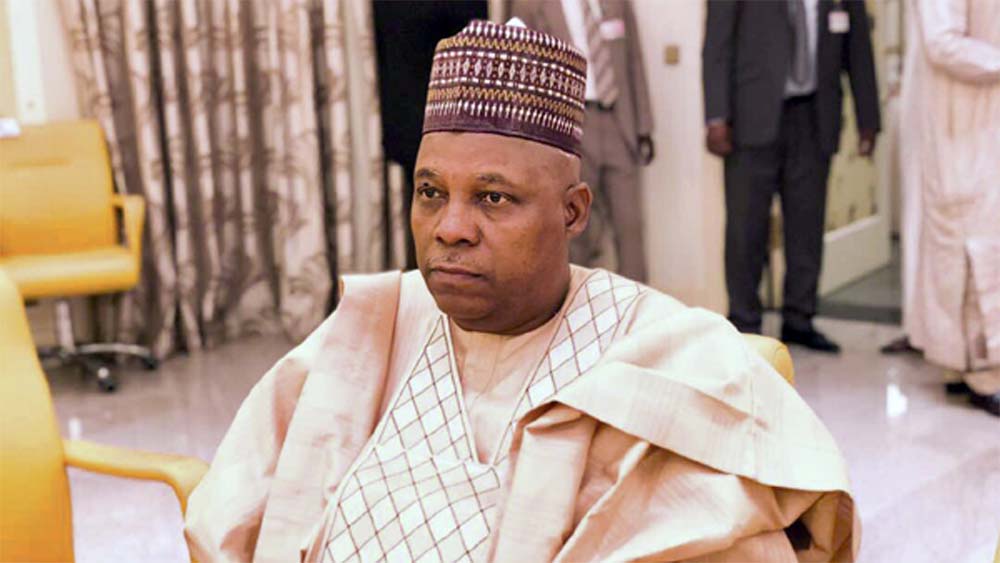
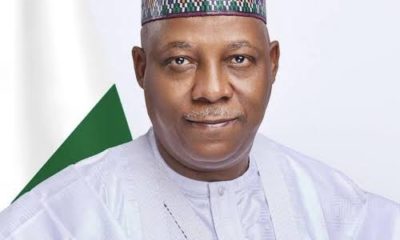
The Nigerian delegation is led by Vice President Kashim Shettima, with state governors and federal ministers participating in discussions on how to translate nutrition policies into measurable improvements in the lives of Nigerians.
Nigeria, Ethiopia to Develop Nutrition Roadmap
The Coordinating Minister of Health and Social Welfare, Professor Muhammad Ali Pate, said Nigeria and Ethiopia would develop a roadmap based on lessons from the leadership exchange to accelerate progress in tackling malnutrition.
Pate described nutrition as a critical component of human capital development, stressing that addressing the challenge required cooperation across government institutions and society.
“Nutrition is key to human capital development, and it requires sectors to work together in a whole-of-government and whole-of-society approach,” he said.
The minister acknowledged progress made through national interventions and community-based programmes but called for stronger implementation.
“We have to now go back and deepen the progress, accelerate,” Pate added.
He expressed optimism that sustained efforts over the next four to five years could produce significant results, particularly for children.
“There are reasons to be optimistic that if we continue in this direction over the next four to five years, Nigeria will achieve remarkable success in dealing with key issues affecting the people of Nigeria, particularly the children who are the future of our country,” he said.
Adeleke, Otti Highlight Need for Better Nutrition Policies
Osun State Governor Ademola Adeleke said nutrition interventions should prioritise children under five and pregnant women, noting that Nigeria needed to build on the progress already recorded.
“Especially for the young ones under five and, of course, pregnant women, it is very, very important,” Adeleke said.
He added that learning from Ethiopia’s experience could help Nigeria improve its approach.
“We have some success, but we can improve on it. That is why I am here, to learn from our counterparts in Ethiopia,” the governor said.
Abia State Governor Alex Otti also urged Nigerian authorities to learn from countries that had made progress in addressing nutrition challenges.
“There’s nothing wrong with saying that we have not done as well. And there’s also nothing wrong in learning from those who have done it, so that you don’t go reinventing the wheel,” Otti said.
He explained that malnutrition could not be addressed through food security alone, as healthcare, education, agriculture, climate change and poverty reduction were closely connected.
“Today, we have learned that it’s not just about food security. It’s also about health. It’s about education. It’s about climate change. It’s about agriculture. So, a whole lot of things are intertwined,” he said.
The governor also highlighted Abia’s investment in education, including the recruitment of 9,469 teachers, the development of 20 smart schools and the rehabilitation of more than 200 primary and secondary schools.
He said the state was committing approximately 20 per cent of its annual budget to education.
Insecurity Complicates Nutrition Efforts in Zamfara
Zamfara State Governor Dauda Lawal said insecurity had made it more difficult for the state to address nutrition challenges, despite its history of substantial food production.
“In the past, when you spoke about nutrition, we didn’t even have anything like that in the state because we produced enough to feed our people. However, because of those challenges now, it has become difficult,” Lawal said.
He, however, insisted that insecurity should not prevent the state from pursuing development initiatives.
“Should we be defined by the insecurity? The question is no. What else can we do?” he asked.
Lawal said Zamfara would continue to align with Federal Government programmes while adapting interventions to the specific needs of its communities.
Jigawa Trains 600 Women in Child Nutrition Programme
Jigawa State Governor Umar Namadi said Ethiopia’s experience under the Seqota Declaration offered useful lessons for Nigeria’s Nutrition 774 Initiative.
He stressed that the programme must extend beyond national and state institutions to reach local governments, wards, communities and individual households.
“The one thing that is very important with 774 is the fact that it will have to go down from the national level to each local government, each ward, each community and each household,” Namadi said.
The governor also highlighted Jigawa’s homegrown nutrition programmes, including the Masaki initiative and a Tom Brown programme designed to promote nutritious food for children.
According to Namadi, approximately 600 women had been trained to produce nutritious food for children under the Tom Brown programme.
The initiative reflects the role state governments can play in complementing federal policies with community-based interventions.
Education Minister Warns of Consequences of Poor Early Nutrition
The Minister of Education, Dr Maruf Tunji Alausa, said efforts to tackle malnutrition must begin during pregnancy and continue through the critical early years of a child’s development.
He warned that inadequate nutrition during this period could have lasting consequences for children’s future.
“If we miss that period, the 2,000 days, we’ve set those children up for failure in life,” Alausa said.
The minister explained that the Nutrition 774 agenda was designed to move nutrition interventions from the Federal Government to state governments, local authorities and communities.
“We have an expansive 774 nutrition agenda that drives our nutrition agenda from the federal to the subnational government, state, local government and the community,” he said.
FG Links Nutrition to Water Supply, Sanitation
The Minister of Water Resources and Sanitation, Professor Joseph Utsev, said improved nutrition depended on reliable water supply, sanitation, agricultural production and healthy living conditions.
“When we talk about the workforce, we must first talk about healthy living. A human being must be healthy before he can impact positively in any role given to him,” Utsev said.
He stressed that water was essential not only for drinking and sanitation but also for irrigation and food production, making it an important part of Nigeria’s broader nutrition strategy.
The Federal Government’s renewed commitment places state and local governments at the centre of efforts to improve nutrition outcomes.






Renewed hostilities between the United States and Iran have heightened fears of another global fuel supply crisis.
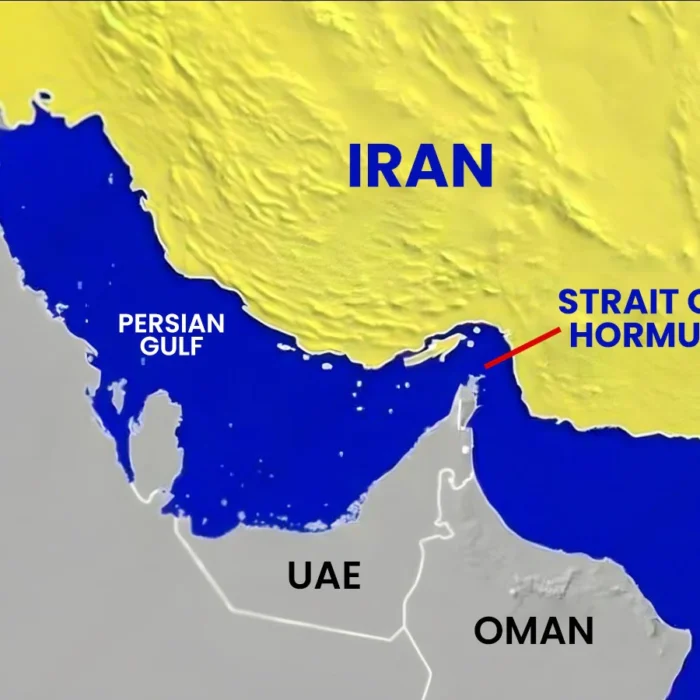
The escalating tensions have renewed concerns about disruptions to crude oil shipments through the Strait of Hormuz, a major global oil transit route, with possible consequences for crude supply, petroleum product availability, shipping costs and energy prices.
The crisis initially erupted in late February when military strikes by the United States and Israel against Iran triggered retaliatory attacks by Tehran, disrupting traffic through the strategic waterway and unsettling global oil markets.
READ ALSO: EFCC Arraigns Woman over Alleged N1.1 bn NNPC Ltd Appointment Fraud
Tensions escalated again on November 17 following reported US strikes on an Islamic Revolutionary Guard Corps site on Qeshm Island, which prompted fresh Iranian attacks on American bases in Kuwait and Bahrain, as well as tankers.
Diplomatic efforts have also remained stalled over Tehran’s demand for the lifting of the blockade before progress can be made on a nuclear agreement.
The renewed uncertainty has raised concerns among oil market analysts. June Goh, a senior oil market analyst at Sparta Commodities in Singapore, said global observable oil inventories were beginning to decline sharply, a development she said could weigh more heavily on market sentiment than political statements about reopening the Strait of Hormuz.

Osun State Governor, Senator Ademola Adeleke has endorsed the appointment of Prince Adewumi Olusola Adeniyi of Godo-dudu royal house of Esa Oke as the new Owamiran of Esa-Oke.
This, according to a government house statement issued in Osogbo on Thursday, followed the outcome of the state executive council meeting presided over by Gov Adeleke.
The statement noted that the stool of Owa-Omiran of Esa Oke became vacant following the demise of Oba Akanbi Adediran from Aragadagbagun ruling house of Esa Oke.
Following this development, with Godo-dudu as the next ruling house, Prince Adewumi Adeniyi’s candidature was subsequently ratified by the state executive council to fill the vacuum created by the death of the immediate Owamiran.
READ ALSO: Atiku Accuses Tinubu of Seeking Plateau’s Forgiveness Only for 2027 Votes
It added that the Osun State Government congratulates and wishes the new Oba elect a peaceful reign as he directs the affairs of the ancient town of Esa Oke in his new capacity as the approved Oba by the Osun State Executive Council.

A call has gone to local and international investors to increase funding for the development and sustainability of Nigeria’s pipeline infrastructure.
The Pipelines Professionals Association of Nigeria (PLAN) made the call at the Nigeria International Pipeline Technology and Security Conference (NIPITECS 2026), which opened in Abuja on Tuesday, warning that the country’s energy security and industrial growth depend largely on reliable pipeline networks.
The President of PLAN, Engr. Ngozi Adeleke listed significant investment, innovative financing solutions, advanced technology, strong regulatory support and effective security frameworks as requirements to develop and sustain critical pipeline infrastructure.
READ ALSO: NNPC Ltd Declares 100% Pipeline Availability for First Time in 2 Decades
She said pipelines remained the backbone of the energy value chain, connecting producing fields to processing facilities, power plants, industrial hubs, export terminals and consumers.
According to her, without reliable pipeline networks, Nigeria’s ambitions to achieve energy security, economic diversification and industrial development would be difficult to realise.
She noted that the conference, with the theme, “Financing the Future: Unlocking Capital for Resilient Pipeline Infrastructure in Nigeria,” was particularly relevant as the country seeks to increase hydrocarbon production, deepen domestic gas utilisation, expand energy access and strengthen industrial capacity.
The PLAN president said the two-day conference would provide an opportunity for industry stakeholders to examine ways of attracting investments into new and existing pipeline infrastructure, while exploring how technology could improve asset integrity and security.
She also called for stronger collaboration among operators, financiers, regulators, service providers, technology companies, academia and host communities to address challenges confronting the sector.
Adeleke stressed that NIPITECS should go beyond discussions to facilitate partnerships, stimulate innovation, encourage knowledge sharing and generate practical recommendations for strengthening Nigeria’s pipeline ecosystem.
“As an association, PLAN remains committed to promoting professionalism, operational excellence, safety, integrity and capacity development across the pipeline industry.
“We will continue to serve as a platform for engagement, learning and collaboration, while advocating policies and practices that support the growth and sustainability of the sector,” she said.
She further urged participants to use the conference to build meaningful relationships and develop partnerships capable of driving progress in the industry beyond the event.
According to her, Nigeria’s energy future would not be determined by its natural resources alone but by the collective ability of stakeholders to finance, build, protect and sustain the infrastructure needed to convert those resources into economic value.
She added that collaboration, shared innovation and collective responsibility were essential to unlocking investment and securing the country’s energy future.
The conference brings together industry leaders, government representatives, regulators, investors, technology companies and other stakeholders to discuss financing, technology and security challenges in Nigeria’s pipeline sector.






Renaissance Unlocks New Oil, Gas Reserves with Technology

Fuel Supply Fears Spike on Renewed Middle East Crisis

EFCC Arraigns Woman over Alleged N1.1 bn NNPC Ltd Appointment Fraud

Adeleke Approves Prince Adewumi Olusola Adeniyi as New Owamiran of Esa-Oke

SGF Commissions Another Go Recycling Hub

WEC Points Investors to Gas Infrastructure in Africa

Trump’s Family Unveils New Cryptocurrency Platform

Senate Denies Receiving Petitions Against Tinubu’s Ambassadorial Nominees

Dangote Cement Lights Up Benue Host Communities With CSR Initiatives

Reps Recommend 3-year Jail Term For Aviation minister

Tems Sets New Record On Billboard Hot 100 Chart
