
NEWS
MC Oluomo introduces barcode to check criminal activities in parks, garages

By Paul Eso
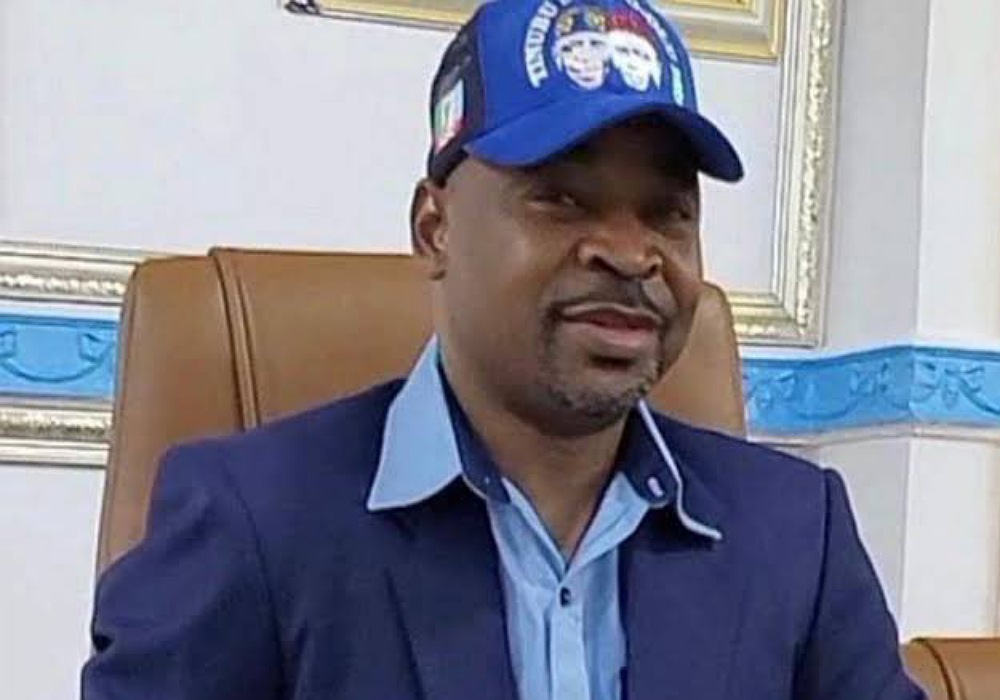
The Chairman of Lagos State Parks and Garages, Alhaji Musiliu Akinsanya, (Aka MC Oluomo), has announced the introduction of the Barcode to checkmate untoward activities among some commercial bus drivers.
MC Oluomo
According to him, the initiative will curb kidnappings and other criminal activities perpetrated by unscrupulous commercial bus drivers.
Akinsanya said the issue of insecurity is a major concern to everybody and as stakeholders in the transportation sector, the agency cannot fold its arms and allow charlatans to turn their garages and parks into criminal hideouts.
Read also >>>Fuel scarcity in Abuja, other northern States caused by Flooded Lokoja road says NMDPRA
“Our goal is to leverage technology to detect some criminal elements using our parks and garages to perpetrate crimes. We want to make our parks and garages as safe as possible. We will make the them hell for anyone with criminal intention,” he said.
He warned leaders of various parks and garages to weed out criminal-minded elements in their domains else would be held responsible for their actions.
Speaking on how the Bar Code works, Lagos State Parks and Garages Secretary, Comrade Olayiwola Lemboye, said commuters would download an app and scan the bar code on buses to confirm if they are safe for boarding.
“Once you scan the bar code on any bus, it will bring out certain information about the park or garage for commuters to determine if the bus is safe for boarding or not. For those who usually forget their ‘loads’ in the bus, the code will help passengers recollect the vehicle’s number plate and trace it to the park or garage such the vehicle operates from.
“We’re using this medium to urge the public to try as much as possible to key into this project because the bar code will assist in curbing the cases of kidnapping, theft and other societal vices people perpetrated with public buses. We are urging the public to just give us the benefit of the doubt on this project and key into it. It is for the good of all,” Lemboye said.
Mr Isaiah Arowolo from Dotmatech Technologies Limited, a firm handling the installation of the bar codes, said over 20,000 buses have been registered into a central database.
Arowolo said: “We have generated the QR code sticker for the 20,000 buses registered and the number is increasing daily. How does it work? We have a unique QR code sticker which will be on each bus; the commuters will download the app from the Playstore or Apple iOS.
“When they scan the code on the bus, information will be given to them on that particular vehicle including its number plate and the name of the secretary of the branch of that park or garage. The reason for that is just for them to have the history of the car or vehicle they board in a month or in a week or daily so that they can fall back to it and after one month.”









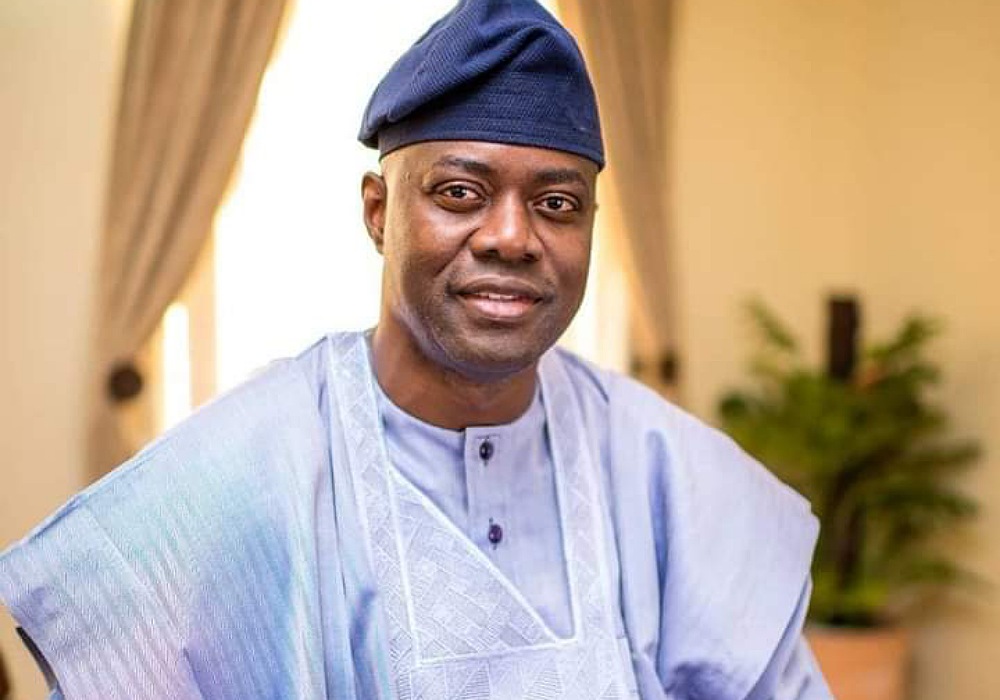
Oyo State Governor Seyi Makinde has challenged the Presidency to explain how Nigeria Liquefied Natural Gas (NLNG) dividends were distributed among states and local governments, insisting that a reconciliation exercise identified a shortfall of about ₦9 trillion.
Makinde’s position was contained in a statement issued on Sunday by his Special Adviser on Media, Dr Sulaimon Olanrewaju, in response to the Presidency’s rejection of the governor’s earlier claims over NLNG dividend payments.
RELATED NEWS: JUST IN: Presidency Rejects Makinde’s Claim of ₦250bn NLNG Dividends for Each State
The statement said the Nigeria Governors’ Forum (NGF), with the support of the Federal Government, engaged a consultant to reconcile NLNG dividend payments, adding that the exercise identified approximately ₦9 trillion allegedly due to states and local governments.
“The exercise identified a shortfall of about ₦9 trillion due to states and local governments. The Federal Government accepted the findings,” the statement said.
The governor maintained that the reconciliation report remained in the custody of both the Federal Government and the NGF.
“The report remains in the custody of both the Federal Government and the NGF. We trust the Presidency will not deny its existence,” the statement added.
The statement also noted that Makinde is the incumbent Vice-Chairman of the NGF.
Makinde Questions $21.5bn NLNG Dividend Payments
The governor questioned the Presidency’s statement that NLNG had paid $21.5 billion in dividends into the Federation Account since its inception, including $3 billion received under the current administration.
According to Makinde, the Presidency’s response did not explain how the payments were distributed or establish the amounts received by states and local governments.
“The Presidency stated that NLNG had paid $21.5 billion in dividends into the Federation Account since inception, including $3 billion received under the current administration. But it did not explain how these funds were disbursed,” the statement said.
The governor also questioned whether states and local governments had received their shares, how much they received and the basis for calculating their allocations.
“Have states and local governments received their shares? How much did they receive, and how were those amounts calculated? What happened to the $3 billion received under this administration?” the statement asked.
Makinde defended the figures he had previously cited, maintaining that his claims were based on verifiable information.
“Governor Makinde conducts public discourse with decorum and does not make unfounded claims or quote figures without a basis,” the statement said.
The governor maintained that he was ready to provide further clarification on the matter while urging the Presidency to address the substance of the allegations.
“We remain ready to provide further clarification while we urge the presidency to address the substance of the matter,” the statement added.
Recall that Biztellers had earlier reported the Presidency’s rejection of Makinde’s claim concerning NLNG dividends allegedly withheld from states and local governments.
The Presidency stated that NLNG had paid $21.5 billion in dividends into the Federation Account since its inception, including $3 billion received under the current administration.
However, in his latest response, Makinde argued that disclosing the total amount paid into the Federation Account did not address how the funds were distributed among the different tiers of government.
The governor is now demanding clarification on the distribution of the dividends and the findings of the reconciliation exercise that reportedly identified the ₦9 trillion shortfall.

The National Association of Nigerian Students (NANS) has threatened to shut down Alex Ekwueme Federal University, Ndufu-Alike (AE-FUNAI), Ebonyi State, if the institution’s management fails to reverse the reported increase in school fees.
The association, in a press release dated Sunday, October 18, 2026, described the reported tuition increment as insensitive, unjustifiable and unacceptable, citing the economic difficulties confronting Nigerian students.
The statement was signed by the NANS President, Dist. Comr. Akinteye Babatunde Afeez, GCNS, who warned that the increase could frustrate the academic aspirations of countless students.
SEE MORE: BREAKING: OAUSTECH Student Akinteye Babatunde Elected New NANS National President
“To be clear, education cannot be commercialised. Students cannot be made to pay for the financial challenges confronting our universities,” the statement read.
NANS acknowledged that universities require adequate funding but argued that their managements, particularly vice-chancellors, should explore innovative revenue-generating opportunities rather than impose additional financial burdens on students.
The association maintained that the Federal Government was investing heavily in education to keep students in school and ensure that access to education was not determined by their financial background or status.
NANS Gives University Management Conditions
The student body warned the vice-chancellor and the entire university management against policies capable of pushing students out of school.
It said the national leadership would not stand by while Nigerian students faced additional financial pressure that could threaten their academic futures.
“Going forward, we wish to make it clear to the Vice-Chancellor and the entire University Management that the National Leadership of NANS will not stand by while Nigerian students are subjected to policies capable of pushing them out of school,” the statement said.
NANS subsequently demanded an immediate reversal of the reported tuition increase and called on the university to restore fees to the affordable and reasonable levels that existed before the increment.
The association warned that failure to meet its demand would lead to a mobilisation of its national leadership to the institution.
“To this end, we call on the management of Alex Ekwueme Federal University to immediately reverse the reported tuition increment and return the fees to the affordable and reasonable level that existed before the increment. Otherwise, we will mobilise the National Secretariat of NANS to Alex Ekwueme Federal University and shut down the school until the fee is reversed,” the statement added.
NANS Reaffirms Commitment to Students
The association reiterated its commitment to defending the interests, welfare and aspirations of Nigerian students.
It pledged to continue speaking firmly against policies that place unnecessary and unbearable financial burdens on students.
NANS maintained that students should not be made to bear the financial challenges confronting universities and called on the management of AE-FUNAI to reverse the reported increase.

Kaduna State Governor Uba Sani has handed over land titles to displaced residents of nine communities in Birnin Yero, Igabi Local Government Area, to enable them to rebuild their homes and regain shelter.
The Kaduna State Ministry of Information and Culture disclosed the development on Sunday, October 18, 2026, describing the exercise as an intervention aimed at helping displaced residents rebuild their homes.
According to the ministry, each beneficiary is being allocated a plot of land to support resettlement and provide shelter for affected residents.
SEE ALSO: Kaduna Moves to Clear 5-Year Promotion Backlog for 24,000 Teachers
“ He is officially handing over land titles, giving each person a plot of land to rebuild their homes and regain shelter,” the ministry’s announcement stated.
The ministry also noted that Governor Sani had continued to support displaced communities across Kaduna State since assuming office.
The latest exercise focuses on nine communities in Igabi Local Government Area, with the allocation of land intended to help affected residents rebuild their homes and regain stability.
The development comes amid previous reports concerning land disputes and displacement affecting communities in Kaduna State.
In September 2026, reports indicated that the Kaduna Geographic Information Service (KADGIS) had resolved more than 5,000 land disputes and restored over 150 property titles.
The agency also reported that alternative plots had been provided to some communities affected by previous demolitions.






Renaissance Capital Sees Significant Upside in Dangote Refinery, Lifts Valuation by 33.4%

Dangote Refinery IPO Elicits Participation in 90 Countries Globally

Makinde Fires Back at Presidency, Insists on ₦9tn NLNG Dividend Shortfall

‘NELFUND Is Not an Excuse for School Fees Hikes’ – NANS Warns Universities

NANS Threatens to Shut Down AE-FUNAI Over School Fees Hike

Wife Dies in Ogun House Fire as Police Take 56-Year-Old Husband Into Custody

Trump’s Family Unveils New Cryptocurrency Platform

Senate Denies Receiving Petitions Against Tinubu’s Ambassadorial Nominees

Dangote Cement Lights Up Benue Host Communities With CSR Initiatives

Reps Recommend 3-year Jail Term For Aviation minister

Tems Sets New Record On Billboard Hot 100 Chart
