
NEWS
Microsoft’s New Research Paper Provides a Roadmap for AI Advancement in Nigeria


While developing economies like Nigeria face significant challenges in fully leveraging the advantages of AI, implementing the technology across key sectors could help address some of these issues and significantly reduce inequality.
Biztellers reports that this is one of the key findings from Microsoft’s new white paper, AI in Nigeria, which was commissioned by Microsoft and conducted by PwC and Lagos Business School. The findings were unveiled during Microsoft AI Skills Week in Lagos, on Tuesday.
The five-day event was designed to equip customers, business leaders, developers and end users with the knowledge and hands-on experience needed to drive AI adoption. It combined self-paced learning, live sessions, and interactive workshops to provide a comprehensive learning experience.
During the event, experts brought critical insights from the white paper to life, unpacking a more data-driven approach to accelerating AI transformation.
“Although AI is still an emerging field with early-stage applications in Nigeria, global advancements and the growing recognition of AI’s transformative power have catalysed a shift in mindset across the country. Entrepreneurs, researchers, and policymakers are now exploring AI to address local needs and drive growth,” says Ola Williams, Managing Director, Microsoft Nigeria and Ghana.
ALSO READ: ADF Donates 10,000 Bags of Rice in Enugu
Government and educational institutions have started fostering innovation and creating an environment for AI research and development. Programmes like the Nigeria Artificial Intelligence Research Scheme (NAIRS) and the National Centre for Artificial Intelligence and Robotics (NCAIR) support AI projects. Recently, the Nigerian government also published its National AI Strategy, aiming to leverage AI for economic growth, social development, and technological leadership.
From finance to e-commerce, agriculture, and healthcare, AI offers numerous opportunities for progress. This is evidenced by greater adoption of the technology across sectors, as well as increased AI startup funding. Nigerian banks use chatbots for services like account inquiries and customer complaints. In e-commerce, platforms such as Bumpa use AI as business coaches, and in agriculture, services like Kitovu employ AI for agronomic advice and personalised crop analysis. This integration of AI is driving efficiency and bolstering Nigeria’s digital economy.
“We stand at a pivotal moment where AI is revolutionising industries and transforming economies. Countries are increasingly adopting AI technologies across critical sectors like healthcare, finance, and education. While AI’s benefits are immense, balancing risks and rewards is crucial. By building trust and robust governance frameworks, Nigeria can overcome challenges and harness AI’s potential, unlocking significant growth and driving transformation across businesses and society,” comments Olufemi Osinubi, Partner and WMA Consulting Risk Services Leader, PwC Nigeria.
Drawing on AI to Overcome Key Obstacles
The progress of AI in Nigeria faces several challenges. While AI has the potential to transform many aspects of daily life, the country must overcome obstacles related to skills, funding, regulation, data preparedness, and public perception to fully enhance its AI capabilities.
Lack of infrastructure and skilled workers are significant barriers to AI advancement. In Nigeria, there is a shortage of people with AI skills, and many of these professionals are leaving the country, causing a gap in expertise and delaying AI adoption. The complexity of learning AI concepts can also discourage beginners. Over and above this, organisations are often hindered by a lack of understanding among business leaders of AI, and its related risks and ethical frameworks. However, initiatives like the Federal Ministry of Communications, Innovation and Digital Economy’s 3MTT (Three Million Technical Talent) programme and Microsoft’s AI Skills Navigator are gradually training the next generation of AI talent to fill this gap in skills and understanding.










The Transmission Company of Nigeria (TCN) has commenced the final phase of restoration works on the 330kV Kainji–Birnin Kebbi Transmission Line following the recent collapse of Tower T367 along the line corridor.
TCN, in an update issued on Wednesday, said significant progress had been recorded at the affected location in Yauri, where restoration activities are ongoing.
ALSO READ: TCN Restores 330kV Shiroro–Mando Line, Strengthens Power Supply to Kaduna
According to the company, the collapsed transmission tower has now been completely dismantled and decommissioned, while the conductors and skywire have been properly aligned and prepared for the next stage of the restoration process.
TCN also disclosed that an Emergency Restoration System (ERS) tower has been moved to the site and is ready for installation.
The company said the installation would be followed by cable stringing and other associated works towards the restoration of the affected transmission line.
“Our engineers and technical personnel remain actively engaged at the site and are working hard to ensure a quick completion and restoration of the line.”
TCN said it remained committed to restoring normal bulk transmission as soon as possible and appealed to electricity consumers and other stakeholders affected by the incident for patience and understanding.
“TCN appreciates the patience and understanding of electricity consumers and other stakeholders affected by the incident and assures the public that every effort is being made to restore the line and consequently, normal bulk transmission as soon as possible.”
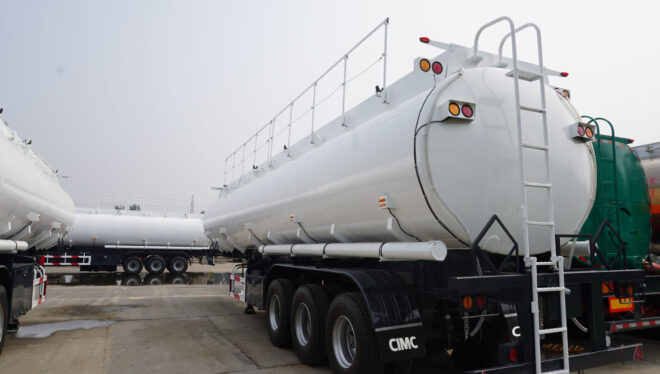
The National Union of Edible Oil Tanker Drivers of Nigeria (NUEOTDN) has suspended its planned nationwide strike scheduled to begin Wednesday following Federal Government intervention in its dispute with operators in the edible oil industry.
The last-minute suspension averted a potential disruption in the transportation and distribution of edible oil across the country, with the union directing members to maintain normal operations while negotiations continue.
READ ALSO: Tinubu Applauds $800m FID on Ima Gas Project
NUEOTDN President, Ilias Aperun, announced the decision in a statement dated September 22, saying interventions by President Bola Tinubu and the Department of State Services (DSS) had opened discussions towards resolving the issues that prompted the planned industrial action.
“The planned industrial action scheduled to commence today, 23rd September 2026, has been suspended.”
Aperun said the union decided to give the government intervention time to produce results in the interest of economic stability and protection of the edible oil supply chain.
“In the interest of peace, national economic stability and the protection of the edible oil supply chain, the Union has decided to suspend the planned action and give room for the ongoing government intervention,” he said.
The union consequently directed its members and other stakeholders to halt preparations for the strike and continue normal operations pending further directives.
Aperun said discussions aimed at resolving the dispute were already underway, adding that the union remained committed to protecting the welfare and legitimate interests of its members without jeopardising the supply of edible oil.
“The NUEOTDN remains committed to the protection of the public health of the masses, welfare and legitimate interests of its comrades, while also supporting a peaceful and sustainable resolution of the issues at stake,” he said.
He urged stakeholders in the industry to cooperate with the ongoing negotiations, saying constructive engagement remained necessary to resolve the issues raised by the tanker drivers.
The union expressed appreciation to the Federal Government for its intervention and urged members to remain calm while awaiting the outcome of the discussions.
Aperun said further developments would be communicated as negotiations progressed.
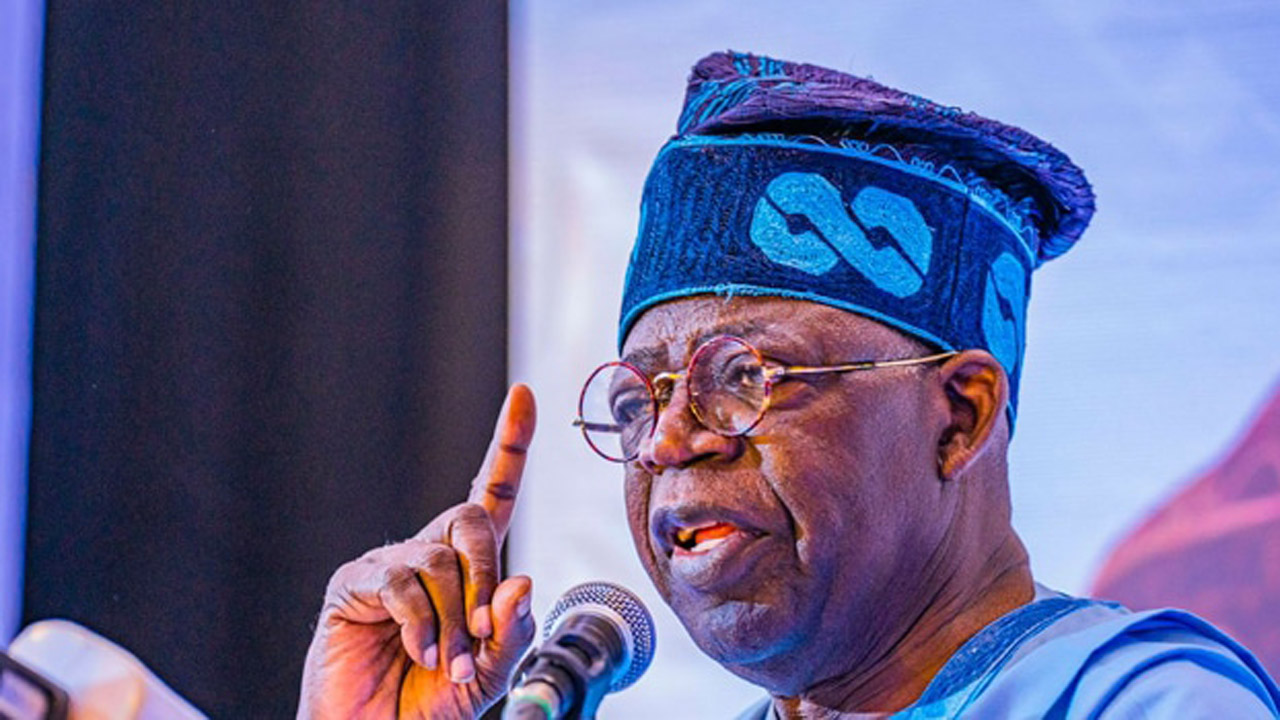
President Bola Ahmed Tinubu has welcomed the construction of a $12 million Abuja Centre for Entrepreneurship, saying the facility will strengthen Nigeria’s Micro, Small and Medium Enterprises (MSME) ecosystem and create more opportunities for businesses to grow and generate jobs.
The President made this known in a statement issued on Wednesday by his Special Adviser on Information and Strategy, Bayo Onanuga.
The Abuja Centre for Entrepreneurship (ACE) is being developed at the SMEDAN Industrial Development Centre in Idu, Abuja, with funding from the Republic of Korea through the Korea International Cooperation Agency (KOICA).
SEE ALSO: Tinubu Applauds $800m FID on Ima Gas Project
The project is being implemented in partnership with the Federal Government through the Small and Medium Enterprises Development Agency of Nigeria (SMEDAN) and the United Nations Development Programme (UNDP).
The centre will provide workspaces, digital facilities, training, incubation and enterprise support for aspiring entrepreneurs, start-ups and existing businesses.
According to the statement, the facility has an initial target of supporting 500 entrepreneurs, 400 start-ups and 1,500 MSMEs.
About $5.9 million of the investment will be allocated to construction, while $6.1 million will fund equipment and programmes designed to support entrepreneurs and businesses.
Tinubu said the centre would help establish, strengthen and grow businesses.
“Small businesses are an important part of our economy. They employ people, support families and create activity in communities across the country.
“Many entrepreneurs already have the ideas and the determination to succeed. What they often need is better access to facilities, technology, training and the support that can help their businesses grow.
“This Centre will provide more of that support and strengthen the ecosystem around them,” he said.
The centre is expected to serve businesses in Abuja and surrounding cities, including Kaduna, Jos, Keffi, Lafia, Minna, Makurdi and Lokoja.
It is also expected to contribute to strengthening the wider entrepreneurship and MSME ecosystem across Northern Nigeria.
The President said the Federal Government would continue to expand the conditions that allow small businesses to grow and compete.
“We want more Nigerians to be able to start businesses, grow them and employ others.
“We also want existing small businesses to have better access to the tools and support they need to become stronger and more productive.
“That is important for jobs, incomes and the wider economy,” Tinubu said.
He added that the project complements the administration’s wider investments in digital skills, entrepreneurship, enterprise development and support for MSMEs.
The centre has also been designed to accommodate women and persons with disabilities. It will include accessible facilities and crèche services for women with young children.
While construction is ongoing, SMEDAN, KOICA and UNDP will work with universities, incubators, financial institutions, private-sector organisations and entrepreneur networks to build a wider support system around the centre.
The partners will also identify businesses that can benefit from the centre’s programmes.
Tinubu thanked the South Korean government for the $12 million investment and commended KOICA, UNDP and SMEDAN for advancing the project to the construction stage.
He said Nigeria would continue to welcome investments and partnerships that strengthen local businesses, deepen enterprise development and create more jobs.
“Our economy will be stronger when more Nigerian businesses can start, survive and grow.
“We must keep building the support around them and opening more opportunities for enterprise across the country,” the President said.






Dangote to Support Two Million Women with Refinery IPO Share Ownership

NGX Invest Expands Primary Market Access with WhatsApp Subscription Channel
Kainji–Birnin Kebbi Power Line: TCN Begins Final Phase of Restoration

2027 Polls: ‘Poor Funding Could Undermine Election Security, Logistics’ — INEC Chairman Warns

N4bn Compensation Dispute Threatens Ikot Abasi Power Project

Organised Labour Supports Workers’ Demand for N500 PMS Price, N500,000 Minimum Wage

Trump’s Family Unveils New Cryptocurrency Platform

Senate Denies Receiving Petitions Against Tinubu’s Ambassadorial Nominees

Dangote Cement Lights Up Benue Host Communities With CSR Initiatives

Reps Recommend 3-year Jail Term For Aviation minister

Tems Sets New Record On Billboard Hot 100 Chart

I have not checked in here for a while since I thought it was getting boring, but the last few posts are great quality so I guess I’ll add you back to my everyday bloglist. You deserve it my friend 🙂
I’ll immediately snatch your rss feed as I can not find your email subscription link or newsletter service. Do you’ve any? Kindly let me recognize in order that I may subscribe. Thanks.
I was curious if you ever thought of changing the layout of your site? Its very well written; I love what youve got to say. But maybe you could a little more in the way of content so people could connect with it better. Youve got an awful lot of text for only having one or two pictures. Maybe you could space it out better?
I saw a lot of website but I believe this one has something extra in it in it
Some genuinely nice stuff on this website , I like it.
Lovely just what I was searching for.Thanks to the author for taking his clock time on this one.
I really appreciate this post. I have been looking everywhere for this! Thank goodness I found it on Bing. You have made my day! Thank you again!
I have been absent for some time, but now I remember why I used to love this website. Thanks , I will try and check back more often. How frequently you update your web site?
Thanks for sharing superb informations. Your web site is very cool. I’m impressed by the details that you have on this website. It reveals how nicely you perceive this subject. Bookmarked this web page, will come back for extra articles. You, my pal, ROCK! I found just the information I already searched everywhere and simply couldn’t come across. What a perfect website.