
NEWS
Midnight Horror in Kaduna: Gunmen Kill Nine, Injure 11 in Fresh Community Attack

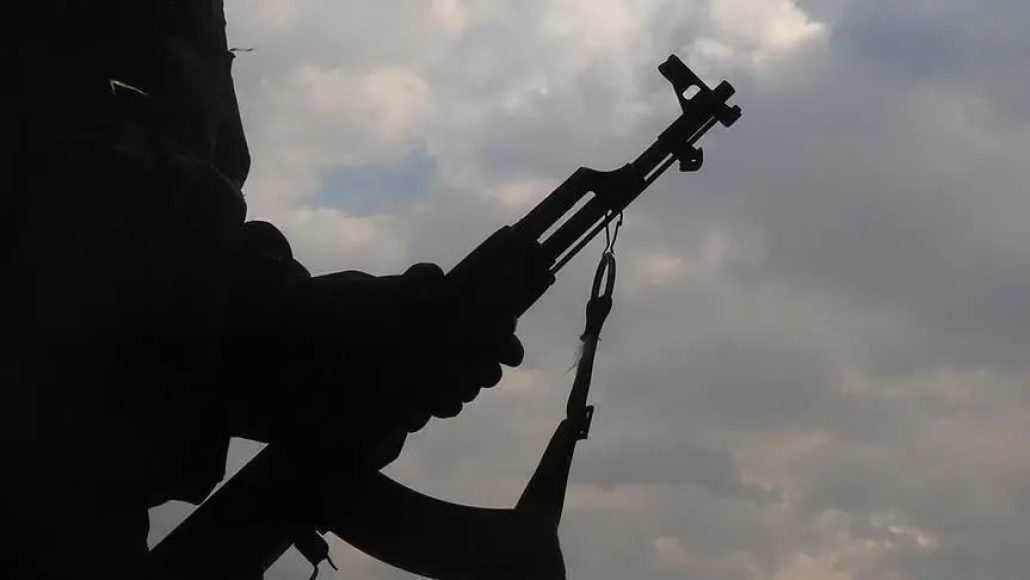
At least nine persons have been killed and 11 others injured following a deadly attack on Angwan Magaji community in Kamaru Ward of Kauru Local Government Area of Kaduna State.
The attack, which occurred around 1:00 a.m. on Wednesday, has heightened concerns over the worsening security situation in communities located along the Kaduna–Plateau border.
ALSO READ: Alleged Corruption: El-Rufai Appears in Kaduna Court as Trial Continues
According to the National Publicity Secretary of the Irigwe Youth Movement, Joseph Chudu Yonkpa, heavily armed attackers invaded the community in the early hours of the morning and opened fire on residents, leaving several casualties in their wake.
Yonkpa explained that most residents of Angwan Magaji are members of the Irigwe ethnic group with ancestral roots in Bassa Local Government Area of Plateau State.
The victims of the attack were identified as Jerry Doctor, 51; Danlami Magani, 49; Sunday Chibi, 53; Rita Abdullahi, 45; Sunday Elkan, 5; Esther Kefas, 5; Happy Friday, 6; Moses Daddy, 4; and Daddy Ibrahim, 28.
Eleven other residents sustained varying degrees of injuries and are currently receiving medical treatment.
Confirming the incident, the National Secretary of the Irigwe Development Association, Danjuma Dickson Auta, condemned the killings and described the attack as unfortunate and deeply troubling.
Auta called on security agencies to immediately investigate the incident and ensure that those responsible are brought to justice.
He also expressed concern over the recurring attacks on communities in the area, urging authorities to strengthen security measures to safeguard lives and property.
The community leader appealed to governments at all levels to take urgent action to prevent further bloodshed and restore confidence among residents, noting that the latest attack has plunged the community into mourning and renewed calls for decisive intervention to end the cycle of violence along the Kaduna–Plateau axis.








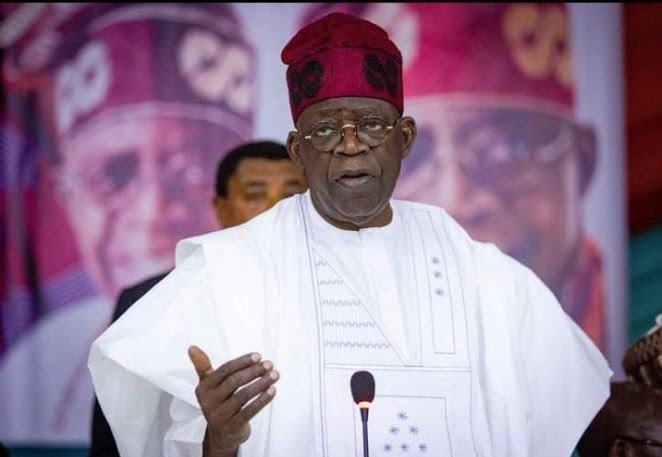
The Presidency has rejected Oyo State Governor Seyi Makinde’s claim that the Federal Government is withholding ₦250 billion in Nigeria LNG Limited (NLNG) dividends for each state, describing the allegation as false and inconsistent with the company’s historical dividend payments.
The rebuttal was contained in a statement issued on Sunday by Bayo Onanuga, Special Adviser to President Bola Tinubu on Information and Strategy.
Makinde had alleged that the Federal Government would not release the funds until after the 2027 general elections, despite states having identified development projects for which the money was expected.
ALSO READ: “Makinde Never Owed Salary Despite FAAC Changes” — APM Chieftain Adelore
The governor made the claim on Friday at the 2027 Budget Stakeholders’ Consultative Engagement held at Olola Ogunlana Hall, International Conference Centre, University of Ibadan.
“Each state was supposed to get ₦250 billion. We had already identified projects that would expand Oyo State’s economy. But they have now said the money will not be paid until after the election. Is the election more important than the people of Nigeria?” Makinde said.
However, the Presidency disputed the governor’s figures, arguing that the amount he cited would require an exceptionally large dividend payment from NLNG.
“Makinde’s latest claim that the Federal Government is withholding the NLNG dividend windfall is false and should be disregarded,” Onanuga stated.
According to the presidential aide, paying ₦250 billion to each of Nigeria’s 36 states would amount to ₦9 trillion, excluding the Federal Government, the Federal Capital Territory and the 774 local government councils.
He explained that under the Federation Account Allocation Committee (FAAC) revenue-sharing formula, states receive 26.72 per cent of distributable Federation Account revenue.
Onanuga said NLNG would have to pay more than ₦33.68 trillion, equivalent to approximately $25 billion, into the Federation Account in a single declaration for the states’ share alone to reach ₦9 trillion.
“NLNG has never paid $25 billion in dividends to the Federation Account in a single payout,” he said.
The Presidency also stated that NLNG had paid approximately $21.5 billion in dividends to the Federation over the past 25 years, with less than $3 billion realised since Tinubu assumed office.
Onanuga argued that these figures contradicted the allegation that a single dividend payment exceeding the company’s total historical distribution to the Federation was being withheld.
“Therefore, any claim that a single payout exceeds the company’s entire lifetime distribution to the Federation—and is being withheld—defies basic logic and economic reality,” he stated.
The presidential aide further criticised Makinde’s public statements, accusing the governor of making misleading claims since embarking on his presidential ambition ahead of the 2027 elections.
“We expect Governor Makinde to be more measured in his public conduct and utterances,” Onanuga said.
He also recalled Makinde’s previous description of the substantial financial allocations from the Federation Account to states, including Oyo, as “voodoo.”
While acknowledging that Makinde was free under Nigerian law to pursue his presidential ambition, Onanuga urged him to avoid what the Presidency described as false claims and disinformation.
“Under Nigerian law, Governor Makinde is free to pursue his presidential ambition. He should desist from making falsehoods and disinformation the hallmarks of his campaign,” he stated.
The Presidency urged Nigerians to disregard the governor’s allegation, arguing that it could mislead citizens and create unnecessary hostility towards the Federal Government.
“We urge the public to disregard these unfounded claims, which serve only to mislead citizens and stoke needless disaffection against the Federal authorities,” Onanuga added.
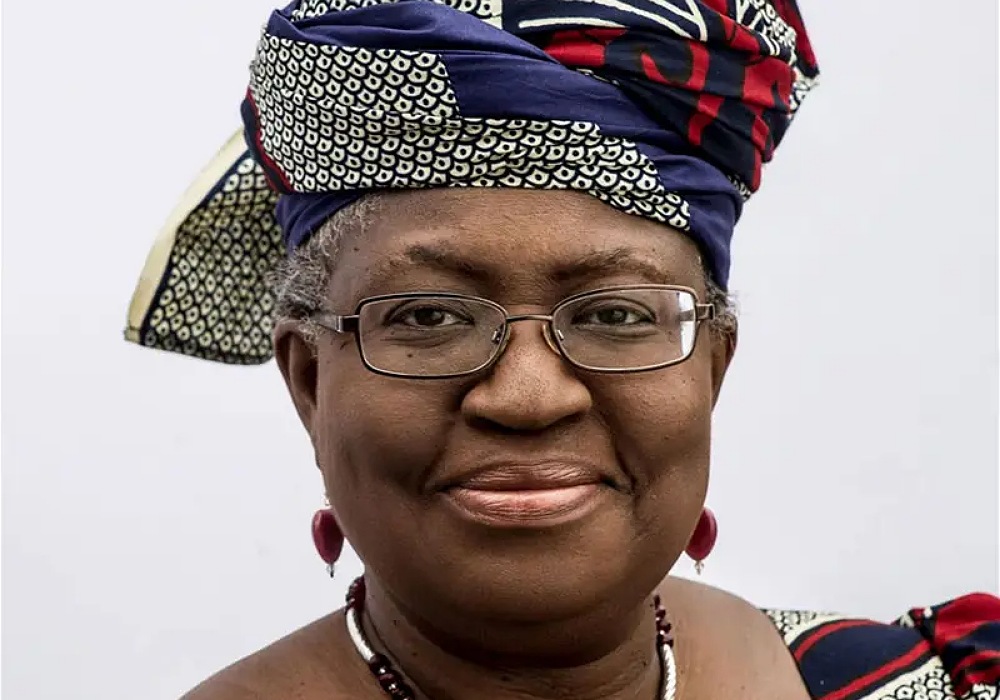
The 2027 presidential candidate of the African Action Congress (AAC), Omoyele Sowore, has challenged the Director-General of the World Trade Organisation (WTO), Ngozi Okonjo-Iweala, to identify the individuals and companies allegedly involved in the $2.4 billion oil subsidy fraud she said she uncovered while serving as Nigeria’s Minister of Finance.
Sowore made the demand in a statement posted on X on Sunday, questioning the evidence supporting the alleged fraud and its reported connection to the kidnapping of Okonjo-Iweala’s mother in 2012.
SEE ALSO: 2027: No New Taxes Under My Gov’t If Elected – Sowore Clarifies
His response followed reports of an interview in which Okonjo-Iweala recounted how her efforts to uncover an alleged $2.4 billion fuel subsidy fraud led to threats against her and the abduction of her mother, Kamene Okonjo.
The initial report, published by Nigerian media outlets on Saturday and Sunday, October 17 and 18, followed Okonjo-Iweala’s account of the incident and her experience fighting corruption while serving in government.
In his response, Sowore questioned the identities of those allegedly responsible for the fraud and the availability of documentary evidence supporting the claims.
“During her two terms at the center of Nigeria’s economic management, who exactly did she discover was responsible for this multibillion-dollar subsidy fraud?” he asked.
He also demanded details of the companies and individuals allegedly implicated, as well as the findings of investigations into the matter.
“Which companies and individuals were implicated? Where are the audit findings, investigation reports and records of prosecution?” Sowore queried.
The AAC presidential candidate also criticised Okonjo-Iweala’s book, Fighting Corruption Is Dangerous, in which she recounted the kidnapping and linked it to her anti-corruption efforts.
Sowore argued that the book did not provide evidence identifying those responsible for the alleged fraud or explaining what happened to the money.
He further questioned the evidence connecting the alleged subsidy fraud investigation to the kidnapping of Okonjo-Iweala’s mother.
According to Sowore, police records, prosecution records and judicial findings concerning the kidnapping pointed to the alleged involvement of palace guards, relatives and domestic workers.
He maintained that the circumstances surrounding the incident should be examined using verifiable evidence, rather than accepting or dismissing competing accounts without proper scrutiny.
Sowore also questioned why, according to his understanding, Okonjo-Iweala had not publicly challenged the police’s account of the kidnapping or demanded a fresh, independent investigation.
He criticised Bloomberg Television journalist Francine Lacqua over her handling of Okonjo-Iweala’s account, arguing that further verification was necessary.
Returning to the central issue, Sowore asked: “Who stole the alleged $2.4 billion?”
He also demanded to know where the audit findings were, which companies and individuals were implicated, what became of the investigations and what evidence established a direct connection between the alleged fraud and the kidnapping.
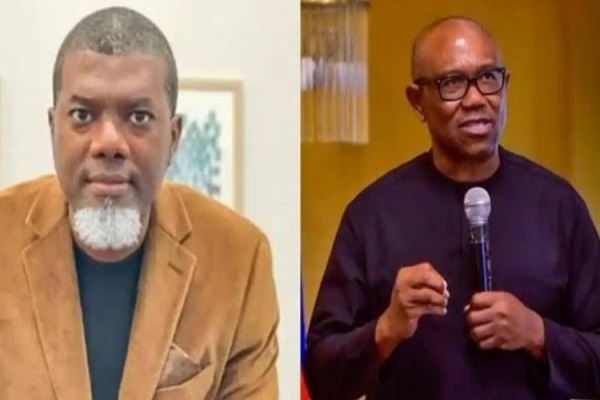
Former presidential aide Reno Omokri has criticised Afrobeats singer Peter Okoye over his call for Nigerians to retire older politicians and support former Anambra State Governor Peter Obi.
Okoye, popularly known as Mr P, made the remarks in a video that went viral on social media, urging Nigerians to move away from older politicians and support Obi.
“Let’s leave these old guys, dem done try. Let’s retire them,” Okoye said in the video, according to Omokri’s account.
SEE MORE: Reno Omokri Praises Tinubu’s Independence Day Address, Says Nigeria Is in ‘Sound Hands’
Reacting to the singer’s position in a post on Sunday, Omokri argued that age alone should not determine Nigerians’ choice of presidential candidates, insisting that a comparison of the ages of the leading presidential tickets does not support Okoye’s argument.
Omokri noted that Obi is 65 years old, while his proposed running mate, Rabiu Musa Kwankwaso, is 70. He put President Bola Tinubu’s age at 74 and Vice President Kashim Shettima’s at 60.
According to Omokri, the Obi-Kwankwaso ticket has a combined age of 135 years, compared with 134 years for the Tinubu-Shettima ticket.
He argued that, based on the average ages of the two tickets, the incumbent president and his deputy are marginally younger as a pair.
Omokri also compared the figures with those of Atiku Abubakar and Rotimi Amaechi, whose combined ages he put at 140 years.
Beyond the age argument, Omokri questioned Obi’s record as Anambra governor, contrasting it with Tinubu’s administration in Lagos State.
He listed schools and independent power projects he attributed to Tinubu’s tenure as Lagos governor, challenging Okoye to identify comparable projects initiated, completed and commissioned with government funds during Obi’s time in office.
Omokri further argued that Nigerians should consider candidates’ records in public office rather than relying primarily on their ages.
He also defended the Tinubu administration by citing the absence of a nationwide strike by the Academic Staff Union of Universities (ASUU) during its tenure and the federal government’s Nigerian Education Loan Fund (NELFUND) programme.






NDC Withdraws Recognition of Diaspora Chapters Over Court Rulingq

2027: Presidential Aide Nkwocha Warns South-East Over One-Term Presidency Deal
‘Impartiality in Doubt’ – ADC Urges Senate to Reject INEC Nominee Over Sokoto Governor Link

Sanwo-Olu Pledges Full Support as Lagos Prepares to Host 2026 CAF Awards

JUST IN: Presidency Rejects Makinde’s Claim of ₦250bn NLNG Dividends for Each State

Sowore Challenges Okonjo-Iweala to Name Those Behind Alleged $2.4bn Subsidy Fraud

Trump’s Family Unveils New Cryptocurrency Platform

Senate Denies Receiving Petitions Against Tinubu’s Ambassadorial Nominees

Dangote Cement Lights Up Benue Host Communities With CSR Initiatives

Reps Recommend 3-year Jail Term For Aviation minister

Tems Sets New Record On Billboard Hot 100 Chart
