
Other News
Military Continues Work With North African Countries

WASHINGTON – The Defense Department continues to work with nations in North Africa to promote security and increase stability in the region still feeling the effects of the Arab Spring, Amanda J. Dory, the deputy assistant secretary of defense for African affairs, told a Senate panel today.
Libya, Tunisia, Algeria and Morocco are confronting instability and the U.S. military is working to build or strengthen their police and military forces, Dory told the Senate Armed Services Subcommittee on Near eastern and South and Central Asian Affairs.
“Our strategic approach recognizes that developing strong and responsive defense institutions can support regional stability, allowing partner militaries to operate under civilian authority while respecting the rule of law and international human rights,” Dory said in prepared testimony.
The effects of the Arab Spring in North Africa continue to reverberate within the region and beyond its borders into the Sahelian states of sub-Saharan Africa, she said.
 Libya remains a key source of instability in North Africa and the Sahel. After the overthrow of Muammar Gadhafi, there is little government infrastructure inside Libya, Dory said, and certainly no tradition of democracy.
Violence is rampant in Libya and the Libyan government is too weak to control its borders and militias provide what security there is. Arms merchants are shipping Libyan weapons out of the country and these arms are fueling instability from Mali westward, Dory said.
“The Department of Defense is prioritizing its assistance to focus on building Libyan security capacity and on improving the Libyan government’s ability to counter terrorism, counter weapons proliferation and secure and destroy its chemical weapons stockpiles,” she said.
The United States will provide general-purpose-force military training for 5,000-8,000 Libyan personnel, Dory said.
“This training effort is intended to help the [Libyan] government build the military it requires to protect government institutions and maintain order,” she said.
The training of Libyan military personnel may begin next year in Bulgaria.
In Morocco, Algeria and Tunisia, DOD maintains close military-to-military ties with their military counterparts. All three are engaged in a security dialogue with the United States and “they share our goals of countering terrorism and enhancing cross-border security,” Dory said.
She added, “We engage with the three governments on a bilateral basis every 12-18 months to ensure our shared security goals are aligned and U.S. government security assistance is prioritized accordingly,”
But all three countries, she said, are feeling the effects of terrorism and growing violent extremism.
In Tunisia, the military deserves tremendous credit for supporting and protecting the population during the country’s democratic transition, Dory said. U.S. assistance to the security sector focuses on counterterrorism support, border security training, she said, and a continuation of long-standing U.S. Foreign Military Financing and International Military Education and Training programs.
Algeria remains a critical security partner in countering regional violent extremist organizations, Dory said.
“Its strategic location in the Maghreb, and its long history combating domestic terrorism and violent extremism, make Algeria a linchpin in the struggle against al-Qaeda in the Islamic Maghreb and its affiliates and bringing stability to the region,” she said. “The January 2013 terrorist attack against the In-Amenas oil facility highlighted the growing transnational threats in the region.”
DOD continues to expand engagement with Algeria in cooperation with other U.S. government departments and agencies across a range of activities, to include information sharing and exercises, Dory said.
Morocco’s King Mohammed VI, she said, has recognized for years that democratic political and economic reforms are needed in his country.
“During the Arab Awakening, he continued to respond to popular demands for change from within Moroccan society,” Dory said of Morocco’s king. “The United States and the Kingdom of Morocco share a long history of bilateral relations that is enduring and expansive.”
A major non-NATO ally, Morocco “has been a strong partner in the struggle against terrorism, and our bilateral military and political cooperation is growing,” she said.

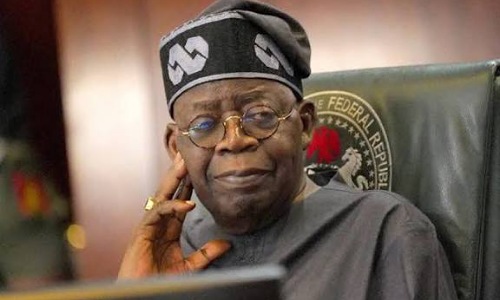
The Social Democratic Party (SDP) and the Inter-Party Advisory Council (IPAC) have disclosed details of their recent closed-door meeting with President Bola Tinubu, explaining that the engagement focused on strengthening Nigeria’s democratic process ahead of the 2027 general elections.
The clarification came amid speculation surrounding the meeting, which took place at the Presidential Villa in Abuja after leaders of several opposition parties attended an Iftar dinner hosted by the president earlier in the week.
ALSO READ: NNPC Secures Tinubu’s Approval for $20bn FID on Bonga Deepwater Project
Speaking during a gathering hosted in Abuja by the SDP’s former presidential candidate, Adewole Adebayo on Friday, the party’s National Chairman, Prof. Sadiq Gombe, said the meeting with Tinubu followed an official invitation from the Presidency and lasted about an hour.
According to Gombe, the discussion centred on the need to strengthen Nigeria’s electoral laws and restore public confidence in the country’s electoral process ahead of the 2027 polls.
He explained that the meeting provided an opportunity for party leaders to remind the president of the importance of conducting transparent, free, and credible elections.
Gombe noted that democracy can only thrive when governments listen to the concerns of citizens and ensure electoral processes that guarantee fairness and accountability.
The SDP chairman also expressed concern over growing voter apathy, pointing to the low turnout recorded in the recent Area Council election in the Federal Capital Territory.
He said the Abuja Municipal Area Council election witnessed only about seven per cent voter turnout, which he described as a clear sign that many Nigerians are losing confidence in the electoral system.
Gombe urged the government and members of the National Assembly to take urgent steps to review electoral laws and rebuild public trust in Nigeria’s democracy.
Also speaking, the National Chairman of IPAC, Dr. Yusuf Dantalle, said political parties used the meeting to raise concerns about aspects of proposed electoral reforms, particularly issues related to indirect primaries and the mandatory electronic transmission of results.
Dantalle explained that the parties appealed to the president to use his influence to encourage legislative review where necessary, noting that reforms should strengthen, rather than complicate, the democratic process.
He expressed optimism that Tinubu would consider the concerns raised and support necessary amendments that would improve the electoral system.
The IPAC chairman also called on the Independent National Electoral Commission (INEC) to strictly adhere to electoral guidelines as preparations for the next election cycle begin.
Earlier in his remarks, Adebayo cautioned political actors against turning the 2027 general elections into a do-or-die contest, stressing that the primary goal of democracy should be the progress and stability of Nigeria rather than personal political victories.
He urged leaders across political parties to encourage citizens to actively participate in the democratic process and ensure that elections are conducted peacefully and transparently.
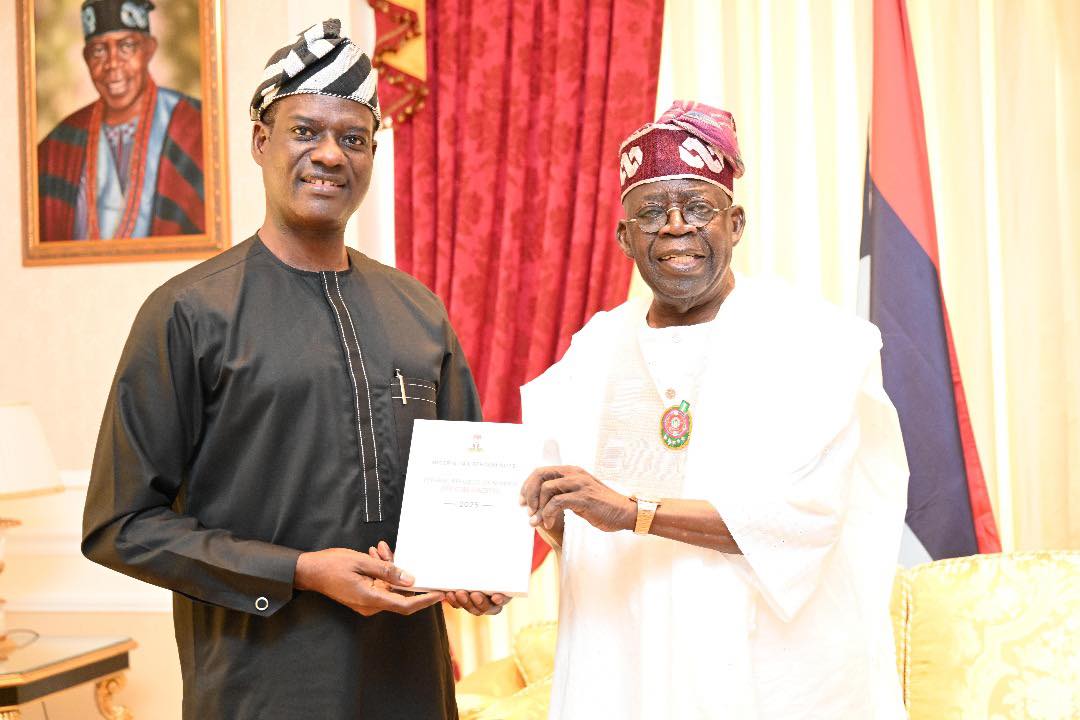
President Bola Tinubu and Mr. Taiwo Oyedele during his nomination on Wednesday.






Airfares Likely to Rise as Aviation Fuel Price Spikes by 80%

Shell Completes Turnaround Maintenance on FPSO, Resumes Production at Bonga

Sahara Group expands fleet with new 40,000 cbm LPG Carrier

NATO Shoots Down Third Iranian Missile in Turkey

Inside Tinubu’s Closed-Door Meeting With Opposition Leaders – SDP, IPAC Reveal Details

Defections Won’t Break PDP in Sokoto, Says Former Senator Gada

Trump’s Family Unveils New Cryptocurrency Platform

Reps Recommend 3-year Jail Term For Aviation minister

Dangote Cement Lights Up Benue Host Communities With CSR Initiatives

Senate Denies Receiving Petitions Against Tinubu’s Ambassadorial Nominees

Things To Know About Threads, Zuckerberg’s Twitter-like App
