
Other News
Military Continues Work With North African Countries

WASHINGTON – The Defense Department continues to work with nations in North Africa to promote security and increase stability in the region still feeling the effects of the Arab Spring, Amanda J. Dory, the deputy assistant secretary of defense for African affairs, told a Senate panel today.
Libya, Tunisia, Algeria and Morocco are confronting instability and the U.S. military is working to build or strengthen their police and military forces, Dory told the Senate Armed Services Subcommittee on Near eastern and South and Central Asian Affairs.
“Our strategic approach recognizes that developing strong and responsive defense institutions can support regional stability, allowing partner militaries to operate under civilian authority while respecting the rule of law and international human rights,” Dory said in prepared testimony.
The effects of the Arab Spring in North Africa continue to reverberate within the region and beyond its borders into the Sahelian states of sub-Saharan Africa, she said.
 Libya remains a key source of instability in North Africa and the Sahel. After the overthrow of Muammar Gadhafi, there is little government infrastructure inside Libya, Dory said, and certainly no tradition of democracy.
Violence is rampant in Libya and the Libyan government is too weak to control its borders and militias provide what security there is. Arms merchants are shipping Libyan weapons out of the country and these arms are fueling instability from Mali westward, Dory said.
“The Department of Defense is prioritizing its assistance to focus on building Libyan security capacity and on improving the Libyan government’s ability to counter terrorism, counter weapons proliferation and secure and destroy its chemical weapons stockpiles,” she said.
The United States will provide general-purpose-force military training for 5,000-8,000 Libyan personnel, Dory said.
“This training effort is intended to help the [Libyan] government build the military it requires to protect government institutions and maintain order,” she said.
The training of Libyan military personnel may begin next year in Bulgaria.
In Morocco, Algeria and Tunisia, DOD maintains close military-to-military ties with their military counterparts. All three are engaged in a security dialogue with the United States and “they share our goals of countering terrorism and enhancing cross-border security,” Dory said.
She added, “We engage with the three governments on a bilateral basis every 12-18 months to ensure our shared security goals are aligned and U.S. government security assistance is prioritized accordingly,”
But all three countries, she said, are feeling the effects of terrorism and growing violent extremism.
In Tunisia, the military deserves tremendous credit for supporting and protecting the population during the country’s democratic transition, Dory said. U.S. assistance to the security sector focuses on counterterrorism support, border security training, she said, and a continuation of long-standing U.S. Foreign Military Financing and International Military Education and Training programs.
Algeria remains a critical security partner in countering regional violent extremist organizations, Dory said.
“Its strategic location in the Maghreb, and its long history combating domestic terrorism and violent extremism, make Algeria a linchpin in the struggle against al-Qaeda in the Islamic Maghreb and its affiliates and bringing stability to the region,” she said. “The January 2013 terrorist attack against the In-Amenas oil facility highlighted the growing transnational threats in the region.”
DOD continues to expand engagement with Algeria in cooperation with other U.S. government departments and agencies across a range of activities, to include information sharing and exercises, Dory said.
Morocco’s King Mohammed VI, she said, has recognized for years that democratic political and economic reforms are needed in his country.
“During the Arab Awakening, he continued to respond to popular demands for change from within Moroccan society,” Dory said of Morocco’s king. “The United States and the Kingdom of Morocco share a long history of bilateral relations that is enduring and expansive.”
A major non-NATO ally, Morocco “has been a strong partner in the struggle against terrorism, and our bilateral military and political cooperation is growing,” she said.

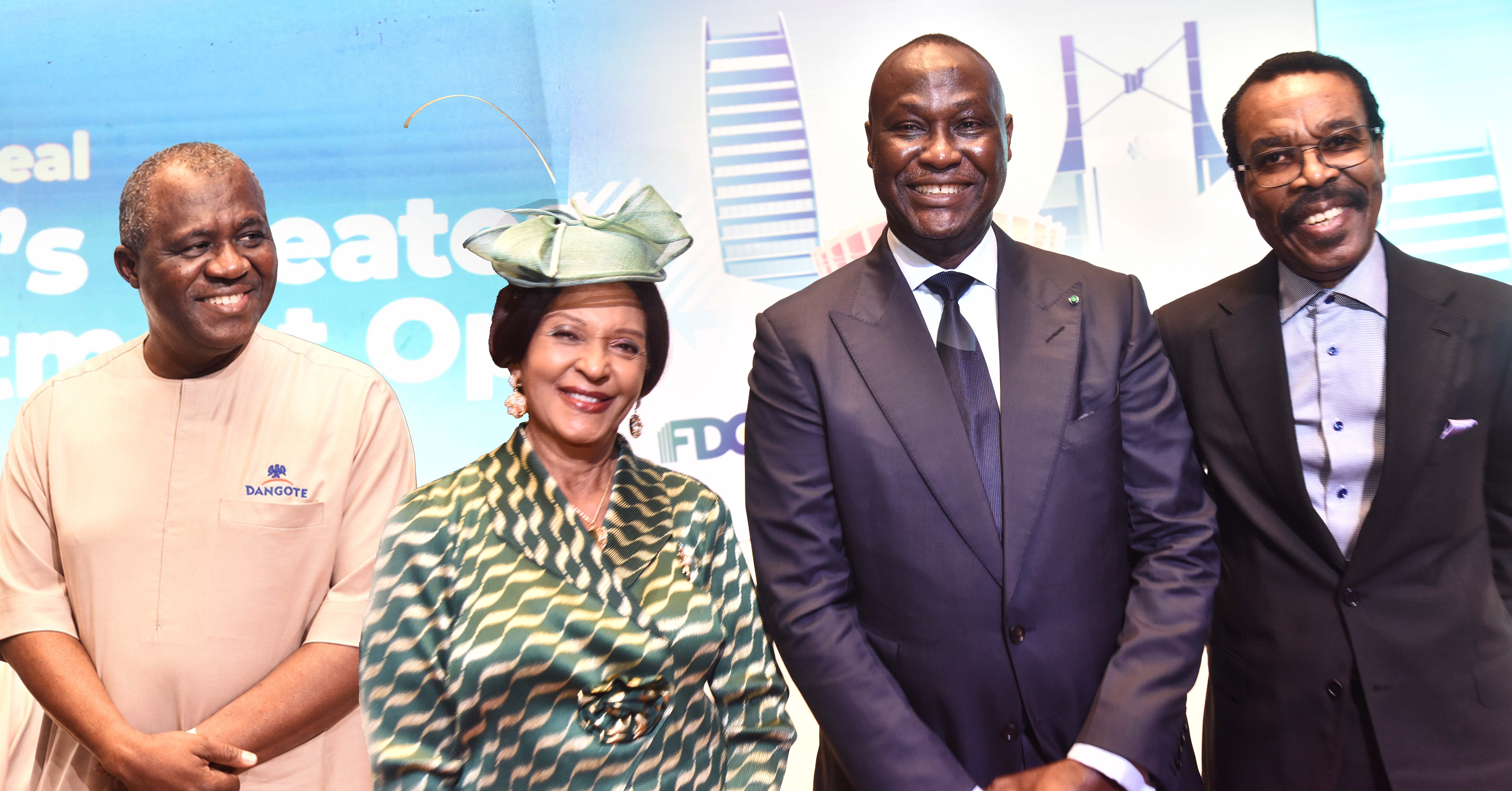
Leading economists, financial experts and industry stakeholders have described the Dangote Group’s investments as major drivers of industrialisation and economic transformation across Nigeria and Africa.
The experts cited the Group’s impact on job creation, import substitution, foreign exchange conservation and economic competitiveness.
They voiced their thoughts at the Lagos Economic Summit themed “The Real Deal: Africa’s Greatest Investment Opportunity,” where they urged governments to implement policies that strengthen local industries and accelerate economic diversification.
President and Chief Executive Officer of the Africa Finance Corporation (AFC), Samaila Zubairu, commended the Dangote Group’s sustained investments across Africa, describing them as critical to unlocking the continent’s economic potential.
He noted that while recent economic reforms have improved foreign exchange stability, strengthened reserves and eased inflationary pressures, the focus must now shift to growth in industry, productivity and employment.
READ ALSO: NMDPRA Shares July Domestic Cooking Gas Supply Details
Also speaking, Chief Executive Officer of the Centre for the Promotion of Private Enterprise (CPPE), Muda Yusuf, said industrialisation remains the most effective path to sustainable economic development.
He called for better alignment of trade and industrial policies, stressing that local manufacturers require strategic support to compete effectively and drive broader economic benefits.
Founder and CEO of Nairametrics, Ugodre Obi-Chukwu, said Africa’s growing population presents a significant industrial opportunity, noting that investments such as the Dangote Refinery are helping to retain capital within the continent while strengthening local production capacity.
In his keynote address, Managing Director of Financial Derivatives Company Limited, Bismarck Rewane, said Nigeria is gradually transitioning from a consumption-led economy to one driven by investment and production.
He added that sustained investments in productive sectors will continue to stimulate growth, create jobs and improve living standards.
Participants at the summit also advocated stronger credit infrastructure, improved national identification systems and increased investment in skills development to enhance the productivity and global competitiveness of Africa’s growing youth population.
Photo Caption: From Left – Chief Economist, Dangote Industries Limited, Dr. Hassan Mahmud; Lady Maiden Alex-Ibru; Chairman of Occasion/Special Guest of Honour, Samaila Zubairu; Key Note Speaker Session 1, Bismarck Rewane; during the Real Deal: Africa’s Greatest Investment Opportunity, Sponsored by Dangote Industry Limited in Lagos on Thursday 3, September 2026.

Social media critic Martins Vincent Otse, popularly known as VeryDarkMan (VDM), has released what he described as his first piece of evidence after the Nigeria Police Force challenged him to substantiate his allegations that some police officers allegedly collaborate with kidnappers.
VDM released a video on his Instagram handle on Thursday, August 27, 2026, shortly after the police invited him to provide evidence supporting the claims he made at the 66th Annual General Conference of the Nigerian Bar Association (NBA) in Port Harcourt.
SEE MORE: ‘Provide Evidence’ — Police React to VDM’s Explosive Kidnap Allegation
The activist captioned the video: “My evidence number 1.”
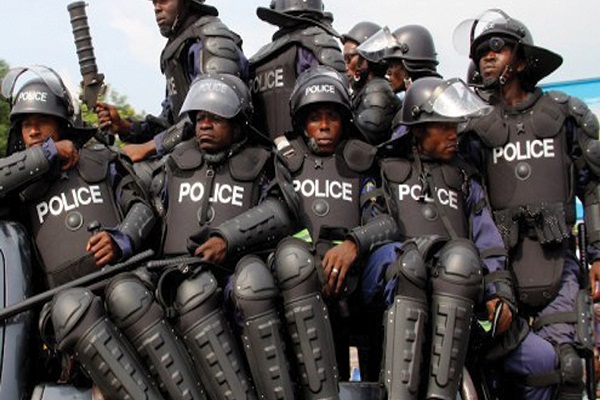
Recalled that VDM, who was a panellist at the NBA conference on Tuesday, had alleged that some police officers manning checkpoints along major highways provide kidnappers and bandits with information about travellers.
According to him, the officers allegedly relay details about the identities and movements of travellers to criminal groups, thereby facilitating abductions for ransom.
The allegation triggered a response from the Nigeria Police Force, which denied the claim and challenged VDM to substantiate his allegations.
The police invitation came as the force sought evidence to support the serious claims made by the social media critic.
In response, VDM released the video, describing it as his “evidence number 1”, signalling that he may provide further material to support his allegations.
The development has continued to attract attention, with the controversy placing renewed focus on allegations of possible collaboration between security personnel and criminal groups involved in kidnapping and banditry.
A former Permanent Secretary of the Federal Civil Service Commission, Goke Adeboroye, has questioned how an alleged fake presidential agency was able to gain access to government facilities, budgetary provisions and office space without being detected.
Adeboroye spoke on Channels Television’s Inside Sources following the discovery of the alleged Presidential Foreign Intervention Promotion Council by the Independent Corrupt Practices and Other Related Offences Commission.
SEE MORE: $1m Extortion Scheme: Fake EFCC Officials Arrested In Plot Against Former NPA MD
The ICPC had said the purported agency had no legal basis and operated with forged appointment letters and other official documents.
The commission also said its alleged Director-General, Adeniyi Matthew, was never appointed by the Federal Government.
The anti-corruption agency further disclosed that its investigation into the PFIPC led to the discovery of the National Brands Development and Made in Nigeria Special Project Office, which it alleged was operating within the Office of the Secretary to the Government of the Federation without proper authorisation.
Reacting to the development, Adeboroye described the situation as a major failure of the government’s bureaucratic system.
“The exposure of that fake presidential agency is a major lapse to say that somebody can actually come into the system, get in on the budget, get offices, and all of that,” he said.
The former permanent secretary identified weaknesses in the bureaucratic structures supporting key offices in the Presidency, including the Office of the Secretary to the Government of the Federation, the Office of the Chief of Staff to the President and the Office of the Head of the Civil Service.
According to him, the bureaucracy in these offices should be strong enough to support the President’s policies while also ensuring that fraudulent or unlawful directives do not gain effect.
“The bureaucracy in those offices are not strong enough to be able to help the President drive the vision at the speed and with the efficiency that he wants,” Adeboroye said.
He also stressed the importance of having professional and experienced civil servants who can scrutinise directives issued by political office holders.
Adeboroye said civil servants should be able to recognise suspicious communications purportedly coming from the Presidency because they are familiar with the official channels through which presidential approvals are transmitted.
“Whether the person brings fake or whatever, you as the civil servant should be trained to be able to detect what should be a genuine communication from the State House. You work in that system,” he said.
He explained that presidential approvals usually pass through established channels involving senior government officials.
“When the President approves anything, he always minutes to about three people. He goes to the Chief of Staff, he goes to SGF, and if he has something to do with civil service, the Head of Service will have it.”
Adeboroye recalled an incident from his time as Permanent Secretary in the Ministry of Interior involving a former governor who claimed to have presidential approval for a diplomatic passport.
He said the then Comptroller-General of the Nigeria Immigration Service, Ude, cross-checked the purported approval before taking action and subsequently sought clarification on whether the former governor, who was no longer in office, should receive the diplomatic passport.
“That’s somebody using the experience of the system to ensure that you are not outplayed,” he said.
The former permanent secretary said similar verification could have been carried out in the alleged fake agency case through a simple phone call to the relevant government offices.
“So we would have expected that on a simple phone call, when I was working in the office of Ekaite, Secretary of Government, I could pick a phone, call any minister, call this, it’s just a phone call from the office of whoever to say, Chief of Staff, is this true? And that would have actually corrected it,” he said.
Meanwhile, the controversy surrounding the National Brands Development and Made in Nigeria Special Project Office has continued.
The chairman of the project office, Musa Aliyu, had alleged that the office was allocated space within the OSGF premises without presidential authorisation.
However, the National Coordinator and Executive Director of the project office, George Nwabueze, denied the allegation, insisting that the office is a project office under the OSGF and has existed for 16 years.
Nwabueze also produced an appointment letter purportedly issued by the OSGF, conveying approval of his appointment as National Coordinator/Executive Director of the Made in Nigeria Project Office.
The conflicting claims have continued to raise questions about the authorisation and status of the project office and the alleged involvement of public officials in its operations.






2027: Yilwatda Lists Tinubu’s Projects, Appointments as Reasons for North Central Support

Domestic Flight delays, Cancellations Compound Air Travellers’ Woes

2027 Election Might Witness Voter-Apathy as Registered Voters Shun PVC Collection

TCN Restores Power Supply to Katampe Substation After Shiroro Line Fault

2027 Elections: FG Warns Politicians Against Promises on Fuel Subsidy

PETROAN Expects Fuel Discount to Combat Inflation

Trump’s Family Unveils New Cryptocurrency Platform

Senate Denies Receiving Petitions Against Tinubu’s Ambassadorial Nominees

Dangote Cement Lights Up Benue Host Communities With CSR Initiatives

Reps Recommend 3-year Jail Term For Aviation minister

Tems Sets New Record On Billboard Hot 100 Chart
