
Business
More sanctions imposed on Russia over Ukraine crisis


BRUSSELS/MOSCOW – The European Union announced asset freezes and travel bans on 15 Russians and Ukrainians over Moscow’s actions in Ukraine, but the measures were seen as less aggressive than sanctions imposed this week by the United States.
In Ukraine’s eastern city of Luhansk, hundreds of pro-Russian separatists stormed the regional government headquarters, unopposed by police, and the Ukrainian government said it had information that they also planned to seize the local television center.
The EU list published on Tuesday included senior Russian politicians but did not extend to companies, several of which were singled out by Washington when it extended its sanctions list on Monday.
Moscow immediately denounced the new EU measures, saying the Europeans were simply doing Washington’s bidding and should be ashamed of themselves. A senior Russian politician said Moscow was working on measures to counter the new sanctions.
But while Russian stock markets rallied after the announcement of less stringent EU sanctions than were expected, there were increasing signs that the Ukraine crisis was having an effect on key parts of the Russian economy.
Russian natural gas exporter Gazprom said further sanctions could disrupt gas sales to Europe and hit its business, while a Russian minister said U.S. restrictions on high-tech exports to Russia would be a blow to Russian companies in the sector.
The International Monetary Fund said it was preparing to cut its forecasts for Russian growth for the second time in less than a month. U.S. credit card firm Visa said it would suspend network services to two Russian banks sanctioned on Monday by the United States.
Those targeted by the EU included Russian deputy prime minister Dmitry Kozak, Ludmila Shvetsova, a deputy speaker of the lower house of parliament, Valery Gerasimov, chief of staff of Russia’s armed forces, as well as separatist leaders in Ukraine.
But the list did not include the heads of Russian energy giants such as Rosneft’s Igor Sechin, who had been included in the latest U.S. sanctions.
TERRITORIAL INTEGRITY
The decision brings to 48 the number of people that the EU has put under sanctions for actions it says have undermined Ukraine’s territorial integrity.
Russia annexed the Crimea region after Ukraine’s pro-Moscow president was ousted in February by protesters demanding closer links with Europe. Kiev and the West accuse Russia of stirring up a separatist campaign in the east, a charge Moscow denies.
On Monday, the United States imposed sanctions on seven Russians and 17 companies linked to Russian President Vladimir Putin.
The United States has been more aggressive in the penalties it has imposed on Russia than has the European Union, which depends heavily on Russia for energy and has close trading links.
The Russian Foreign Ministry said the EU sanctions would not ease tensions in Ukraine, where the Kiev government is struggling to rein in pro-Russian separatists.
“Instead of forcing the Kiev clique to sit at the table with southeastern Ukraine to negotiate the future structure of the country, our partners are doing Washington’s bidding with new unfriendly gestures aimed at Russia,” the ministry said.
Despite a Ukrainian military operation to contain them, pro-Russian militants have seized public buildings in about a dozen towns and cities in Russian-speaking eastern and southeastern regions of Ukraine.
The separatists’ actions have led to accusations in the West and in Kiev that Russia is planning to annex those areas as it did with the Crimean peninsula.
Russian Deputy Foreign Minister Sergei Ryabkov denied that on Tuesday, telling a Russian news website that Moscow was “not at all inclined to repeat the so-called Crimea scenario in southeastern Ukraine”.
Russian has massed tens of thousands of troops near the border with Ukraine. A NATO official said on Tuesday the alliance had seen no sign that they were withdrawing, despite a Russian statement that the troops had returned to their permanent positions.
SANCTIONS EFFECT
Western countries say sanctions are already having an effect on Russia by scaring investors into pulling out capital. The central bank has raised interest rates to support the ruble, and Russian firms are finding it harder to raise funds.
Gazprom, headed by Alexei Miller, an ally of Putin, and its managers have not been hit by U.S. or EU sanctions.
But the company, which meets a sizeable amount of Europe’s demand for gas, said a pricing row with the new government in Kiev could potentially lead to a disruption of its gas exports to the rest of Europe through pipelines crossing Ukraine.
“An expansion of the U.S., EU and other sanctions programs could adversely impact operations and the financial condition of the Gazprom Group,” it said in a report following publication of its 2013 financial results.
Long seen as a tool of Russian foreign policy, Gazprom has threatened to cut supplies to Ukraine over an unpaid gas bill it puts at more than $2 billion and warned this could lead to reduced deliveries to clients in Europe.
MILITARY OBSERVERS
In eastern Ukraine, the self-declared mayor of a separatist-held town said he would discuss the release of detained military observers only if the EU dropped sanctions against rebel leaders.
Vyacheslav Ponomaryov, the de facto mayor of Slaviansk, told Interfax news agency the imposition of visa bans and asset freezes against Denis Pushilin, leader of the self-styled People’s Republic of Donetsk, and Andrei Purgin, another leader in the eastern region, “was not conducive to dialogue”.
The six observers were in Ukraine under the auspices of the Organization for Security and Cooperation in Europe, a democracy watchdog. They were detained last week after separatists said they had found a Ukrainian spy with them.
The mayor of eastern Ukraine’s biggest city was in a stable condition on Tuesday in a hospital in Israel, where he was flown after an assassination attempt.
Gennady Kernes, one of Ukraine’s most prominent Jewish politicians, was shot in the back on Monday in Kharkiv, and underwent surgery in Ukraine on Monday. Officials had said his injuries were life-threatening.
– REUTERS

Nigeria’s economic fortune is benefiting from the Middle East crisis, as the impact of capital inflows from stronger crude oil earnings has seen her foreign reserves climb to record $53.1 billion, beating the $51.04 billion year-end target.
Data available on the Central Bank of Nigeria’s (CBN) website indicated that the reserves closed at $53.1 billion on August 24, which is the highest level in almost 18 years.
Any analyses of the growth shows that the difference in reserves position places the Nigerian economy in good stead, because it can cover over 12 months import.
It is noteworthy that Nigeria’s external reserves fuel the CBN’s capacity to support the local currency and meet external obligations, have continued to rise steadily, since the face-off between the United States and Iran.
Further analysis of the data displayed by the CBN showed that the liquid portion of the external reserves stood at $52.5 billion.
Biztellers reports that Brent crude traded around $87 per barrel, within the week, well above Nigeria’s 2026 federal budget benchmark of $64.85.
READ ALSO: Shell Endorses Regional Action Plan for Safe Helicopter Services
With the Middle East crisis not showing signs of abating, analysts believe the price rebound would largely bolster Nigeria’s fiscal revenues.
The line of thought is popular among those who know, because as a crude oil exporter, Nigeria will continue to earn more petrodollars, which they argue would support the domestic currency – naira’s stability, while pumping the volume of external reserves.
In its economic projections for 2026, the CBN targeted stronger oil earnings, foreign exchange market reforms and improved external capital inflows to achieve the year-end reserves projection.
According to analysts, the current reserves position reinforces the steady growth in Nigeria’s external buffers.
The founder/Chief Executive Officer of the Centre for the Promotion of Public Enterprise (CPPE), Dr Muda Yusuf, earlier hinted at a positive outlook for Nigeria’s external reserves as he does not see anything derailing the forex and fiscal reforms that have brought about stability and improvement in external reserves, as reported by The Nation.
Yusuf said: “Well, the outlook for me is positive because I don’t see anything derailing these forex reforms, fuel subsidy etc. It is these reforms that have brought about stability.”
The CBN data further showed that Nigeria’s external reserves have maintained a steady upward surge in recent months.
The reserves started June at $49.80 billion and crossed the $50 billion mark by June 5, reaching $50.12 billion.
On June 15, reserves had increased further to $50.81 billion before rising to the current position. The reserves stood at $51.9 billion on July 31, and continued.
The sustained increase reflects stronger foreign exchange inflows and improved liquidity conditions in the country’s external sector.
The CBN Governor, Olayemi Cardoso, said: “This strong buffer continues to reinforce investor confidence in the Nigerian economy and support exchange rate stability.”
The CBN’s decision to clear over $7 billion unsettled FX backlogs raised investors’ confidence in the economy, supporting dollar inflows and foreign reserves accretion, Cardoso added.
The CBN boss had explained that although he had no idea where the fund for the backlog clearance would come from, when he assumed office, he believed it was the right thing to do, and gave investors his word.
He said: “Credibility is at the heart of any central bank. If you don’t have credibility, people do not trust you and they do not invest in your economy. When I took office, I made a promise we would pay the backlog, the verifiable backlog of monies that were owed by Nigeria to third parties.
“And it was, at the time, estimated at over $7 billion US dollars. And to be honest with you, I had no idea how I was going to do it, but I just felt it was not something to be negotiated.”
Cardoso explained that Nigeria needed to ensure that its integrity is maintained. Analysts believe the higher reserve level could enhance the CBN’s capacity to support exchange rate stability and meet external obligations.
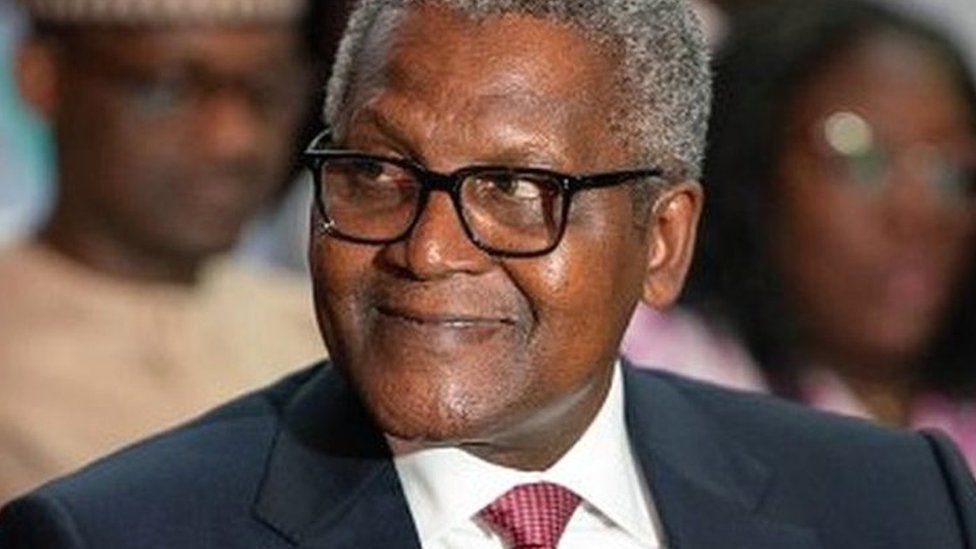
Up to 30% equity in the upcoming Dangote Refinery in Kenya, has been placed on the table for East African countries, which makes about $1.5 billion worth of the planned project available to regional investors.
David Ndii, Kenyan President William Ruto’s economic adviser, disclosed this on Thursday at a capital markets forum in Nairobi, where he said Kenya would take a 10% stake while Ethiopia and Rwanda had also expressed interest.
Dangote’s planned refinery is expected to be developed in Lamu, a coastal town in southeastern Kenya, though the project was initially proposed for Tanga in Tanzania.
According to the billionaire industrialist, the decision to move the proposed location to Kenya was informed by commercial and technical considerations.
Ndii disclosed that Kenya’s proposed 10% participation would be worth approximately $500 million.
READ ALSO: Shell Endorses Regional Action Plan for Safe Helicopter Services
He said the combined regional participation could amount to about $1.5 billion, with Dangote prepared to support the project if some participating countries are unable to commit as crude off-takers.
“The total for the region is about $1.5 billion,” he said. “I don’t actually see a challenge in doing that, and if some of them are not off-taking we will backstop.”
The proposed regional participation would give East African countries a direct equity interest in a major energy infrastructure project while potentially securing access to refined petroleum products for participating markets.
The United Nations Geoscheme (UNG) for Africa defines Eastern Africa as comprising 18 sovereign countries, alongside two French overseas territories, meaning the proposed 30% allocation could potentially involve a broader regional investor base beyond Kenya, Ethiopia and Rwanda.
The Nigerian authorities have been called upon to focus on strengthening domestic refining capacity.
The Petroleum and Natural Gas Senior Staff Association of Nigeria (PENGASSAN) made the call in a communiqué issued at the end of the three-day PENGASSAN Energy and Labour Summit (PEALS 2026).
It stressed the need for adequate protection for refineries operating in the country.
The PENGASSAN said Nigeria must reduce the economic inefficiency of exporting crude oil while importing significant volumes of refined petroleum products by creating an environment that supports domestic refining and other value‑adding activities.
The communiqué, signed by the union President, Festus Osifo, and General Secretary, Jerry Amah, stressed the need to protect refineries, including Dangote Refinery and Waltersmith Refinery.
The association said the expansion would enable Nigeria to retain a greater share of the value generated from its petroleum resources while creating jobs, conserving foreign exchange and stimulating industrial development. PENGASSAN linked the growth to wider opportunities in petrochemicals, gas processing and other downstream activities.
READ ALSO: Umar Cautions Against Irregular Policies in Nigeria’s Oil Industry
The communiqué reads in part: “The summit called for sustained policies and investments to expand Nigeria’s domestic refining capacity and reduce the economic inefficiency of exporting crude oil while importing significant volumes of refined petroleum products. The need to protect refineries (such as Dangote Refinery, Waltersmith Refinery, etc.) within Nigeria’s jurisdiction was emphasised.
“Nigeria must progressively retain more value from its petroleum resources through domestic refining, petrochemicals, gas processing and other value‑adding activities capable of generating employment, conserving foreign exchange and stimulating industrial growth.
“Ultimately, the strength of Nigeria’s oil and gas industry will not be measured merely by the resources beneath the ground, but by the projects delivered, the value created, the Nigerian capabilities developed, the decent jobs sustained and the prosperity generated for the Nigerian people.”
The association also warned that abrupt policy changes, overlapping mandates, repetitive approvals and conflicting directives increase the cost of doing business and weaken Nigeria’s competitiveness for global energy capital.
The PENGASSAN called for faster regulatory approvals, digitalised processes and clearer timelines, arguing that the effectiveness of regulation should be measured by its impact on investment, production, government revenue, job creation and national value rather than simply by the number of licences or approvals issued.
On gas, the PENGASSAN advocated an integrated approach to developing Nigeria’s more than 215 trillion cubic feet of proven reserves, including investments in processing facilities, pipelines, storage, LNG, LPG and CNG infrastructure. It said gas should be deployed more aggressively for power generation, manufacturing, transportation, fertiliser and petrochemical production.
The association also urged stronger protection of workers’ rights, occupational safety and employment during mergers, acquisitions, divestments and asset transfers, saying sustainable investment requires skilled and fairly treated workers and that increased production must not come at the expense of workers’ lives and wellbeing.
In addition, the PENGASSAN said the next phase of Nigeria’s petroleum industry must focus on execution with measurable targets and clearly assigned responsibilities to ensure policies translate into projects, production, investment and sustainable employment.






Nigeria Beats 2026 Foreign Reserves Target, Hits $53.1b

Dangote Dangles 30% of $17 Billion Refinery Before East Africans

Shell Endorses Regional Action Plan for Safe Helicopter Services

Ikire Killings: Adeleke Establishes Commission for Coroner Inquiry by Executive Order

Tinubu Mourns Eagle Online Publisher, Dotun Oladipo

Akpabio Mourns Dotun Oladipo

Trump’s Family Unveils New Cryptocurrency Platform

Senate Denies Receiving Petitions Against Tinubu’s Ambassadorial Nominees

Dangote Cement Lights Up Benue Host Communities With CSR Initiatives

Reps Recommend 3-year Jail Term For Aviation minister

Tems Sets New Record On Billboard Hot 100 Chart
