
Other News
MSF provides medical and humanitarian aid to refugees from South Sudan


LONDON – Every day, more than 1,000 South Sudanese refugees are fleeing the fighting in their home country, crossing into Kenya, Ethiopia and Uganda, where emergency teams from Médecins Sans Frontières/Doctors Without Borders (MSF) are providing medical and humanitarian aid.
In just one month, more than 89,000 people, mostly women and children, have been forced to leave their homes behind, often making long journeys on foot, by bus or by truck, taking with them only what they can carry. Some families arrive at the border with nothing; many are in need of food, water, shelter and medical care.
“Most of the refugees in Uganda fled the fighting in Bor, and walked for four or five days to reach Juba, where they took a bus or truck to the border,” says Ruben Pottier, MSF’s head of mission in Uganda, which is now home to 46,000 South Sudanese refugees. “It really strikes you when you walk around the camp that there are very few men,” says Pottier.
 More than 25,000 refugees are crammed into the Dzaipi settlement, a camp built for just 3,000 people. It is hot and dusty, and living conditions are terrible for those who are sheltering under the trees or inside a school. “We are treating serious cases of malaria, diarrhoea, and respiratory tract infections,” says MSF’s Dr Fredericke Dumont. “There are women suffering complications during pregnancy and some cases of malnutrition.”
20,000 people from Dziapi are set to be accommodated in a permanent camp in Numanzi, and there are plans to build three more camps in the coming weeks. MSF is currently setting up water and sanitation facilities, running inpatient and outpatient services, providing maternity care, vaccinations and nutrition support to refugees in Uganda. As new camps are built, MSF will expand its activities.
“Because there are now large numbers of people living in a region that has frequent epidemics of cholera and meningitis, we will be closely monitoring the health situation in the camps,” says Pottier.
Around 10,000 South Sudanese refugees have fled to neighbouring Kenya, where MSF is working at the Nadapal border crossing. Some arrive tired, hungry and dehydrated; others have sold what few personal belongings they were carrying in order to pay for transport.
Tok Maker Tot, 20, fled Juba with his mother and ten siblings after witnessing the shooting of some students at his university. His father stayed behind in the city. “Two students from our class were shot,” says Tot. “All the students have now fled. Those who have money have gone to Nairobi, others went to Kampala, others went to Ethiopia. But we, who do not have anything, are trying to go to Kakuma [a refugee camp in northwestern Kenya].”
“When people cross the border there is relief and often hope,” says Guilhem Molinie, MSF’s head of mission in Kenya. “But you can see that people are used to tough realities. At the border I met a refugee who was pleading with officials to let him back into South Sudan. He wanted to find his mother, who was blind. I met another family who had been so scared before they left home that they had hidden under a bed for seven days.”
MSF is working with the Kenyan Ministry of Health to screen all refugees arriving at Nadapal for measles. So far, the team has screened 6000 people, and vaccinated more than 1000 children against measles and polio. Seven suspected cases of measles have been referred to the local hospital for treatment. “With cases of measles reported at the camps in Juba, where most of these refugees transited through, it is of the utmost importance that we do all that we can to prevent an outbreak in Kenya” says Molinie.
As well as providing medical care, MSF has distributed more than 11,000 litres of water to the refugees in Nadapal.
In neighbouring Ethiopia, in the coming weeks MSF will provide outpatient services, maternity care, immunisations and nutrition care to 5,500 refugees who have settled temporarily in Tirgol, and will continue to provide these services once they are moved to a permanent camp in Leichure, which is currently under construction.

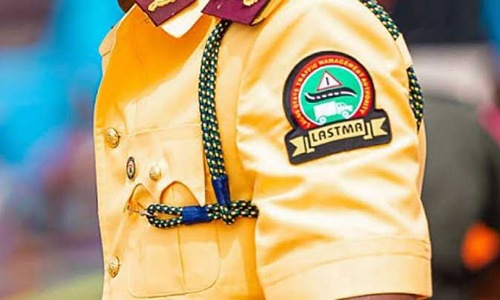
The Lagos State Traffic Management Authority (LASTMA) has alerted motorists to traffic delays along Ogunnusi Road towards Ojodu-Berger due to ongoing rehabilitation work.
LASTMA disclosed this in a post on its official X account on Sunday, stating that the road rehabilitation was being carried out by the Lagos State Public Works Corporation (LSPWC).
According to the agency, “The ongoing work is affecting traffic flow, with vehicles moving at a slower pace in both directions.”
ALSO READ: Chaos On Lagos-Ibadan Expressway As LASTMA Shuts Otedola Bridge
To ease the situation, LASTMA said a contraflow arrangement had been introduced for motorists travelling from Omole Junction towards Vis Junction.
“A contraflow arrangement is in place for vehicles coming from Omole Junction towards Vis Junction to facilitate the movement of traffic,” the agency stated.
LASTMA added that its personnel had been deployed to manage traffic and ensure the continuous movement of vehicles around the affected area.
“Our personnel are on ground managing the traffic situation and ensuring the continuous flow of vehicular movement,” the agency said.
The traffic management authority advised motorists to remain patient and exercise caution while the rehabilitation work continues.
“Motorists are advised to exercise patience and drive with caution while the rehabilitation work continues,” LASTMA stated.


Leading economists, financial experts and industry stakeholders have described the Dangote Group’s investments as major drivers of industrialisation and economic transformation across Nigeria and Africa.
The experts cited the Group’s impact on job creation, import substitution, foreign exchange conservation and economic competitiveness.
They voiced their thoughts at the Lagos Economic Summit themed “The Real Deal: Africa’s Greatest Investment Opportunity,” where they urged governments to implement policies that strengthen local industries and accelerate economic diversification.
President and Chief Executive Officer of the Africa Finance Corporation (AFC), Samaila Zubairu, commended the Dangote Group’s sustained investments across Africa, describing them as critical to unlocking the continent’s economic potential.
He noted that while recent economic reforms have improved foreign exchange stability, strengthened reserves and eased inflationary pressures, the focus must now shift to growth in industry, productivity and employment.
READ ALSO: NMDPRA Shares July Domestic Cooking Gas Supply Details
Also speaking, Chief Executive Officer of the Centre for the Promotion of Private Enterprise (CPPE), Muda Yusuf, said industrialisation remains the most effective path to sustainable economic development.
He called for better alignment of trade and industrial policies, stressing that local manufacturers require strategic support to compete effectively and drive broader economic benefits.
Founder and CEO of Nairametrics, Ugodre Obi-Chukwu, said Africa’s growing population presents a significant industrial opportunity, noting that investments such as the Dangote Refinery are helping to retain capital within the continent while strengthening local production capacity.
In his keynote address, Managing Director of Financial Derivatives Company Limited, Bismarck Rewane, said Nigeria is gradually transitioning from a consumption-led economy to one driven by investment and production.
He added that sustained investments in productive sectors will continue to stimulate growth, create jobs and improve living standards.
Participants at the summit also advocated stronger credit infrastructure, improved national identification systems and increased investment in skills development to enhance the productivity and global competitiveness of Africa’s growing youth population.
Photo Caption: From Left – Chief Economist, Dangote Industries Limited, Dr. Hassan Mahmud; Lady Maiden Alex-Ibru; Chairman of Occasion/Special Guest of Honour, Samaila Zubairu; Key Note Speaker Session 1, Bismarck Rewane; during the Real Deal: Africa’s Greatest Investment Opportunity, Sponsored by Dangote Industry Limited in Lagos on Thursday 3, September 2026.
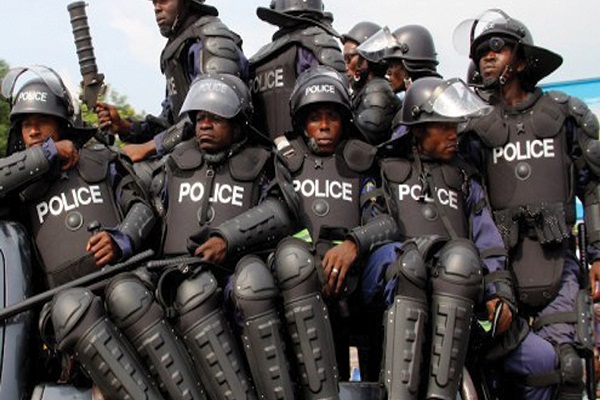
Social media critic Martins Vincent Otse, popularly known as VeryDarkMan (VDM), has released what he described as his first piece of evidence after the Nigeria Police Force challenged him to substantiate his allegations that some police officers allegedly collaborate with kidnappers.
VDM released a video on his Instagram handle on Thursday, August 27, 2026, shortly after the police invited him to provide evidence supporting the claims he made at the 66th Annual General Conference of the Nigerian Bar Association (NBA) in Port Harcourt.
SEE MORE: ‘Provide Evidence’ — Police React to VDM’s Explosive Kidnap Allegation
The activist captioned the video: “My evidence number 1.”
Recalled that VDM, who was a panellist at the NBA conference on Tuesday, had alleged that some police officers manning checkpoints along major highways provide kidnappers and bandits with information about travellers.
According to him, the officers allegedly relay details about the identities and movements of travellers to criminal groups, thereby facilitating abductions for ransom.
The allegation triggered a response from the Nigeria Police Force, which denied the claim and challenged VDM to substantiate his allegations.
The police invitation came as the force sought evidence to support the serious claims made by the social media critic.
In response, VDM released the video, describing it as his “evidence number 1”, signalling that he may provide further material to support his allegations.
The development has continued to attract attention, with the controversy placing renewed focus on allegations of possible collaboration between security personnel and criminal groups involved in kidnapping and banditry.





FG Withdraws Charges Against ‘Fake Agency’ DG, Adeniyi Adeyemi

Shell Identifies Keys to Nigeria’s Energy Future

Nigeria Records Biggest Rise in Multidimensional Poverty Among Five Countries – UN

Katsina Students Get ₦689.79m Bursary as Gov Radda Doubles Allowances
DOJ Confirms Federal Criminal Investigation After Agents Raid Ilhan Omar’s Home

Peter Obi Slams Tinubu Over ₦7.7tn Debt Interest Against ₦6.2tn Revenue

Trump’s Family Unveils New Cryptocurrency Platform

Senate Denies Receiving Petitions Against Tinubu’s Ambassadorial Nominees

Dangote Cement Lights Up Benue Host Communities With CSR Initiatives

Reps Recommend 3-year Jail Term For Aviation minister

Tems Sets New Record On Billboard Hot 100 Chart
