
NEWS
NCDMB Unveils Procedures For Implementation Of Presidential Directive on Local Content, Highlights Recent Accomplishments

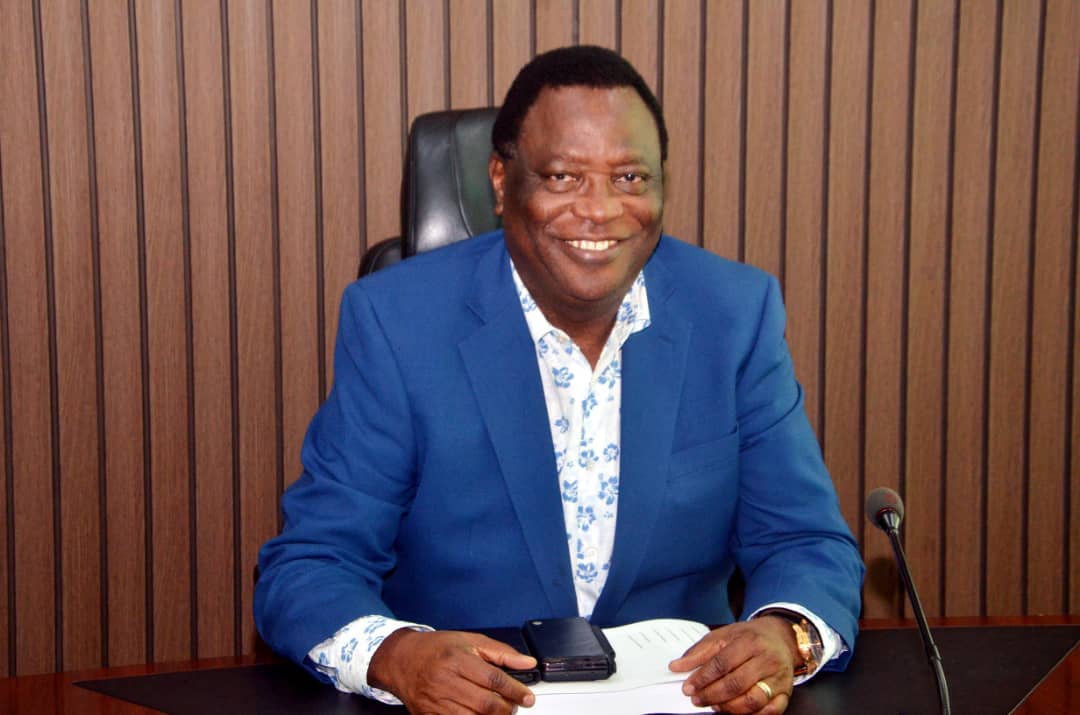
The Executive Secretary, Nigerian Content Development and Monitoring Board (NCDMB), Engr. Felix Omatsola Ogbe, on Monday in Abuja hailed the Presidential Directive on Local Content Compliance Requirements as crucial for enhanced competitiveness and mitigation of risks in regard to unqualified contractors, just as he unveiled five focal areas for implementation of the policy initiative.
The Executive Secretary spoke at the Nigerian Content Seminar, the opening day of the Nigerian Oil and Gas (NOG) Energy Conference, in Abuja.
The NCDMB boss listed the areas as ‘Promoting the Utilisation/Growth of In-country Capacities,’ ‘Enhancing the Cost Competitiveness of Oil and Gas Projects,’ ‘Non-inclusion of Intermediary Entities Lacking the Essential Capacity to Perform from the Nigerian Content Plan (NCP),’ ‘Approval of Nigerian Content Plan (which consists of contractors that meet the legal definition of Nigerian companies and demonstrate capacity to execute projects within Nigeria),’ and ensuring that ‘Entities acting solely as intermediaries, with no demonstrable capacity to execute the project or activity, shall not be approved.’
Engr. Ogbe assured that under the first focal area, ‘Promoting the Utilisation/Growth of In-country Capacities,’ the Board would continue to leverage its existing processes “to assess and verify the capacity of companies, facilitating and carrying out in-country capacity audits in collaboration with all relevant stakeholders.”
On enhancement of cost competitiveness of oil and gas projects, he said, among other activities operators in the oil and gas industry would only be permitted to source capacities out-of-country “only after in-country capacity gaps have been identified.”
In regard to the third focal area, namely, ‘Non-inclusion of Intermediaries Lacking the Essential Capacity,’ Engr. Ogbe stated that the “Tender opportunity’s pre-qualification and technical evaluation phases” would be used to eliminate entities so identified as incapable of performing.
Explaining the Board’s procedure in respect of ‘Approval of Nigerian Content Plan (NCP),’ he noted that international players’ participation would be deemed appropriate only “when the necessary Nigerian Content level is unavailable locally or inefficient.”
While assuring that entities acting solely as intermediaries with no demonstrable capacity to execute a project would not be approved, he reiterated that the Board remains “steadfast in its dedication to guaranteeing that any services provided will generate value in the country,” and that it would “evaluate current policies and guidelines to encourage the development of indigenous capabilities and guarantee that these policies and guidelines are not misused, misapplied, or misinterpreted.”
In all, he observed with satisfaction that the Presidential Directive and the Board’s modalities are in sync with the objectives of its 10-Year Strategic Roadmap, which aims to increase Nigerian Content to 70 per cent by 2027.
Among recent landmark accomplishments of the Board, as identified by the NCDMB boss, were the inauguration of Amal Technologies Gas Leak Detection Device and Printed Circuit Board Manufacturing facility in December 2023 in Abuja, the commissioning of the Kwale Gas Gathering (KGG) Hub and NEDOGAS Plant in June in Delta State, and the Final Investment Decision (FID) on the Ubeta Field Development Project by TotalEnergies Exploration and Production Nigeria Limited and its Joint Venture partner, Nigerian National Petroleum Company
Limited.
Engr. Ogbe seized the occasion to congratulate winners and participants in the Golf Tournament organized as part of the NOG Energy Week. The golf tourney is sponsored by the NCDMB and the Executive Secretary emphasized that the event is an excellent platform to provide clarity, expositions, tips and guidance to industry players on the provisions of the NOGICD Act.
Speaking during one of the breakout sessions, the Director of Projects Certification and Authorization Certificate (PCAD) at the NCDMB, Engr. Abayomi Bamidele explained that NCDMB had enabled oil and gas through its policies, collaboration and investments.
He indicated that about 1000 Nigerian service companies were registered on the NOGIC JQS in 2011, but the number had increased to 13,000, while the number of operating companies had equally increased to 120 firms.
He charged service companies to only accept jobs they have the technical capacity to execute, and to eschew the practice of bidding for every job in the oil and gas industry.
He also emphasized that Nigerian Content is not a major cost driver in Nigeria, noting that other elements like security and managing community stakeholders are big cost drivers.
In his contribution, the General Manager, Planning Research and Statistics, Mr. Silas Omomehin Ajimijaye affirmed that subsequent legislations enacted in the oil and gas industry after the Nigerian Oil and Gas Industry Content Development (NOGICD) Act had reinforced the NOGICD Act.
Also contributing in the session, the chairman of the Petroleum Technology Association of Nigeria (PETAN), Engr. Wole Ogunsanya noted that Nigerian Content development built the capacity of local companies who now execute jobs across Africa and beyond. He added that local content implementation had lowered the entry barrier into oil and gas industry and created
local operating companies that are acquiring the assets being divested by international oil companies.

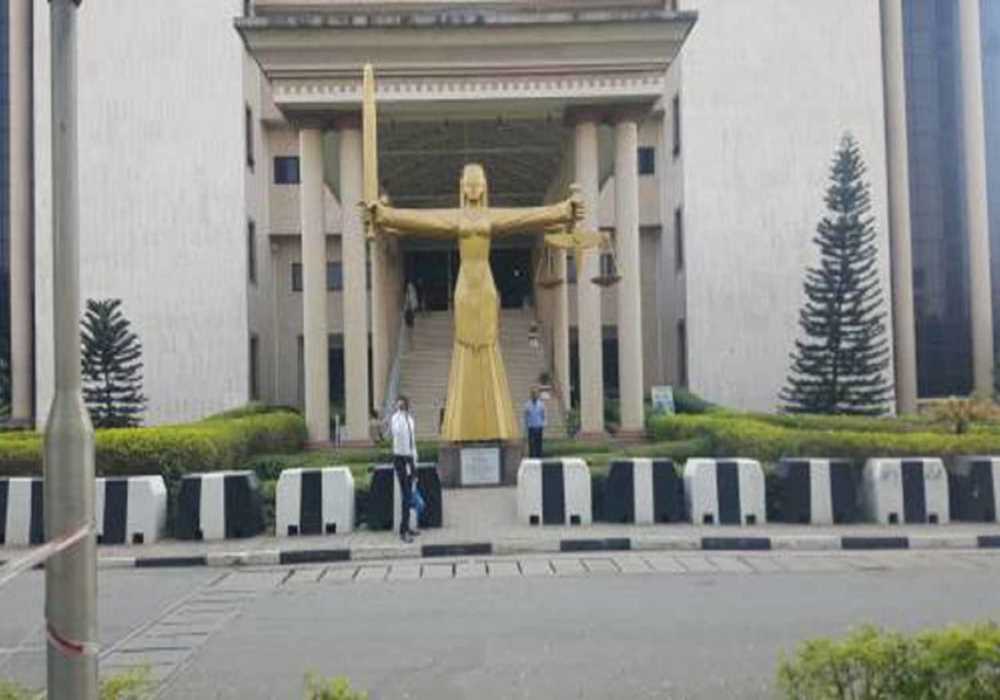
Following observed mis-steps, the Federal Government of Nigeria has withdrawn the eight-count criminal charge brought against the alleged fake Director General (DG) of the Presidential Foreign Intervention Promotion Council (PFIPC), Adeniyi Adeyemi.
Biztellers reports that the matter, in accordance with the counsel of the Attorney General of the Federation (AGF) and Minister of Justice, Prince Lateef Olasunkanmi Fagbemi, (SAN), the matter will be filed at the High Court of the Federal Capital Territory (FCT), instead of the Federal High Court (FHC).
Consequently, upon an unopposed application for termination by the prosecution counsel and Director of the Public Prosecution of the Federation (DPPF), Rotimi Oyedepo (SAN), on Monday, Justice Mohammed Umar of a Federal High Court, Abuja on Monday, struck out the matter.
READ ALSO: Shell Identifies Keys to Nigeria’s Energy Future
In a motion for the termination of the charges, Oyedepo informed the court that the Attorney General of the Federation (AGF) and Minister of Justice has carried out a review of the case file of Adeyemi and the charge filed by the Inspector General of Police (IGP) and found some loopholes.
The DPPF added that the documents allegedly forged by Adeyemi during his operations of the fake agency are those that can be prosecuted by the High Court of the Federal Capital Territory (FCT).
He also informed the court that a new charge has been filed at the High Court of the FCT and that Adeyemi would be expeditiously arraigned afresh.
He therefore urged the judge to strike out the charge as required by law.
Following no objections from Ibrahim Angulu (SAN), who stood in for Adeyemi, Justice Umar subsequently terminated the charge.
Adeniyi, 38, was being tried alongside two others whose whereabouts are unknown, on charges bordering on conspiracy and forgery.
The two others said to be at large were identified as Femi (surname unknown) and Anu (surname unknown).
The charge marked: FHC/ABJ/CR/25/2025, was entered against the defendant by the DPPF.

To secure a bright energy for her teeming population, Nigeria must sustain the momentum of reform, accelerate investment, and deepen partnerships.
This view was expressed by Managing Director, Shell Nigeria Exploration and Production Company of Nigeria Limited (SNEPCo) Ronald Adams in Lagos at the weekend.
Delivering a keynote address at the Africa Energy Conference (AEC) of the Lagos Business School (LBS), Adams called for regulatory certainty through efficient execution of reforms, sustained investment appeal to enable projects to move more swiftly from opportunity to production and partnership by operators, regulators, NNPC Limited and communities to unlock the full value of Nigeria’s resources.
Adams cited Nigeria’s huge oil and gas resources as an advantage but pointed out: “Resources alone do not guarantee prosperity. Prosperity comes when resources are matched with investment, technology, sound policy and disciplined execution. Success will be determined not by the size of our resources, but by our ability to convert them into investment and economic growth.”
Adams pledged the support of Shell towards a bright energy future of Nigerians. He said: “For more than six decades, Shell has been part of Nigeria’s energy journey. Together with our partners, we have helped develop major energy infrastructure, supported Nigerian businesses, invested in talent, and contributed to economic development. Bonga remains a powerful example of what technology, partnership and Nigerian capability can achieve in deepwater operations. Today, that story continues through Bonga North.”
READ ALSO: ADF Targets 5 Million Students, 2 Million Vulnerable Women
Issuing a clarion call for action by all stakeholders, he added: “The world is not standing still. Capital is moving, technology is advancing and competition is intensifying. The countries that attract investment tomorrow are those that improve competitiveness today. Nigeria has begun that journey. Our task is to sustain the momentum and translate reform into projects, projects into growth, and growth into shared prosperity.”
The conference, the 4th in the series had at its theme; “Securing Nigeria’s Energy Future: Policy Reform, Capital Mobilisation, and Pathways to a Sustainable Power and Energy Market” and was attended by top government officials, industry captains, energy professionals, and students.
Lagos State Deputy Governor Obafemi Hamzat represented Lagos State Governor Babajide Sanwo-Olu as the guest of honour. SNEPCo was a principal sponsor of the Africa Energy Conference (AEC) and mounted a well-received exhibition on its deepwater operations and social investments across Nigeria.


Katsina State Governor, Dikko Umaru Radda, has flagged off the disbursement of ₦689.79 million in bursary payments to 19,318 continuing students across 97 institutions for the 2025/2026 academic session.
The disbursement follows a 100 per cent increase in academic bursary rates, marking the first adjustment since 2007.
The latest payment forms part of the state government’s broader investment in education and student welfare, with cumulative bursary disbursements and related student awards under the administration reaching ₦3.29 billion.
SEE ALSO: Dikko Radda Of APC Wins Katsina Governorship Election
More than 174,000 beneficiary payments have been recorded across successive payment cycles.
Increased Allowances for Veterinary and Law Students
Under the revised scholarship support framework, allowances for Veterinary Medicine students have increased by 150 per cent for students in the 300 and 400 levels and by 200 per cent for those in the 500 and 600 levels.
Support for Nigerian Law School students and academic excellence awards has also continued.
The state government has also approved a scholarship programme for 1,700 students, with 50 beneficiaries drawn from each of the state’s 34 local government areas.
The programme is designed to support tuition fees, registration and other educational expenses.
₦6bn Scholarship Trust Fund
The government has made provision for ₦6 billion in seed funding for a scholarship trust fund intended to strengthen educational financing.
The fund is expected to support specialised scholarship opportunities in fields including engineering, medicine, Artificial Intelligence and mechatronics.
The state’s foreign scholarship initiatives have also supported 118 students studying Medicine, Artificial Intelligence and Bioengineering in Egypt, Ethiopia and China, with approved educational and living expenses covered by the government.
More Scholarship Opportunities
Other educational support initiatives include 34 maritime scholarship beneficiaries and seven students receiving 50 per cent financial support at the Nigerian College of Aviation Technology, Zaria.
The state has also nominated 34 candidates for MBBS studies in Russia, identified 70 prospective master’s degree candidates and selected 10 candidates for Qur’anic Sciences scholarships in Ghana.
These initiatives form part of the state’s broader efforts to expand access to education across different fields and levels of study.
Scholarship Board Strengthens Accountability
The Katsina State Scholarship Board has also strengthened its application, verification and payment systems.
As part of its accountability measures, the board interviewed more than 14,925 fresh applicants and returned approximately ₦86 million in unclaimed funds to the state government.
The state also acknowledged the contributions of the Nigerian Education Loan Fund (NELFUND), the Tertiary Education Trust Fund (TETFund) and the National Information Technology Development Agency (NITDA) in expanding access to educational financing and digital learning resources.
Radda Inaugurates Tinubu/Dikko Education Beneficiary Network
As part of the activities, Radda inaugurated the Tinubu/Dikko Education Beneficiary Network (TDEBNET), a voluntary organisation comprising parents and beneficiaries of educational programmes.
Members of the organisation expressed support for the re-election bids of Radda and President Bola Ahmed Tinubu in 2027.





FG Withdraws Charges Against ‘Fake Agency’ DG, Adeniyi Adeyemi

Shell Identifies Keys to Nigeria’s Energy Future

Nigeria Records Biggest Rise in Multidimensional Poverty Among Five Countries – UN

Katsina Students Get ₦689.79m Bursary as Gov Radda Doubles Allowances
DOJ Confirms Federal Criminal Investigation After Agents Raid Ilhan Omar’s Home

Peter Obi Slams Tinubu Over ₦7.7tn Debt Interest Against ₦6.2tn Revenue

Trump’s Family Unveils New Cryptocurrency Platform

Senate Denies Receiving Petitions Against Tinubu’s Ambassadorial Nominees

Dangote Cement Lights Up Benue Host Communities With CSR Initiatives

Reps Recommend 3-year Jail Term For Aviation minister

Tems Sets New Record On Billboard Hot 100 Chart

246676 522671I recognize there is a superb deal of spam on this website. Do you need aid cleaning them up? I may possibly assist in between courses! 630189
633336 715836Overall, politicians are split on the concern of whether Twitter is much more for business or personal use. The very first thing could be the fact which you can build up quite a large following of individuals. 362202
674750 301900youve gotten an critical weblog right here! would you wish to make some invite posts on my weblog? 321254