
Business
NEITI’s Reveals 2021 Solid Minerals Government Earnings

In a significant disclosure, Nigeria Extractive Industries Transparency Initiative (NEITI) has reveals the government’s earnings from solid minerals in 2021, offering insight into a vital economic sector.
According to NEITI, In 2021, the Federal Government of Nigeria generated N193.59 billion from the solid minerals sector.
Between 2007 and 2021, the sector contributed a total of N814.59 billion, with 2021 marking the highest earnings.
This information was disclosed by the Nigeria Extractive Industries Transparency Initiative (NEITI) during the unveiling of its 2021 Solid Minerals Industry Report in Abuja tagged: “Impact built on blocking leakages to grow revenue’’.
Senator George Akume, the Secretary to the Government of the Federation (SGF), was represented by Dr. Maurice Mbaeri, Permanent Secretary, General Services Office, SGF, during the report’s unveiling.
Dr. Maurice Mbaeri, Permanent Secretary of the General Services Office under the SGF, represented Senator George Akume during the event.
This 12th edition of the report encompasses actual payments made by 1,214 companies within the sector, as well as receipts from three vital government agencies.
The report also delves into the quantities of minerals produced, utilized, and exported from the sector, while providing reconciled data on physical and financial transactions.
Additionally, it includes special verifications of certain processes within the solid minerals industry.
During the report presentation, Orji Ogbonnaya Orji, the Executive Secretary of NEITI, highlighted that the figures indicated a significant increase of N60.32 billion or 51.89 percent growth compared to the 2020 revenue of N116.82 billion.
This positive trend, he noted, signifies a consistent upward trajectory observed in the sector over the past five years.
He said “This contribution, though a significant increase over past years, is still abysmal considering the potentials of the sector to the Nigerian economy,”
Orji explained that the 2021 Solid Minerals report thoroughly reviewed, ascertained, reconciled, and reported all revenues and investment flows associated with the government’s involvement in the solid minerals sector.
Additionally, the NEITI report encompassed tracking balances payable and receivable from financial inflows while monitoring the allocation and utilization of funds intended for the development of Nigeria’s solid minerals industry.
Orji clarified that these funds encompass various initiatives, such as the Natural Resources Development Fund, Solid Minerals Development Fund, the Ministry of Mines and Steel Development’s MinDiver Programme, and the Solid Minerals Development Funds administered through the Small and Medium Industries Equity Investment Scheme, which operates in partnership with the Bank of Industry.
Breaking down the revenues, it was revealed that the Federal Inland Revenue Service collected N169.52 billion, the Mining Cadastre Office generated N4.3 billion, and the Mining Inspectorate Department generated N3.62 billion.
Orji noted that the revenue deposited into the federation account from the sector over the past 15 years, totaling N818.04 billion, was considerably low when considering the sector’s economic potential.
Regarding production, the report disclosed that the total volume of solid minerals used or sold in 2021 amounted to 76.28 million tons, resulting in a royalty payment of N3.57 billion.
He said “The minerals with the largest production volume in the year under review are Granite, Limestone, Laterite, Clay and Sand.
“Dangote Plc accounted for the highest production with a total production of 28.8 million tons. Bua and Lafarge accounted for 8.4 and 4.3 million tons while Zeberced accounted for 3.3 million tons respectively.
“Ogun state recorded the highest production in the year under review, with a total of 17.5 million tons followed by Kogi state with 16.3 million tons and Edo with 8 million tons.
“The least production volume was recorded in Borno State with 25,500 tons,” he added
Orji provided further details, mentioning that a total of 2,045 licenses were issued, including 840 exploration licenses (reflecting a 62.79 percent increase), 771 Small Scale Mining Leases, 255 Quarry Leases, 139 Reconnaissance Permits, and 40 Mining Leases.
Regarding exports, he highlighted that the total minerals exported in 2021 amounted to 142.54 million tons, with a Free on Board (FOB) value of US$101.29 million. This represented a substantial increase of 138.57 percent compared to the US$42.46 million reported in the 2020 report.
China emerged as the primary destination for Nigeria’s mineral exports, representing 97 percent of the export volume and 88 percent of the export value.
Additionally, Nigeria’s minerals found their way to other destinations, including Malaysia, Korea, Thailand, and the United Arab Emirates.
In terms of the solid minerals sector’s contribution to the economy, Orji mentioned that the report indicated a contribution of 0.63 percent to the Gross Domestic Product (GDP).
This showed improvement when compared to previous years, where the sector contributed 0.45 percent in 2020 and 0.26 percent in 2019.










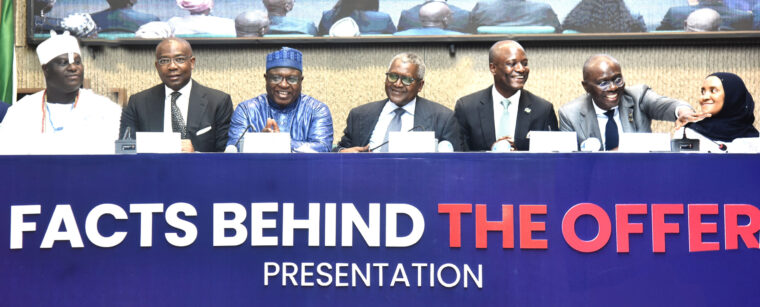
President and Chief Executive of Dangote Industries Limited, Aliko Dangote, has assured investors that the Initial Public Offering (IPO) of Dangote Petroleum Refinery & Petrochemicals FZE presents a compelling opportunity for strong returns and sustainable wealth creation, positioning the offer as a chance for Nigerians and Africans to participate in one of the continent’s most significant industrial achievements.
Speaking during the “Facts Behind the Offer” presentation at the Nigerian Exchange (NGX) in Lagos, Dangote described the $1.6 billion offer as the largest IPO ever undertaken in Africa, underscoring the company’s commitment to broadening ownership and enabling millions of individuals to benefit from the value generated by a world-class industrial enterprise.
According to him, the refinery IPO is more than a capital raising exercise; it is an opportunity for investors to become part owners of a strategic asset that is already delivering strong operational and financial results.
“The Dangote Refinery IPO is more than an investment opportunity; it is an opportunity for millions of Nigerians and Africans to build lasting wealth through ownership of a world-class industrial asset. We have built a refinery that is already delivering strong revenues, solid profitability and significant value to the economy. By investing today, shareholders are not only positioning themselves to enjoy attractive returns and dividend prospects, but they are also laying the foundation for generational wealth that can benefit their children and grandchildren. This offer is designed to allow ordinary people to participate in an extraordinary success story and share in the long-term value that Dangote Refinery will continue to create for decades to come.”
READ ALSO: Saudi Pipeline Disruption Pushes Nigeria’s Crude Beyond $115/barrel
He emphasised that the offer reflects the Group’s long-standing philosophy of creating prosperity through broad ownership, enabling ordinary citizens to share in the success of transformational businesses
Dangote noted that the refinery has already fulfilled its core vision of transforming Nigeria from a major importer of refined petroleum products into a significant refining and export hub, supplying domestic demand while serving markets across Africa and beyond.
“We are not merely offering shares; we are offering Nigerians an opportunity to participate in a transformational chapter of our economic history. This is a strategic investment in an asset that is creating jobs, conserving foreign exchange, enhancing energy security and strengthening Africa’s industrial capacity,” he stated
The IPO has been structured to encourage broad participation, with 4.1 billion ordinary shares offered at N525 per share and a minimum subscription of just 10 shares valued at N5,250. The offer is expected to attract a diverse range of investors, including civil servants, teachers, artisans, students, institutional investors, pension funds and members of the Nigerian diaspora.
Highlighting the refinery’s financial strength, Dangote disclosed that the company generated approximately N19.47 trillion in revenue during the first half of 2026, while profit after tax reached N2.55 trillion, demonstrating its capacity to create sustainable value for shareholders.
At the offer price, Dangote Petroleum Refinery is expected to achieve an implied market capitalisation of approximately N65.22 trillion. Together with the market capitalisations of Dangote Cement Plc and Dangote Sugar Refinery Plc, the listing is projected to create an equity cluster valued at about N83.5 trillion, making the Dangote Group the largest equity cluster on the Nigerian Exchange.
Commenting on the significance of the transaction, NGX Group Chairman, Umaru Kwairanga, described the offer as a defining milestone for Africa’s capital markets and a demonstration of the capacity of African capital to finance large-scale projects capable of accelerating economic growth and development across the continent.
Similarly, Lagos State Governor, Babajide Sanwo-Olu, hailed the IPO as a watershed moment for Africa’s financial markets, noting that it reinforces confidence in the continent’s ability to mobilize capital and invest in its own future.
“This transaction is changing perceptions about what is possible in Africa. It is creating opportunities for a broad spectrum of investors, from small business owners and market traders to institutional investors and technology entrepreneurs,” he said.
Also speaking, Chief Executive Officer of the Botswana Stock Exchange, Kesegofetse Molatlhegi, commended Dangote for demonstrating that African ambition can deliver globally significant industrial projects, while encouraging greater continental participation in the refinery’s growth story.
For his part, Chief Executive Officer of Dangote Petroleum Refinery, Davide Bird, highlighted the refinery’s operational achievements, noting that it has become the largest single supplier of refined petroleum products into Europe and continues to maintain safe, reliable and efficient operations. He added that the company remains focused on delivering its Vision 2030 objective of becoming the world’s largest integrated refinery and petrochemical complex.
Reaffirming the significance of the offer, Dangote said the IPO represents an opportunity for investors to move from consumers to owners and participate in the long-term growth of one of Africa’s most strategic industrial enterprises.
“This is a defining investment opportunity. We want millions of Nigerians and Africans to become owners of a business that has been built to create value for generations. Those who invest today are positioning themselves to benefit from the growth, resilience and enduring legacy of a truly transformational enterprise,” he said.
Photo Caption: L-R: Ooni of Ife, Adeyeye Enitan Ogunwusi; Managing Director, Coronation Asset Management Limited, Aigbovbioise Aig-Imoukhuede; Group Chairman, NGX Group, Dr Umaru Kwairanga; President/CE, Dangote Industries Limited, Aliko Dangote; Group Managing Director/Chief Executive Officer, NGX Group, Temi Popoola; Lagos Governor, Babajide Sawo-Olu; Group Executive Director, Commercial Operations, Oil & Gas, Fertiliser and WAEP, Fatima Aliko-Dangote, at the Dangote Petroleum Refinery & Petrochemicals Initial Public Offering (IPO) Facts Behind the Figure presentation at the Nigerian Exchange (NGX), Lagos on Monday, September 14, 2026.
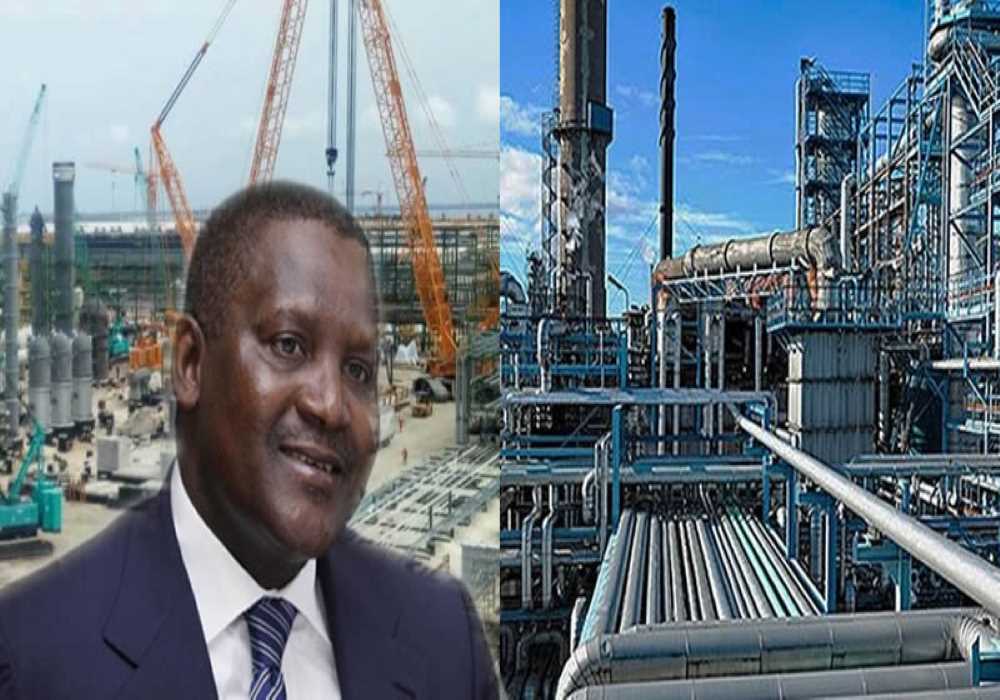
The President of Dangote Industries Limited (DIL), Aliko Dangote, has expressed support for the economic reforms of the President Bola Ahmed Tinubu administration, particularly the removal of the fuel subsidy and the liberalisation of the foreign exchange market.
The industrialist gave the commendation in Lagos on Monday at the Nigerian Exchange Group (NGX) during the formal launch of the Initial Public Offering (IPO) of Dangote Petroleum Refinery and Petrochemicals (DPRP).
He also commended Tinubu’s leadership and said the Dangote Refinery was supporting the administration’s efforts.
“I want to thank him for taking a lot of bold steps by removing the subsidy and democratising the exchange rate…” Dangote said.
READ ALSO: Dangote Refinery IPO: SEC Warns Investors Against Fraudsters, Fake Platforms
He assured that the Dangote Group would continue working with the government to contribute to Nigeria’s development.
“So, we thank you very much for your leadership and we will continue to partner with the government to ensure that we make this country great and we make Africa great,” he said.
Dangote, a former president of the Nigerian Exchange, also expressed surprise at the transformation of the bourse, saying he had not expected it to reach its current level.
“I was the president of this exchange. Even when I was inviting people to come and help me turn the exchange around to make it a world-class exchange, I never thought this exchange would be at this level in 2026,” he said.
He revealed that a more grand ceremony would be held with Tinubu in attendance.
The refinery’s IPO, which opened on Monday, offers 4.1 billion new ordinary shares at N525 per share, with a minimum subscription of 10 shares valued at N5,250.
The offer is scheduled to close on 13 October 2026, subject to the terms of the prospectus.

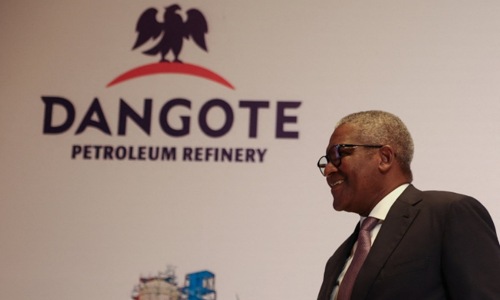
President of Dangote Industries Limited, Aliko Dangote, has described the Initial Public Offering of Dangote Petroleum Refinery and Petrochemicals as a “People’s IPO” as the N2.15tn offer officially opened on the Nigerian Exchange on Monday.
Dangote sounded the gong at the NGX trading floor in Lagos to formally open the offer, marking a major milestone for Nigeria’s capital market.
The IPO comprises 4.1 billion new ordinary shares priced at N525 per share, with a minimum subscription of 10 shares valued at N5,250.
RELATED NEWS: BREAKING: Dangote Refinery IPO Subscription Surpasses ₦1.4trn as Investor Demand Soars
The offer, which opened on September 14, 2026, is scheduled to close on October 13, 2026, subject to the terms contained in the prospectus.
Speaking after sounding the gong, Dangote said the offering was aimed at widening public participation in the ownership of the refinery.
“We fully share all our prosperity with the people. That’s why we call this ‘People’s IPO’. We know the journey has actually just started.
“It’s not only about the refinery.”
The Dangote Refinery IPO is the first refinery offering to investors on the Nigerian stock market in the 66-year history of the Nigerian Exchange.
The offer is open to retail, institutional and eligible African investors, providing members of the public with an opportunity to acquire an interest in one of Africa’s largest industrial projects.
Dangote also disclosed that the IPO was part of a broader plan by the Dangote Group to list more of its companies on the capital market.
He said the group intended to list every company that would operate under its umbrella in the future.
“We, as a group, will list every single company that will operate. I don’t know about the others, but I know our own market cap, even at a 10 times P/E ratio by 2030, should not be less than $350 billion,” he said.
The businessman added that the Nigerian Exchange would provide a platform for the group to pursue listings on other international exchanges.
“From this exchange, then we can go to any other place.
“So, Nigeria and Africa is our base. We want to make sure that we join our continent.”
The Dangote Refinery, located in the Lekki Free Zone, Lagos, has been positioned as a major investment in Nigeria’s domestic refining capacity and efforts to reduce dependence on imported petroleum products.
The opening ceremony was attended by Lagos State Governor Babajide Sanwo-Olu, NGX Group Chairman Umaru Kwairanga, the Ooni of Ife, Oba Adeyeye Enitan Ogunwusi Ojaja II, Zenith Bank founder Jim Ovia and other dignitaries.
The N2.15tn IPO will remain open until October 13, 2026, subject to the terms contained in the prospectus.






Shettima Returns To Nigeria After High-Stakes BRICS Summit In India
Tension in Sokoto as Govt Shuts Mosque After Cleric’s Stabbing

Africa’s Biggest IPO: Dangote Promises Strong Returns, Generational Wealth for Investors

Saudi Pipeline Disruption Pushes Nigeria’s Crude Beyond $115/barrel

DPRP IPO: Dangote Rings Opening Bell at NGX
Dangote Commends Fuel Subsidy Removal

Trump’s Family Unveils New Cryptocurrency Platform

Senate Denies Receiving Petitions Against Tinubu’s Ambassadorial Nominees

Dangote Cement Lights Up Benue Host Communities With CSR Initiatives

Reps Recommend 3-year Jail Term For Aviation minister

Tems Sets New Record On Billboard Hot 100 Chart
