
NEWS
‘Nigeria Cannot Do What China Did’ – Oxford Economist Warns

Professor Stefan Dercon, a development economist at the University of Oxford, has warned that Nigeria cannot replicate China’s economic development model, urging the country to adopt pragmatic policies that reflect its own institutional realities.
Dercon made the remarks on Monday at the opening ceremony of the 32nd Nigerian Economic Summit (NES #32) in Abuja, where he highlighted the importance of leadership commitment, economic transformation and policies that promote sustainable growth.
According to him, Nigeria lacks the institutional structures that supported China’s development and must therefore identify an economic model suited to its own circumstances.
SEE MORE: China Grants 30-Day Visa-Free Entry To British, Canadian Travelers
“Nigeria does not have a Chinese state, and it can dream of it, but it doesn’t. But it also means it can’t do a China,” Dercon said.
He explained that China’s development was supported by a long history of meritocratic institutions, including a rigorous public examination system for civil servants that had existed for approximately 1,300 years.
The economist noted that many countries developed their state institutions through patronage and personal connections rather than merit-based systems, creating differences in their capacity to implement development policies.
Dercon, however, said Nigeria could still learn from successful economies by identifying approaches that fit its own circumstances rather than attempting to copy another country’s model.
He pointed to China’s shift away from an ideology-driven economy under former leader Mao Zedong towards a more pragmatic approach focused on economic growth and progress.
According to him, countries that achieve economic success share a commitment among their leadership to growth, regardless of the specific economic model they adopt.
“That’s actually what all countries that are successful, whatever the blueprint or the models they try to use, have in common. That’s an elite commitment to actually growth using a model that fits the context,” he said.
Dercon Calls for Economic Transformation
The Oxford economist urged Nigeria to demonstrate a serious commitment to transforming its economy, creating jobs and improving prosperity.
He argued that the country needed to move away from an economic system that benefits a limited group of people towards one that delivers broader opportunities and sustainable development.
“So what Nigeria needs is that. It needs a really serious commitment to begin to change this model,” Dercon said.
He added that the government must recognise its capabilities and limitations while identifying and correcting policies that undermine economic growth.
Dercon also emphasised the importance of learning from experience, testing policies and making necessary adjustments to achieve better results.
“But all these places, they learned, they tried, and they corrected, and then they made progress,” he said.
Indonesia Offers Lessons for Nigeria
Dercon also identified Indonesia as a country Nigeria could study for lessons on economic development, while acknowledging that the two countries have important differences.
He argued that economic growth should be treated as a national security priority because a stronger economy is essential to national development and stability.
“You need to grow the economy, you need to develop. That’s an issue of national security. I don’t think I have to explain that in Nigeria’s context either,” he said.
He advised Nigerian policymakers to maintain macroeconomic stability, remain consistent with sound economic policies and focus on practical measures capable of supporting long-term growth.
Dercon stressed that Nigeria’s priority should be to develop an economic strategy that reflects its institutional realities while promoting productivity, job creation and shared prosperity.



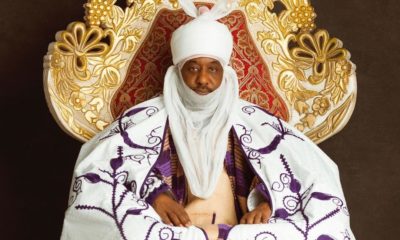







The Presidency has highlighted major development projects across Nigeria’s North Central region under President Bola Tinubu’s Renewed Hope Agenda, covering eight key sectors, including road infrastructure, power, agriculture, education, aviation and security.
Sunday Dare, Special Adviser to the President on Media and Public Communication and Presidential Spokesperson, disclosed this on Sunday, November 15, 2026, in a post on his X account.
According to Dare, the projects are designed to improve regional connectivity, expand economic opportunities, strengthen food security and promote development across communities in the region.
ALSO READ: ‘Tinubu Built Northern Alliances Long Before Presidency’ – Sunday Dare
He highlighted interventions spanning major road construction, renewable energy, agricultural support, educational development, security infrastructure and empowerment programmes.
In the road infrastructure sector, the listed projects include the Mararaban Jama’a–Pankshin–Langtang–Shendam–River Ibi corridor dual carriageway, Phase II rehabilitation of the Babban-Lamba–Sharan Road and construction of the Akwanga–Jos–Bauchi–Gombe–Biu–Maiduguri Superhighway.
Others include the construction of the 600-metre Akwanga Underpass, completion of the Lafia Bypass, reconstruction of the Bali–Serti–Gembu Road and construction of the Gembu–Mbamnga–Yang Road, which commenced in early 2025. Improvement works are also listed along the Jalingo–Wukari corridor.
In the aviation sector, the government highlighted approval for the construction of an airstrip on the Mambilla Plateau.
The power and renewable energy initiatives include a 40-megawatt hydropower plant at the Kashimbila Multipurpose Dam, expected to supply electricity to the national grid, as well as irrigation channels to support year-round farming.
Other interventions include the deployment of solar-powered mini-grids, installation of solar streetlights and provision of solar home systems to households.
On agriculture and food security, the Renewed Hope Agricultural Support Programme is expected to provide farmers with improved seedlings, fertiliser and agricultural training.
The list also includes support for hybrid potato farming, expansion of irrigated farmland through dam infrastructure and development of agricultural processing centres.
For women and youth empowerment, the initiatives include agricultural support for women and young farmers through the First Lady’s Renewed Hope Initiative.
Vocational skills development and certification for women, start-up grants for small businesses, market women empowerment through business training and start-up tools, as well as rural grants and skills development programmes, are also highlighted.
In education, the Federal Polytechnic Nasarawa is listed for transformation into the Federal University of Mining, Engineering and Technology, alongside expanded scholarship opportunities and improved access to higher education.
On security, the government outlined plans for the establishment of a new Army Division in Jalingo, Taraba State, alongside strengthened security deployment to protect farming communities and improve safety.
The eighth area focuses on regional development, with the North Central Development Commission identified as a long-term regional development initiative. Additional federal road projects are also expected to improve connectivity and support economic activities.
Dare’s disclosure highlights the administration’s focus on infrastructure expansion, agricultural productivity, energy access and human capital development as part of its Renewed Hope Agenda.

Vice President Kashim Shettima has departed Abuja for Jos, Plateau State, alongside his wife, Hajiya Nana Shettima, ahead of the All Progressives Congress (APC) presidential campaign rally in the state.
The visit is part of the Tinubu–Shettima campaign’s engagements as the ruling party seeks to secure support for President Bola Ahmed Tinubu and Vice President Shettima ahead of the 2027 general elections.
The campaign’s visit to Plateau is expected to highlight the Federal Government’s infrastructure and economic development projects in the state, particularly those aimed at improving road connectivity, boosting commerce and supporting agricultural activities.
SEE ALSO: Tinubu, Shettima Head to Jos for APC Presidential Campaign Rally
Among the projects highlighted by the administration is the ongoing 125-kilometre Akwanga–Jos highway, which forms part of the Akwanga–Bauchi–Gombe–Maiduguri Superhighway.
Other projects include the rehabilitation of the Sharram–Garram–Babban Lamba Road in Kanke and the approved Mararaban Jama’a–Kanke–Langtang–Shendam–Ibi Road, which is expected to improve connectivity between Plateau and Taraba states.
The administration says the projects are part of its broader development agenda to connect communities, facilitate access to markets and provide farmers and businesses with improved infrastructure.
The APC campaign is expected to use the rally to present the administration’s achievements and future plans while seeking the confidence of Plateau residents to continue its development agenda beyond 2027.
The Ogun State Police Command has presented cheques totalling ₦10.65 million to families and next-of-kin of deceased police officers who served under the command, as part of efforts to support dependants of personnel who died in active service.
The cheques, amounting to ₦10,658,391.36, were presented on Saturday, November 14, 2026, by the Commissioner of Police, CP Bode Ojajuni, on behalf of the Inspector-General of Police, IGP Olatunji Rilwan Disu.
The statement was signed by the Police Public Relations Officer of the Ogun State Command, DSP Oluseyi B. Babaseyi, anipr, and dated November 14, 2026.
ALSO READ: How Ogun Driver Allegedly Stole Boss’s ₦45m Lexus and Plotted to Sell It for ₦10m in Cotonou
The presentation took place at the Command Headquarters in Eleweran, Abeokuta, under the Nigeria Police Force Group Life Assurance and the IGP Family Welfare Schemes.
The initiatives are designed to provide financial assistance to families of police officers who lost their lives while serving the country.
Accompanied by members of the Command Management Team, Ojajuni personally handed over the cheques to the beneficiaries.
Addressing the recipients, the police commissioner reaffirmed the Inspector-General’s commitment to the welfare of police personnel and their families.
He described the widows and families of the deceased officers as the “true superheroes”, acknowledging their resilience in coping with the loss of their loved ones who died in service to the nation.
Ojajuni noted that the financial intervention was a demonstration of the Force’s appreciation and institutional responsibility to support the families of fallen officers.
He said the initiative represented the Nigeria Police Force’s enduring commitment to standing by the dependants of personnel who paid the ultimate price in active service.
Responding on behalf of the beneficiaries, Mrs Ejembi Ada Veronica thanked the Inspector-General of Police and the Ogun State Police Command for remembering their families and providing financial assistance.
She assured the authorities that the money would be channelled towards the education, upkeep and general welfare of the children and dependants left behind by the deceased officers.
According to her, the intervention would provide timely relief and help improve the stability of the affected families.
The Ogun State Police Command reiterated its commitment to supporting the families of fallen officers, assuring them of its continued solidarity.





How Rising Costs Are Pushing Nigerian Bakeries to the Brink

FULL LIST: 18 Nollywood Actors and Actresses Who Died in 2026
Tinubu Gov’t Unveils North Central Development Projects Across Eight Sectors

Obi, Kwankwaso Pledge to Tackle Corruption, Reduce Cost of Living

Dangote Plans 10,000MW Power Intervention, Raises Africa Investment Ambition to $70bn

40% of Breadmakers Shut Down as Atiku Accuses Tinubu of Economic Failure

Trump’s Family Unveils New Cryptocurrency Platform

Senate Denies Receiving Petitions Against Tinubu’s Ambassadorial Nominees

Dangote Cement Lights Up Benue Host Communities With CSR Initiatives

Reps Recommend 3-year Jail Term For Aviation minister

Tems Sets New Record On Billboard Hot 100 Chart
