
Business
Nigeria Must Cut Farm-to-Market Losses to Bring Down Food Prices – Tinubu


President Bola Ahmed Tinubu has said Nigeria must reduce losses between farms and markets as part of efforts to bring down food prices and ease the cost of living.
Tinubu made this known in his Independence Day address to Nigerians on Thursday, as the country marked its 66th anniversary.
The President said reducing the cost of producing and transporting food would be critical to making essential goods more affordable for Nigerians.
SEE MORE: ‘Nigeria Cannot Erase Decades of Poverty in Four Years, Says Tinubu
According to him, the government is expanding mechanised irrigation and dry-season farming while improving access to seeds, fertiliser, storage and transportation.
He said the government was also building and completing roads, railways and ports to improve the movement of agricultural produce and connect farms and factories to markets.
Tinubu explained that when farmers produce at lower costs and fewer crops are lost before reaching the market, the savings can ultimately be reflected in the prices paid by consumers.
“Our logic is simple. When a farmer produces more cheaply, when fewer crops are lost between the farm and the market, when a manufacturer spends less on electricity, when a truck reaches its destination faster, and when the business environment fosters fair competition, all those savings will ultimately find their way into the price of goods in the market,” he said.
The President said the measures form part of his administration’s broader plan to lower the cost of living and move the country towards what he described as an era of shared prosperity.







President/Chief Executive, Dangote Industries Limited, Aliko Dangote, has declared that over 90,000 people are expected to be working at the group’s petroleum refinery & petrochemicals and fertiliser operations in Lagos next year.
This is as the group accelerates investments to create jobs, strengthen industrial production and transform agriculture across Africa.
Dangote, who disclosed this in an interview, also unveiled plans to establish 20 fertiliser blending plants in strategic locations across the continent to improve farmers’ access to essential inputs and support year-round supply. The projects form part of an investment programme that could reach $65 billion over four years, spanning refining, fertiliser, petrochemicals, power, pipelines and other businesses.
“The refinery expansion is huge. By next year, we expect to have almost 90,000 people working on the refinery and fertiliser projects in Lagos,” he said.
READ ALSO: Shell Commends Oil Industry Reforms as Key to Unlocking More Barrels
Dangote said creating opportunities for Africa’s youthful population was a central motivation for the group’s expansion, stressing that the continent needed more factories and greater domestic production to meet its growing needs. “My biggest concern is job creation in Africa. We have a very youthful population, and we are not creating enough jobs. We must push harder to create opportunities and keep our young people productively engaged,” he said.
The refinery expansion will add another 700,000 barrels per day of processing capacity, taking the planned total to about 1.4 million barrels per day, alongside additional petrochemical facilities and infrastructure. Beyond energy, Dangote outlined a fertiliser expansion programme designed to help turn Africa’s agricultural potential into greater production, more reliable food supplies and economic opportunities.
“We also plan to establish 20 blending plants in strategic locations across Africa. We intend to begin mining potash and phosphate in Congo-Brazzaville very soon,” he said.
He disclosed that the group was working towards nine million tonnes of urea capacity, with plans for 1.2 million tonnes of diammonium phosphate, DAP, and one million tonnes of NPK blending capacity in Lagos. Dangote said the objective was to ensure that farmers in countries hosting the group’s operations, as well as neighbouring markets, could obtain fertiliser when needed, without the uncertainty associated with lengthy import and delivery processes.
“What we want is for the countries where we operate, and their neighbours, to have fertiliser available 365 days a year. Farmers should be able to buy it when they need it, without worrying about supply,” he said.
Citing Ethiopia, he explained that fertiliser imports had to pass through Djibouti before being transported inland, creating logistical challenges that could leave supplies arriving after the planting season. “With local production, the fertiliser will be available there. We will also have one million tonnes of NPK capacity attached to the project,” he said.
Dangote linked the programme to his determination that Africa should build the capacity to meet its own agricultural input requirements, rather than remain vulnerable to disruptions in international markets. “At the beginning of the Russia–Ukraine crisis, the African Union went to Russia to plead for fertiliser. I said then that, within four years, Africa should never again have to go anywhere to beg for fertiliser,” he said.
He expressed confidence that sufficient access to gas would enable a much larger expansion in fertiliser production. “If Africa needs 30 million tonnes and we can secure enough gas, we can produce and supply it,” he said. “Africa has an enormous agricultural advantage. We must lead the effort to turn that opportunity into a major agricultural transformation.”
The group’s wider investment programme includes an initial ambition to develop 10,000 megawatts of power with some African countries and increase cement capacity to 100 million tonnes. Dangote said reliable electricity was essential to industrial growth, enabling African countries to process their raw materials, retain more value within their economies and create opportunities for their people. He disclosed that approximately $50 billion of the planned investment would go into existing businesses, while another $15 billion would be directed towards new ventures, including projects yet to be announced. The programme would be financed through a combination of free cash flow, internally generated equity and debt, he said.
Dangote urged African investors to take the lead in developing the continent, arguing that substantial domestic investment would encourage international capital to follow.
“I am tired of hearing about ‘potential’. We have been talking about Africa’s potential for decades. But Africans themselves must invest in their continent,” he said. “What gives other investors comfort and confidence is seeing us put our own money on the table. That is what we are trying to do. We are demonstrating that we are serious.”
He argued that sustained investment by African businesses was essential to unlocking the continent’s industrial and agricultural opportunities, while giving international investors the confidence to participate.
“Governments are always calling for foreign investors. But what attracts a foreign investor is a domestic investor,” he said. “We must demonstrate that we are doing something substantial in Africa so that others can join us.”
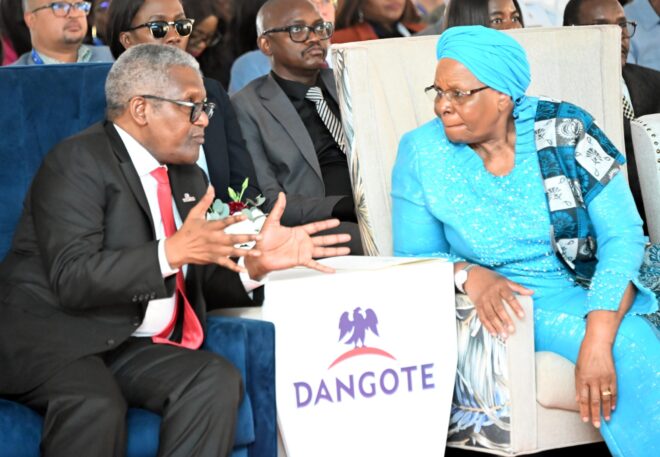
Photo Caption: Group President/Chief Executive, Dangote Industries Limited, Aliko Dangote (left), in conversation with the President of the Republic of Namibia, H.E. Dr Netumbo Nandi-Ndaitwah, during the official launch of the Dangote Namibia Tank Farm and Regional Pipeline Investment in Walvis Bay, Namibia, recently.
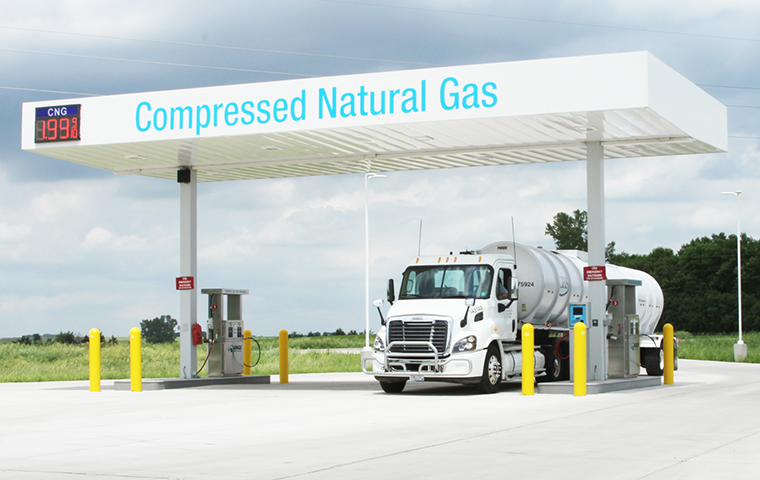
The quest for diversified fuel sources with a view to reducing cost of transportation has seen operational CNG stations in Nigeria rise to 106.
The Executive Chairman of the Presidential Initiative on Compressed Natural Gas and Electric Vehicles (Pi-CNG & EV), Barr. Ismaeel Ahmed, has stated this during the commissioning of a CNG Integrated Refueling Unit (IRU) Station by Pi‑CNG & EV and Rolling Energy, in Karu.
According to Ahmed, 170 stations are in different stages of development or waiting for different licences from the Nigerian Midstream and Downstream Petroleum Regulatory Authority (NMDPRA).
He added that investors are trooping into the sector as $2.6 billion worth of private investment has come in, adding that while most of the stations are privately-owned, the government is intervening with policies that will make their construction easy.
READ ALSO: Shettima Arrives Jigawa for APC Presidential Campaign Rally, Tinubu to Inaugurate Four Projects
He stated that it took Nigeria 60 years to get to 24,000 PMS stations but the rate of construction of CNG stations makes the country the fastest adoption rate for CNG and electric vehicles.
“We are moving at a scale that is very impressive. The work is in progress and a lot of entrepreneurs are seeing the need for this and they are coming in and we’re calling them to come in and invest more,” he said.
He added that the route where CNG buses are plying has led to reduction in transport fare but he said there is the need to do more in providing additional buses for fares to crash.
On his part, the State House Permanent Secretary, Temitope Fashedemi, said the use of CNG will help to reduce the burden of increasing the price of petrol.
He added that Nigerians will soon see the availability of the product when more investors build new stations and the Ajaokuta-Kaduna-Kano pipeline is completed.
“The stations will reduce the pressure in other places that we’re going to, and they can come here and refuel at any time, and even convert. And hopefully this will also be a clarion call for persons with the capacity to also set up things like this for the benefit of the citizens.”
The Chairman and Founder of Rolling Energy, Mubarak Umar Danbatta, said the station will help the government achieve its goals in ensuring that Nigeria is energy secure.
A call has gone to researchers, engineers, academics and other energy professionals to present technical solutions and innovations capable of addressing challenges across Nigeria’s oil and gas industry.
The organisers of the Nigeria Oil and Gas (NOG) Energy Week have opened submissions for its 2027 Technical Seminar, made the call for papers, citing 14 technical categories across the energy value chain for specific attention.
They maintain that it is aimed at promoting the exchange of research, field experience and practical knowledge to support investment, operational efficiency and technological development in the sector.
The organisers said submissions would cover upstream activities, including geoscience, field development, drilling and asset management, as well as midstream operations involving infrastructure, facilities, supply and pipeline transportation, shipping and marine services.
READ ALSO: Shell Advocates for Expansion of Gas Pipelines for Industries
Other areas include downstream infrastructure, power generation and industrialisation, alongside cross-cutting subjects such as artificial intelligence, digital transformation, decarbonisation, health, safety, security and environment (HSSE), project management, finance and people development.
Asset Operations Support at TotalEnergies EP Nigeria, Razaq Shuaib, who reviewed submissions for last year’s programme, said the contributions reflected the range of expertise available across the industry, including working engineers and students.
He stressed the importance of developing technical knowledge and human capacity to sustain progress in Nigeria’s energy sector, noting that human capital remained a major driver of industry growth.
Also, Portfolio and Country Director, dmg Nigeria, Wemimo Oyelana, said the programme was designed to give professionals working on practical industry challenges an opportunity to share their experience and findings with a wider audience.
“We built this programme to reach the people actually solving problems in the field and providing them with a platform to share what they are learning within the wider industry. If you have worked through something the industry needs to hear about, this is the platform for it,” Oyelana said.
The organisers said abstracts of 500 words must be submitted by December 18, 2026, through the NOG Energy Week website. Selected papers will be presented at the Bola Ahmed Tinubu International Conference Centre, Abuja, on June 29 and 30, 2027.
The organisers are expecting more than 1,000 submissions for the next edition, with eligible professionals encouraged to submit research and technical findings for consideration.
The seminar is expected to provide a platform for sharing practical approaches and emerging technologies that could support activities across the energy value chain, particularly in areas requiring improved operational performance, infrastructure development and more efficient use of resources.






Adeleke Clarifies Osun Debt Profile

Ogun Police Deny Awujale Palace Siege, Explain Chief Gbenden’s Invitation

Peter Obi, Kwankwaso to Hold NDC Town Hall Meeting in Benue Today

2027: Obi Promises to Tackle Insecurity, Revive Plateau Tourism

Diaspora Investors Urged to Look Beyond Real Estate, Explore Nigeria’s Capital Market

Dangote Refinery, Fertiliser Expansion to Employ Over 90,000 in Lagos

Trump’s Family Unveils New Cryptocurrency Platform

Senate Denies Receiving Petitions Against Tinubu’s Ambassadorial Nominees

Dangote Cement Lights Up Benue Host Communities With CSR Initiatives

Reps Recommend 3-year Jail Term For Aviation minister

Tems Sets New Record On Billboard Hot 100 Chart
