
NEWS
Nigeria Nominates Dr. Olufemi Elias For ICJ Judge Position

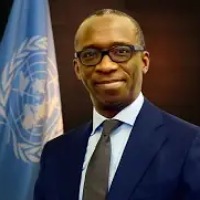
Nigeria has formally presented Dr. Olufemi Elias as its candidate for a seat on the International Court of Justice (ICJ) for the 2027-2036 term.
The announcement was made at an event held at the Nigeria House in New York, where members of the UN diplomatic corps gathered to hear Nigeria’s case for the accomplished international lawyer.
The ICJ, often referred to as the World Court, is the principal judicial organ of the United Nations. Established in 1945, it resolves disputes between states in accordance with international law.
READ ALSO: Yinka Alaseyori Shines At The Experience 2024 With Soulful Performance
Judges are elected by the UN General Assembly and Security Council for nine-year terms, with the next election scheduled for 2026.
Ambassador Samson Itegboje, Charge d’Affaires of Nigeria’s Permanent Mission to the United Nations, made a strong case for Dr. Elias’s candidacy, emphasizing his extensive expertise and Nigeria’s commitment to the ICJ.
“Since 1960, Nigeria has been making significant contributions, both in terms of participation in cases before the ICJ and in promoting the Court’s role in global dispute resolution,” Itegboje said.
“Through these efforts, we can state without being immodest that Nigeria has contributed significantly to the development of international law.”
Itegboje highlighted Nigeria’s adherence to ICJ rulings, citing the country’s compliance with the Court’s judgment in the Bakassi Peninsula dispute with Cameroon as an example of its respect for international law.
“It is important to recall that our legal experts and diplomats have participated in legal submissions, particularly in cases dealing with territorial disputes, human rights, and maritime law,” he added.
The ambassador described Dr. Elias as an outstanding candidate with deep-rooted expertise in international law.
“Dr. Elias is not just a renowned international lawyer with vast experience in the practice of international law and academics but was born into a jurist family and has learned the ropes of dispensing good judgment from his childhood,” he said.
Dr. Elias’s candidacy builds on a legacy of Nigerian representation at the ICJ. His father, the late Justice Taslim Olawale Elias, served on the ICJ from 1976 to 1991, including terms as Vice President and President.
The younger Elias has carved out his own impressive career, serving in numerous global legal roles.
He is the President of the Administrative Tribunal of the OPEC Fund for International Development, Chairman of the Islamic Development Bank Administrative Tribunal, and a former Assistant Secretary-General of the United Nations.
He has also held positions with the Organization for the Prohibition of Chemical Weapons and the World Bank Administrative Tribunal.
Elias is a member of the prestigious Institute de Droit International and an honorary life member of the American Society of International Law.
In his address to the diplomatic gathering, Dr. Elias spoke of his dedication to upholding the principles of international law.
“I have devoted my career to public international law, and I believe my qualifications and experience position me well to contribute to the Court’s mission of peaceful dispute resolution,” Elias said.
The ICJ election in 2026 will determine whether Dr. Elias joins the ranks of distinguished Nigerians who have served on the World Court, including Charles Onyeama (1966-1976) and Bola Ajibola (1991-1994).


Nigeria’s hope of meeting her targeted production level of three million barrels a day (bpd) has been anchored on sustained drilling activities.
The Nigerian National Petroleum Company Limited (NNPC Ltd), has said that security web across exploration infrastructure has improved production in recent times, while the level of oil theft has also been reduced.
READ ALSO: Ndindi Nyoro Gives Ruto 14 Days to Disclose Dangote Refinery Deal
According to the NNPC Ltd, crude oil production has risen to 1.8 million barrels per day in the last month.
The Group Chief Executive Officer, Bayo Ojulari, gave the information on Thursday at the 2026 Association of Energy Correspondents of Nigeria (NAEC) Conference in Lagos.
Ojulari, who was represented by the Chief Communications Officer of the Company, Andy Odeh, noted that Nigeria’s crude oil production rose to 1.821 million barrels per day (bpd), including condensates, reflecting improved regulations and upstream activities.
According to Ojulari, the approach has helped to improve the operating environment and accelerate activities across the upstream sector.
“Today, we are doing 1.821 million barrels per day,” he said. “The country has recorded more than 80 per cent success in its efforts to improve production.”
The event was themed: ‘Access To Assets: Empowering Players & Driving Growth’.
Nigeria produced 1, 677,777 barrels of crude oil and condensate per day in the month of August 2026, representing an increase of 0.4 percent when compared to the month of July.
The 15th edition of the Practical Nigerian Content Forum (PNCF) is billed for Yenagoa, Bayelsa State from November 30.
This edition of the initiative of the Nigerian Content Development and Monitoring Board (NCDMB) would hold be in collaboration with the Bayelsa State Government as disclosed on Tuesday when a delegation of the NCDMB and DMG Events met with the Deputy Governor of Bayelsa State, Dr Peter Pereotubo Akpe, at the Government House, Yenagoa.
Leading the delegation, the General Manager, Corporate Communications Division of NCDMB, Dr Obinna Ezeobi, conveyed the appreciation of the Executive Secretary of the board, Felix Omatsola Ogbe, to the state government for its continued support for the forum.
He said, “We appreciate the Bayelsa State Government for its continued partnership and support for the PNC Forum”.
READ ALSO: 40 Oil Blocks up for Grabs as NUPRC Opens 2026 Bid Round
According to him, the Youth PNC was designed to expose young people in the Niger Delta to emerging opportunities in the oil and gas industry and the competencies required to build successful careers in other sectors of the economy.
Ezeobi added, “We have introduced new initiatives into this year’s programme to ensure that the PNC continues to deliver greater value to participants and address emerging issues in the Nigerian content space.”
The Senior Manager, Zonal Coordination, NCDMB, Mr Adebayo Joseph, spoke on plans for the Youth PNC, while the leader of the DMG Events delegation, Ms Olamide Oloko, outlined the major activities planned for the conference.
Oloko said the new initiatives would include a Local Content Roundtable and a two-day programme for Local Community Contractors aimed at helping them scale up their operations.
She added, “The 2026 edition will also feature a breakout session to collate stakeholders’ views on the future direction of Nigerian Content over the next decade.”
Responding, Akpe assured the NCDMB and DMG Events of the state government’s continued support for the PNC Forum.
Akpe said, “The Bayelsa State Government is committed to ensuring that the event is successful and that participants have a conducive and secure environment throughout their stay in the state.”
He said the initiative demonstrated the practical impact of the programme and urged the board to sustain efforts aimed at creating opportunities for young people in the region.

Nigerian women allegedly being held at a deportation facility in India have cried out over their treatment, with a video circulating online showing some of them displaying injuries and alleging that security personnel flogged detainees.
The video began circulating online on Wednesday and shows a group of Nigerian women inside and around what they described as a deportation camp.
Several of the women pointed to marks, bruises and apparent injuries on their legs, feet and bodies while alleging that they were beaten with sticks or canes.
SEE ALSO: Rufai Oseni Row: NiDCOM Breaks Silence on Nigerians Detained in India, Addresses Ekene’s Case
“See my video, see my leg,” one of the women could be heard saying in the footage.
Another woman said, “Mona see wetin dem dey do for deportation camp.”
“Deportation camp, na dem flog person, see,” another woman said while showing what appeared to be an injury.
The women further alleged that female detainees were beaten with sticks.
“Dem dey use stick dey flog women, mona dey see am,” one of them said.
Another woman, while pointing at an injured detainee, said, “Dem carry cane flog o… see her body, dem flog am.”
The women also alleged that police officers carried sticks inside the facility.
“Police carry stick like say dem dey cut firewood,” one of the women said.
The footage shows the women appearing distressed as they moved through the facility and gathered in an outdoor area.
They repeatedly appealed to Nigerians to share the video and draw attention to their situation.
“Make una see… make this video trend/go,” one woman said.
“Make una share am,” another added.
One of the women also expressed frustration over their alleged experience at the facility, saying, “We don suffer, every time, every time.”
The footage comes amid ongoing concerns over Nigerians detained at the Lampur detention centre, also known as Sewa Sadan, in New Delhi.
Recall that in September, reports emerged that more than 200 Nigerians were being held at the facility, with some detainees alleging poor food, inadequate medical care and prolonged detention.
The Nigerians in Diaspora Commission (NiDCOM) subsequently defended its handling of the situation and said the Nigerian High Commission in India was seeking another amnesty period to facilitate the departure of Nigerians without proper immigration documentation.
No official response from the Indian authorities or the Nigerian government specifically addressing the allegations in the latest video had been made available at the time of publication.






Nigeria Resorting to Gas for Speedy Industrialisation — Ekpo
Adeshina Hinges Nigeria’s Energy Growth on Technical Expertise, Quality Investment

NNPC Ltd Anchors Meeting Crude Production Target on Sustained Drilling
World Bank Report: ‘Nigeria Needs 10% Growth for 20 Years to Reduce Poverty’ — Ekpo
Yenagoa Hosts NCDMB 2026 Content Forum

IPO: ADF Opens Wealth Creation Pathway for 2m Vulnerable Nigerian Women

Trump’s Family Unveils New Cryptocurrency Platform

Senate Denies Receiving Petitions Against Tinubu’s Ambassadorial Nominees

Dangote Cement Lights Up Benue Host Communities With CSR Initiatives

Reps Recommend 3-year Jail Term For Aviation minister

Tems Sets New Record On Billboard Hot 100 Chart
