
Maritime
Nigeria spends N1.2trn on vehicle imports


…Operators demand 50% government patronage
…Say foreign car distributors will go out of business by 2024
LAGOS – Nigeria spent a total of N1.2 trillion on importation of vehicles last year. A break down of the figure showed that N550 billion was spent on importation of cars, buses and trucks.
This does not include tractors and military vehicles. Also, Nigeria spent around N500 billion on spare parts and on tyres alone, it spent N150 billion. This same trend is continuing unabated.
These facts were disclosed by Engr. Aminu Jalal, Director-General, National Automotive Council (NAC) in an interview with Financial Vanguard on the recently introduced automotive policy by the Federal Government. He said, “This is not good for our country. With the new policy, we are going to support our car plants to produce very standard cars at globally competitive prices.
“This is going to greatly add to our local content. For example, to assemble a car here, you need about 2,500 parts. If many cars are produced and sold here, it would encourage the local manufacturing of these parts, creating more wealth here and driving down the cost of vehicles. By the time we start implementing this policy, you will see a very impressive positive change in just six months”
Stakeholders in the local automotive industry however are demanding for 50 per cent patronage of locally produced vehicles, a vibrant vehicles purchase scheme and policy consistency through legislation by the Federal Government if the new policy for the sector is to work.
They say if the policy is well implemented this time, distributors of foreign brands of cars in the country will go out of business by 2024. The local industry is made up of 19 companies such as PAN Nigeria in Kaduna, National Trucks Manufacturers Limited (NTM) in Kano; Steyr Nigeria Limited in Bauchi; ANAMMCO in Enugu; Innoson Vehicle Manufacturing Company in Nnewi, Anambra State; Zahav Automobile in Lagos; Leyland in Ibadan; VON Automobile, Lagos; Leventis in Lagos; Iron Products Industries Limited in Lagos; Gorgeous Metals Limited in Kaduna; Autobahn Techniques in Lagos; Proforce Limited (armoured vehicles) in Ode-Remo, Ogun State and Lasbag in Akure etc.
Investigation by Financial Vanguard showed that as a result of the policy, three international vehicle manufacturers — Nissan, Hyundai and Ashok Leyland — have moved to VON Automobiles of Nigeria Limited assembly plants in Lagos to start production in Nigeria.
Financial Vanguard’s visit to VON, Lagos further revealed that made-in-Nigeria Ashok Leyland commercial vehicles from completely knocked-down components for local and sub-Sahara African markets, strewn across the premises. Nissan is said to have concluded plans to roll out the first batch of its made-in-Nigeria cars in May this year.
Similarly, Peugeot will be bringing out new models of 508 and 301 by May, while Innoson Vehicles Manufacturing Limited will be launching its brand of Sudan cars in April.
The operators pointed out that in the 1970s when the government tried to build a car industry, it formed partnerships with companies including Peugeot, Volkswagen, Fiat and Daimler-Benz. By the 1980s, most of the companies had stopped operating because of poor domestic patronage, low capacity utilisation, high-cost environment and failure to implement the automotive policy of the time. Only two survived, running at a fraction of their capacity. Nigerians then turned to imports, including used cars. Spare parts companies went out of business because of high cost and competition from smuggled imports.
In an interview with Financial Vanguard, Arthur Madueke, Executive Director, Nigerian Automotive Manufacturers Association, NAMA, the umbrella body of all the assembly plants in Nigeria, said for the new automotive policy to work and achieve the desired results, governments (federal, state and local) should be committed to the policy by buying 50 per cent of the locally produced vehicles annually, asserting that “the ripple effect on the economy will be enormous when you think about the economic linkages and employment generation.
“As you may be aware, one job in component manufacturing plants feeds one auto plant and four in other ancillary industries. So, you can imagine that once the assembly plants are on, all other linkages will come up. It will affect agriculture, wood, textile, chemicals, etc. The impact it will have on Nigerian economy is enormous. So, government should enforce the buying of made-in-Nigeria goods. It should start from all its ministries, departments and agencies. Nigerians must buy what is made in Nigeria; be it auto vehicles or other products. Some of the vehicles imported into the country are not tropicalised, after one or two years, they break down and you cannot get their spare parts in Nigeria. Government should be in the lead of buying locally made vehicles. Just 50 per cent of their purchase will make the industry thrive.
“We are happy that international car manufacturers like Toyota and Nissan are coming back to Nigeria. The thrust of the new policy for the sector is to create jobs and bring technology to Nigeria.
Toyota has never been to Nigeria but their cars are being imported into this country. Nissan is coming into partnership with VON to start local production of Nissan vehicles in Nigeria and the factory will be here at VON. The same thing applies to Hyundai and Ashok Leyland.
So there are three companies in one here now to produce SUV cars, vehicles and trucks. They are all here now because of the automotive policy. If the policy is well implemented this time, I bet you, vendors of foreign autos in Nigeria may go out of business by 2024,” added Madueke.
According to him, while car manufacturing in Nigeria has failed a couple of times, car distributorship business has been doing very well. “Virtually all major car brands are effectively represented in the Nigerian market. For instance, sole distributorship arrangements exist with major car makers and their Nigerian partners.
The BMW brand of cars is solely distributed in Nigeria by Coscharis Motors located in Victoria Island. Toyota, which is the leading car brand in Nigeria, has Elizade Motors and Toyota Nigeria Ltd as its main distributors.
Honda cars are distributed by Stallion Motors. Mitsubishi is distributed by CFAO Motors, while KIA is distributed by KIA Motors. These are the major players for the leading car brands on Nigerian roads. Some car dealers are known to make up to 300 per cent return on their initial investment annually.
Amplifying the support for government patronage, Engr. Aminu Jalal, Director-General, National Automotive Council (NAC), noted that, “patronage of locally produced vehicles provides an example and sends a strong signal to investors by indicating a mark of confidence in the industry. It also shows that government is serious about job and wealth creation and technological development.
“I want to tell you that last year alone, this country spent N550 billion on importation of cars, buses and trucks. That does not include tractors and military vehicles. Again, we also spent around N500 billion on spare parts. In fact, on tyres alone, we spent N150 billion. And this year, the same trend is showing.
“This is not good for our country. With the new policy, we are going to support our car plants to produce very standard cars at globally competitive prices. This is going to greatly add to our local content. For example, to assemble a car here, you need about 2,500 parts. If many cars are produced and sold here, it would encourage the local manufacturing of these parts, creating more wealth here and driving down the cost of vehicles. By the time we start implementing this policy, you will see a very impressive positive change in just six months.
Another factor for the success of the policy, according to Jalal, is policy consistency by government through legislation.
“The industry is long-term in nature, with companies that started the industry over 100 years ago still around in one form or the other (Daimler-Benz, Peugeot, Ford, GM, etc).
Accordingly, our development plan should also be long-term, 10 years to be renewed every five years. And every aspect of the plan should be legislated to give comfort to the investors that there will be no abrupt policy changes,” said Jalal.
Madueke, quoted earlier, added: “The last policy failed as a result of, among all other things, inconsistent policy and the Structural Adjustment Programme, SAP, introduced during the regime of President Ibrahim Badamosi Babangida, IBB. As a result of this, the income of middle level Nigerians went down because of the devaluation of the naira.
All these factors impacted on the industry negatively. We had about 350,000 units of ckd, (completely-knocked-down) and the effective demand was about 304,000 units, which showed that we were producing more than what Nigerians required.
We were also heading for export until 1986 when production went down by 10 per cent of installed capacity. Now, production is picking up and even those who are not in production, those who were in components manufacturing are now coming up to support the new automotive policy.”
He believes the new policy will succeed because “there was sort of wide consultation by Olusegun Aganga, Minister of Industry, Trade and Investment.
He consulted very widely with every stakeholder that is concerned in the automotive industry and they all made input into the policy so the policy is bound to impact on a whole lot of other sectors like steel, agriculture, chemical, etc.
The most important thing is that no one minister can change anything in the policy. It has to be done in conjunction with the Ministry of Industry, Trade and Investment and the Ministry of Finance.
So, one person cannot get up tomorrow and say I signed this. And there has to be legislation on it to stop anybody from arbitrarily changing the policy and the policy should be renewed every five years.”
A third safeguard to the new policy is Vehicle Purchase Scheme, said Jalal.
He pointed out that the automotive industry has vehicle financing scheme.
“NAC will work with Original Equipment Manufacturers, OEMs, to establish domestic dealership networks, set up captive finance operations and integrate into the existing banking systems in the country.
Some banks, including a specific bank that currently finances one third of vehicle purchase in South Africa, are already in a position to support this scheme and have expressed interest,” he said.
According to Madueke, with Vehicle Purchase Scheme, Nigerians would be able to buy new cars instead of second-hand or fairly used ones.
“There is no way cars produced in Nigeria will not be cheaper than the imported ones.
The price of vehicles assembled in this country will not cost beyond N1 to N1.5 million and for somebody who is working in an organisation, by the time he pays the money over four years through vehicle purchase scheme, it is nothing than for him to take N1.5 million cash to buy a car.
It is rare. In America and Europe, nobody goes to a showroom to buy car with cash. They operate a system that allows you to pay gradually through the bank. That system was here in Nigeria until the collapse of the previous automotive policy.
There is even a bank in South Africa and they are here in Nigeria -Stanbic IBTC Bank – they are doing that. Even some other local banks are also doing it. So, the vehicles will be affordable and when the volume of production increases over time, the prices will come down.
Dr. Innocent Chukwuma, Chairman, Innoson Vehicle Manufacturing Limited, told Financial Vanguard that he is anxiously waiting for the implementation of the new national automobile industrial development policy by the Federal Government.
“We are happy with the introduction of new auto policy in Nigeria. It will help the local producers to survive, thereby creating employment for Nigerians. The policy will also help to develop auto industry in Africa, of which Nigeria is likely to be in the lead.
He affirmed that Innoson Vehicle, just like other local manufacturers in Nigeria, will benefit a lot from the new policy and auto component manufacturers will fill up the market soon, thereby creating healthy competition, and of course, Innoson brand of cars will hit the market come April, this year.”
He disclosed that the company produces IVM carrier truck, SUV G5, IVM 5000 to IVM 6540 commercial buses; IVM 6601, IVM 6730, IVM 6800, IVM 6850 etc, fully air- conditioned, adding: “Government officials, multinational companies, transport companies, etc, have purchased our vehicles and found them very useful. The standard too is very high.”
He advised that the Federal Government should ensure that the new auto policy stands the test of time irrespective of the negative attacks from vendors of foreign auto plants in Nigeria.
With this new policy, Nigeria is on the right part to being truly the giant of Africa and in the next 10 years, Nigeria will be servicing African market effectively,” he said.
However, Mr. Norbert Chukwuma, Managing Director, Nigeria Machine Tools Limited, Oshogbo, said: “The policy is excellent in that it will spur the growth of indigenous manufacturers of transport vehicles.
“I can assure you that not one company is capable of producing 30 per cent of the auto parts of any particular vehicle. It requires the whole wide range of support. People are going to supply different components (somebody supplies the tyre, another supplies the seat; radiator, pump etc.), all these have to come together to make this policy work.
So, in trying to develop the programme, you must also develop the ancillary industries – the plastic, metal, petrochemical, and design industries. All these must come together to make the programme work, otherwise we are going to end up purely as a car assembling country.
We have to develop the capacity of other companies servicing the auto industry to be able to meet the requirements of auto parts’ production. The automotive policy is a sound one but for it to work properly; a lot of other things need to be put in place.
“I can confidently say that Nigeria Machine Tools is one of the companies that can produce a sizable number of spare parts.
We did it when it was under the Federal Government’s ownership; spare parts were produced for Peugeot Automobile of Nigeria, PAN, and I believe with the upgrade, we can produce a decent amount of spare parts for the industry.
The Minister of Industry, Trade & Investment, Dr. Olusegun Aganga said the benefit derivable from the new policy include foreign direct investment, strengthening local manufacturers, development of auto components, skills acquisition, creation of employment and creation of wholesome industrial development.
The minister visited South Africa in May last year and a Memorandum of Understanding, MoU, was signed to secure South Africa’s input into the policy, including technical assistance and sharing of information about the country’s own policies.
Aganga had also approached global car manufacturers, including South Africa-based Nissan and Toyota, to persuade them to set up in Nigeria, a country to which they export vehicles at present.
Nissan, in its alliance with France’s Renault, has already pronounced its interest in starting vehicle assembly of semi-knocked-down kits with its exclusive Nigerian distributor and in time, using its first-mover advantage to make the country an automotive African hub.
– VANGUARD

The Nigerian Maritime Administration and Safety Agency (NIMASA) and the Nigerian Navy have renewed their strategic partnership with the endorsement of a Memorandum of Understanding (MoU) to strengthen maritime security, enhance safety and deepen coordinated enforcement across Nigeria’s maritime domain.
The MoU was signed at the Nigerian Navy Headquarters, Abuja, by the Director General of NIMASA, Dr Dayo Mobereola, and the Chief of the Naval Staff, Vice Admiral Idi Abbas.
The renewed agreement marks a significant milestone in the longstanding relationship between both institutions and represents the first formal renewal of their partnership since the original MoU was signed in 2007.
The agreement provides a framework for enhanced collaboration in the promotion and maintenance of maritime security and the effective implementation of the Suppression of Piracy and Other Maritime Offences (SPOMO) Act, the International Ship and Port Facility Security (ISPS) Code and other relevant maritime laws and regulations within NIMASA’s mandate.
READ ALSO: NNPC/Shell Vision First Initiative Impact over 10,000
Speaking at the signing ceremony, the NIMASA Director General, Dr Dayo Mobereola, commended the commitment of the Honourable Minister of Marine and Blue Economy, Adegboyega Oyetola, to strengthening inter-agency collaboration as a key driver of maritime security and the development of Nigeria’s Blue Economy.
He said the renewed MoU would provide a stronger institutional framework for both organisations to discharge their respective statutory mandates while consolidating the gains already recorded in securing Nigeria’s maritime domain. This he said will enhance achieving the goals of President Bola Tinubu GCFR for the Blue Economy.
According to him, the agreement is also designed to address emerging maritime security challenges through improved coordination, information sharing and operational cooperation.
“As we renew this partnership today, I urge our respective teams to ensure that the spirit of this agreement translates into practical and measurable outcomes,” Dr Mobereola said.
Dr Mobereola also expressed appreciation to the Chief of the Naval Staff and the Nigerian Navy for their continued support and commitment to the renewal of the partnership.
In his remarks, the Chief of the Naval Staff, Vice Admiral Idi Abbas, described the signing as a milestone in the enduring relationship between the Nigerian Navy and NIMASA.
He noted that the renewed MoU contained important additions aimed at strengthening the response to the evolving nature of maritime security challenges.
One of the key provisions, he said, is the integration of the Deep Blue Project into the collaborative framework, providing a stronger basis for cooperation between the Nigerian Navy’s Maritime Guard Command and the project.
He also highlighted the introduction of a joint reporting protocol for communication and information sharing during operations, which he said would facilitate timely decision-making and a more coordinated response to maritime incidents.
Vice Admiral Abbas further welcomed provisions for greater institutional engagement, including an annual conference to enhance collaboration, review progress and address emerging challenges.
“Whether we like it or not, the water is where we get whatever we are getting—our revenue, everything and even the trade we engage in, in large percentages, is done through the water. So this institution has to be very strong,” he said.
The renewed MoU is expected to deepen operational cooperation between NIMASA and the Nigerian Navy, particularly in maritime security, information sharing, coordinated responses to maritime incidents, enforcement of applicable maritime laws amongst others.
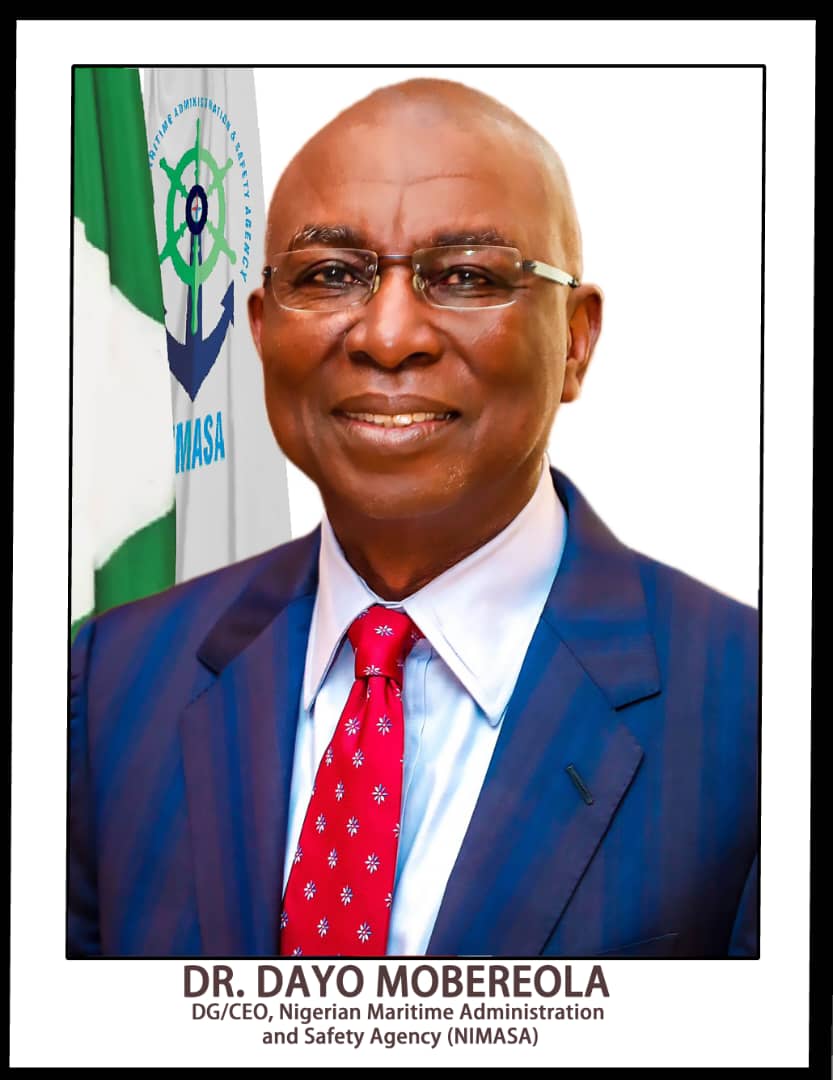
The Director General of the Nigerian Maritime Administration and Safety Agency (NIMASA), Dr. Dayo Mobereola, has reaffirmed the Agency’s commitment to advancing regional maritime integration, cooperation and capacity development across Africa.
Mobereola made this known when he received the Honorary Consul of the Republic of Liberia in Lagos, Dapo Akinosun, at the Agency’s headquarters in Lagos.
The NIMASA DG described the meeting as a reflection of the longstanding and mutually beneficial relationship between Nigeria and Liberia, particularly within the maritime sector.
According to him, stronger collaboration among African nations remains critical to unlocking the continent’s maritime potential, strengthening the Blue Economy, and promoting sustainable regional growth of the continent.
On the significance of maritime cooperation, Mobereola said: “The time has come for African nations to upscale maritime collaboration. The partnership between Nigeria and Liberia will help us build capacity, strengthen regional cooperation, and create opportunities for African youths within the global maritime industry.
“We must collectively build maritime capacity beyond borders. Sea-time training and practical exposure will position Nigerian and African youths to compete effectively in the international maritime space.”
ALSO READ: Workers Suspend Strike at NUPRC
He also appreciated the Liberian Government for supporting Nigeria’s successful bid for the Category C seat of the International Maritime Organization (IMO), noting that both countries have sustained productive maritime relations over the years.
In his address, Akinosun stated that the visit was aimed at reinforcing the enduring relationship between Nigeria and Liberia while promoting stronger maritime cooperation between both countries.
The Envoy described the maritime sector as a key driver of economic growth, regional integration, and Blue Economy development, while commending the management of NIMASA for efforts towards repositioning Nigeria’s maritime industry for sustainable growth and investment.
“Nigeria has demonstrated genuine commitment to maritime partnership and regional growth. Liberia looks forward to deeper collaboration with NIMASA in maritime administration, safety, capacity development, and trade promotion for the advancement of Africa’s Blue Economy,” Akinosun said.
Modupe Asudo
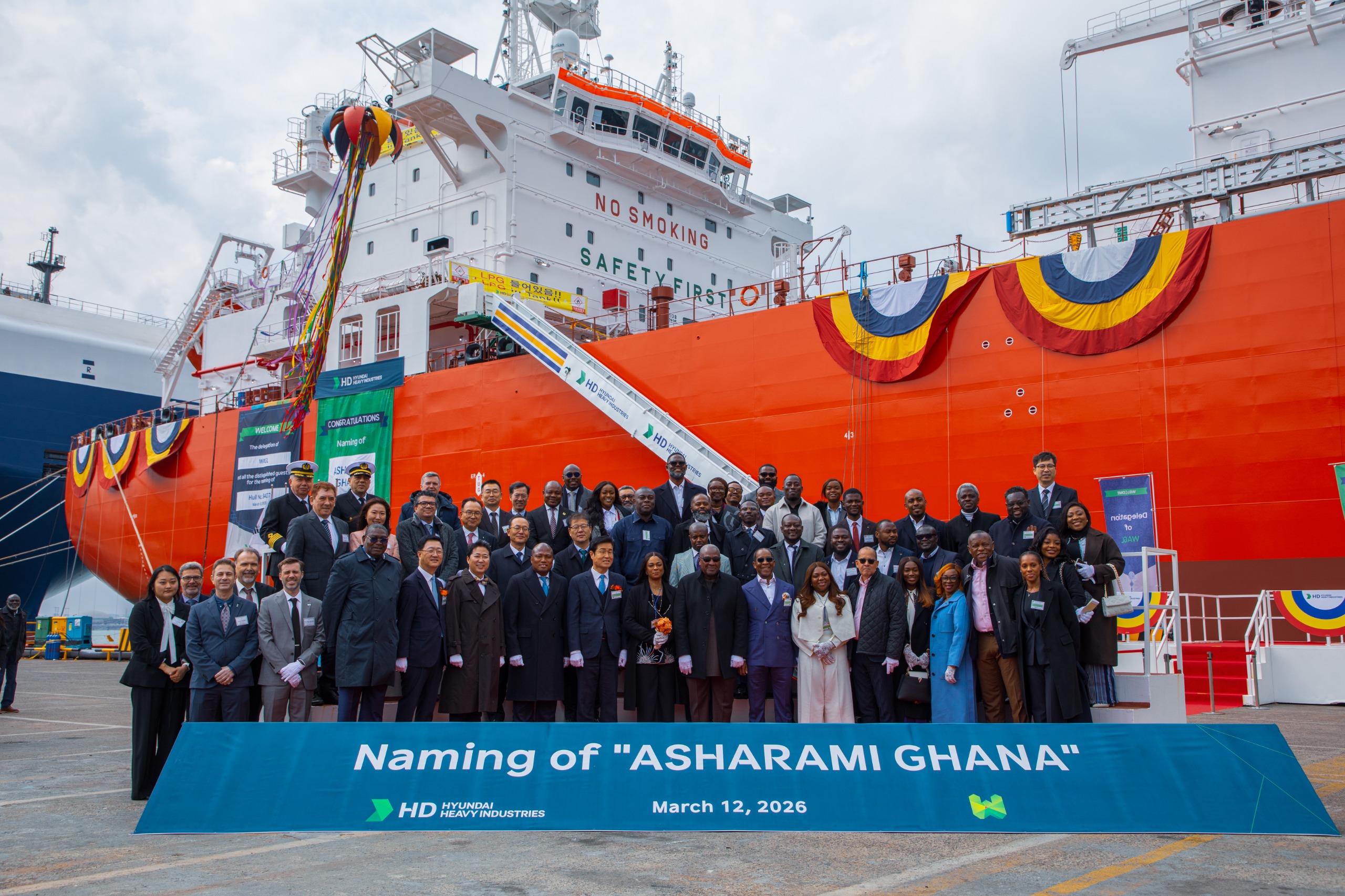
Sahara Group, a leading global energy and infrastructure conglomerate, has commissioned MT Asharami Ghana, a 40,000‑cubic‑metre Liquefied Petroleum Gas (LPG) carrier, expanding its fleet capacity, while strengthening Ghana’s clean energy supply chain and LPG distribution network.
The dual‑fuel vessel improves operational efficiency, enhances supply reliability, and supports lower‑emission LPG logistics as consumption grows across Ghana and the wider sub‑region.
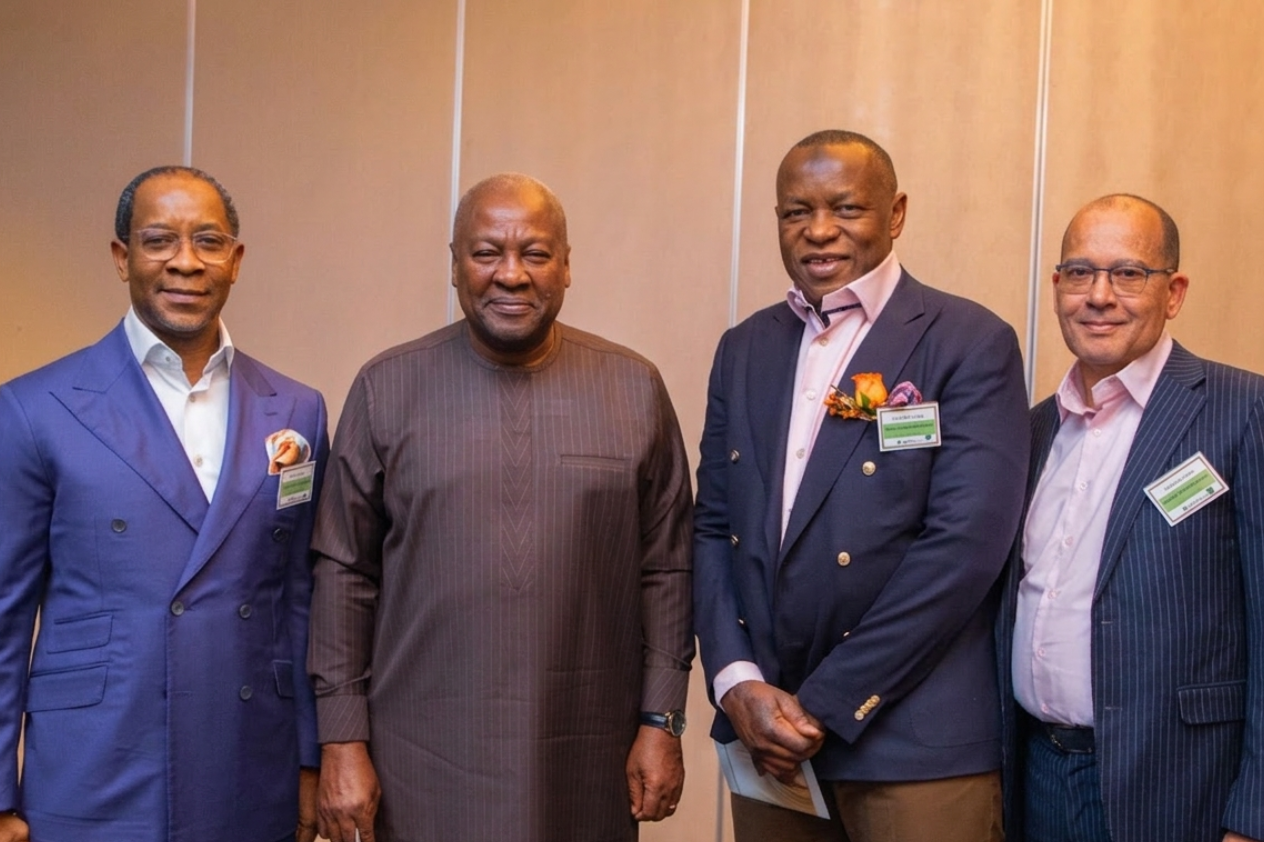
Ghanaian President Mahama and Sahara Executive Directors
Speaking at the commissioning in Ulsan, South Korea, President John Dramani Mahama described the vessel as “a significant milestone in strengthening the infrastructure that underpins the global LPG supply chain,” noting that expanded shipping capacity is critical to improving supply security, reliability and efficiency for countries that rely partly on LPG imports.
He commended Sahara Group, WAGL Energy and all partners involved for their “leadership, technical expertise and strategic foresight,” adding that the project reflects “the power of partnership” in advancing safe, efficient, and responsible energy distribution.
President Mahama wished the MT Asharami Ghana safe sails, expressing confidence that the vessel would inspire further investment and collaboration across Africa’s energy value chain.
According to Wale Ajibade, Executive Director, Sahara Group, the vessel supports Ghana’s clean energy ambitions through integrated infrastructure.
“MT Asharami Ghana is more than a vessel; it is part of a deliberate strategy to strengthen LPG supply security and support Ghana’s clean energy ambitions. It secures an additional 25,000-Metric-tonne stock security for the Ghana economy, alongside the soon to be commissioned 6000-metric-tonee of 12.000-metric-tonne land storage in Tema,” he said.
With the addition of Asharami Ghana, Sahara Group’s LPG carrier fleet now comprises six delivered vessels with a combined capacity of 202,000 cubic metres. Supported by partnerships with WAGL Energy, NNPC Limited and other stakeholders, an additional 270,000 cubic metres of capacity is under construction and due for delivery by September 2028.
Temitope Shonubi, Executive Director, Sahara Group, said Asharami Ghana is part of Sahara’s integrated LPG infrastructure strategy spanning shipping, storage, and downstream distribution globally, including the development of a 12,000‑metric‑tonne land‑based LPG storage terminal in Tema, with a 6,000‑metric‑tonne first phase scheduled for completion in May 2026.
He thanked Yaa Serwaa Alifo, MD of Asharami Ghana, for her resilience and insistence to dedicate a ship of “this magnitude solely to the Ghana Market and its landlocked neighbours.”
Ghana is targeting LPG adoption of 50 per cent of households by 2030, up from about 30 per cent today. Sahara’s investments will support clean energy access for more than 35 million people, while strengthening Ghana’s role in regional LPG trade to neighbouring and landlocked West African markets.
The commissioning comes in Sahara Group’s 30th anniversary year, guided by the Sahara Beyond XXX milestone, underscoring Sahara’s focus on building an enduring enterprise that delivers responsible growth, shared prosperity and long‑term impact across its markets.






State Govs, Wike Endorse One-Party State, Join APC Campaign Council

2027: ‘Tinubu Has Done Well’ – Wike Tells Opposition to Speak the Truth

‘Celebrate This Poor Man’ – Shettima Defends Tinubu Over Economic Crisis
FG Withdraws Charges Against ‘Fake Agency’ DG, Adeniyi Adeyemi

Shell Identifies Keys to Nigeria’s Energy Future

Nigeria Records Biggest Rise in Multidimensional Poverty Among Five Countries – UN

Trump’s Family Unveils New Cryptocurrency Platform

Senate Denies Receiving Petitions Against Tinubu’s Ambassadorial Nominees

Dangote Cement Lights Up Benue Host Communities With CSR Initiatives

Reps Recommend 3-year Jail Term For Aviation minister

Tems Sets New Record On Billboard Hot 100 Chart
