
Banking
Nigeria’s economy in danger without CBN autonomy — sanusi


ABUJA – Governor of the Central Bank of Nigeria, CBN, Mr. Lamido Sanusi, yesterday, warned that Nigeria’s economy will be greatly endangered if the independence of the apex bank was undermined.
In an interview with Bloomberg Television Africa, on the sidelines of the World Economic Forum in Davos, Switzerland, Sanusi said maintaining the independence of the bank will be a major challenge that his successor will have to contend with, saying that it is important for a strong individual to be appointed to head the bank, due to the critical role it plays in the development of the country.
He said, “Any undermining of the CBN’s independence may hurt the economy. If anyone tampers with it, the markets would punish the economy.
“The CBN is a very strong institution that needs a strong leader and I think one of the things we have achieved over the last four or five years is to show that we can have an independent Central Bank in Africa.
“It is extremely important from the fiscal side, it is extremely important from the governance side, that the governor of the Central Bank is able to speak independently of political authority and raise an alarm and concerns, and give constructive criticism and advice.”
In another interview with Reuters Global Markets Forum, Sanusi ruled out further devaluation of the currency, saying that the apex bank would continue to pursue a stable exchange rate policy as long as the foreign reserves can support.
He further expressed concern about Nigeria’s dwindling Excess Crude Account, saying that its ability to successfully protect the naira will be based on the amount in the Excess Crude Account and the Foreign Exchange Reserve.
According to him, a stable currency is absolutely critical for price stability and financial stability in general, adding that it is not in the interest of the country to devalue the naira, because it will not have impact on the country’s current account balance, given the highly inelastic nature of imports and the dominance of oil.
He said the Excess Crude Account, ECA, had now fallen to just $2.5 billion, compared with $11.5 billion a year ago, noting that until it is replenished there would be little room for a reduction in the Monetary Policy Rate, MPR, below the current 12 per cent benchmark.
He said: “We should continue to seek a stable exchange rate for as long as the reserves and monetary conditions can support this.”
Sanusi said he has no fears of tightening monetary policy further to keep inflation down and to stabilize the currency, noting that, if needed, the CBN will increase its Monetary Policy Rate from 12 per cent and the Cash Reserve Requirement on public sector funds to 100 per cent.
He added that: “I don’t think we are at the end of possible tightening cycles, but I do think that the scope for further tightening is getting narrower and narrower. We do need to rely more on other instruments.”
He said the CBN will maintain inflation within a band of six per cent to nine per cent this year, controlled majorly by monetary conditions.
He said, “Government spending has not been huge, the real challenge has been on the revenue side and on the foreign exchange side. I see no reason why from 2015, Nigeria cannot move to within the range of South Africa’s three percent to six percent, or four percent to seven percent for inflation.”
Sanusi further stated that he was unconcerned by personal relationships, saying that, “We meet at work and people should do their job. I do hope that the president will be happy if I do the job very well.”
Sanusi had over the years as CBN Governor, made a number of controversial statements, drawing the ire of the members of the National Assembly and the executive arm of government, when he commented on the pay package of the legislators and asked questions on the finances of the country, respectively.
It came to an head, when in September last year, he wrote a letter to the Presidency, alleging that about $49.8 billion of the country’s crude oil money has not been remitted by the Nigerian National Petroleum Corporation, NNPC, to the Federation Account over a 19-month period.
The NNPC denied insinuations made by the CBN Governor in the letter, saying Sanusi is ignorant of the operations of the oil and gas sector and also playing politics with the issue.
The Minister of Finance and Coordinating Minister of the Economy, Mrs. Ngozi Okonjo-Iweala, called a joint press conference with the Minster for Petroleum Resources and the CBN to explain the controversial figure and it was established after a reconciliation meeting that it was not $49.8 billion that had not paid into the Federation Account but $10.8 billion.
However, a few days into 2014, it was reported that the Presidency, angered by Sanusi’s decision to allegedly leak contents of his letter to former President Olusegun Obasanjo, asked him to resign, a request that he turned down, saying that he can not be forced out of office until June, when his tenure is expected to elapse.
– VANGUARD
Socio-Economic Rights and Accountability Project (SERAP) announced that it has filed a lawsuit against the Central Bank of Nigeria (CBN) “over the failure to account for and explain the whereabouts of the missing or diverted N3 trillion of public funds, including the over N629 billion paid to ‘unknown beneficiaries’ as part of the Anchor Borrowers’ Programme.”
The lawsuit followed the grave allegations contained in the latest annual report by the Auditor-General of the Federation, which was published on 9 September 2025.
In the suit number FHC/ABJ/CS/250/2026 filed last week at the Federal High Court in Abuja, SERAP stated that it is seeking “an order of mandamus to direct and compel the CBN to account for and explain the whereabouts of the missing or diverted N3 trillion of public funds, including detailed reports of how exactly the funds were spent.”
In the suit, SERAP is arguing that, “These grim allegations by the Auditor-General suggest grave violations of the public trust, the provisions of the Nigerian Constitution 1999 [as amended], the CBN Act, and anticorruption standards.”
SERAP is also arguing that, “These grave violations also reflect a failure of CBN accountability more generally and are directly linked to the institution’s persistent failure to comply with its Act and to uphold the principles of transparency and accountability.”
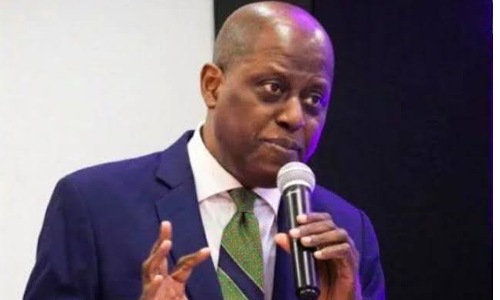
CBN Gov, Olayemi Cardoso
According to SERAP, “These violations have seriously undermined the ability of the CBN to effectively discharge its statutory functions and the public trust and confidence in the bank. The CBN ought to be committed to transparency and accountability in its operations.”
SERAP also stated in its suit that, “Nigerians have the right to know the whereabouts of the missing or diverted public funds. Granting the reliefs sought would advance the right of Nigerians to restitution, compensation and guarantee of non-repetition.”
SERAP said, “Section 15(5) of the Nigerian Constitution requires public institutions to abolish all corrupt practices and abuse of power. Section 13 of the Constitution imposes clear responsibility on the CBN to conform to, observe and apply the provisions of Chapter 2 of the constitution.”
The suit filed on behalf of SERAP by its lawyers Oluwakemi Agunbiade and Valentina Adegoke, read in part: “According to the Auditor-General, the CBN in 2022 failed to remit over N1 trillion [N1,445,593,400,000.00] of ‘the Federal Government’s portion of operating surplus’ into the Consolidated Revenue Fund (CRF) account.”
“The Auditor-General fears that the money may have been ‘diverted.’ He wants the money recovered and remitted to the treasury.”
“The CBN also failed to recover over N629 billion [N629,040,000,000.00] paid to ‘unknown beneficiaries’ as part of the Anchor Borrowers’ Programme, a programme ‘meant to support farmers to ensure sustainable food production in the country.’”
“But ‘the numbers of beneficiaries who collected the money are unknown.’ The CBN has also failed to ‘recover the money.’ The Auditor-General fears ‘the money may have been diverted’, which could have ‘contributed to the difficulty in sustaining food security in the Nation.’”
“He wants the money recovered and remitted to the treasury.”
“The CBN has also failed to recover over N784 billion [N784,410,108,864.47] ‘being 32 unpaid, overdue loans and interventions disbursed by the Bank between 2018 and May 2022.’”
“The Auditor-General said ‘there was no evidence that the Bank was doing enough to recover the loans/interventions, which ought to have been paid.’ He wants the money recovered and remitted to the treasury.”
“The CBN in 2022 also spent over N125 billion [N125,374,000,000.00] ‘on questionable intervention activities.’ The CBN claimed it spent the money ‘on intervention activities in connection with national security, the federal government, state securities, armed forces and to build the capacity of the financial sector’.”
“But the Auditor-General is concerned that the money may have been spent ‘without the approval of the National Assembly.’ There was also no document to ‘support the expenditure.’”
“The ‘expenditure also may not have been in the public interest and consistent with the objectives of the CBN in section 2 of the CBN Act.’ The Auditor-General fears the money may have been ‘diverted.’ He wants the money recovered and remitted to the treasury.”
“The CBN in 2022 also ‘unjustifiably’ spent over N1 billion [N1,792,769,160.00] to buy 43 operational vehicles for the Nigeria Immigration Service (NIS).”
“According to the Auditor-General, ‘the spending is unjustified because there is no connection with buying operational vehicles for the NIS and the objectives of the CBN as stated in section 2 of the CBN Act.’”
“The NIS also ‘failed to provide any evidence to show that the vehicles were actually supplied and delivered.’ There ‘were also no procurement and payment records or documents.’ The Auditor-General fears the money may have been ‘diverted’. He wants the money recovered and remitted to the treasury.”
“The CBN also awarded 43 contracts for over N189 billion [N189,50,066,756.73]. The Auditor-General said that ‘the contractors deliberately delayed completion of these contracts by seeking extension of the completion period.’”
“The contractors then ‘requested for variation of the contracts due to extension of completion period.’ Following the request, the CBN paid the contractors over N9 billion [N9,270,849,691.61] ‘irregular variation of contract price.’”
“There ‘were no relevant procurement documents such as contract files, procurement records, and payment vouchers’ for the payment. The Auditor-General fears ‘the money may have been diverted’ and the projects may have been abandoned.’ He wants the money recovered and remitted to the treasury.”
“The Katsina state branch of the CBN also failed to recover over N90 million [N90,163,610.00] being ‘outstanding loans and interventions disbursed to 33 small and medium enterprises during Covid 19 in 2020.’”
“The Auditor-General fears ‘the money may have been ‘diverted’ or ‘mismanaged’. He wants the money recovered and remitted to the treasury.”
“Paragraph 3112(ii) of the Financial Regulations 2009 provides: ‘Where a public officer fails to account for government revenue, such officer shall be surcharged for the full amount involved and such officer shall be handed over to either the EFCC or the ICPC.’”
“Section 51 of the Fiscal Responsibility Act provides that, ‘A person shall have legal capacity to enforce the provision of this Act by obtaining prerogative orders or other remedies at the Federal High Court, without having to show any special particular interest.’”
“The Nigerian Constitution, Freedom of Information Act, and the country’s anti-corruption and human rights obligations rest on the principle that citizens should have access to information regarding their public institutions’ activities.”
No date has been fixed for the hearing of the suit.
Banking
Millions of customers still stranded worldwide 24 hours after GT Bank online operations suffered attacks
By Yemie ADEOYE
GT Bank, one of Nigeria’s leading banks, with operations across Africa and the United kingdom, and with an asset base of about US$3.11 trillion is under a cyber attack which has left millions of its customers across the world stranded in the last 24 hours.
The bank which was renowned for its seamless online operations at inception has suffered dwindling online efficiency in recent years and this current attack didn’t come as a surprise to many of its numerous customers. However, it is becoming worrisome that over 24 hours after its online operations went down, the bank has not been able to arrest the situation and restore its online services.
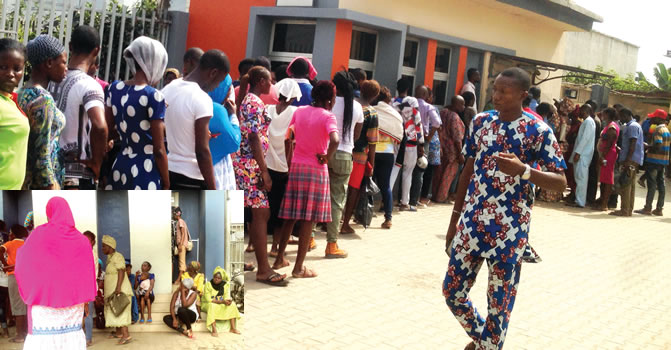
Stranded GT Bank customers outside the banks premises
Several customers of the bank took to their X (formerly known as twitter) handles to express their frustrations at the bank, as several of the customers in the diaspora are unable to access their accounts and carry on with their transactions. A customer , Jeff55 who lamented on his X handle about the development, stated that it is a thing of shock that a bank of this size couldn’t afford to have the necessary tools and experts to ensure a full protection of its online operations in this age and time.
Another customer Dimma stated that while Cybersecurity training may seem tedious, the recent #GTBank hack is a stark reminder that everyone is just a click away from a devastating attack.
Several media organisations had reported that hackers have stolen GT Bank website, and intercepted customers Data in massive phishing operation.
At the time of filing this report, Biztellers.com.ng checks on the banks website shows that it is still down and unaccessible, and neither GT Bank media and communications unit nor any of its agencies or surrogates have commented officially on the development.
Says output surge buoyed by reforms he announced in May 2024 to address gaps in PIA
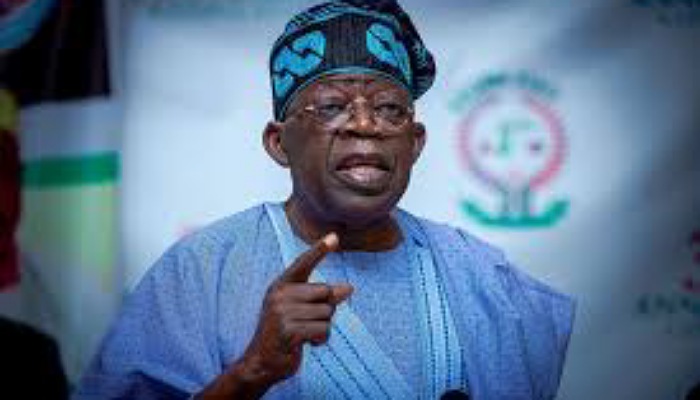
President Bola Ahmed Tinubu on Sunday declared a resurgence in the oil & gas industry, commending the increased crude production to 1.6 million barrels per day.
The president, who said this in a national broadcast, maintained that the resurgence was buoyed by the reforms he announced in May 2024 to address the gaps in the Petroleum Industry Act (PIA).
Nigeria’s crude oil output got a boost to 1.61 million barrels per day in July 2024 through the president’s directive and the industry leadership provided by the Nigerian National Petroleum Company Limited (NNPCL).
Acknowledging what he called a resurgence of the once-declining oil and gas industry in his Sunday-morning broadcast to the nation, President Tinubu said that oil investors are coming back to Nigeria.
He said; “Our once-declining oil and gas industry is experiencing a resurgence on the back of the reforms I announced in May 2024 to address the gaps in the Petroleum Industry Act. Last month, we increased our oil production to 1.61 million barrels per day, and our gas assets are receiving the attention they deserve. Investors are coming back, and we have already seen two Foreign Direct Investments signed of over half a billion dollars since then.
Read Also : BREAKING: Sell Crude To Dangote Refinery In Naira – Tinubu To NNPC Ltd
“Fellow Nigerians, we are a country blessed with both oil and gas resources, but we met a country that had been dependent solely on oil-based petrol, neglecting its gas resources to power the economy.
We were also using our hard-earned foreign exchange to pay for and subsidise its use. To address this, we immediately launched our Compressed Natural Gas Initiative (CNG) to power our transportation economy and bring costs down.
This will save over two trillion Naira a month, being used to import PMS and AGO and free up our resources for more investment in healthcare and education.
“To this end, we will be distributing a million kits of extremely low or no cost to commercial vehicles that transport people and goods and who currently consume 80% of the imported PMS and AGO.
“We have started the distribution of conversion kits and the setting up of conversion centres across the country in conjunction with the private sector. We believe that this CNG initiative will reduce transportation costs by approximately 60 per cent and help to curb inflation.”






2027: ‘Algorithms Will Not Decide Election Results’, INEC Chairman Declares

Navy Recovers 98,000 Litres of Suspected Stolen Crude in Rivers

DPRP’s Appeal Against Fuel Import Licence Ruling Earns Stakeholder Backing

State Govs, Wike Endorse One-Party State, Join APC Campaign Council

2027: ‘Tinubu Has Done Well’ – Wike Tells Opposition to Speak the Truth

‘Celebrate This Poor Man’ – Shettima Defends Tinubu Over Economic Crisis

Trump’s Family Unveils New Cryptocurrency Platform

Senate Denies Receiving Petitions Against Tinubu’s Ambassadorial Nominees

Dangote Cement Lights Up Benue Host Communities With CSR Initiatives

Reps Recommend 3-year Jail Term For Aviation minister

Tems Sets New Record On Billboard Hot 100 Chart
