
Politics
Nigeria’s President-elect’s Family Tied To Controversial London Mansion Purchase

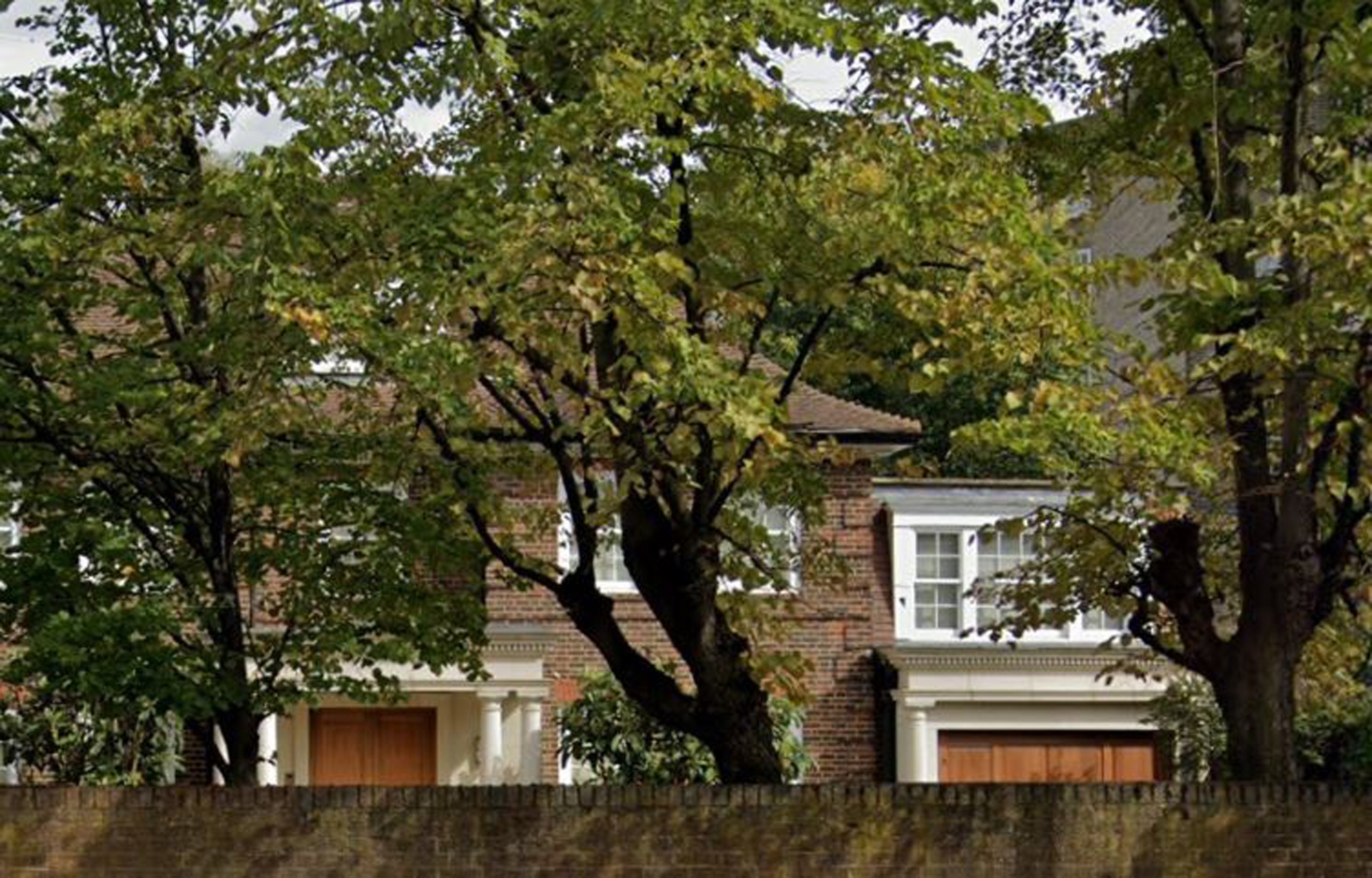
A report by Bloomberg released on Tuesday claims that company documents have revealed, that an offshore owner of an $11 million London mansion, which was targeted for confiscation as part of an investigation into one of Nigeria’s biggest corruption scandals, is controlled by the son of the country’s President-elect, Bola Tinubu.
The documents indicate that a firm owned by Tinubu’s son purchased the property in 2017. However, there is no evidence to suggest that Tinubu himself was involved in the acquisition.
President Muhammadu Buhari had visited the London property in August 2021, almost four years after the purchase was made.
Tinubu has long faced questions regarding the source of his family’s wealth, including during the recent election campaign when he and his representatives were repeatedly questioned by local and international media.
Tinubu has consistently maintained that his wealth was acquired through his inheritance of real estate, sound investments, and his previous employment as an accountant at Deloitte LLP and as an executive at the Nigerian subsidiary of Mobil Oil in the 1980s and early 1990s.
He even cited Warren Buffett as a role model for his financial success in an interview with the BBC leading up to the election.
However, recently uncovered corporate documents reveal that Tinubu’s 37-year-old son, Oluwaseyi, is the primary shareholder of Aranda Overseas Corp., an offshore company that paid £9 million ($10.8 million) to Deutsche Bank for the purchase of an extravagant three-story residence in the posh St. John’s Wood neighborhood of north London.
The property features amenities such as an eight-car driveway, electric gates, two gardens, and a gym. It is situated in an area popular among American bankers. While there is no evidence that Tinubu was involved in the acquisition of the property, the revelation is likely to fuel further questions about the source of the family’s wealth.
Despite attempts to reach out for comment, both Bola Tinubu’s spokesman and his son Oluwaseyi Tinubu have not responded to emails, phone calls, and text messages. A British lawyer listed as Aranda’s agent in the UK has also declined to comment, citing confidentiality rules.
During the time of the purchase, Nigeria’s government was pursuing the former owner of the property, Kolawole Aluko, who was accused of fleeing while owing the country a debt of over $1.5 billion in oil-trading. The state was also trying to seize the luxurious property and other assets it suspected Aluko had obtained through illicit means.
Aluko has denied all accusations of wrongdoing and claims that a court judgment earlier this year clearing his former business partner has cleared his name. However, the ruling is being contested by Nigeria’s anti-graft agency.
Bola Tinubu, aged 71, emerged victorious in the February election as the candidate of the ruling All Progressives Congress and is expected to succeed his political ally, President Buhari, on May 29. Tinubu played a pivotal role as a power broker in the opposition party merger that helped bring Buhari into power in 2015.
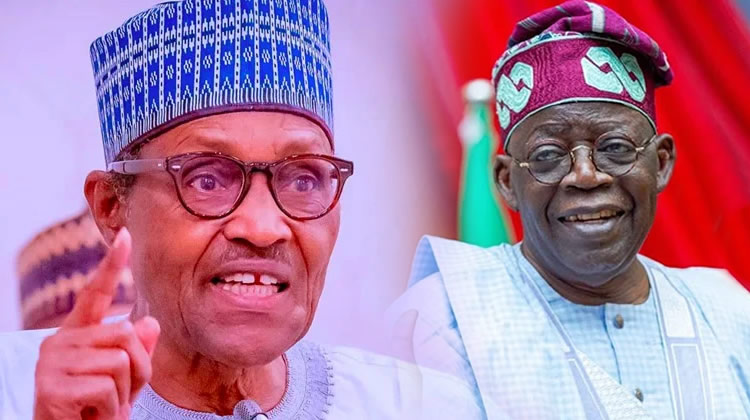
Despite President Buhari’s campaign promise to combat corruption, Nigeria’s ranking in Transparency International’s Corruption Perceptions Index has declined over the past eight years.
Bola Tinubu, who previously served as the governor of Lagos state, has faced persistent accusations of corruption and violations of the law, which he has denied.
In 1993, he relinquished $460,000 to settle a lawsuit in Chicago after US federal authorities alleged that bank accounts in his name contained the profits of heroin trafficking. Tinubu’s legal team has stated that he was never charged in connection with the case.
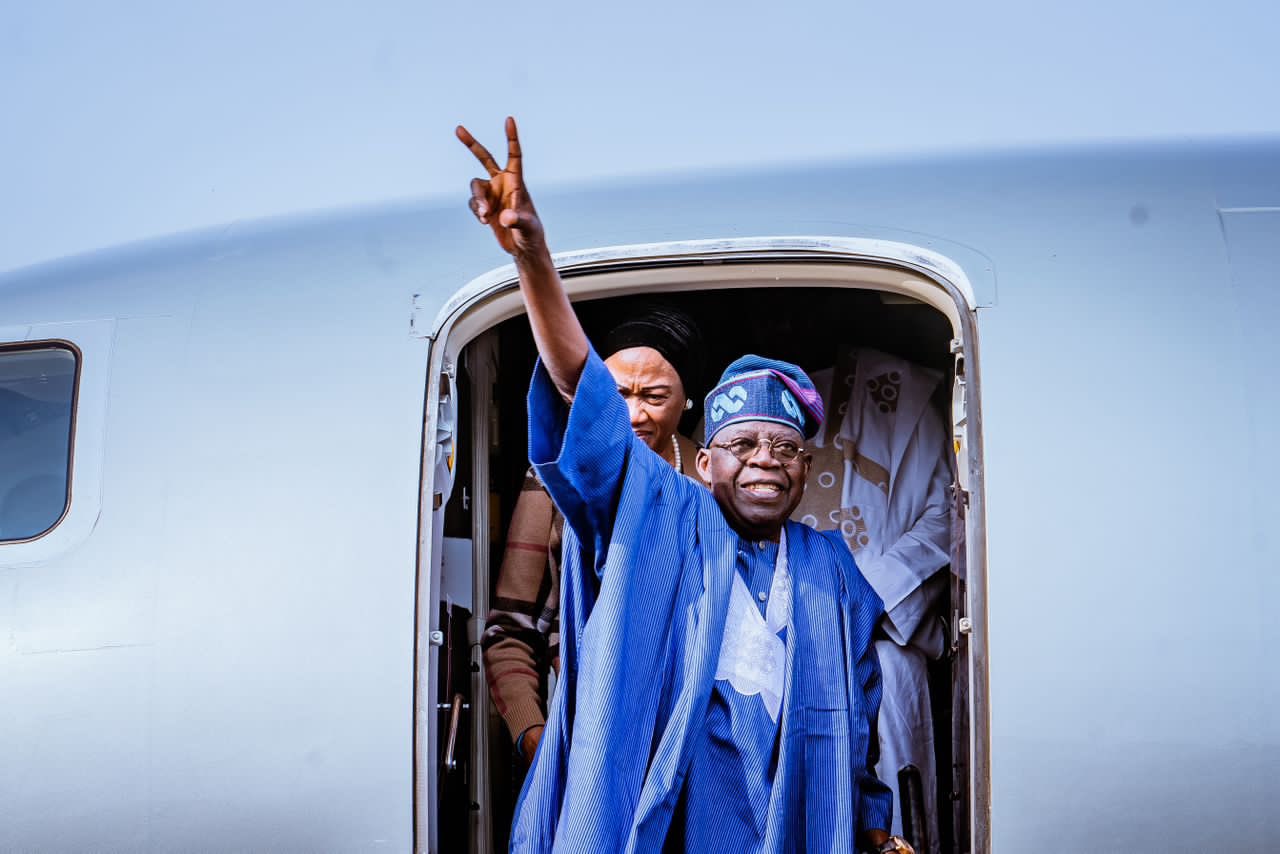
In August 2021, while Bola Tinubu was staying at the 7,000-square foot London home, he received a visit from President Buhari, as reported by the Lagos-based newspaper Premium Times.
According to documents obtained from the Pandora Papers leak of offshore companies data, shareholders and directors of Aranda, which purchased the London property, were Adegboyega Oyetola, the former governor of Osun state, and Elusanmi Eludoyin, the head of a Nigerian property group, from its establishment 24 years ago until at least 2010.
However, requests for comment from Oyetola’s spokesman and Eludoyin went unanswered.
The Newly-filed documents in response to UK anti-money laundering rules and viewed by Bloomberg this year revealed that Tinubu’s son, an advertising entrepreneur who played a prominent role in his father’s presidential campaign, has controlled Aranda, registered in the British Virgin Islands, since June 2011.
The company was registered as an overseas entity in the UK on January 20th.
During Buhari’s first term, his administration launched legal proceedings against Diezani Alison-Madueke, who was the oil minister for five years until 2015.
The government also took action against two businessmen, Kolawole Aluko and Olajide Omokore, who secured lucrative contracts during her tenure.
The US government filed a lawsuit for forfeiture in Texas in 2017, accusing Aluko and Omokore of bribing the minister and failing to pay the state-owned energy company for most of the crude oil they received.
Alison-Madueke, who is based in London, has denied the allegations and is challenging multiple forfeiture orders issued by Nigerian courts. She has also accused the anti-corruption agency of preventing her from defending herself in criminal proceedings.
In June 2016, a federal judge in Abuja, the Nigerian capital, granted a request by the Economic and Financial Crimes Commission to seize over a dozen properties owned by Aluko, both in Nigeria and abroad, including the St. John’s Wood house.
The forfeiture order was still in effect when Tinubu’s son acquired the property out of receivership 16 months later.
According to court filings, the forfeiture order granted in June 2016 against Kolawole Aluko’s assets, including the St. John’s Wood property, was made on an interim basis and was pending the conclusion of an ongoing investigation into Aluko, as of at least the end of 2018.
Aluko’s lawyer, Tokunbo Jaiye-Agoro, declined to comment on the forfeiture case, citing that it is still “sub-judice.”
In late 2016, Deutsche Bank foreclosed on the house owned by Aluko and appointed receivers to sell it. However, it is not clear whether the Nigerian government was aware of the lender’s takeover of the house as it pursued the seizure process.
According to court filings, Aluko had taken out loans using other properties as collateral. The Economic and Financial Crimes Commission (EFCC) alleged that the buildings were purchased with the proceeds of crime, and that Aluko had fled the country to avoid answering the fraud allegations against him.
In February, a Nigerian court acquitted Olajide Omokore of charges related to the same allegations. However, the EFCC, which accused Omokore of defrauding the state energy firm of $1.6 billion, has said it will appeal.
Aluko was removed from the indictment because he was not in the country at the time, and his current whereabouts are unknown.
Meanwhile, Omokore’s lawyer has objected to any continued linking of his client’s name to corrupt practices.
The Nigerian government officials, including Buhari’s spokesman, the Attorney General, the Nigerian National Petroleum Co. Ltd., and the EFCC, did not respond to requests for comment.
In October 2017, Tinubu’s son’s company, Aranda, bought one of the properties that was being targeted by the Nigerian government in its pursuit of Aluko and his assets.
The property in question is still owned by Aranda, and according to UK land records, there is currently no mortgage registered to it.
Aranda did not purchase the house directly from Aluko but from a UK unit of Deutsche Bank AG. The bank had foreclosed on the property and appointed receivers to sell it a year earlier.
Aluko had acquired the mansion via a BVI company in 2013 and paid £11.95 million, according to Premium Times. Deutsche Bank declined to comment on the matter.
It’s worth noting that the property in question is not the only luxury asset that Aluko has been linked to. In 2017, the US Department of Justice accused him and Omokore of using illicit funds to buy a $50 million penthouse in New York, a $80 million yacht, and several other assets.
According to Aluko’s lawyer, Jaiye-Agoro, his client has no knowledge of Aranda or the individuals behind the company and was not aware of the sale of the property, as Deutsche Bank had foreclosed on the house.
It is unclear whether the Nigerian authorities had requested the UK’s National Crime Agency to freeze the property.
The UK Home Office declined to comment on the matter. In March 2021, the US Justice Department announced that it had seized assets worth over $53 million, including a 65-meter superyacht and luxury homes in California and New York, purchased by Aluko for more than $160 million using what it considers to be the proceeds of corruption.

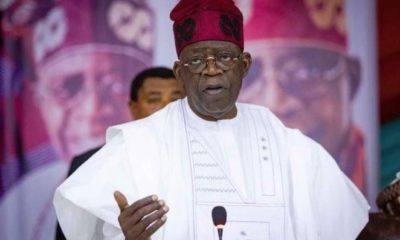



The All Progressives Congress (APC) Presidential Campaign Council is scheduled to hold its inaugural meeting on Tuesday, October 20, 2026, to consider its campaign calendar and preparations for the campaign flag-off in Kaduna.
The meeting, according to an internal memorandum released on Sunday and signed by Imo State Governor Hope Uzodimma, Secretary of the Presidential Campaign Council, will take place at 2 p.m. at the council’s headquarters, Plot 781, Herbert Macaulay Way, Central Business District, Abuja.
SEE ALSO: ‘The Entire North Has Made Up Its Mind for Tinubu’ — APC Chieftain
The notice states that attendance is “strictly by invitation” and restricted to the 134 members of the Presidential Campaign Council listed in the distribution list.
It explains that the meeting will formally commence the council’s collective assignment and provide an opportunity for members to consider and adopt the campaign calendar.
“The meeting will formally commence the collective assignment of the Council and provide an opportunity to consider and adopt the Campaign Calendar,” the memorandum stated.
It added that members would also deliberate on other related matters, including preparations for the campaign flag-off scheduled to take place in Kaduna on Saturday, October 24, 2026.
Governors, National Assembly Leaders Listed
The distribution list includes state governors, National Assembly leaders and officials assigned to various campaign directorates.
Among those listed as state coordinators are Imo State Governor Hope Uzodimma, Lagos State Governor Babajide Sanwo-Olu, Kaduna State Governor Uba Sani, Enugu State Governor Peter Mbah, Borno State Governor Babagana Zulum and Rivers State Governor Nyesom Wike.
Others include Akwa Ibom State Governor Umo Eno, Anambra State Governor Charles Soludo, Delta State Governor Sheriff Oborevwori, Ogun State Governor Dapo Abiodun and Osun State Governor Ademola Adeleke.
Senate President Godswill Akpabio and House of Representatives Speaker Tajudeen Abbas are also listed among the council’s leadership.
Campaign Directorates
The memorandum identifies officials responsible for coordinating different aspects of the campaign, including media and strategic communications, new media, finance and treasury, fundraising, policy and manifesto development, legal affairs, security and intelligence, data management, and contact and mobilisation.
The Directorate of Media and Strategic Communications lists Mohammed Idris Malagi as Coordinating Director I and Abdulaziz Abdulaziz as Coordinating Secretary I.
Segun Dada and Solomon Arowolo are listed as director and secretary, respectively, of the Directorate of New Media.
Other directorates listed include infrastructure mobilisation and sensitisation, creative sector mobilisation, artisan mobilisation, diaspora mobilisation, women mobilisation, sport sector mobilisation and mobilisation of people living with disabilities.
The document also identifies a Parliamentary Mobilisation Directorate for State Assemblies.
In the memorandum, Uzodimma thanked members for their cooperation and commitment to the assignment.
“Thank you for your usual cooperation and dedication to the success of this important assignment,” he stated.
The meeting is scheduled to hold four days before the campaign flag-off in Kaduna, which the memorandum identifies as a key item for discussion.
The Nigeria Democratic Congress (NDC) has withdrawn recognition of its diaspora chapters, citing a subsisting court judgment that reportedly restricts Nigerian political parties from establishing, operating or supervising chapters outside the country’s territorial boundaries.
The party announced the decision in a press statement released on Sunday October 18, 2026, signed by its National Publicity Secretary, Osa Director, Esq.
The statement followed a review of the party’s relationship with its foreign chapters operating across different countries, with the NDC explaining that its decision was informed by a court judgment concerning the legality of diaspora chapters belonging to Nigerian political parties.
SEE ALSO: Kwankwaso Rejects ADC Claims, Says NDC Won’t Withdraw From 2027 Race
The party referenced the case of Prof. Ali Alao v. All Progressives Congress (APC) & Anor, Suit No. CV/187/2025, decided by Justice Peter Kekemeke of the Federal Capital Territory High Court in Maitama.
According to the NDC, the court held that “no political party registered in Nigeria has the legal authority to establish, operate or supervise chapters outside the country’s territorial boundaries.”
The statement further quoted the court as ruling that “diaspora chapters of Nigerian political parties were illegal, unconstitutional, and unknown to the laws of the Federal Republic of Nigeria.”
Explaining its decision to comply with the reported judgment, the party said it was withdrawing all previous recognition granted to its foreign chapters.
“Therefore, the NDC, in deference to the said judgment, is halting recognition of foreign chapters of the party and all earlier recognitions are hereby withdrawn,” the statement read.
NDC Appreciates Diaspora Supporters
Despite the withdrawal of recognition, the party expressed appreciation to its diaspora supporters, acknowledging their contributions, loyalty, guidance and continued commitment to its activities.
The NDC said it remained grateful for the support it had received from the various foreign chapters, even as it moved to address the legal implications of the court judgment.
“We are deeply appreciative of the immense support of various foreign chapters in the diaspora. We are grateful for their unwavering loyalty, guidance, and contributions to the party,” the statement said.
The party also disclosed that a harmonisation process had been initiated in jurisdictions where more than one group existed, with the aim of bringing the different groups under a single umbrella.
It added that the judgment was still under review and had been referred to its Legal Department for further advice and guidance.
“The party is currently studying the judgment and has referred same to its Legal Department for further advice and guidance,” the statement added.
NDC Addresses Peter Obi’s Diaspora Supporters
The NDC also acknowledged the significant interest Nigerians living abroad have shown in its candidates, particularly its presidential candidate, Peter Obi.
The party encouraged diaspora supporters to sustain their interest and continue supporting its political activities despite the withdrawal of formal recognition from its foreign chapters.
“The party is aware of the tremendous interest that Nigerians in the diaspora have in our candidates, especially our presidential candidate, Mr Peter Obi and we thank them and encourage them to sustain such interest with more vigour,” the statement read.
The party further clarified that the withdrawal of recognition did not mean diaspora supporters should stop meeting or interacting with one another.
Instead, it encouraged them to maintain their engagements, assuring them that the party would continue to communicate with them through appropriate and lawful channels.
“We encourage our supporters in the diaspora to continue to meet and interact, and we shall remain in touch with them through appropriate and legal channels,” the statement said.
NDC Criticises APC, Calls for a New Nigeria
The party also used the statement to urge its supporters to remain committed to its political objectives, calling for collective efforts to address what it described as Nigeria’s present state of drift and hopelessness under the ruling All Progressives Congress (APC).
“Collectively, we must work hard to build a Nigeria of our dreams. We must rescue Nigeria from its present state of drift and hopelessness foisted on it by the rudderless APC,” the statement read.
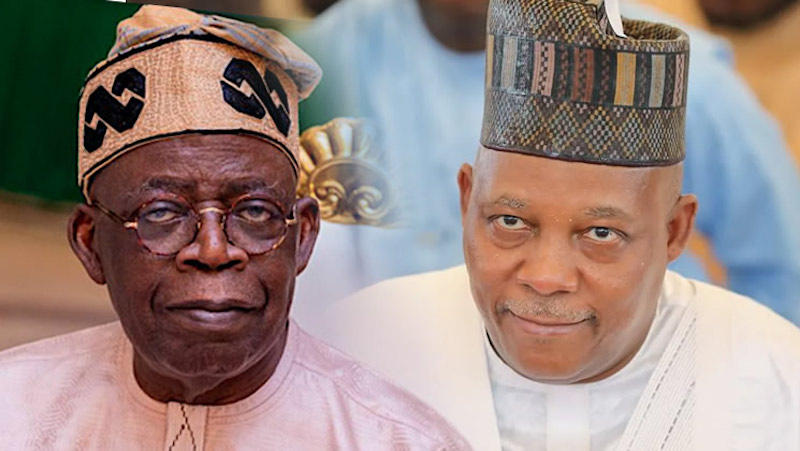
Senior Special Assistant to the President on Media and Communications in the Office of the Vice President, Stanley Nkwocha, has questioned the implications of a proposed one-term presidency arrangement involving former Anambra State Governor Peter Obi and former Kano State Governor Rabiu Musa Kwankwaso, warning that it could affect the South-East’s long-term political aspirations.
Nkwocha raised the concerns on Saturday during a strategic sensitisation meeting of the All Progressives Congress (APC) in Imerienwe Ward 5, Ngor Okpala Local Government Area of Imo State, where he urged the South-East to embrace strategic political alliances ahead of the 2027 general elections.
The presidential aide said the region needed to reassess its political strategy in view of its electoral strength, national political realities and the development opportunities available through engagement with the Federal Government.
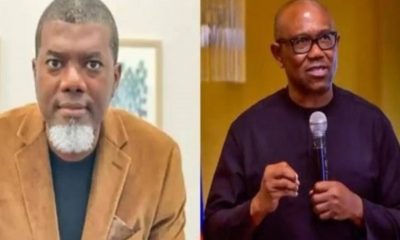
ALSO READ: Tinubu vs Obi: Omokri Fires Back at Peter Okoye Over Call to Retire Older Politicians
He questioned whether a one-term presidency arrangement would serve the collective interests of the South-East, particularly in its pursuit of national political leadership.
Nkwocha also argued that the region’s comparatively smaller registered voter population made political partnerships with other geopolitical zones important to its long-term ambitions.
Nkwocha Urges South-East to Support Tinubu, Shettima
The presidential aide maintained that President Bola Tinubu’s administration had demonstrated its commitment to the South-East through infrastructure projects, institutional reforms and economic investments, despite the region’s voting pattern during the 2023 presidential election.
He cited the establishment of the South-East Development Commission, the reconstruction of major federal highways, improvements in transport infrastructure and other economic initiatives as evidence of the administration’s commitment to inclusive national development.
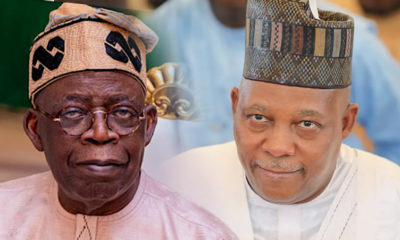
Nkwocha subsequently urged his kinsmen to support the Tinubu administration and Vice President Kashim Shettima ahead of the 2027 elections.
“My boss, Vice President Kashim Shettima, is on the ballot. Please support the Vice President,” he appealed.
His remarks came as the APC intensified grassroots mobilisation in Imo State, with community leaders and political stakeholders at the meeting pledging to consolidate their political structures under the ruling party.
Imo Government Official Backs APC Mobilisation
Speaking at the event, the Deputy Chief of Staff (Operations) to Imo State Governor Hope Uzodimma, Enyinnaya Onuegbu, recalled Imerienwe’s history of political organisation and grassroots mobilisation.
“We used to come to Imerienwe to learn how to play politics,” Onuegbu said, noting that Ngor Okpala had traditionally been recognised for delivering substantial bloc votes during elections.
He also commended Uzodimma for infrastructure development across Imo State, particularly improvements in aviation facilities that have enabled night flight operations at the Sam Mbakwe International Cargo Airport.
“Under Governor Hope Uzodimma, aeroplanes now land at the Imo State Airport at night. More good things are coming in the future,” he said.
Onuegbu expressed confidence in the community’s commitment to the ruling party ahead of the next general elections.
“Imerienwe will deliver all APC candidates in the coming elections,” he declared.
Community Leaders Pledge Support for Tinubu, Shettima
The Chairman of Ndi Nze Ngor-Okpala and Okenze Ngor-Okpala Ggburukuru, Chief Sylvester Okenze Obinna, urged community members to support Nkwocha, commending his contributions to the development of the area.
He called on the people to demonstrate their appreciation through unity and electoral support for Tinubu and Shettima in 2027.
“Our son, Stanley Nkwocha, has made us proud, and we must stand together to support him. The best way to appreciate his efforts and the opportunities his position has brought to our community is to remain united and vote overwhelmingly for President Bola Ahmed Tinubu and Vice President Kashim Shettima in the coming elections. We must show that Ngor Okpala stands firmly behind its own,” Obinna said.
Retired Air Vice Marshal Remigius Ekeh also stressed the importance of unity and strategic political engagement in advancing the community’s interests.
“Politics is both local and strategic. Strategic thinking must be used in order to make a success of our political ambitions,” he said.
Earlier, the Village Chairman of Umunakara Community, Ifeanyi Nwaiwu, announced that political leaders and supporters across seven villages had resolved to unite under the APC.
The villages are Umuchieze, Umukoha, Umundiukwu, Umunakara, Umunwoko, Umuodu and Umuokoji.
“There is no other party in contention. We are all collapsing our political affiliations into the APC,” Nwaiwu declared.
He also assured the party leadership of the community’s commitment to the mobilisation exercise, saying, “We will not shame you.”
During the meeting, the ward chairman presented requests for the grading of community roads and the installation of 50 additional solar-powered streetlights at strategic locations to improve accessibility, security and economic activities.
The meeting was attended by community leaders, women and youth representatives, political stakeholders and APC supporters from Imo State and other parts of the South-East, with discussions focusing on political participation, grassroots organisation and community development priorities.
Other attendees included APC Owerri Zonal Women Leader, Lady Tina Okere; APC Vice Chairman in Ngor Okpala Local Government Area, Georginia Onuoha; the party’s local government secretary, Emmanuel Ukachukwu Dubic; and its youth leader, Chinedu Uhuka, among other political stakeholders.





APC Campaign Council Sets Inaugural Meeting for Tuesday Ahead of Kaduna Flag-Off

Renaissance Capital Sees Significant Upside in Dangote Refinery, Lifts Valuation by 33.4%

Dangote Refinery IPO Elicits Participation in 90 Countries Globally

Makinde Fires Back at Presidency, Insists on ₦9tn NLNG Dividend Shortfall

‘NELFUND Is Not an Excuse for School Fees Hikes’ – NANS Warns Universities

NANS Threatens to Shut Down AE-FUNAI Over School Fees Hike

Trump’s Family Unveils New Cryptocurrency Platform

Senate Denies Receiving Petitions Against Tinubu’s Ambassadorial Nominees

Dangote Cement Lights Up Benue Host Communities With CSR Initiatives

Reps Recommend 3-year Jail Term For Aviation minister

Tems Sets New Record On Billboard Hot 100 Chart
