
Business
NNPC, Dangote Team Up to Power Nigeria’s Energy Future

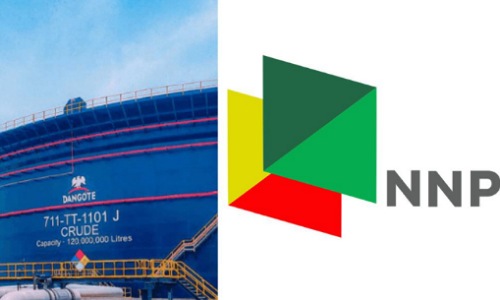
Nigeria is set to take a giant leap in energy security and industrial growth as NNPC Limited and the Dangote Group strengthen their strategic partnership.
The renewed collaboration, solidified during a visit by NNPC CEO Engr. Bashir Bayo Ojulari to the Dangote Refinery in Ibeju-Lekki, Lagos, signals a new era for the nation’s energy sector.
The alliance is expected to unlock vast opportunities across Nigeria’s oil and gas value chain, including refining, gas supply, shipping, and trading.
SEE ALSO: How Dangote’s Full Refinery Capacity Could Push Naira Below ₦1,000 — Otedola
Engr. Ojulari said the partnership will enhance visibility of NNPC-Dangote operations and “create synergies that deliver real benefits to Nigerians.”
For his part, Alhaji Aliko Dangote, President of the Dangote Group, highlighted that the collaboration will help maximize efficiency, drive industrial expansion, and ensure Nigerians reap the benefits of the country’s natural resources.
The strategic move also reflects confidence in President Bola Ahmed Tinubu’s reforms in the oil and gas sector, which have made Nigeria more attractive to both local and international investors.
NNPC currently holds a 7.25% stake in the Dangote Refinery, reinforcing its commitment to domestic refining and energy self-sufficiency.
Both parties confirmed their resolve to continue working together to strengthen Nigeria’s energy infrastructure, expand industrial capacity, and contribute to national prosperity.








Frequent flight delays and cancellations across Nigerian airports have left local air travellers expressing frustration over prolonged waiting times and disrupted travel plans.
These disruptions have often left departure halls at several airports across the country crowded in recent times, leaving many stranded and delayed passengers wearing long faces.
A visit to the domestic terminals of the Murtala Muhammed Airport (MMA), Lagos, lent credence to the development, with passengers anxiously waiting for updates on delayed flights.
Similarly, at the domestic terminal of the Nnamdi Azikiwe Airport (NAA), Abuja, the departure hall was crowded, with travellers expressing concern over the frequency of flight disruptions.
For instance, one of the passengers, Odogwu, voiced frustration that his flight had been delayed both on his journey from Lagos to Abuja and on his return trip.
He said: “My flight was delayed while I was going to Abuja from Lagos. It was delayed as I am returning. I am stressed, honestly. And I am not alone. Delay announcements are many, about four in two hours today. Terrible.”
Another passenger, Ochonoghor, whose flight from Warri to Lagos was disrupted, Sunday, said he was forced to spend additional money after the flight was rescheduled to the following day.
He said: “I had to part away with another money after my flight scheduled for 5pm on Sunday was shifted to the next day. I needed to be in Lagos by 9am on Monday because I had an important meeting to attend.”
READ ALSO: 2027 Election Might Witness Voter-Apathy as Registered Voters Shun PVC Collection
Recently, a passenger, Segalink, also took to X, formerly Twitter, to express frustration over a prolonged delay on an Air Peace flight from Asaba to Lagos.
He wrote: “Air Peace is interesting. Flight P47863 from Asaba to Lagos which was scheduled to depart at 15:00 on 26/09/2026 (yesterday) kept being rescheduled allegedly due to maintenance and the majority of the passengers slept at the airport in the hope of flying only to be told around 12am that they would fly by 5am this morning.
“Unfortunately, that promise wasn’t fulfilled until almost 9am today. These were passengers who bought tickets for a 10am flight originally from Asaba to Lagos. No refreshments or hotel accommodation were provided. Is this how we will continue? These are folks who will not permit you to board if you are 15 minutes late to the counter.”
Recall that the Nigeria Civil Aviation Authority, NCAA’s, Summary of Domestic Airline Flight Disruptions Operations for August, which showed that domestic airlines collectively recorded 4,801 disruptions out of 7,961 operated flights.
Air Peace recorded the highest number of disruptions, with 1,337 delayed or cancelled flights out of 1,864 operated during the month. United Nigeria Airlines delayed or cancelled 951 of its 1,231 operated flights, while Enugu State-owned Enugu Air recorded 586 disruptions out of 878 operated flights. ValueJet disrupted 438 of its 767 operated flights.
Akwa Ibom State-owned Ibom Air recorded 257 disruptions out of 560 operated flights, while Arik operated 301 flights, of which 188 were delayed and one was cancelled.
However, the airlines faulted the statistics, saying most of the disruptions were caused by factors beyond their control.
The 30-day petrol discount scheme unveiled by the Nigerian government is expected to help beat inflation by reducing transportation costs, in addition to easing the prices of food and other essential commodities.
The Petroleum Products Retail Outlets Owners Association of Nigeria (PETROAN) made the assertion, urging the federal government to allocate 30 percent of the discounted petrol volume to its members to ensure wider distribution across the country.
The national president of PETROAN, Dr Billy Gillis-Harry, while commending the federal government for recognising the strategic importance of transportation to the Nigerian economy, noted that the intervention was coming at a critical period for Nigerians.
Gillis-Harry said the intervention could produce benefits beyond the transport sector.
READ ALSO: Presidency Explains Petrol Discount Offering
He opined that lower petrol costs for transport operators could help commuters, traders, farmers, manufacturers and other businesses.
He, however, urged the government, the Nigerian National Petroleum Company Limited (NNPC Ltd), transport operators, petroleum marketers and relevant agencies to cooperate fully to ensure that the scheme achieved its objectives.
The PETROAN also called on the federal government to assess the outcome of the 30-day programme and consider further measures to sustain its economic benefits.
It said additional interventions would be necessary if the scheme produced measurable reductions in transportation costs and inflationary pressures.
The PETROAN maintained that transportation costs had a direct impact on the prices of food, agricultural produce, manufactured goods and other essential commodities.
The association said a reduction in the cost of petrol for public transport operators could translate into lower fares and provide relief for commuters and households.
It said, “When transport operators spend less on petrol, commuters could benefit from more affordable fares, traders could move goods at lower costs, farmers could access markets more efficiently, and businesses could reduce logistics expenses.”
According to the association, lower transportation costs could also reduce the cost of moving agricultural produce from rural communities to urban markets.
The PETROAN said this could help moderate the prices of food and other essential commodities, particularly in areas where transportation and logistics accounted for a significant portion of the final cost of goods.
It added that the policy could support small businesses, traders, farmers, manufacturers and other productive sectors that depended heavily on road transportation.
“Reduced logistics expenses could enable businesses to sustain operations, protect jobs and improve productivity,” the association said.
The PETROAN further stated that the intervention could ease inflationary pressures by reducing the transportation component embedded in the prices of goods and services.
It said consumers could experience some relief from the current cost-of-living pressures if the savings were effectively transmitted across the supply chain.
The association, however, urged the federal government to implement the programme transparently and efficiently.
It called for clear guidelines on the exact discount per litre, eligible beneficiaries, monitoring mechanisms and distribution channels.
The PETROAN said the success of the policy should not be measured only by the volume of petrol sold at a discount.
Rather, it said the government should assess the programme based on its actual impact on transportation fares, food prices, business operating costs and household purchasing power.
The association appealed to the Federal Government to allocate 30 per cent of the total volume of discounted petrol to PETROAN members.
It said such an allocation would facilitate wider national distribution and ensure that the benefits of the intervention reached Nigerians in urban and rural communities.
The PETROAN stated that its retail outlets were spread across virtually all local government areas, communities and villages in Nigeria.
It said its network included some of the country’s most remote and underserved locations, including communities where NNPC retail outlets were not available.
“PETROAN can state unequivocally that its retail outlets have a presence in some of the most remote and underserved locations across Nigeria,” the association said.
It added that its grassroots network gave it the capacity to take petroleum products and government interventions beyond major cities and commercial centres.
“Consequently, PETROAN is requesting that 30 per cent of the total volume of discounted petrol be allocated through its retail network to guarantee wider national distribution and ensure that the benefits of the intervention reach Nigerians across local government areas, towns, villages and hard-to-reach communities,” it said.
The association also said its direct relationship with petroleum consumers positioned it to support and pilot the Federal Government’s compressed natural gas initiative across the country.
The PETROAN added that leveraging its existing retail network for CNG deployment would accelerate access to the alternative fuel and encourage its adoption.
It said the approach would be particularly useful in communities where access to alternative energy solutions remained limited.
“Given its extensive grassroots presence and direct relationship with petroleum consumers, PETROAN is strategically positioned to champion and pilot the federal government’s CNG initiative across the country,” the association said.
It added that the use of existing retail outlets could support the Federal Government’s broader energy-transition and economic objectives.
The association reiterated its commitment to supporting policies that promoted affordable petroleum products, lower logistics costs, economic stability, sustainable business activity and improved living standards for Nigerians.

The minister of state, Petroleum Resources (Gas), Ekperikpe Ekpo, has said that Nigeria is fast-tracking efforts to transform the country’s gas resources to increasingly serve as a catalyst for industrialisation, power generation, transportation, manufacturing, fertiliser production, LPG adoption and other productive activities across our economy.
Speaking at the 2026 energy conference of the Nigeria Association of Energy Correspondents of Nigeria (NAEC) with the theme,”
Access to Assets: Empowering Players and Driving Growth” the minister represented by his technical adviser, Abel Nsa, said currently the federal government has continued to prioritise critical gas infrastructure.
He listed some of the initiative to include the AKK and OB3 Gas Pipelines which he described as critical to strengthening the national gas network and connecting supply with major demand centres.
He said the ongoing transformation is considered essential as infrastructure is the bridge between our resources and the industries, power plants, businesses and households that need them.
The Minister espouse that access to assets, therefore, must be understood more broadly than access to licences or acreage.
READ ALSO: Adeshina Hinges Nigeria’s Energy Growth on Technical Expertise, Quality Investment
According to him, An investor may have an asset but still be unable to develop it because of inadequate infrastructure, financing constraints, regulatory uncertainty, limited evacuation capacity or insufficient market access, adding, “Our objective must consequently be to create an ecosystem where access to resources is matched by access to infrastructure, capital, markets and predictable regulation.”
He further informed the audience that “We are also focused on creating a more attractive environment for investment.
“The reforms introduced under the Petroleum Industry Act 2021, together with targeted fiscal and regulatory measures for gas development, are intended to improve competitiveness, reduce barriers and enhance project bankability. Our message to credible investors is clear: Nigeria is open for responsible investment in its gas sector.”
In achieving its target, he said government recognises that it cannot develop the sector alone as it needs the capital, technology, expertise and commercial discipline of the private sector.
“We also need stronger collaboration among regulators, financial institutions, development partners and industry players to ensure that viable gas projects can move from concept to final investment decision and, ultimately, production.” he added.
Ekpo, said the opportunities created by the gas resources must not be limited to a few large players, pointing out “We want to see greater participation by indigenous companies, independent producers, infrastructure developers, technology providers and emerging energy businesses.”
Therefore he noted that empowering more capable Nigerian players will deepen competition, strengthen local capacity and ensure that a greater share of the value created within the energy sector remains in the Nigerian economy.
The minister also added, “Our objective is also to maximise domestic gas utilisation. We must increasingly convert our gas resources into value-added products rather than viewing gas solely as a commodity for export. Gas-to-power, LNG, LPG, CNG, fertiliser, petrochemicals and other gas-based industries offer enormous opportunities for investment, industrial development and job creation.
“In this regard, the government’s initiatives to expand LPG access and promote CNG adoption demonstrate our commitment to bringing the benefits of gas closer to ordinary Nigerians. Our ambition is to ensure that gas is not simply produced in Nigeria, but that Nigerians can use it, build businesses around it and benefit economically from it.:
He also added that government will ensure that access to assets translates into meaningful Nigerian participation and community development.
He said the Nigerian Content must continue to evolve from participation in contracts to ownership of capabilities, technology, capital and assets and host communities must also see tangible benefits from petroleum operations.
This is essential for building an industry that is sustainable, inclusive and supported by the people. Ekpo added.
He reaffirmed the commitment of the government to provide the policy certainty, regulatory clarity, infrastructure and enabling environment that allow investors and operators to succeed.
In return, he said government expect industry players to bring capital, innovation, efficiency and a commitment to developing Nigeria’s resources responsibly.
The partnership between government and industry must therefore be built around a shared objective: turning Nigeria’s energy potential into measurable economic growth, he said.
He noted that Nigeria has the resources; but what is need led now is to unlock their full value and move from access to assets, to development of assets; from development to utilisation; and from utilisation to broad-based economic growth.
The federal government, he said remains committed to creating the conditions for this transformation and urged all stakeholders to work with government to build a gas sector that is investable, competitive, inclusive and capable of powering Nigeria’s next phase of growth.
He said that Access to assets must ultimately become access to opportunity, prosperity and national development. I thank you, and God bless the Federal Republic of Nigeria.






‘Don’t Rush the Refinery’ – Kenyan Presidential Candidate Warns Dangote

2027 Election: ‘Look Beyond the Noise’ – Showunmi Urges Nigerians to Give Tinubu More Time

NLC Ultimatum: Wage Demands Can Be Resolved in Two Weeks – HR Expert

LASTMA Alerts Motorists to Traffic Delays on Ogunnusi Road
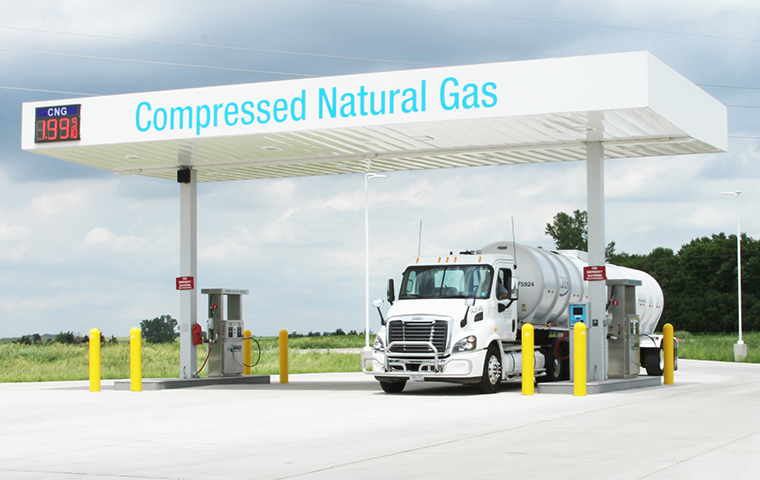
CNG Initiative: Why Tinubu’s Gov’t Moved Beyond Plan for 3,000 Buses – Coker

2027: Yilwatda Lists Tinubu’s Projects, Appointments as Reasons for North Central Support

Trump’s Family Unveils New Cryptocurrency Platform

Senate Denies Receiving Petitions Against Tinubu’s Ambassadorial Nominees

Dangote Cement Lights Up Benue Host Communities With CSR Initiatives

Reps Recommend 3-year Jail Term For Aviation minister

Tems Sets New Record On Billboard Hot 100 Chart
