
NEWS
NNPC Remits 4.5trn To FG Account – Kyari

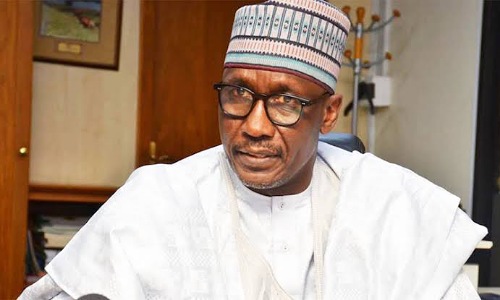
The Nigerian National Petroleum Company Limited (NNPC Ltd) remitted N4.5 trillion in revenue to the Federation Account in October 2023.
Mele Kyari, the Group Chief Executive Officer (GCEO) of NNPC Ltd, shared this update during an engagement with the Senate Committee on Finance on Wednesday.
Kyari expressed optimism that the current challenges in the country would transition into prosperity soon.
During his presentation, the GCEO of NNPC Ltd assured lawmakers that the reforms outlined in the Petroleum Industry Act (PIA) had positioned the company on par with global counterparts in the oil sector, expressing confidence that this would pave the way for brighter prospects both for the company and Nigeria as a whole.
He said, “The NNPC Ltd that is a creation of the National Assembly, requires that we conduct business transparently and profitably in line with provisions of the law and to create value for shareholders, and not to lose money, and also to continue to add value and pay dividends to shareholders.
“I’m glad to inform you Mr chairman and Distinguished Senators that as at October we were able to deliver N4.5 trillion into the federation account as a company to this country in 2023.
“Every national oil company has a trading company. We have always had one which never worked prior to PIA’s implementation.
“Currently NNPC Ltd is delivering on its mandate through the PIA reforms that have brought us to be at par with our peers, across the globe, and not to lose money anymore.”





The Minister of Finance and Coordinating Minister of the Economy, Taiwo Oyedele, has said the petrol discount introduced by NNPC Retail Limited could strengthen the company’s business and potentially increase profits and dividends to the Federation, despite the reduction in its retail margin.
Oyedele explained that the discount, which took effect on October 1, 2026, was a commercial decision by NNPC Retail to lower petrol prices for consumers without relying on public funds.
The minister stated this in a press release issued by the Federal Ministry of Finance on Friday, October 9, 2026, while addressing concerns that the price reduction represented a return of fuel subsidy.
According to him, the company could offset the reduction in its earnings per litre by selling more petrol over time and retaining customers beyond the discount period.
SEE ALSO: NNPC Ltd Anchors Meeting Crude Production Target on Sustained Drilling
“A smaller margin or temporary zero margin on each litre can be more than offset by selling more litres over time,” Oyedele said.
He added that the discount could strengthen customer loyalty, potentially increasing NNPC Retail’s profitability and the dividends paid to the Federation.
Why NNPC Is Cutting Its Retail Margin
Oyedele explained that the petrol discount was different from the fuel subsidy regime abolished by the Tinubu administration in 2023.
He said a margin discount occurs when a retailer voluntarily reduces its profit margin and passes the savings to consumers, with the retailer bearing the cost.
A fuel subsidy, by contrast, involves the government paying part of the price consumers would otherwise pay, using public revenue.
“The cost of the discount is borne by the retailer alone,” the minister said.
He maintained that the NNPC Retail discount was not being financed through the federal budget or the Federation Account.
According to him, NNPC Retail purchases petrol from the Dangote Refinery and other suppliers at market prices on commercial terms before adding its retail margin to determine pump prices.
The discount, he explained, comes from that margin, allowing the company to reduce prices while keeping them market-reflective.
NNPC Discount Could Benefit Consumers and Government
The minister said NNPC Retail Limited, a wholly owned subsidiary of NNPC Limited, was established more than 20 years ago to support the availability, distribution and affordability of refined petroleum products across Nigeria.
He noted that the company’s responsibilities extended beyond maximising retail profits to ensuring that petroleum products remained accessible to consumers nationwide.
According to Oyedele, NNPC Retail has historically sold petrol at prices below those of other marketers, with the current discount continuing that role.
He argued that lower margins do not necessarily translate into lower overall profits, as increased sales volumes could compensate for reduced earnings on individual litres.
The minister also said improved customer retention could support the company’s business beyond the discount period.
However, he did not provide projected sales figures or financial estimates showing how much additional profit or dividend revenue the company could generate.
Minister Dismisses Concerns Over Federal Revenue
Oyedele also addressed concerns that reducing NNPC Retail’s margin could affect the profits of NNPC Limited and reduce dividends paid to the Federation.
He said the outcome would depend on the company’s ability to increase sales and offset the lower margin through higher volumes.
The minister maintained that the commercial arrangement could benefit both consumers and government if the company succeeded in expanding sales while maintaining profitability.
He described margin discounts as a routine commercial strategy used by retailers internationally.
Oyedele Rules Out Market Distortion and Smuggling Concerns
The finance minister further argued that the discount would not significantly distort the domestic petrol market or create new incentives for cross-border smuggling.
He said the retail margin on petrol accounted for less than five per cent of the pump price, limiting the extent to which a discount could widen the price gap between Nigeria and neighbouring countries.
According to him, petrol prices in neighbouring countries were already 20 to 40 per cent higher than in Nigeria.
He therefore maintained that reducing the retail margin would not create the kind of market distortions associated with previous fuel subsidy arrangements.
Government Lists Other Measures to Reduce Fuel Costs
Acknowledging the pressure of fuel prices on households and businesses, Oyedele said the discount was one of several measures being pursued by the government to ease the burden on Nigerians.
He listed the expansion of compressed natural gas transport, the waiver of taxes and duties on petrol, and the removal of illegal levies that increase transportation costs among the government’s interventions.
The minister said the measures were designed to provide relief without returning the country to a fuel subsidy regime that the government considers financially unsustainable.
He reiterated that the NNPC Retail discount lowers petrol prices without direct public funding and could strengthen the company’s commercial performance if increased sales offset the reduced margin.

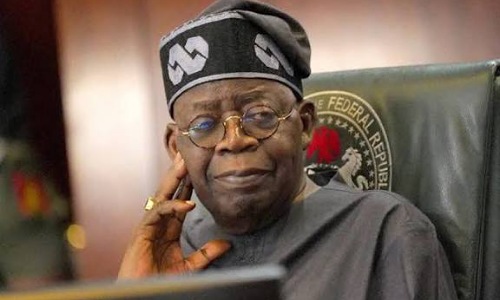
The Federal Government on Thursday announced that the Nigerian National Petroleum Company Limited will forgo its retail profit margin on petrol and sell to Nigerians at cost, as part of measures to cushion households from global crude oil price shocks.
This was as the Presidency said the arrangement, backed by President Bola Tinubu, does not signal the return of the petrol subsidy, which ended on May 29, 2023.
The petrol price slash was among a raft of measures announced by the Minister of Finance and Coordinating Minister of the Economy, Taiwo Oyedele, on Thursday.
In a statement signed Thursday by the Special Adviser to the President on Information and Strategy, Bayo Onanuga, the Presidency said NNPC Retail, which already sells petrol at the lowest price in the market, will roll out the new deal within 30 days.
READ ALSO: NUPRC Shares Priorities for Next Phase of Growth
The statement is titled ‘NNPC retail forgoes petrol profit margin to offer some support to Nigerian households amid global petrol crisis; FG announces additional measures.’
“This means if NNPC’s landing cost is N1300, it will sell fuel to Nigerians, especially commercial vehicles, at the same price,” the statement read.
Briefing journalists on Thursday, Oyedele said the Federal Government hoped other marketers would follow NNPCL’s example, as the sharp rise in crude and petrol prices was not expected to last long.
The Presidency said the Federal Government was also negotiating a ceiling of N1,350 per litre on the ex-gantry or landing cost of petrol to keep pump prices stable.
It said where costs rise above the ceiling, refiners and importers will bear the shortfall and recover it later, when crude prices or the exchange rate allow, without breaching the ceiling.
“This is neither a subsidy nor a price control: it is designed to smooth prices over time rather than suppressing them,” Oyedele was quoted as saying, adding, “The reasoning is simple. 1,400 naira a litre today and 1,400 tomorrow is better than 1,500 today and 1,300 tomorrow, because volatility itself adds to uncertainty and cost. And when fares rise sharply, they rarely fall as fast. The ceiling will be reviewed monthly, reset as costs require, and the figures published for transparency.”
The FG, he said, will also sell crude forward to domestic refineries. According to the statement, this is expected to shield pump prices from global volatility as production rises and previously committed crude is freed up.
The statement noted that under the 2025 tax reform laws, the Federal Government, working with the states and security agencies, was reining in the collection of road taxes and levies that inflate fares and logistics costs. It is also increasing funding for cash transfers to the most vulnerable households and for subsidised credit to small businesses and consumers.
The other measures listed include the CNG rollout, where the FG is scaling up compressed natural gas deployment with the states, and expects transporters to pass on the savings to passengers through lower fares. CNG is 60 to 70 per cent cheaper than petrol, the statement said.
It said excess profit tax will be considered for operators who take undue advantage of consumers anywhere along the energy value chain.
Proceeds will be used only to cushion fuel prices through transport support or vouchers for urban minimum-wage earners. The government will also work with the National Assembly on enhanced tax relief for low-income earners under the 2027 Finance Bill.
The FG, according to Onanuga, is cutting regulatory costs that feed into the cost of doing business and, indirectly, into the prices of goods and services. The FG, he added, is investing in a reserve from which it will release refined products into the market, under published rules, whenever a global disruption or hoarding threatens supply and price stability.
The Presidency said this was “not a subsidy” and did not fix prices, but secured supply and would deter artificial scarcity and market manipulation.
It argued that traffic management agencies will improve traffic flow in major urban centres to cut fuel consumption, while NIPOST’s newly launched address codes will make logistics more efficient and cheaper.
The Presidency explained that none of the measures restored a blanket subsidy, adding that doing so “would create longer-term harm for a short-term cure.”
It said, “Removing the fuel subsidy came at a price. But the alternative has been tried. Nigeria has already lived through that cycle: scarcity, smuggling, a collapsing currency and a fiscal crisis. We cannot afford to live through it again, least of all in response to a temporary disruption, and at the very moment the results of reform are gathering pace.
“Government is not out to reverse a necessary reform designed to set our country on the path towards sustained prosperity. It is to ensure its gains reach more Nigerians, faster and in more tangible ways. That is our work, and we are committed to doing it.”
The Presidency added that the FG was working on a comprehensive package of fiscal measures to bring inflation down to single digits sustainably in the near term.

The Nigerian Upstream Petroleum Regulatory Commission (NUPRC), has set its priorities for the next phase of the industry to bring back more than 788,000 barrels per day of shut-in production, move offshore projects worth up to $50 billion to final investment decision, and push domestic gas delivery to full compliance.
The chief executive of the NUPRC, Oritsemeyiwa Eyesan, said this at the Commission’s fifth anniversary ceremony in Abuja.
“Our licensing will be regular and predictable. Our focus will be on what moves the numbers: restoring the more than 788,000 barrels per day of shut-in production identified across 63 operators; taking offshore projects valued at an estimated $30 billion to $50 billion to final investment decision; and raising domestic gas delivery from about two-thirds of the domestic obligation to full delivery,” she said.
READ ALSO: Nigeria Resorting to Gas for Speedy Industrialisation — Ekpo
Eyesan used the occasion to launch the Nigeria 2026 Licensing Round, which offers 40 blocks across land, shallow water and deep water terrains. She said the blocks are open to investors with the technical competence, the financial capacity and the commitment to develop Nigeria’s petroleum resources.
She said the guidelines, drawn up in line with the counsel of the Nigeria Extractive Industries Transparency Initiative (NEITI), will set out the evaluation methodology in full, provide for fuller publication of results, and require disclosure of the beneficial owners of every bidder.
In the coming days, the Commission will publish full details of the blocks, the qualification requirements and the participation procedures on its website and a dedicated licensing round portal.
“So, I invite qualified Nigerian and international investors to come and compete. Bring your best ideas, your best partners and your best bids. May the best bids win,” Eyesan said.
The event was themed “From Uncertainty to Stability: Unlocking the Next Phase of Investment.” Eyesan said the Petroleum Industry Act and President Bola Tinubu’s executive orders had brought transparency and predictability to the upstream sector over the past five years.
The launch was made with the approval of President Tinubu, who is also Minister of Petroleum Resources.
At the event, the NUPRC honoured past directors of the defunct Department of Petroleum Resources, its pioneer leadership, and former National Assembly leaders who helped pass the PIA, including former Senate President Ahmad Lawan and former Speaker Femi Gbajabiamila.
The Commission also unveiled a special edition of its magazine, The Upstream Gaze, and a documentary on its first five years.
President Tinubu was represented by Vice President Kashim Shettima. The OPEC Governor for Nigeria, Ademola Adeyemi Bero, delivered the lecture.
Others present were the chairman, Senate Committee on Gas, Senator Agom Jarigbe; the minister of State for Petroleum Resources (Oil), Senator Heineken Lokpobiri; the chairman of the NUPRC Board, Senator Magnus Abe; and the group chief executive officer of NNPC Ltd, Engr. Bayo Bashir Ojulari.






NNPC Petrol Discount: Oyedele Explains How Lower Margins Could Boost Profits

Presidency Explains Petrol Discount Offering

NUPRC Shares Priorities for Next Phase of Growth

Nigeria Resorting to Gas for Speedy Industrialisation — Ekpo
Adeshina Hinges Nigeria’s Energy Growth on Technical Expertise, Quality Investment

NNPC Ltd Anchors Meeting Crude Production Target on Sustained Drilling

Trump’s Family Unveils New Cryptocurrency Platform

Senate Denies Receiving Petitions Against Tinubu’s Ambassadorial Nominees

Dangote Cement Lights Up Benue Host Communities With CSR Initiatives

Reps Recommend 3-year Jail Term For Aviation minister

Tems Sets New Record On Billboard Hot 100 Chart
