
NEWS
NSIA Sustains Growth with Interests, Infrastructure, Mgt Fees

The key growth drivers for the Nigeria Sovereign Investment Authority (NSIA) are interest income, infrastructure business revenue, and fiduciary activities’ management fees, which went up by 34.5 percent, amounting to N15.7 billion year-on-year.
Managing Director/Chief Executive Officer, NSIA, Aminu Umar-Sadiq made the disclosure in Abuja on Thursday, when he tabled the 2022 Audited Financial Statements to media.
According to Umar-Sadiq, the NSIA attracted $500m foreign direct investments into Nigeria and invested $500m in domestic infrastructure.
In summary, the NSIA grew its net assets from N919.73 billion in 2021, to N1.02 trillion in 2022, which translates to 10.5 percent.
He said, “It is however noteworthy that earnings from interest income, infrastructure business revenue, and fiduciary activities’ management fees increased by 34.5 percent (N15.7bn) year on year.
“These returns provided the needed diversification of the Group’s revenue base and cushioned the effect of the decline in the earnings from the market-facing assets.”
On the progress made under his administration, Umar-Sadiq pointed out that, “We recorded 10th straight year of continuous positive earnings despite volatility and headwinds across global markets; Net asset grew by 10.5 percent to N1.02tn in 2022 (2021: N919.73bn).’’
Stating that the NSIA developed or co-developed over 10 institutions and platforms to improve the financial market ecosystem.
Umar-Sadiq affirmed that the Authority also invested in over 80 percent of locally owned and run private equity funds.
He explained that the NSIA’s total comprehensive income closed at N96.96bn for 2022, a decline of 34.0 percent relative to N147. 98bn in 2021.
The MD declared that the sovereign wealth manager recorded the 10th straight year of continuous positive earnings despite volatility and headwinds across global markets.
According to him, the 2022 financial statements indicate a continuity of the performance trajectory from the pioneer team to the current one, assuring the nation of continued high-quality and steady leadership for the Authority.
The NSIA is an investment institution of the federation set up to manage funds in excess of budgeted hydrocarbon revenues and as part of its mandate operates the Stabilization Fund, the Future Generations Fund, and the Nigeria Infrastructure Fund.
The 2022 Annual Returns are the first under the new management of the Authority, led by Umar-Sadiq.






The Nigerian Content Development and Monitoring Board (NCDMB), in collaboration with Zeconia Global Investment CO. Ltd, has successfully completed the Training on Digital Oilfield Operation & Data Analytics for 50 participants in Lagos State.
The 5-day intensive capacity-building program, which was held from September 28 to October 2, 2026 in Lagos, came to a successful close with participants equipped with cutting-edge digital skills for the oil and gas industry.
The training was designed to bridge the digital gap in the sector, exposing beneficiaries to practical knowledge on digital oilfield architecture, production optimization, real-time data monitoring, IoT applications, predictive analytics, and data-driven decision making in upstream operations.
READ ALSO: 40 Oil Blocks up for Grabs as NUPRC Opens 2026 Bid Round
At the closing ceremony, the Managing Director of Zeconia Global Investment Co. Ltd, Olawore Oladipupo, conducted the official handover to participants, applauding their commitment, active participation and eagerness to learn throughout the duration of the training.
He charged them to leverage the knowledge gained to add value to the industry and position themselves for emerging opportunities in the digital energy space.
Participants expressed profound appreciation to NCDMB and Zeconia Global for the life-changing opportunity, describing the training as impactful, practical and timely for the evolving global oil and gas landscape.
The programme once again demonstrates NCDMB’s unwavering commitment to human capital development, local content growth and strategic partnerships aimed at empowering Nigerians with relevant skills for the future of work.

As the Nigerian government intensifies efforts to lure fresh investment into the upstream sector, the Nigerian Upstream Petroleum Regulatory Commission (NUPRC), has unveiled 40 oil blocks for the 2026 licensing round.
The blocks, located across land, shallow water and deepwater terrains, will be open to investors with the technical competence, financial capacity and commitment to develop Nigeria’s petroleum resources.
The NUPRC Chief Executive, Oritsemeyiwa Eyesan, announced the licensing round during her closing remarks at the commission’s fifth anniversary celebration in Abuja on Tuesday.
READ ALSO: Middle East Push, G7’s Strategic Reserve Release Arrest Oil Prices
She disclosed that the exercise has the blessings of both President Bola Tinubu and the Minister of Petroleum Resources.
“Ladies and gentlemen, the wait is over. It is with great joy that I announce that pursuant to the approval of His Excellency, President Bola Ahmed Tinubu, GCFR, President and Commander-in-Chief of the Armed Forces of the Federal Republic of Nigeria and Honourable Minister of Petroleum Resources, the Nigerian 2026 Licensing Round is hereby announced,” Eyesan said.
She said the round would offer 40 blocks across land, shallow water and deepwater terrains to investors with the requisite technical and financial capacity.
Eyesan said the 2026 bid round would introduce enhanced transparency measures, including mandatory disclosure of the beneficial owners of every bidder.
She added that the commission would provide greater disclosure of the evaluation methodology and results, stressing that transparency and predictability were essential to attracting upstream investment.
According to her, competition for upstream capital had become increasingly intense as investors now had multiple jurisdictions from which to choose.
“We will not rest on our oars. Competition for upstream capital is fierce, and it grows fiercer by the day. Investors have choices. They go where the rules are clear, where the process is predictable and where data can be trusted,” she said.

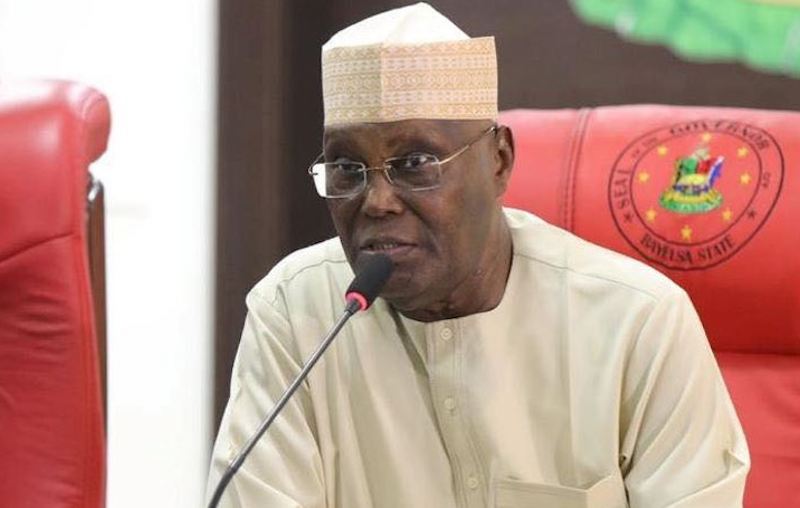
Former Vice President and African Democratic Congress (ADC) presidential candidate for the 2027 election, Atiku Abubakar, has expressed deep sadness over the Nigerian Air Force aircraft crash in Ondo State that claimed 25 lives.
Atiku disclosed this in a statement posted on X on Tuesday, describing the tragedy as heartbreaking and extending his condolences to the families of the victims and the Nigerian Armed Forces.
The Nigerian Air Force ATR-42 aircraft, with registration number NGR 931, crashed in the Inbound area of Ilaje Local Government Area of Ondo State on Monday while on a routine mission from Benin to Lagos.
ALSO READ: Moment Military Aircraft Crashes During Airshow Near Athens (Video)
The aircraft disappeared from radar after air traffic controllers lost contact with it at about 9:13 a.m.
Its wreckage was later located near the Naval Base in Igbokoda, where search-and-rescue operations were launched.
The Nigerian Air Force subsequently confirmed that 25 people were on board, comprising five crew members and 20 passengers, with no survivors.
Reacting to the tragedy, Atiku said the scale and circumstances of the crash were heartbreaking.
“Among those who lost their lives were airmen, soldiers and members of their families,” he said.
He added that the victims included people whose lives were dedicated to service, as well as families and individuals whose lives were cut short in the tragedy.
“My thoughts and prayers are with the families of all the deceased,” Atiku said.
He noted that no words could adequately comfort parents who had lost their children, children who had lost their parents, or families suddenly deprived of their loved ones.
Atiku also extended his heartfelt condolences to the Nigerian Air Force and the Armed Forces of Nigeria, as well as the governments and people of Nigeria and Ondo State.
He prayed that Almighty God would grant eternal rest to the souls of the departed, comfort their grieving families and give the Nigerian Air Force and the nation the strength to bear the painful loss.





2027: NRM Candidate Esther Okereke Backs Death Penalty for Corruption
NUPRC Outlines Major Offshore Investment Pipelines
NCDMB, Zeconia Global Train 50 on Digital Oilfield Operations

40 Oil Blocks up for Grabs as NUPRC Opens 2026 Bid Round

Middle East Push, G7’s Strategic Reserve Release Arrest Oil Prices
Petrol, Diesel Prices Rise 86% in Eight Months – Report

Trump’s Family Unveils New Cryptocurrency Platform

Senate Denies Receiving Petitions Against Tinubu’s Ambassadorial Nominees

Dangote Cement Lights Up Benue Host Communities With CSR Initiatives

Reps Recommend 3-year Jail Term For Aviation minister

Tems Sets New Record On Billboard Hot 100 Chart
