
Other News
Op-ed by WaterAid: Africa’s once in a generation opportunity


CAPE-TOWN – Op-ed by Lindlyn Moma, Regional Advocacy Manager for WaterAid in Southern Africa
Africa’s leaders have in their hands a once-in-a-generation opportunity to shape the international development agenda, not just for their continent but for the whole globe.
The continent’s leaders are in the midst of negotiating the Africa Common Position (ACP) on what the UN framework for development will look like after 2015. The outcome will be hugely influential.
UN Secretary-General Ban Ki-Moon has pointed out that we are the first generation that has the resources and know-how to end extreme poverty. We must ensure that no one is left behind.
As we debate how to achieve this, we must not forget about the work yet to be completed on the UN Millennium Development Goals. These eight ambitious goals, set in 2000 to address hunger, extreme poverty and other issues crippling the developing world, run out in 2015.
 Sanitation is the most off track of all of these goals. UN figures show some 70% of sub-Saharan Africans do not have access to adequate sanitation, while over a quarter — nearly 230 million people — practise open defecation.
This has devastating consequences for the continent. Over a thousand African children under the age of five die every day because of this lack of safe drinking water and poor sanitation.
Last month, Secretary-General Ban called upon the world to “urgently step up” its efforts and put sanitation at the heart of post-2015 development.
Failing to do so will carry measurable financial costs.
UN estimates suggest about 5% of the continent’s wealth is being lost from this lack of access to water and sanitation. If everyone had access to these services, it would add $33 billion US a year to the continent’s economies, according to a conservative 2012 estimate by economists at the World Health Organisation.
Ghana alone, for instance, according to a World Bank assessment, loses $290 million US each year to a lack of sanitation services. Kenya loses $324 million, Nigeria a staggering $3 billion.
Making access to sanitation and safe water a top priority in the African Common Position presents an opportunity for Africa’s children, and for economic growth. This is also in line with the Africa Water Vision 2025.
Liberian President Ellen Johnson Sirleaf, along with the UN-established High Level Panel on the Post-2015 Development Agenda, has already called for a new UN development goal of universal access to water and sanitation. In following that lead, African leaders can be seen to be listening to the voices of its citizens, including women and girls, who are calling for the prioritisation of water and sanitation post-2015.
As we now mourn the loss of Nelson Mandela, the ultimate symbol of justice for the African people, we also remember his calls for an African Renaissance.
Safe water and better sanitation can help address so many of the challenges Africa faces today, from reducing the HIV transmission rate to improving child health and school attendance. As Mandela himself said: “Water is central in the social, economic and political affairs of the African continent.”
By prioritising safe water and sanitation, Africa’s leaders can also ensure the unfinished business of the Millennium Development Goals is dealt with strategically. Africa’s leaders can set the continent onto a trajectory so that by 2030, everyone has access to this basic right to sanitation.
If we miss this opportunity, we risk leaving hundreds of millions of people on the continent behind, stranding them far from that promise of an African Renaissance.

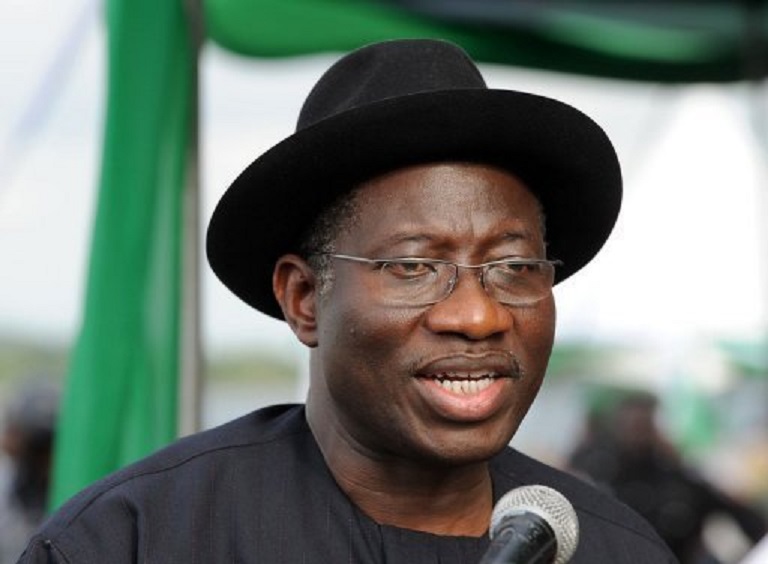
The Labour Party has commended former President Goodluck Jonathan for conceding defeat in the 2015 presidential election, saying his decision demonstrated that political power was not worth the blood of Nigerians.
The National Chairman of the Labour Party, Senator Nenadi Usman, made the statement on Tuesday in Bauchi State while speaking with journalists on the sidelines of the 2026 Goodluck Jonathan Foundation Democracy Dialogue.
SEE MORE: Court Sacks Abure, Orders INEC to Recognise Nenadi Usman-led LP Caretaker Committee
The event, organised by the Goodluck Jonathan Foundation, was themed, “Beyond Elections: Can Political Parties and the Judiciary Save African Democracy?”
Usman said Nigeria’s democracy survived the tensions surrounding the 2015 election because Jonathan chose to put the national interest above his desire to remain in office.
She said, “Nigeria’s democracy survived the doomsday predictions of bookmakers in 2015 because of President Jonathan’s concession of defeat in that year’s election, even before the final votes were tallied.”
According to her, Jonathan’s approach to politics was exceptional, particularly because he had consistently maintained that neither his election nor remaining in power was worth the blood of any Nigerian.
Usman stated, “Such a principled approach to politics had never before been witnessed on the Nigerian political horizon. Jonathan, from the inception of his presidency, consistently maintained that neither his election nor remaining in power was worth the blood of any Nigerian.”
She added that Jonathan demonstrated the sincerity of his position when the 2015 election tested his commitment to the principle.
The Labour Party chairman urged politicians preparing for the 2027 general elections to emulate Jonathan’s non-violent approach to politics, respect democratic rules and place national interest above personal ambitions.
She also questioned whether politicians seeking the presidency in 2027 would be prepared to make similar sacrifices for national unity, particularly amid inflammatory rhetoric from some political camps.
Usman further recalled the saying attributed to Warren Buffett that someone is sitting in the shade today because someone planted a tree a long time ago.
She argued that Nigerians are able to practise democracy today partly because Jonathan made sacrifices at a critical moment.
On the Labour Party’s preparations for the 2027 elections, Usman described the party as the most structured opposition political party in Nigeria.
She said the Labour Party’s relationship with the Nigeria Labour Congress and the Trade Union Congress had strengthened its political structure nationwide.
Usman claimed that the party remained the only opposition party with a realistic presence across Nigeria’s 186,000 polling units.
She said, “With the combined strength of the NLC and the TUC, both of which are constitutional members of the party, no Nigerian political party is better positioned to show the APC government the exit door than the Labour Party.”
The democracy dialogue attracted several political leaders and dignitaries, including former Presidents Olusegun Obasanjo and Goodluck Jonathan, former Vice-President Namadi Sambo, Bauchi State Governor Bala Mohammed, former Senate President Anyim Pius Anyim and Labour Party’s 2023 presidential candidate, Peter Obi.
Others included former Plateau State Governor Jonah Jang, APC Deputy National Chairman, South, Dr Ben Nwoye, and the Emir of Bauchi, Dr Rilwanu Suleiman Adamu.
The dialogue provided a platform for discussions on strengthening democratic institutions, the role of political parties and the judiciary, and preventing democratic reversals across Africa.
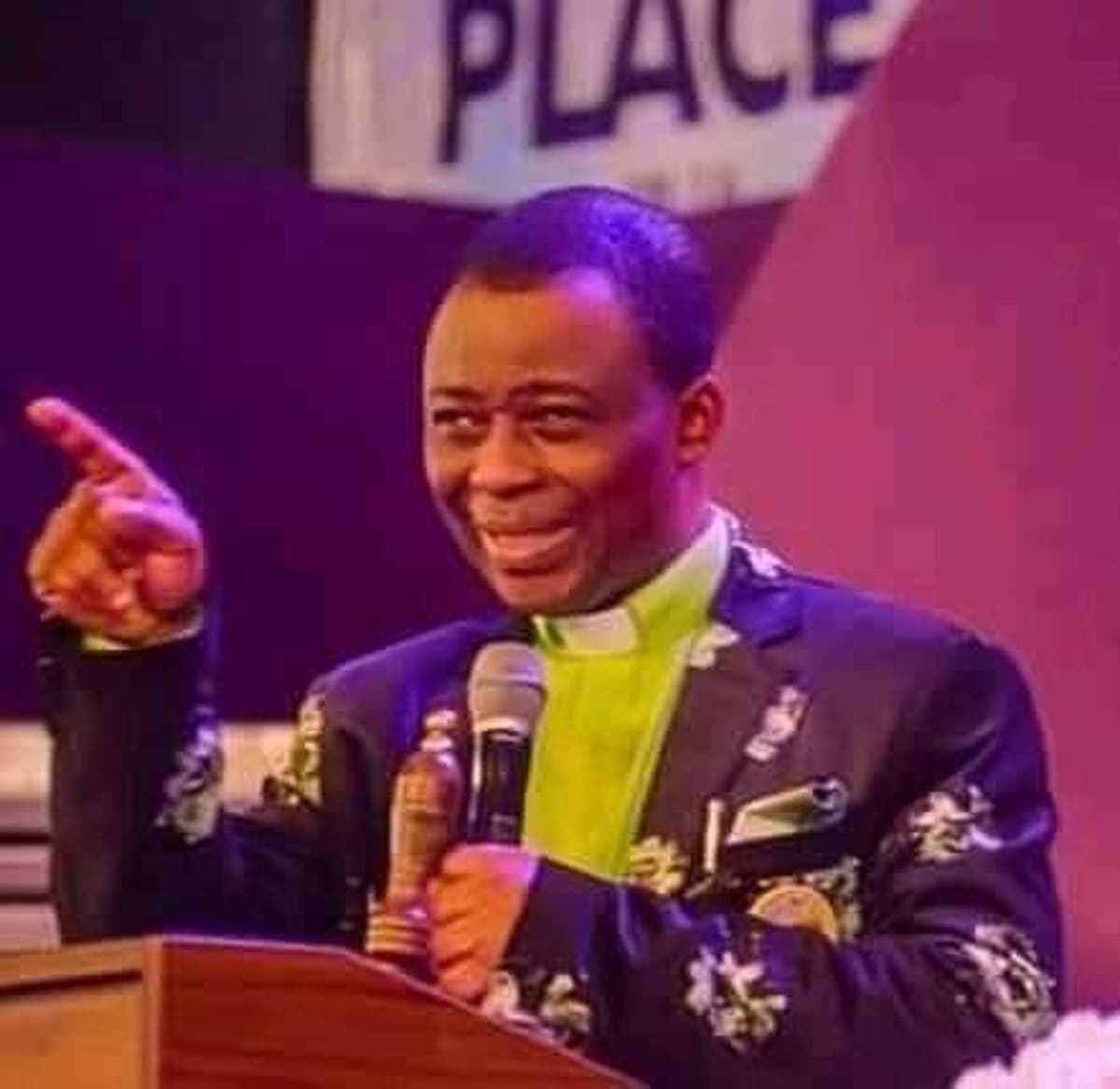
Nigeria has recorded another major achievement on the international stage as the Mountain Top Chorale of Mountain of Fire and Miracles Ministries (MFM) emerged champion of the 2026 World Choir Games in Helsingborg, Sweden.
The Nigerian choir clinched the gold medal in the Spiritual Category (C14), scoring an impressive 87.38 points in the competition conducted by Oluwasegun Okedunmola.
The feat was celebrated by the General Overseer of MFM, Daniel Olukoya, who described the victory as a major moment of pride for Nigeria and the ministry.
SEE MORE: Harith concludes acquisition of FMFML
In a Monday Facebook post, Olukoya wrote, “A CHAMPION’S SOUND! GOLD FOR MOUNTAIN TOP CHORALE!”
According to him, the choir secured two major honours at the 2026 competition, including the gold medal in the Spiritual Category and the overall championship in the Champions Competition.
He said the achievement went beyond music, describing it as a demonstration of “discipline, excellence, dedication, teamwork and the power of using our gifts to glorify God.”
Olukoya also commended the choristers, conductor, leadership of the choir and everyone whose sacrifices and commitment contributed to the success.
The World Choir Games, organised by Interkultur, is regarded as the world’s largest international choir competition. The 2026 edition is being held in Helsingborg from August 6 to 16.
The host organisation said about 8,500 singers from more than 40 countries are participating, with more than 160 choirs taking part in the competition, concerts and other activities.
The 2026 edition is also the first time the World Choir Games are being held in Sweden.
Mountain Top Chorale’s victory places the Nigerian choir among the top performers at the global choral event and further highlights Nigeria’s presence in international gospel and choral music.
Celebrating the achievement, Olukoya said, “From Nigeria to the world, Mountain Top Chorale has raised the banner high.”
He concluded his message by congratulating the choir and giving glory to God for the historic achievement.
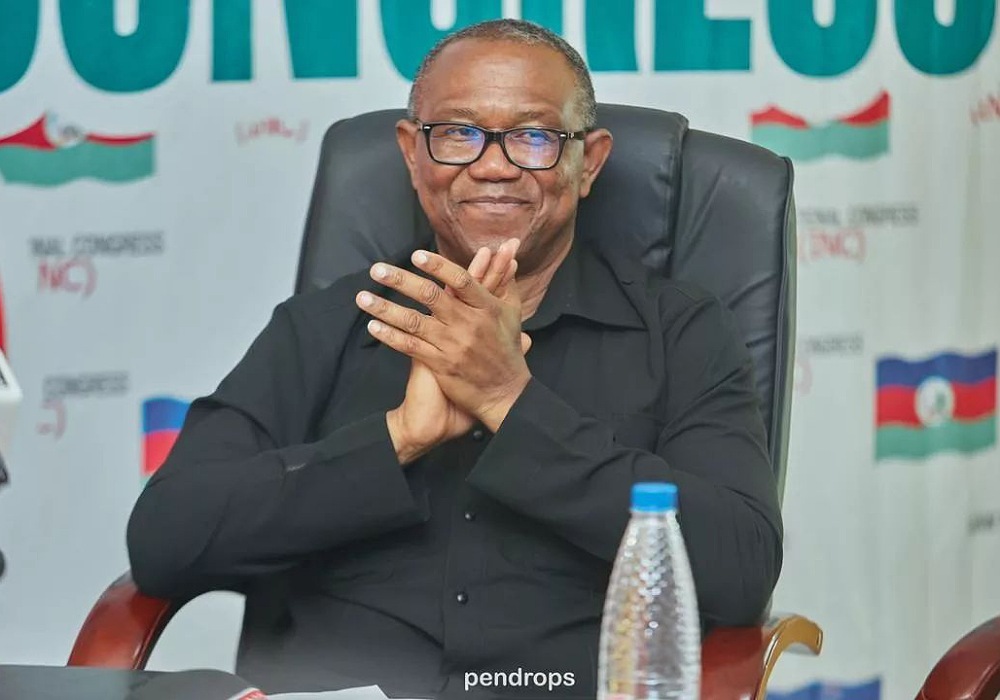
Former presidential candidate of the Nigeria Democratic Congress (NDC), Peter Obi, has called on President Bola Ahmed Tinubu to resign over what he described as “failure in governance,” drawing comparisons with political accountability in other democracies following the resignation announcement of UK Prime Minister Keir Starmer.
In a statement posted on his official X account on Monday, Obi said he had followed Starmer’s resignation speech and reflected on what he described as the importance of leadership responsibility in democratic governance.
ALSO READ: UK PM Keir Starmer Resigns
“As a keen observer of global politics, my primary interest lies in examining what successful nations do right and the structural factors that cause others to lag or struggle with governance and development,” Obi said.
He noted that Starmer’s decision followed growing public dissatisfaction over economic challenges, rising cost of living, and unmet campaign promises in the United Kingdom.
Obi then drew parallels with Nigeria, recalling that before the 2015 general elections, President Bola Ahmed Tinubu had repeatedly called on then-President Goodluck Jonathan to resign over insecurity.
“During the Chibok school kidnapping incident, he demanded the immediate resignation of President Jonathan, arguing that the government had failed in its most fundamental duty of protecting lives,” Obi stated.
He also referenced campaign promises made by Tinubu during the 2023 elections, including commitments to improve electricity supply, tackle corruption, and enhance the welfare of Nigerians.
“President Bola Ahmed Tinubu made several promises, including improved electricity supply. He also challenged the electorate not to vote for him for a second term if he failed to deliver on those commitments,” Obi said.
According to him, conditions in the country have since deteriorated, with persistent power shortages, worsening insecurity, and deepening economic hardship.
“At present, however, these conditions have worsened. Electricity supply remains unreliable, insecurity has intensified in many areas, including kidnappings, and economic hardship has deepened rather than eased,” he added.
Obi further argued that other sectors, including infrastructure, transportation, and anti-corruption efforts, had also suffered setbacks, insisting that Nigeria is currently in “the worst possible condition.”
The opposition figure therefore called on President Tinubu to step down, saying such a move would promote accountability in public office.
“I, therefore, join Nigerians of goodwill in calling for the resignation of the President over monumental failure in governance,” Obi said.
He added that resignation would help foster “a political culture rooted in accountability and responsibility” and reinforce the idea that “public office is a sacred trust, not an entitlement,” stressing the need for what he called “a New Nigeria that is possible.”





![Davido Drops 4th Album ‘Timeless’ [Video]](https://biztellers.com.ng/wp-content/uploads/2023/03/IMG_20230331_094254_1000_x_800_pixel-80x80.jpg)
‘I’m Not Going to Apologise’ — Davido Fires Back at Okpebholo Over WAEC Result

Kano Bans Patent Medicine Stores From Administering IV Drips, Blood Transfusions

Bayelsa Assembly Sacks Sagbama LGA Chairman, Deputy

Why Adeleke Defeated APC in Osun, Wike Explains

Dangote Refinery Bags $1bn Backing Ahead of IPO

2027: Wike Predicts Easy Victory for Tinubu, Says Opposition Is ‘Crippled and Depleted’

Trump’s Family Unveils New Cryptocurrency Platform

Senate Denies Receiving Petitions Against Tinubu’s Ambassadorial Nominees

Dangote Cement Lights Up Benue Host Communities With CSR Initiatives

Reps Recommend 3-year Jail Term For Aviation minister

Tems Sets New Record On Billboard Hot 100 Chart
