
Other News
Pandemic and Natural Disaster Response Plans Unveiled in Nigeria
ABUJA – Nigeria has reached a milestone in providing assistance to and protecting their citizens during pandemic and natural emergencies. Working with peers and experts from the U.S. Africa Command and other international partners, Nigerian officials came together in a special ceremony to unveil a grand national disaster response plan in Abuja.
Disaster preparedness requires leadership, experts, patience and planning. The goal is to produce written, complementary, codified plans that provide the roadmap for first responders and leaders at all levels from multiple organizations, so they know they are ready and able to help their country when disaster strikes.
“I seize this opportunity to appreciate the U.S. Government, the U.S. Africa Command and indeed all other partners for their enormous assistance in the realization of these national plans. These plans will provide Nigeria with a robust framework for pandemic and disaster response management. Indeed, today is historic and is a happy day for Nigeria,” said Professor C.O. Onyebuchi Chukwu, Nigeria’s Federal Minister of Health (FMOH).
The grand plan, collectively and formally known as Nigeria’s National Pandemic Influenza Preparedness and Response Plan, the Armed Forces Pandemic Contingency Plan, and the Military Assistance to Civil Authorities Disaster Contingency Plan, was presented in a ceremony before an audience of more than 150 on November 14 in Abuja.
The ceremony attendees, also here to participate in a disaster response exercise, included civil and military experts from the Armed Forces of Nigeria, African partner nations Burkina Faso, Ghana, Kenya, Senegal, and Uganda, the U.S. Africa Command, and senior officials from the U.S. Departments of State and Defense. As a testament Nigeria’s progress in disaster response preparedness, Liberia and Mozambique sent observers. Other experts who traveled to attend this high-profile event included representatives from the World Food Program (WFP), the UN Office for Coordination of Humanitarian Affairs (UNOCHA) and the International Federation of the Red Cross (IFRC).
“Managing severe pandemics is a shared priority for the United States and Nigeria,” declared Maria E. Brewer, who serves as the U.S. Embassy Abuja’s Deputy Chief of Mission. “Cooperation between nations, militaries and international organizations, non-governmental organizations and other civil society groups is key to developing and maintaining disaster preparedness, so I am proud to be part of this event,” said Brewer, noting that over the last four years the United States has invested over $1.6 million as part of its commitment to this development effort.
U.S. Marine Corps Lt. Gen. Steven Hummer, Deputy Commander for Military Operations for U.S. AFRICOM, and the senior DoD official present at the ceremony, noted that Nigeria is a regional leader and an important partner to the United States. He congratulated Nigeria’s government and the armed forces for progress made to develop a national plan for pandemic and disaster situations and stressed the importance of collaboration between countries and government agencies in order to combat pandemic issues.
“Multinational and multiagency plans and exercises are critical to effectively respond to these kinds of complex emergencies which will not stop at borders. We know not when disasters will strike, but we have to be sure that when one does, our efforts will make a difference. The good news is Nigeria will be better prepared to respond in ways to protect the interests of the Nigerian nation and its people. These plans will help save lives, property and resources,” said Hummer.
Other notables participating in the ceremony from Nigeria were Mr. Muhammad Sani Sidi, who is the Director General of the National Emergency Management Agency (NEMA), Dr. Nurudeen Muhammad, Federal Minister Foreign Affairs (FMOFA), and Mr. Abdulrazak Salawu, Federal Minister of Defense (FMOD), who, along with Professor Chukwu, unveiled the plans.
Among U.S. government officials who attended with Lt. Gen. Hummer and Ms Brewer was Dr. Jonathan Woodson, who serves as the U.S. Assistant Secretary of Defense for Health Affairs.
“The impact of unpreparedness goes beyond illness and death,” said Dr. Woodson. “If we fail to prepare for the event, it destabilizes national institutions, government and the economy with rippling second and third order effects.”
Woodson commended the efforts of the Nigerian government in developing a national response plan and noted the importance of working across agencies toward a common goal.
“It really represents a total commitment of the government in helping civil society to work together with the military to provide capability in the event that a disaster occurs, to mitigate what happens, to prepare and to be able to respond effectively,” said Woodson. “This represents the whole of government coming together in the right way.”
Exercise, Exercise, Exercise the plans
The ceremony also served as the kick-off point for a disaster preparedness training exercise which is sponsored by the U.S. Africa Command and is the result of a collaborative effort with the U.S. Center for Disaster and Humanitarian Assistance Medicine (CDHAM).
A facilitator invited from Kenya to participate in the follow-on disaster preparedness exercise, retired Colonel Vincent Anami said the purpose of the plans is to enhance the capacity and capability of the Federal Republic of Nigeria and its government in the area of disaster management with an emphasis on pandemics.
“The initiative is U.S. AFRICOM’s in partnership with other countries such as Kenya, Ghana, Liberia, Nigeria, Mozambique, Togo and Uganda,” Anami said. “This initiative is very important because pandemics are very mobile, and if it strikes, many will be affected.”
Erik Threet, AFRICOM’s Disaster Preparedness Program manager, stated that “the goal of the command’s Disaster Preparedness Program is to assist African nations in strengthening their capacities and capabilities to save lives and reduce human suffering during disasters.”
During the course of the exercise, which is scheduled to conclude November 22, participants will validate the Armed Forces of Nigeria Pandemic Contingency Plan and Military Assistance to Civil Authorities (MACA) Disaster Contingency Plan.
Participants will engage in a table-top exercise and develop a “5-Year Disaster Management Strategic Work Plan” for Nigeria.
This exercise to validate the new plans will assist in reviewing current capabilities and will also identify where the United States and Nigeria could further partner and collaborate to respond to complex emergency situations.
“As a regional leader, Nigeria’s capacity to respond to pandemics and other complex emergencies impacts the U.S. and regional interests,” said Hummer.
During their statements, the Nigerian top officials expressed their appreciation for the strategic partnership between the United States and Nigeria through AFRICOM and the assistance in developing extensive pandemic and disaster response plans for Nigeria.
“We appreciate the strong bilateral and international collaborations in these efforts,” Hummer said. “We look forward to expanding opportunities to work together, learn from each other and to build our combined capacity to deliver an effective and professional response that all citizens deserve.”

ABUJA – Nigeria has reached a milestone in providing assistance to and protecting their citizens during pandemic and natural emergencies. Working with peers and experts from the U.S. Africa Command and other international partners, Nigerian officials came together in a special ceremony to unveil a grand national disaster response plan in Abuja.
Disaster preparedness requires leadership, experts, patience and planning. The goal is to produce written, complementary, codified plans that provide the roadmap for first responders and leaders at all levels from multiple organizations, so they know they are ready and able to help their country when disaster strikes.
 “I seize this opportunity to appreciate the U.S. Government, the U.S. Africa Command and indeed all other partners for their enormous assistance in the realization of these national plans. These plans will provide Nigeria with a robust framework for pandemic and disaster response management. Indeed, today is historic and is a happy day for Nigeria,” said Professor C.O. Onyebuchi Chukwu, Nigeria’s Federal Minister of Health (FMOH).
The grand plan, collectively and formally known as Nigeria’s National Pandemic Influenza Preparedness and Response Plan, the Armed Forces Pandemic Contingency Plan, and the Military Assistance to Civil Authorities Disaster Contingency Plan, was presented in a ceremony before an audience of more than 150 on November 14 in Abuja.
The ceremony attendees, also here to participate in a disaster response exercise, included civil and military experts from the Armed Forces of Nigeria, African partner nations Burkina Faso, Ghana, Kenya, Senegal, and Uganda, the U.S. Africa Command, and senior officials from the U.S. Departments of State and Defense. As a testament Nigeria’s progress in disaster response preparedness, Liberia and Mozambique sent observers. Other experts who traveled to attend this high-profile event included representatives from the World Food Program (WFP), the UN Office for Coordination of Humanitarian Affairs (UNOCHA) and the International Federation of the Red Cross (IFRC).
“Managing severe pandemics is a shared priority for the United States and Nigeria,” declared Maria E. Brewer, who serves as the U.S. Embassy Abuja’s Deputy Chief of Mission. “Cooperation between nations, militaries and international organizations, non-governmental organizations and other civil society groups is key to developing and maintaining disaster preparedness, so I am proud to be part of this event,” said Brewer, noting that over the last four years the United States has invested over $1.6 million as part of its commitment to this development effort.
U.S. Marine Corps Lt. Gen. Steven Hummer, Deputy Commander for Military Operations for U.S. AFRICOM, and the senior DoD official present at the ceremony, noted that Nigeria is a regional leader and an important partner to the United States. He congratulated Nigeria’s government and the armed forces for progress made to develop a national plan for pandemic and disaster situations and stressed the importance of collaboration between countries and government agencies in order to combat pandemic issues.
“Multinational and multiagency plans and exercises are critical to effectively respond to these kinds of complex emergencies which will not stop at borders. We know not when disasters will strike, but we have to be sure that when one does, our efforts will make a difference. The good news is Nigeria will be better prepared to respond in ways to protect the interests of the Nigerian nation and its people. These plans will help save lives, property and resources,” said Hummer.
Other notables participating in the ceremony from Nigeria were Mr. Muhammad Sani Sidi, who is the Director General of the National Emergency Management Agency (NEMA), Dr. Nurudeen Muhammad, Federal Minister Foreign Affairs (FMOFA), and Mr. Abdulrazak Salawu, Federal Minister of Defense (FMOD), who, along with Professor Chukwu, unveiled the plans.
Among U.S. government officials who attended with Lt. Gen. Hummer and Ms Brewer was Dr. Jonathan Woodson, who serves as the U.S. Assistant Secretary of Defense for Health Affairs.
“The impact of unpreparedness goes beyond illness and death,” said Dr. Woodson. “If we fail to prepare for the event, it destabilizes national institutions, government and the economy with rippling second and third order effects.”
Woodson commended the efforts of the Nigerian government in developing a national response plan and noted the importance of working across agencies toward a common goal.
“It really represents a total commitment of the government in helping civil society to work together with the military to provide capability in the event that a disaster occurs, to mitigate what happens, to prepare and to be able to respond effectively,” said Woodson. “This represents the whole of government coming together in the right way.”
Exercise, Exercise, Exercise the plans
The ceremony also served as the kick-off point for a disaster preparedness training exercise which is sponsored by the U.S. Africa Command and is the result of a collaborative effort with the U.S. Center for Disaster and Humanitarian Assistance Medicine (CDHAM).
A facilitator invited from Kenya to participate in the follow-on disaster preparedness exercise, retired Colonel Vincent Anami said the purpose of the plans is to enhance the capacity and capability of the Federal Republic of Nigeria and its government in the area of disaster management with an emphasis on pandemics.
“The initiative is U.S. AFRICOM’s in partnership with other countries such as Kenya, Ghana, Liberia, Nigeria, Mozambique, Togo and Uganda,” Anami said. “This initiative is very important because pandemics are very mobile, and if it strikes, many will be affected.”
Erik Threet, AFRICOM’s Disaster Preparedness Program manager, stated that “the goal of the command’s Disaster Preparedness Program is to assist African nations in strengthening their capacities and capabilities to save lives and reduce human suffering during disasters.”
During the course of the exercise, which is scheduled to conclude November 22, participants will validate the Armed Forces of Nigeria Pandemic Contingency Plan and Military Assistance to Civil Authorities (MACA) Disaster Contingency Plan.
Participants will engage in a table-top exercise and develop a “5-Year Disaster Management Strategic Work Plan” for Nigeria.
This exercise to validate the new plans will assist in reviewing current capabilities and will also identify where the United States and Nigeria could further partner and collaborate to respond to complex emergency situations.
“As a regional leader, Nigeria’s capacity to respond to pandemics and other complex emergencies impacts the U.S. and regional interests,” said Hummer.
During their statements, the Nigerian top officials expressed their appreciation for the strategic partnership between the United States and Nigeria through AFRICOM and the assistance in developing extensive pandemic and disaster response plans for Nigeria.
“We appreciate the strong bilateral and international collaborations in these efforts,” Hummer said. “We look forward to expanding opportunities to work together, learn from each other and to build our combined capacity to deliver an effective and professional response that all citizens deserve.”

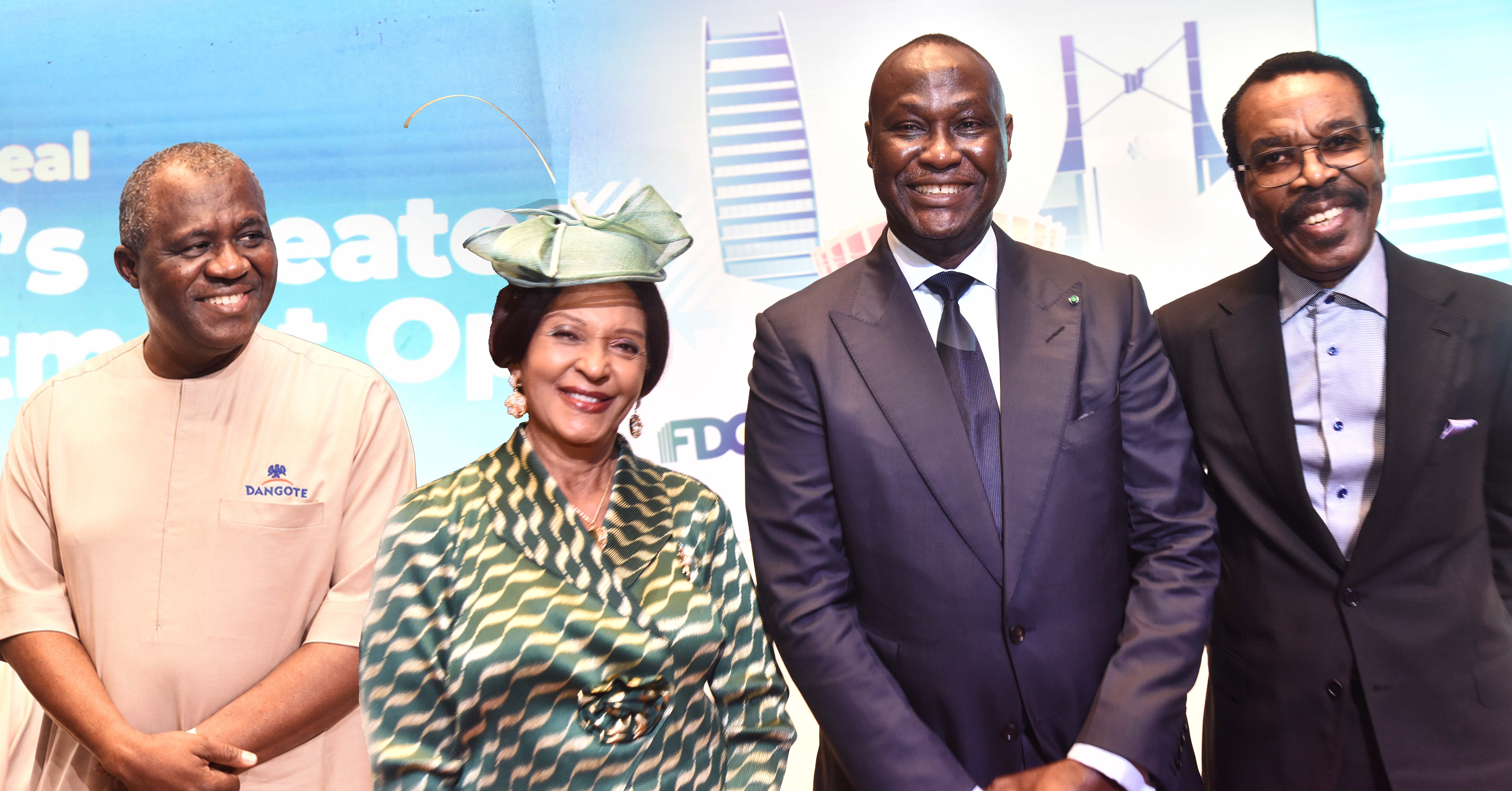
Leading economists, financial experts and industry stakeholders have described the Dangote Group’s investments as major drivers of industrialisation and economic transformation across Nigeria and Africa.
The experts cited the Group’s impact on job creation, import substitution, foreign exchange conservation and economic competitiveness.
They voiced their thoughts at the Lagos Economic Summit themed “The Real Deal: Africa’s Greatest Investment Opportunity,” where they urged governments to implement policies that strengthen local industries and accelerate economic diversification.
President and Chief Executive Officer of the Africa Finance Corporation (AFC), Samaila Zubairu, commended the Dangote Group’s sustained investments across Africa, describing them as critical to unlocking the continent’s economic potential.
He noted that while recent economic reforms have improved foreign exchange stability, strengthened reserves and eased inflationary pressures, the focus must now shift to growth in industry, productivity and employment.
READ ALSO: NMDPRA Shares July Domestic Cooking Gas Supply Details
Also speaking, Chief Executive Officer of the Centre for the Promotion of Private Enterprise (CPPE), Muda Yusuf, said industrialisation remains the most effective path to sustainable economic development.
He called for better alignment of trade and industrial policies, stressing that local manufacturers require strategic support to compete effectively and drive broader economic benefits.
Founder and CEO of Nairametrics, Ugodre Obi-Chukwu, said Africa’s growing population presents a significant industrial opportunity, noting that investments such as the Dangote Refinery are helping to retain capital within the continent while strengthening local production capacity.
In his keynote address, Managing Director of Financial Derivatives Company Limited, Bismarck Rewane, said Nigeria is gradually transitioning from a consumption-led economy to one driven by investment and production.
He added that sustained investments in productive sectors will continue to stimulate growth, create jobs and improve living standards.
Participants at the summit also advocated stronger credit infrastructure, improved national identification systems and increased investment in skills development to enhance the productivity and global competitiveness of Africa’s growing youth population.
Photo Caption: From Left – Chief Economist, Dangote Industries Limited, Dr. Hassan Mahmud; Lady Maiden Alex-Ibru; Chairman of Occasion/Special Guest of Honour, Samaila Zubairu; Key Note Speaker Session 1, Bismarck Rewane; during the Real Deal: Africa’s Greatest Investment Opportunity, Sponsored by Dangote Industry Limited in Lagos on Thursday 3, September 2026.

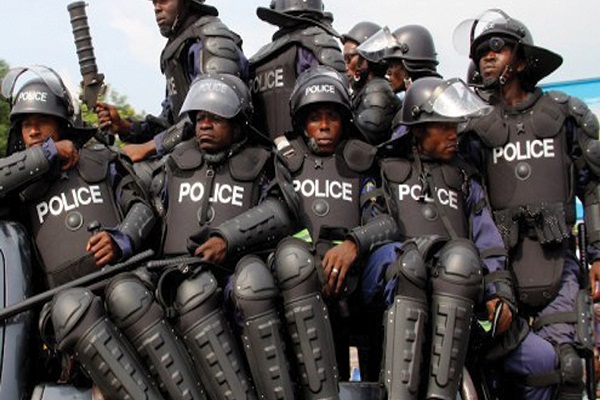
Social media critic Martins Vincent Otse, popularly known as VeryDarkMan (VDM), has released what he described as his first piece of evidence after the Nigeria Police Force challenged him to substantiate his allegations that some police officers allegedly collaborate with kidnappers.
VDM released a video on his Instagram handle on Thursday, August 27, 2026, shortly after the police invited him to provide evidence supporting the claims he made at the 66th Annual General Conference of the Nigerian Bar Association (NBA) in Port Harcourt.
SEE MORE: ‘Provide Evidence’ — Police React to VDM’s Explosive Kidnap Allegation
The activist captioned the video: “My evidence number 1.”
Recalled that VDM, who was a panellist at the NBA conference on Tuesday, had alleged that some police officers manning checkpoints along major highways provide kidnappers and bandits with information about travellers.
According to him, the officers allegedly relay details about the identities and movements of travellers to criminal groups, thereby facilitating abductions for ransom.
The allegation triggered a response from the Nigeria Police Force, which denied the claim and challenged VDM to substantiate his allegations.
The police invitation came as the force sought evidence to support the serious claims made by the social media critic.
In response, VDM released the video, describing it as his “evidence number 1”, signalling that he may provide further material to support his allegations.
The development has continued to attract attention, with the controversy placing renewed focus on allegations of possible collaboration between security personnel and criminal groups involved in kidnapping and banditry.
A former Permanent Secretary of the Federal Civil Service Commission, Goke Adeboroye, has questioned how an alleged fake presidential agency was able to gain access to government facilities, budgetary provisions and office space without being detected.
Adeboroye spoke on Channels Television’s Inside Sources following the discovery of the alleged Presidential Foreign Intervention Promotion Council by the Independent Corrupt Practices and Other Related Offences Commission.
SEE MORE: $1m Extortion Scheme: Fake EFCC Officials Arrested In Plot Against Former NPA MD
The ICPC had said the purported agency had no legal basis and operated with forged appointment letters and other official documents.
The commission also said its alleged Director-General, Adeniyi Matthew, was never appointed by the Federal Government.
The anti-corruption agency further disclosed that its investigation into the PFIPC led to the discovery of the National Brands Development and Made in Nigeria Special Project Office, which it alleged was operating within the Office of the Secretary to the Government of the Federation without proper authorisation.
Reacting to the development, Adeboroye described the situation as a major failure of the government’s bureaucratic system.
“The exposure of that fake presidential agency is a major lapse to say that somebody can actually come into the system, get in on the budget, get offices, and all of that,” he said.
The former permanent secretary identified weaknesses in the bureaucratic structures supporting key offices in the Presidency, including the Office of the Secretary to the Government of the Federation, the Office of the Chief of Staff to the President and the Office of the Head of the Civil Service.
According to him, the bureaucracy in these offices should be strong enough to support the President’s policies while also ensuring that fraudulent or unlawful directives do not gain effect.
“The bureaucracy in those offices are not strong enough to be able to help the President drive the vision at the speed and with the efficiency that he wants,” Adeboroye said.
He also stressed the importance of having professional and experienced civil servants who can scrutinise directives issued by political office holders.
Adeboroye said civil servants should be able to recognise suspicious communications purportedly coming from the Presidency because they are familiar with the official channels through which presidential approvals are transmitted.
“Whether the person brings fake or whatever, you as the civil servant should be trained to be able to detect what should be a genuine communication from the State House. You work in that system,” he said.
He explained that presidential approvals usually pass through established channels involving senior government officials.
“When the President approves anything, he always minutes to about three people. He goes to the Chief of Staff, he goes to SGF, and if he has something to do with civil service, the Head of Service will have it.”
Adeboroye recalled an incident from his time as Permanent Secretary in the Ministry of Interior involving a former governor who claimed to have presidential approval for a diplomatic passport.
He said the then Comptroller-General of the Nigeria Immigration Service, Ude, cross-checked the purported approval before taking action and subsequently sought clarification on whether the former governor, who was no longer in office, should receive the diplomatic passport.
“That’s somebody using the experience of the system to ensure that you are not outplayed,” he said.
The former permanent secretary said similar verification could have been carried out in the alleged fake agency case through a simple phone call to the relevant government offices.
“So we would have expected that on a simple phone call, when I was working in the office of Ekaite, Secretary of Government, I could pick a phone, call any minister, call this, it’s just a phone call from the office of whoever to say, Chief of Staff, is this true? And that would have actually corrected it,” he said.
Meanwhile, the controversy surrounding the National Brands Development and Made in Nigeria Special Project Office has continued.
The chairman of the project office, Musa Aliyu, had alleged that the office was allocated space within the OSGF premises without presidential authorisation.
However, the National Coordinator and Executive Director of the project office, George Nwabueze, denied the allegation, insisting that the office is a project office under the OSGF and has existed for 16 years.
Nwabueze also produced an appointment letter purportedly issued by the OSGF, conveying approval of his appointment as National Coordinator/Executive Director of the Made in Nigeria Project Office.
The conflicting claims have continued to raise questions about the authorisation and status of the project office and the alleged involvement of public officials in its operations.






‘Dem Dey Use Stick Dey Flog Women’ — Nigerians in India Camp Cry Out

2027: I’ll Bring Petrol Price Down to ₦300, Says Donald Duke
2027: INEC Must Prove Nigerians Wrong on Election Credibility — Donald Duke

‘Military Gets Huge Budgets, Yet Air Crashes Persist’ — Shehu Muhammad

2027: INEC Can Deliver, But Must Fix 2023 Pitfalls — Civil Society Leader

‘NYSC Has Outlived Its Usefulness, Should Be Scrapped’ — Shehu Muhammad

Trump’s Family Unveils New Cryptocurrency Platform

Senate Denies Receiving Petitions Against Tinubu’s Ambassadorial Nominees

Dangote Cement Lights Up Benue Host Communities With CSR Initiatives

Reps Recommend 3-year Jail Term For Aviation minister

Tems Sets New Record On Billboard Hot 100 Chart
