
Banking
Panic in China over rumors of solvency in banks

SHANGHAI – On Tuesday, Hundreds of people rushed to withdraw money from two branches of small Chinese banks after rumors spread about solvency at one of the banks, reflecting growing anxiety among investors as regulators signal greater tolerance for credit defaults.
The case highlights the urgency of plans to put in place a deposit insurance system to protect investors against bank insolvency, as Chinese grow increasingly nervous about the impact of slowing economic growth on financial institutions.
Regulators have said they will roll out deposit insurance as soon as possible, without giving a firm deadline.
Domestic media reported, and a local official confirmed, that ordinary depositors swarmed a branch of Jiangsu Sheyang Rural Commercial Bank in Yancheng in economically troubled Jiangsu province on Monday.
The semi-official China News Service quoted the bank’s chairman, Zang Zhengzhi, as saying it would ensure payments to all the depositors. The report did not say how the rumor originated.
Chen Dequn, a resident in Yandong, just outside Yancheng, said she saw a crowd of about 70 to 80 people gathering in a branch of Sheyang Rural Commercial Bank in her town on Tuesday.
“At the moment there are about 70 or 80 people in there. Normally there’d only be about 10,” she told Reuters by telephone.
Officials at another small bank, Rural Commercial Bank of Huanghai, said they had faced similar rushes by depositors, triggered by rumors of insolvency at Sheyang.
“We will be holding an emergency meeting tonight,” an official at the bank’s administration office told Reuters, but declined to comment further.
Why Yancheng investors suddenly lost confidence in the security of their bank deposits is not clear, given that the Sheyang bank is subject to formal reserve requirements, loan-to-deposit ratios and other rules to ensure it keeps sufficient cash on hand to meet demand.
Bank failures in China are virtually unknown, as Chinese banks are considered to operate under an implicit guarantee from the government.
Finally, money market interest rates have eased since February, and traders say liquidity in the interbank market — where banks like Sheyang can tap short-term funds to meet depositor demand — remains relatively relaxed. <CN/>
“It’s true that these rumors exist, but actually (the bank going bankrupt) is impossible. It’s a completely different situation from the problem with the cooperatives,” said Zhang Chaoyang, an official at the propaganda department of the Communist Party committee in Tinghu district, where the bank branch is located.
Zhang was referring to an incident that rattled depositors in Yancheng in January, when some rural cooperatives — which are not subject to the supervision of the bank regulator — ran out of cash and locked their doors.
Local officials say several co-op bosses fled after committing fraud.
China’s central bank governor said this month that deposit rates are likely to liberalized in one to two years – the most explicit timeframe to date for what would be the final step in freeing up banks to set their own interest rates.
It is widely expected to introduce a deposit insurance scheme before freeing up deposit rates, to protect savers in case a liberalized market puts major strains on smaller banks and alarms the public. Analysts also expect the controls on deposit rates to be lifted gradually. Is China’s debt nightmare a province called Jiangsu?
DEFAULT FEARS
Investors both in China and globally have taken note of Beijing’s recent decision to allow China’s first domestic bond default. Chaori Solar Energy Science and Technology Co Ltd (002506.SZ) missed a bond coupon payment in March. Officials have indicated publicly that they believe other defaults are inevitable but do not believe such incidents will lead to systemic risk.
In the past, domestic bond issuers were routinely bailed out by local governments and banks, and the willingness of regulators to let Chaori miss interest payments negatively impacted rates in Chinese offshore credit markets.
More recently, media also reported a heavily indebted real estate developer in Zhejiang province was at risk of defaulting on 3.5 billion yuan ($565 million) worth of loans — a situation that has yet to be resolved.
When contacted by Reuters by phone on Tuesday, an official at the Jiangsu Sheyang Rural Commercial Bank branch hung up, saying she was busy.
An official at the administrative office at Jiangsu Sheyang Rural Commercial Bank said the bank would publish a statement shortly. On its website, the bank says it is capitalized at 525 million yuan ($85 million) and had total deposits of 12 billion yuan as of end-February,
Officials at the Jiangsu branch offices of the China Banking Regulatory Commission (CBRC) declined to comment. The Yancheng branch of CBRC and the propaganda offices in Yancheng city and Sheyang county did not answer calls seeking comment.
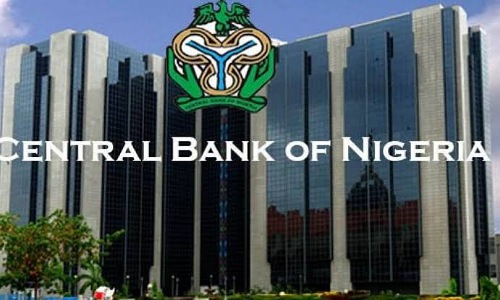
Socio-Economic Rights and Accountability Project (SERAP) announced that it has filed a lawsuit against the Central Bank of Nigeria (CBN) “over the failure to account for and explain the whereabouts of the missing or diverted N3 trillion of public funds, including the over N629 billion paid to ‘unknown beneficiaries’ as part of the Anchor Borrowers’ Programme.”
The lawsuit followed the grave allegations contained in the latest annual report by the Auditor-General of the Federation, which was published on 9 September 2025.
In the suit number FHC/ABJ/CS/250/2026 filed last week at the Federal High Court in Abuja, SERAP stated that it is seeking “an order of mandamus to direct and compel the CBN to account for and explain the whereabouts of the missing or diverted N3 trillion of public funds, including detailed reports of how exactly the funds were spent.”
In the suit, SERAP is arguing that, “These grim allegations by the Auditor-General suggest grave violations of the public trust, the provisions of the Nigerian Constitution 1999 [as amended], the CBN Act, and anticorruption standards.”
SERAP is also arguing that, “These grave violations also reflect a failure of CBN accountability more generally and are directly linked to the institution’s persistent failure to comply with its Act and to uphold the principles of transparency and accountability.”
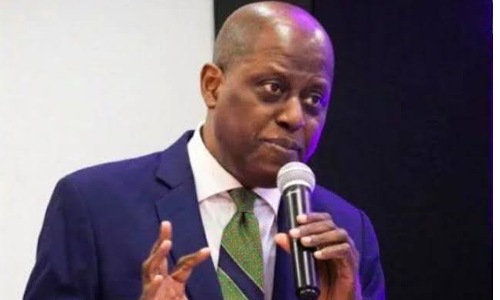
CBN Gov, Olayemi Cardoso
According to SERAP, “These violations have seriously undermined the ability of the CBN to effectively discharge its statutory functions and the public trust and confidence in the bank. The CBN ought to be committed to transparency and accountability in its operations.”
SERAP also stated in its suit that, “Nigerians have the right to know the whereabouts of the missing or diverted public funds. Granting the reliefs sought would advance the right of Nigerians to restitution, compensation and guarantee of non-repetition.”
SERAP said, “Section 15(5) of the Nigerian Constitution requires public institutions to abolish all corrupt practices and abuse of power. Section 13 of the Constitution imposes clear responsibility on the CBN to conform to, observe and apply the provisions of Chapter 2 of the constitution.”
The suit filed on behalf of SERAP by its lawyers Oluwakemi Agunbiade and Valentina Adegoke, read in part: “According to the Auditor-General, the CBN in 2022 failed to remit over N1 trillion [N1,445,593,400,000.00] of ‘the Federal Government’s portion of operating surplus’ into the Consolidated Revenue Fund (CRF) account.”
“The Auditor-General fears that the money may have been ‘diverted.’ He wants the money recovered and remitted to the treasury.”
“The CBN also failed to recover over N629 billion [N629,040,000,000.00] paid to ‘unknown beneficiaries’ as part of the Anchor Borrowers’ Programme, a programme ‘meant to support farmers to ensure sustainable food production in the country.’”
“But ‘the numbers of beneficiaries who collected the money are unknown.’ The CBN has also failed to ‘recover the money.’ The Auditor-General fears ‘the money may have been diverted’, which could have ‘contributed to the difficulty in sustaining food security in the Nation.’”
“He wants the money recovered and remitted to the treasury.”
“The CBN has also failed to recover over N784 billion [N784,410,108,864.47] ‘being 32 unpaid, overdue loans and interventions disbursed by the Bank between 2018 and May 2022.’”
“The Auditor-General said ‘there was no evidence that the Bank was doing enough to recover the loans/interventions, which ought to have been paid.’ He wants the money recovered and remitted to the treasury.”
“The CBN in 2022 also spent over N125 billion [N125,374,000,000.00] ‘on questionable intervention activities.’ The CBN claimed it spent the money ‘on intervention activities in connection with national security, the federal government, state securities, armed forces and to build the capacity of the financial sector’.”
“But the Auditor-General is concerned that the money may have been spent ‘without the approval of the National Assembly.’ There was also no document to ‘support the expenditure.’”
“The ‘expenditure also may not have been in the public interest and consistent with the objectives of the CBN in section 2 of the CBN Act.’ The Auditor-General fears the money may have been ‘diverted.’ He wants the money recovered and remitted to the treasury.”
“The CBN in 2022 also ‘unjustifiably’ spent over N1 billion [N1,792,769,160.00] to buy 43 operational vehicles for the Nigeria Immigration Service (NIS).”
“According to the Auditor-General, ‘the spending is unjustified because there is no connection with buying operational vehicles for the NIS and the objectives of the CBN as stated in section 2 of the CBN Act.’”
“The NIS also ‘failed to provide any evidence to show that the vehicles were actually supplied and delivered.’ There ‘were also no procurement and payment records or documents.’ The Auditor-General fears the money may have been ‘diverted’. He wants the money recovered and remitted to the treasury.”
“The CBN also awarded 43 contracts for over N189 billion [N189,50,066,756.73]. The Auditor-General said that ‘the contractors deliberately delayed completion of these contracts by seeking extension of the completion period.’”
“The contractors then ‘requested for variation of the contracts due to extension of completion period.’ Following the request, the CBN paid the contractors over N9 billion [N9,270,849,691.61] ‘irregular variation of contract price.’”
“There ‘were no relevant procurement documents such as contract files, procurement records, and payment vouchers’ for the payment. The Auditor-General fears ‘the money may have been diverted’ and the projects may have been abandoned.’ He wants the money recovered and remitted to the treasury.”
“The Katsina state branch of the CBN also failed to recover over N90 million [N90,163,610.00] being ‘outstanding loans and interventions disbursed to 33 small and medium enterprises during Covid 19 in 2020.’”
“The Auditor-General fears ‘the money may have been ‘diverted’ or ‘mismanaged’. He wants the money recovered and remitted to the treasury.”
“Paragraph 3112(ii) of the Financial Regulations 2009 provides: ‘Where a public officer fails to account for government revenue, such officer shall be surcharged for the full amount involved and such officer shall be handed over to either the EFCC or the ICPC.’”
“Section 51 of the Fiscal Responsibility Act provides that, ‘A person shall have legal capacity to enforce the provision of this Act by obtaining prerogative orders or other remedies at the Federal High Court, without having to show any special particular interest.’”
“The Nigerian Constitution, Freedom of Information Act, and the country’s anti-corruption and human rights obligations rest on the principle that citizens should have access to information regarding their public institutions’ activities.”
No date has been fixed for the hearing of the suit.
Banking
Millions of customers still stranded worldwide 24 hours after GT Bank online operations suffered attacks
By Yemie ADEOYE
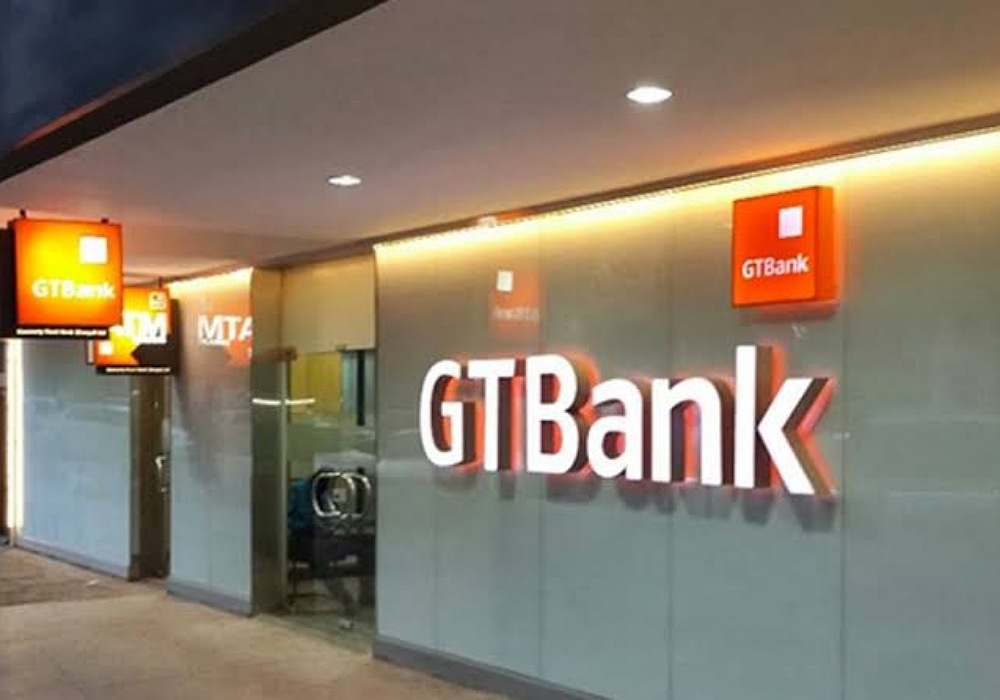
GT Bank, one of Nigeria’s leading banks, with operations across Africa and the United kingdom, and with an asset base of about US$3.11 trillion is under a cyber attack which has left millions of its customers across the world stranded in the last 24 hours.
The bank which was renowned for its seamless online operations at inception has suffered dwindling online efficiency in recent years and this current attack didn’t come as a surprise to many of its numerous customers. However, it is becoming worrisome that over 24 hours after its online operations went down, the bank has not been able to arrest the situation and restore its online services.
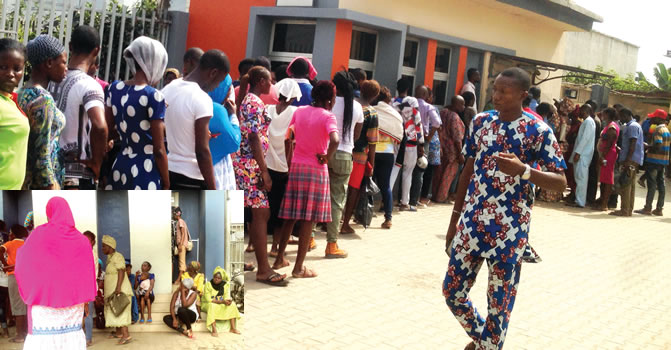
Stranded GT Bank customers outside the banks premises
Several customers of the bank took to their X (formerly known as twitter) handles to express their frustrations at the bank, as several of the customers in the diaspora are unable to access their accounts and carry on with their transactions. A customer , Jeff55 who lamented on his X handle about the development, stated that it is a thing of shock that a bank of this size couldn’t afford to have the necessary tools and experts to ensure a full protection of its online operations in this age and time.
Another customer Dimma stated that while Cybersecurity training may seem tedious, the recent #GTBank hack is a stark reminder that everyone is just a click away from a devastating attack.
Several media organisations had reported that hackers have stolen GT Bank website, and intercepted customers Data in massive phishing operation.
At the time of filing this report, Biztellers.com.ng checks on the banks website shows that it is still down and unaccessible, and neither GT Bank media and communications unit nor any of its agencies or surrogates have commented officially on the development.
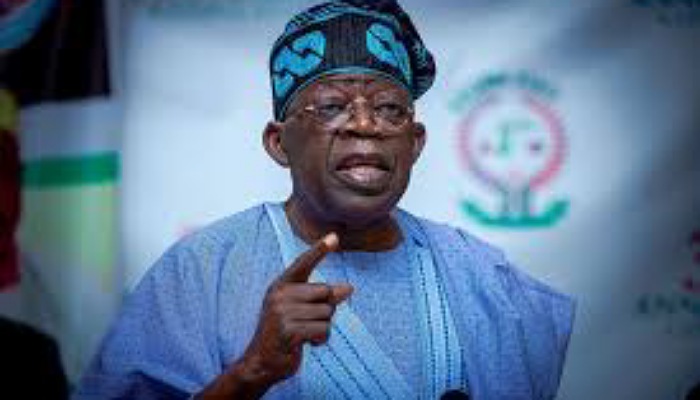
Says output surge buoyed by reforms he announced in May 2024 to address gaps in PIA
President Bola Ahmed Tinubu on Sunday declared a resurgence in the oil & gas industry, commending the increased crude production to 1.6 million barrels per day.
The president, who said this in a national broadcast, maintained that the resurgence was buoyed by the reforms he announced in May 2024 to address the gaps in the Petroleum Industry Act (PIA).
Nigeria’s crude oil output got a boost to 1.61 million barrels per day in July 2024 through the president’s directive and the industry leadership provided by the Nigerian National Petroleum Company Limited (NNPCL).
Acknowledging what he called a resurgence of the once-declining oil and gas industry in his Sunday-morning broadcast to the nation, President Tinubu said that oil investors are coming back to Nigeria.
He said; “Our once-declining oil and gas industry is experiencing a resurgence on the back of the reforms I announced in May 2024 to address the gaps in the Petroleum Industry Act. Last month, we increased our oil production to 1.61 million barrels per day, and our gas assets are receiving the attention they deserve. Investors are coming back, and we have already seen two Foreign Direct Investments signed of over half a billion dollars since then.
Read Also : BREAKING: Sell Crude To Dangote Refinery In Naira – Tinubu To NNPC Ltd
“Fellow Nigerians, we are a country blessed with both oil and gas resources, but we met a country that had been dependent solely on oil-based petrol, neglecting its gas resources to power the economy.
We were also using our hard-earned foreign exchange to pay for and subsidise its use. To address this, we immediately launched our Compressed Natural Gas Initiative (CNG) to power our transportation economy and bring costs down.
This will save over two trillion Naira a month, being used to import PMS and AGO and free up our resources for more investment in healthcare and education.
“To this end, we will be distributing a million kits of extremely low or no cost to commercial vehicles that transport people and goods and who currently consume 80% of the imported PMS and AGO.
“We have started the distribution of conversion kits and the setting up of conversion centres across the country in conjunction with the private sector. We believe that this CNG initiative will reduce transportation costs by approximately 60 per cent and help to curb inflation.”





‘Oseni Rufai Helped Me, Not NiDCOM’ — Ekene Chukwuma on Return to Nigeria

‘Who Owns NNPC?’ Rufai Grills Olabode Sowunmi Over Fuel Subsidy
JUST IN: Amnesty Volunteer Lawrence Zongo Regains Freedom After 10 Days In Custody

2027: Tinubu Won’t Abandon Governance for Campaigns, Says Aide

Atiku Launches ‘Ask AA’ Portal, Invites Nigerians to Question His Record
Adamawa SSG Identifies Three Priorities for Tackling Nigeria’s Security Challenges

Trump’s Family Unveils New Cryptocurrency Platform

Senate Denies Receiving Petitions Against Tinubu’s Ambassadorial Nominees

Dangote Cement Lights Up Benue Host Communities With CSR Initiatives

Reps Recommend 3-year Jail Term For Aviation minister

Tems Sets New Record On Billboard Hot 100 Chart

101328 400528I really delighted to locate this web website on bing, just what I was looking for : D besides saved to bookmarks . 902784
284863 790562i always enjoy to do weblog hopping and i stumbled upon your blog .”~; 915758
915035 917640Hey, you used to write great, but the last couple of posts have been kinda boringK I miss your great writings. Past couple of posts are just a bit out of track! come on! 312619