
Politics
Party Rifts Deepen As Lagos APC Prepares For LG Primaries

As the July 12 local government elections approach in Lagos State, internal tensions within the ruling All Progressives Congress (APC) have intensified, with accusations of candidate imposition threatening to fracture the party’s base across several Local Government Areas (LGAs) and Local Council Development Areas (LCDAs).
Despite efforts by the party to manage pre-election friction through the adoption of a consensus candidacy approach, several aspirants and local stakeholders allege that the method is being exploited to sideline credible contenders in favour of handpicked loyalists.
The Lagos State Independent Electoral Commission had, in April, published the official timetable for elections across the 57 council chairmanship seats and 376 councillorship positions.
READ MORE: EFCC Arrests Ex-APC Lawmaker, Muhammad Kazaure
The polls are to take place as the current local council officials round off their tenure in July. But instead of uniting the APC, the pre-election activities have deepened divisions.
Tensions in Ojokoro and Yaba
In Ojokoro LCDA, controversy erupted when a faction of party leaders under the Ojokoro Apex Council announced Mobolaji Sanusi as the consensus chairmanship candidate.
The group, backed by prominent figures including former House of Representatives members Ipoola Omisore and Adisa Owolabi, submitted a signed resolution to the state APC chairman, Cornelius Ojelabi.
Among the signatories was the incumbent LCDA chairman, Idowu Tijani.
But not all party members accepted the outcome. Within days, another screening conducted by a separate bloc of leaders produced Rosiji Yemisi as a rival candidate.
A party member involved in the process, who spoke anonymously, rejected Sanusi’s candidacy, alleging it was part of an orchestrated imposition.
According to him, “The apex council is attempting to impose a ‘foreigner backed by the Speaker of the Lagos State House of Assembly, Mudasiru Obasa’ on us. Imposing an outsider with no electoral history in Ojokoro would have negative consequences.”
Yaba LCDA is also grappling with similar unrest. A coalition of landlords, electorates, and political stakeholders accused party leaders of manipulating the consensus process in favour of Babatunde Ojo, who reportedly placed 11th in a screening exercise.
William Babatunde, who topped the exercise with 85 percent, was allegedly sidelined.
In a petition to First Lady Oluremi Tinubu, the coalition led by Amoo Ismail voiced its frustration:
“It is important to emphasise that we have credible leaders within our community who are capable of selecting the most qualified candidate from the broad pool of aspirants.
“It is simply unjust and disheartening to the political stakeholders in the local government that a single individual continues to unilaterally impose a chairmanship candidate upon us.”
They called on both the First Lady and President Bola Tinubu to intervene.
“A more inclusive and consultative approach, one that values the voices of grassroots mobilisers and other key stakeholders, will likely yield a more favourable outcome for both the local government and our great party.”
Backlash and Warnings from Within
The controversy has not gone unnoticed by key figures within the APC. Opeyemi Ahmed, media aide to the outgoing chairman of Agboyi-Ketu LCDA, Dele Osinowo, publicly criticized the consensus approach in a now-deleted Facebook post.
“The party is not sincere with its guidelines; from direct to indirect to consensus. We can do better. Let’s give a sense of belonging to everyone. Tinubu needs to win Lagos, but if a few are writing names at the top and using fake strategy to call for consensus at the bottom, then Tinubu should be ready to lose come 2027.”
Echoing this sentiment, APC chieftain Fouad Oki delivered a strongly worded open letter titled “Lagos APC’s crisis of Democracy: Internal strife and the risk to President Tinubu’s stronghold.”
“The Lagos APC must choose democracy over cliques. If party managers still believe they know better than voters, permit me to remind you of the stakes: disenfranchised grassroots can sabotage not only council polls, but also general elections to come. Unity forged under injustice is brittle; lasting strength requires inclusivity.”
He warned the party not to repeat past mistakes.
“Let this op-ed be a rallying cry within the party: abandon the politics of imposition, honour the rights of members, and give Lagosians a real voice. Failing that, our party risks losing Lagos not to an opposition challenger, but to its own internal discord – a disaster that would echo all the way to 2027.”
Party Responds: No Cause for Alarm
In response to the growing unrest, the Lagos APC has defended its approach. Party spokesperson, Seye Oladejo, dismissed allegations of imposition, stating that the process of selecting candidates was still ongoing and inclusive.
“We have not concluded the process of the primaries, which will be held on Saturday. For those who have been able to reach consensus, there will be affirmation, but for those who have not reached consensus, their delegates will decide who their preferred candidates will be in their respective local governments.”
He added that claims of imposition were premature.
“Nobody is imposing anything on anybody; we cherish internal democracy in our party, and we have always strived on all of this.”
Oladejo further argued that consensus has historically helped the APC avoid post-primary crises.
“As a party, we see ourselves as members of the same family. Consensus has always been easier to manage, whatever fallout might arise from the process of electing candidates for elections. So, consensus, over time, has worked for us and is recognised by our constitution.”
“We have an internal mechanism for resolving conflicts or disagreements, and that machinery will be ignited to resolve whatever grey areas arise as a fallout of the primaries,” he said.
With the APC primaries scheduled for today and allegations of manipulation still simmering, all eyes are on the party’s leadership to see how it will navigate the storm.
While consensus remains a valid tool within the party’s constitution, the challenge now lies in ensuring that it does not come at the cost of credibility and inclusiveness—two elements many say are key to securing both the upcoming council elections and President Tinubu’s longer-term political prospects.





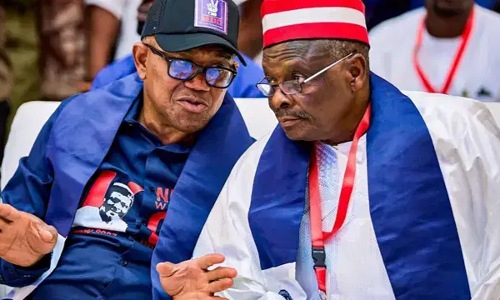
Presidential candidate of the Nigeria Democratic Congress (NDC), Peter Obi, and his running mate, Senator Rabiu Musa Kwankwaso, have pledged to tackle corruption, reduce the cost of living and promote national unity if elected into office.
Obi made the commitment during a town hall meeting in Zaria, Kaduna State, on Saturday, November 14, 2026, after attending the fifth convocation ceremony of Skyline University in Kano.
Speaking at the meeting, Obi said he and Kwankwaso would work together to unite the country and address challenges holding back national development.
SEE ALSO: Peter Obi, Kwankwaso to Hold NDC Town Hall Meeting in Benue Today
“Senator Rabiu Musa Kwankwaso and I will work together to unite and secure the country around a shared national purpose,” he said.
He also pledged to confront corruption and introduce policies that would ease the economic burden on Nigerians.
“We will vigorously implement policies to reduce the cost of living while making strategic investments in essential sectors, especially healthcare and education, and lifting our people out of poverty,” Obi stated.
The former Anambra State governor said government policies should reflect the actual needs of citizens rather than being imposed from the top down.
He explained that town hall meetings provide an opportunity to engage directly with Nigerians and obtain firsthand information about their challenges.
Before the meeting, Obi and Kwankwaso commissioned the senatorial campaign office of Mohammad Turad Sha’aban, the NDC candidate for Kaduna North Senatorial District.
Earlier in Kano, Obi attended Skyline University’s fifth convocation ceremony as Special Guest of Honour, where he described education as the foundation of national development.
“Education is the bedrock of development. Experience has consistently shown that the more educated a nation is, the greater its level of development,” he said.
He commended the university for providing students with entrepreneurship and innovation training, noting that such skills could encourage start-ups, strengthen small and medium-sized enterprises and create employment opportunities.
Obi congratulated the graduating students and appreciated residents of Kano and Kaduna states for their turnout and support.
He concluded by expressing optimism about Nigeria’s future, declaring: “A New Nigeria is POssible, and Nigeria will be OK!”
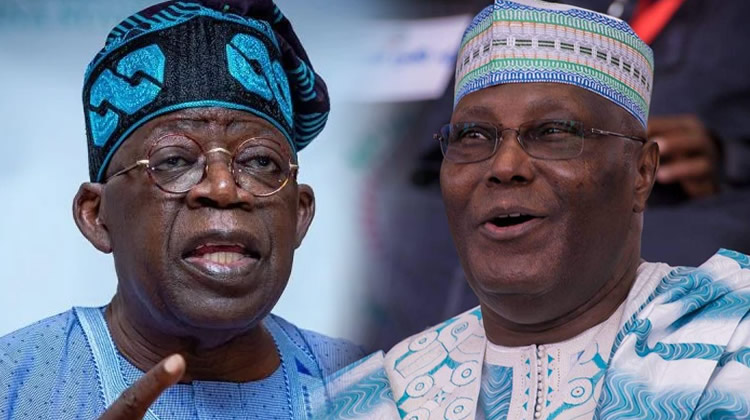
Former Vice President Atiku Abubakar has accused President Bola Tinubu’s administration of economic failure, blaming rising energy costs, high interest rates and increasing production expenses for the closure of several bakery businesses across Nigeria.
Atiku’s reaction followed a disclosure by the Premium Breadmakers Association of Nigeria (PBAN) that it had lost nearly 40 per cent of its membership within two years, reflecting the growing pressure on businesses in the country’s food production sector.
In a statement issued in Bauchi on Saturday, November 14, by his Director of Strategic Communication of the ADC Presidential Campaign Council and Senior Special Assistant on Public Communication, Phrank Shaibu, Atiku said the development highlighted the economic difficulties facing Nigerian businesses and households.
SEE ALSO: Atiku Launches 2027 Campaign in Sokoto, Pledges to Tackle Insecurity
He said he was in Bauchi to continue promoting his affordable life campaign and sympathise with Nigerians struggling with the consequences of the Tinubu administration’s economic policies.
According to him, the decline in the association’s membership reflects the human and business costs of an economy where rising operating expenses are making it increasingly difficult for businesses to remain profitable.
The former vice president noted that the situation had resulted in bakery closures, job losses and higher bread prices, adding that millions of Nigerian households who depend on bread as a staple food were increasingly finding it difficult to cope with rising costs.
Atiku also raised concerns over the rising price of cooking gas, which he said had reached ₦1,800 per kilogram in Abuja and ₦1,650 in parts of Lagos and Ogun states.
He further cited reports that depot prices increased by 31.8 per cent in one month, moving from ₦1,100 to ₦1,450 per kilogram.
The ADC chieftain said energy costs account for approximately half of bakery production expenses, citing the example of an operator whose monthly diesel bill reportedly increased from ₦9 million to ₦19 million.
He added that small bakery operators could require between ₦40 million and ₦50 million to transition to alternative energy sources, while businesses seeking financing were being quoted interest rates as high as 34 per cent.
Reacting to the development, Atiku said the economic challenges confronting farmers, manufacturers and bakers showed that the government’s reforms had failed to deliver the expected relief.
“From farmers to manufacturers and now bakers, the verdict on Tinubu’s economic reforms cannot be clearer: they have been a monumental failure,” he said.
He also questioned the Federal Government’s borrowing despite the difficulties facing local businesses, arguing that Nigerians deserved to know how the loans were being utilised.
“The irony is that while the economy is falling under Bola Tinubu’s watch, his government has accumulated local and foreign loans in astronomical figures,” Atiku stated.
“If local businesses are dying while the government continues to borrow, Nigerians are entitled to ask where these loans are going.”
Atiku maintained that improving local production across different sectors would be a major priority of his proposed administration, stressing that economic recovery should extend beyond crude oil refining.
“The major policy plank of my administration will be to improve local production in every sphere of the economy, not just crude oil refining,” he said.
He added that his proposed Atiku Economic Recovery Plan recognised the difficulties confronting farmers, manufacturers, bakers and other participants in local production.
The former vice president urged the Federal Government to urgently address rising energy costs and the shortage of affordable financing, warning that continued pressure on productive businesses could lead to further closures, job losses and higher prices for essential goods.
He reaffirmed his commitment to building an economy that supports local industries, protects employment and makes basic necessities more affordable for Nigerian households.
The African Democratic Congress (ADC) has criticised the Nigerian Bar Association (NBA) over its decision to initiate disciplinary proceedings against lawyer and politician, Kalu Kalu, accusing the association of allowing itself to be drawn into a political battle against the opposition.
In a press statement dated Saturday, November 14, 2026, and signed by its National Publicity Secretary, Mallam Bolaji Abdullahi, the ADC questioned the NBA’s decision to pursue disciplinary action against Kalu over his comments concerning Justice Peter Lifu.
The party said it supports constructive engagement, restraint and respect for institutions but described the NBA’s reaction to Kalu’s remarks as curious, particularly in view of previous judicial criticism of Justice Lifu.
The ADC specifically referenced a June 2026 ruling by the Court of Appeal, which it said described the judge’s conduct as the “highest form of judicial impertinence” and cited a Supreme Court precedent characterising such conduct as judicial rascality.
It questioned why the NBA had not expressed similar concern when the appellate court raised serious issues about the conduct of a judicial officer.
SEE ALSO: ‘The Panic Is Real’ – Atiku Accuses APC of Plot to Weaken ADC
The party said, “Why is the NBA only now finding its voice because a politician, who also happens to be a lawyer, has said something that some people find uncomfortable? What has Kalu Kalu said about Justice Peter Lifu that the Court of Appeal has not already said?”
The ADC warned the NBA against actions that could create the impression that it was taking sides in the political dispute involving the ruling party and the opposition.
It also expressed concern over what it described as attempts by powerful political interests to influence judicial institutions and the Nigerian Bar, insisting that the NBA must protect its reputation as an independent professional association.
“We respect the NBA for its noble history in the defence of democracy and the rule of law. However, the Association must be careful not to allow itself to be perceived as throwing its hat into the political ring on the side of a ruling party that already boasts openly of hijacking our judicial institutions and the Nigerian Bar,” the statement read.
The opposition party maintained that public confidence in the judiciary was threatened more by alleged misconduct within the legal and judicial systems than by criticism from politicians and lawyers.
It argued that the NBA should focus on addressing conduct capable of undermining the administration of justice rather than targeting Kalu for expressing his views.
“The NBA cannot demand respect for the judiciary while appearing indifferent to conduct that brings the judiciary into disrepute. Respect for the courts must never become a requirement for silence in the face of injustice,” the ADC said.
The party, however, acknowledged the importance of professional restraint among lawyers but insisted that such expectations should not prevent them from speaking against perceived injustice.
“We agree that lawyers must exercise restraint. But there is no respectful way to address evil, and the NBA cannot teach us one,” Abdullahi added.
The ADC’s reaction follows reports that the Nigerian Bar Association had initiated disciplinary steps against Kalu Kalu over his remarks concerning Justice Peter Lifu.
The NBA’s action reportedly followed controversial comments by Kalu about the judge in connection with the ongoing legal dispute surrounding the ADC’s leadership.
The development attracted attention after the NBA moved to refer the matter to its Legal Practitioners Disciplinary Committee, raising concerns about professional conduct and the limits of public criticism of judicial officers.






IEA Sees Oil Supply Average of 108.1mbpd in 2027

Navy Destroys Two Illegal Refining Sites, Recover Stolen Crude

NNPC Ltd Assures on Int’l Standard Measurement, Methane Transparency

Shell Bags Best IOC Award at NAPE Confab
How Rising Costs Are Pushing Nigerian Bakeries to the Brink

FULL LIST: 18 Nollywood Actors and Actresses Who Died in 2026

Trump’s Family Unveils New Cryptocurrency Platform

Senate Denies Receiving Petitions Against Tinubu’s Ambassadorial Nominees

Dangote Cement Lights Up Benue Host Communities With CSR Initiatives

Reps Recommend 3-year Jail Term For Aviation minister

Tems Sets New Record On Billboard Hot 100 Chart

2w4hm7
pfyqj0
1eyf27