
Other News
Paul Walker’s Death Complicates ‘Fast & Furious 7’ Filming


CALIFORNIA — Universal Pictures executives, still reeling from the weekend death of one of the stars of their “Fast & Furious” films, got down to the difficult business on Monday of figuring out how to salvage their No. 1 movie franchise.
But as they huddled in morning meetings on an unusually somber lot here, it was clear there were still far more questions than answers.
The death of Paul Walker, 40, would have presented substantial challenges for Universal under the best of circumstances. To finish “Fast & Furious 7” in time for a planned July 11 release, the company has been operating under an aggressive, little-room-for-delays production schedule. Filming is still only half finished, unusual for a movie of this size so close to release, and Mr. Walker played a leading role.
But the manner of Mr. Walker’s death — he died in a fiery car crash eerily similar to what the “Fast & Furious” movies present as entertainment — amplifies the challenges. Even if the script can be reworked, it could be hard to motivate a close-knit cast to quickly resume filming happy-go-lucky car chase sequences. It could be more challenging to sensitively market a film filled with fast driving and exploding cars.
“Because there is this horrible irony where life is imitating art, they have a very, very fine line to walk, both with revisions to the script and in the marketing campaign,” said Dennis Rice, a marketing consultant who has held top positions at Miramax, United Artists and Disney.
“They will succeed in the end, in part because they must,” he added. “As horrible as his death was, there is a business investment to protect.”
The “Fast & Furious” movies cost roughly $150 million to produce and at least $100 million more to market. The blockbuster franchise has taken in about $3 billion at the box office over the last 12 years, after adjusting for inflation. “Fast & Furious 7” is by far Universal’s biggest movie for 2014.
A Universal spokeswoman had no comment on Monday.
People with knowledge of the studio’s internal response, who spoke on the condition of anonymity out of respect for Mr. Walker and his family, described a leadership team that put aside their own emotions and swiftly began to deal with the crisis.
When word reached the studio late Saturday afternoon of Mr. Walker’s death, executives were still scattered for the Thanksgiving holiday. The studio’s communications executive nonetheless managed to rush out a heartfelt public statement. “This loss is devastating to us,” it read in part. “Paul was truly one of the most beloved and respected members of our studio family.”
Ron Meyer, who became vice chairman of NBC Universal, and his two top movie officers, Jeff Shell, chairman of the Universal Filmed Entertainment Group, and Donna Langley, chairwoman of Universal Pictures, divided duties. Mr. Meyer personally called Mr. Walker’s family members, every “Fast & Furious” cast member, their agents and dozens of other production personnel.
Ms. Langley and her lieutenants began to assess how the production might be salvaged, poring through scripts and film already shot. Mr. Shell would sort out business and legal questions concerning production delays.
Still to be decided: Do they write his death into the film? Cut his performance? Hire another actor to finish his role? Universal is helped by the franchise itself, movie experts say, because the films have a history of mismatched story lines and also began relying more on crime stories, playing down dangerous street racing.
Public safety announcements to go with DVDs of the film were recorded. Mr. Walker recorded one. “All the driving sequences you see in the film are done by experienced professionals on closed courses. Be safe. Drive smart. Stay legal.”


The Lagos State Traffic Management Authority (LASTMA) has alerted motorists to traffic delays along Ogunnusi Road towards Ojodu-Berger due to ongoing rehabilitation work.
LASTMA disclosed this in a post on its official X account on Sunday, stating that the road rehabilitation was being carried out by the Lagos State Public Works Corporation (LSPWC).
According to the agency, “The ongoing work is affecting traffic flow, with vehicles moving at a slower pace in both directions.”
ALSO READ: Chaos On Lagos-Ibadan Expressway As LASTMA Shuts Otedola Bridge
To ease the situation, LASTMA said a contraflow arrangement had been introduced for motorists travelling from Omole Junction towards Vis Junction.
“A contraflow arrangement is in place for vehicles coming from Omole Junction towards Vis Junction to facilitate the movement of traffic,” the agency stated.
LASTMA added that its personnel had been deployed to manage traffic and ensure the continuous movement of vehicles around the affected area.
“Our personnel are on ground managing the traffic situation and ensuring the continuous flow of vehicular movement,” the agency said.
The traffic management authority advised motorists to remain patient and exercise caution while the rehabilitation work continues.
“Motorists are advised to exercise patience and drive with caution while the rehabilitation work continues,” LASTMA stated.

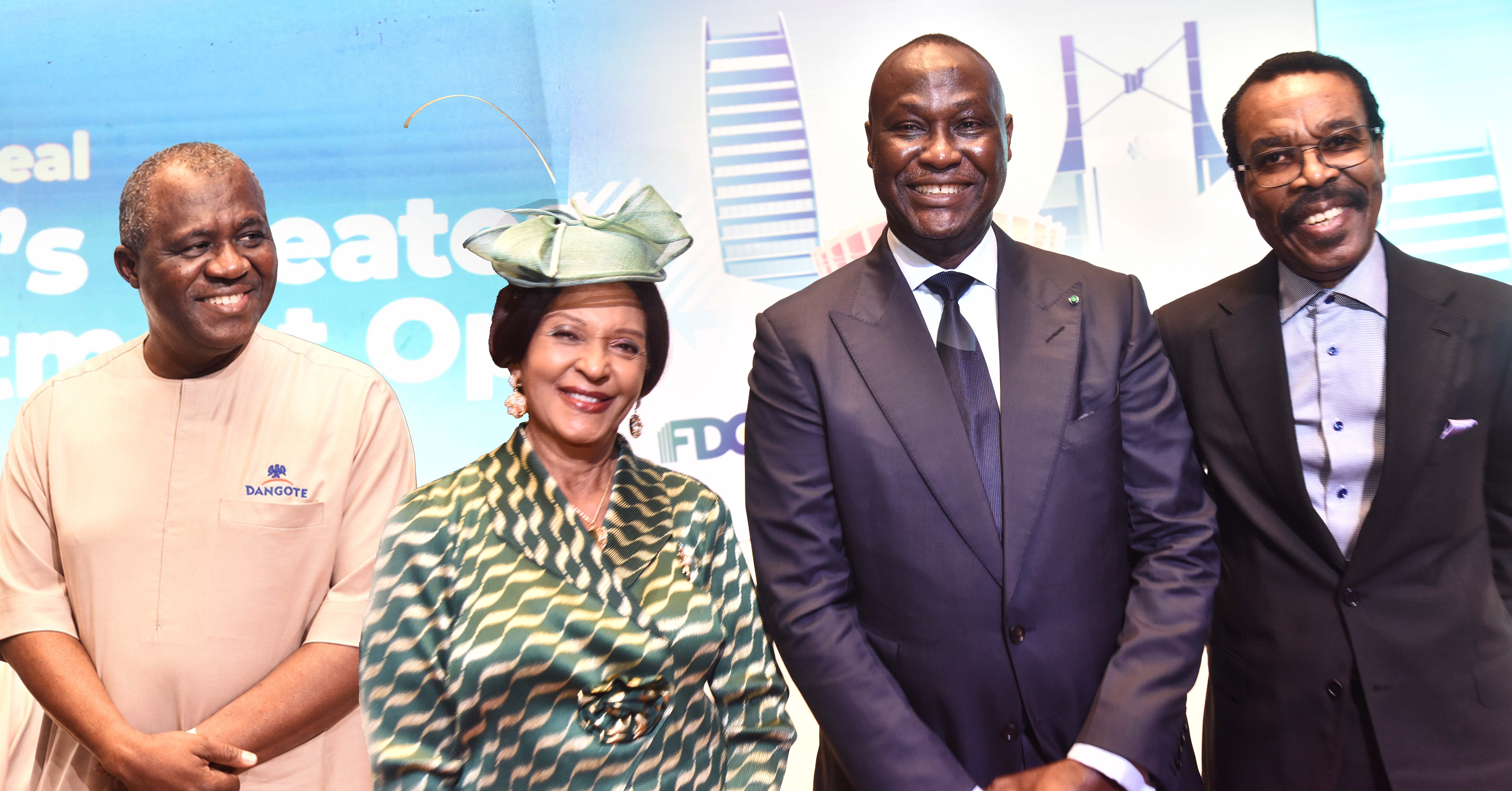
Leading economists, financial experts and industry stakeholders have described the Dangote Group’s investments as major drivers of industrialisation and economic transformation across Nigeria and Africa.
The experts cited the Group’s impact on job creation, import substitution, foreign exchange conservation and economic competitiveness.
They voiced their thoughts at the Lagos Economic Summit themed “The Real Deal: Africa’s Greatest Investment Opportunity,” where they urged governments to implement policies that strengthen local industries and accelerate economic diversification.
President and Chief Executive Officer of the Africa Finance Corporation (AFC), Samaila Zubairu, commended the Dangote Group’s sustained investments across Africa, describing them as critical to unlocking the continent’s economic potential.
He noted that while recent economic reforms have improved foreign exchange stability, strengthened reserves and eased inflationary pressures, the focus must now shift to growth in industry, productivity and employment.
READ ALSO: NMDPRA Shares July Domestic Cooking Gas Supply Details
Also speaking, Chief Executive Officer of the Centre for the Promotion of Private Enterprise (CPPE), Muda Yusuf, said industrialisation remains the most effective path to sustainable economic development.
He called for better alignment of trade and industrial policies, stressing that local manufacturers require strategic support to compete effectively and drive broader economic benefits.
Founder and CEO of Nairametrics, Ugodre Obi-Chukwu, said Africa’s growing population presents a significant industrial opportunity, noting that investments such as the Dangote Refinery are helping to retain capital within the continent while strengthening local production capacity.
In his keynote address, Managing Director of Financial Derivatives Company Limited, Bismarck Rewane, said Nigeria is gradually transitioning from a consumption-led economy to one driven by investment and production.
He added that sustained investments in productive sectors will continue to stimulate growth, create jobs and improve living standards.
Participants at the summit also advocated stronger credit infrastructure, improved national identification systems and increased investment in skills development to enhance the productivity and global competitiveness of Africa’s growing youth population.
Photo Caption: From Left – Chief Economist, Dangote Industries Limited, Dr. Hassan Mahmud; Lady Maiden Alex-Ibru; Chairman of Occasion/Special Guest of Honour, Samaila Zubairu; Key Note Speaker Session 1, Bismarck Rewane; during the Real Deal: Africa’s Greatest Investment Opportunity, Sponsored by Dangote Industry Limited in Lagos on Thursday 3, September 2026.
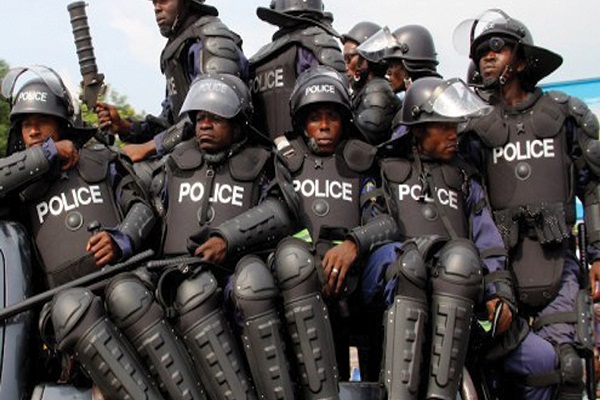
Social media critic Martins Vincent Otse, popularly known as VeryDarkMan (VDM), has released what he described as his first piece of evidence after the Nigeria Police Force challenged him to substantiate his allegations that some police officers allegedly collaborate with kidnappers.
VDM released a video on his Instagram handle on Thursday, August 27, 2026, shortly after the police invited him to provide evidence supporting the claims he made at the 66th Annual General Conference of the Nigerian Bar Association (NBA) in Port Harcourt.
SEE MORE: ‘Provide Evidence’ — Police React to VDM’s Explosive Kidnap Allegation
The activist captioned the video: “My evidence number 1.”
Recalled that VDM, who was a panellist at the NBA conference on Tuesday, had alleged that some police officers manning checkpoints along major highways provide kidnappers and bandits with information about travellers.
According to him, the officers allegedly relay details about the identities and movements of travellers to criminal groups, thereby facilitating abductions for ransom.
The allegation triggered a response from the Nigeria Police Force, which denied the claim and challenged VDM to substantiate his allegations.
The police invitation came as the force sought evidence to support the serious claims made by the social media critic.
In response, VDM released the video, describing it as his “evidence number 1”, signalling that he may provide further material to support his allegations.
The development has continued to attract attention, with the controversy placing renewed focus on allegations of possible collaboration between security personnel and criminal groups involved in kidnapping and banditry.





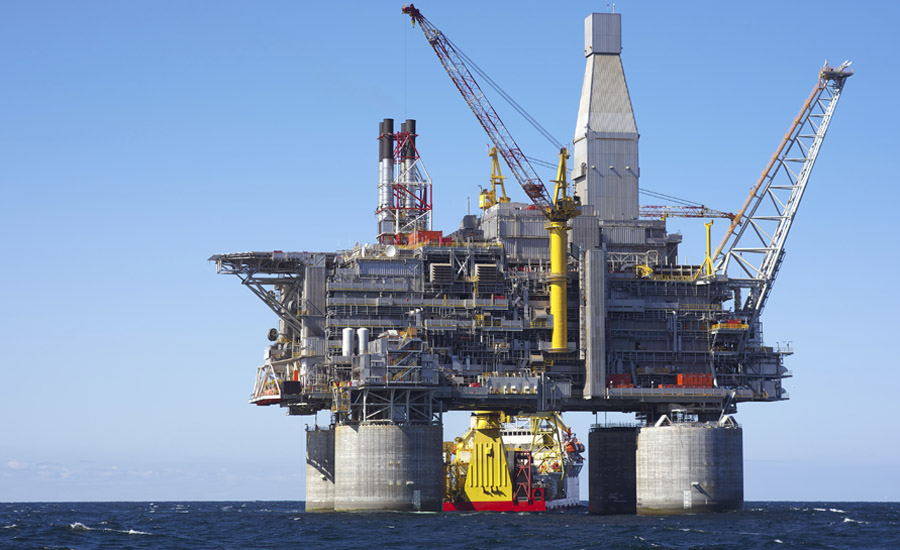
Heritage Energy on Ways of Unlocking Oil Industry Investment
NCDMB, Renaissance Empower 60 with Oil & Gas Technical Skills

Fuel Discount: Presidency Explains Why Atiku’s Production Subsidy Proposal May Fail

‘Don’t Rush the Refinery’ – Kenyan Presidential Candidate Warns Dangote

2027 Election: ‘Look Beyond the Noise’ – Showunmi Urges Nigerians to Give Tinubu More Time

NLC Ultimatum: Wage Demands Can Be Resolved in Two Weeks – HR Expert

Trump’s Family Unveils New Cryptocurrency Platform

Senate Denies Receiving Petitions Against Tinubu’s Ambassadorial Nominees

Dangote Cement Lights Up Benue Host Communities With CSR Initiatives

Reps Recommend 3-year Jail Term For Aviation minister

Tems Sets New Record On Billboard Hot 100 Chart
