
NEWS
Peter Obi Challenges Nigerians to Verify His Anambra Governance Record

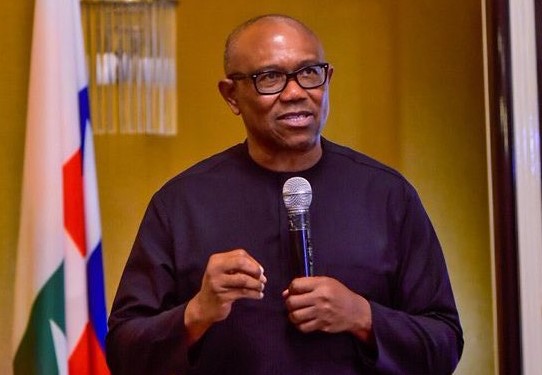
Former Anambra State Governor Peter Obi has challenged Nigerians to examine his administration’s governance record, highlighting the development policies and institutional reforms introduced during his tenure.
Obi disclosed this in a post on his X account on Monday, as he commenced a series titled “Nigerians, Go and Verify,” in which he reflected on the circumstances surrounding his emergence as governor and the governance philosophy that guided his administration.
He said Anambra State was at a critical point when he assumed office, with weak public institutions, inadequate development planning and a growing disconnect between government and the people.
According to him, his administration recognised that governance needed to be redefined around transparency, accountability, prudent management of public resources and measurable results.
“Our governing philosophy rested on four principles: character, competence, capacity, and compassion,” Obi stated.
He explained that leadership should not be driven by political slogans, personal recognition or self-promotion but by the responsibility to improve the living conditions of ordinary citizens.
“Leadership was not a platform for self-promotion, political slogans, or the pursuit of personal acclaim. Its purpose was to improve the circumstances of ordinary citizens,” he said.
Obi disclosed that one of the earliest challenges identified by his administration was the absence of a unified development plan capable of guiding government priorities and resource allocation.
To address the gap, he said his administration established the Ministry of Economic Planning to provide an institutional foundation for coordinated and sustainable development.
The initiative subsequently led to the development of the Anambra Integrated Development Strategy (ANIDS), which became the overarching framework for the state’s development agenda.
According to Obi, ANIDS was designed to align Anambra’s development priorities with the United Nations Millennium Development Goals (MDGs), which focused on eight areas, including poverty reduction, universal primary education, gender equality, maternal health, child mortality, disease prevention, environmental sustainability and global development partnerships.
He said his administration adapted the international objectives to the specific circumstances and needs of Anambra State, translating them into practical policies, programmes and measurable outcomes.
“Instead of viewing the MDGs as remote international benchmarks, we worked to convert their aims into practical policies, programs and measurable results that would produce tangible improvements in the lives of our people,” he stated.
The former governor also recalled that his administration changed Anambra’s public identity from “Home for All” to “The Light of the Nation.”
He said the decision was not merely a change of slogan but part of a broader effort to restore public confidence in government, renew civic pride and position the state as an example of purposeful leadership and development.
On the broader development agenda, Obi said his administration pursued a comprehensive approach that recognised the interdependence of different sectors.
He maintained that education, healthcare, infrastructure, security, agriculture and effective public institutions required simultaneous attention to achieve sustainable development.
“We did not accept the idea that government could focus on a single sector while leaving others behind,” he said.
Obi further identified the restoration of the dignity of the Anambra person as a central objective of his administration, arguing that the quality of infrastructure, healthcare, education and public institutions reflected how government treated its citizens.
He also listed the treatment of government workers, pensioners and traditional institutions as important indicators of responsible governance.
The latest statement forms part of Obi’s “Nigerians, Go and Verify” series, through which he is revisiting the policies, decisions and development framework of his administration in Anambra State.




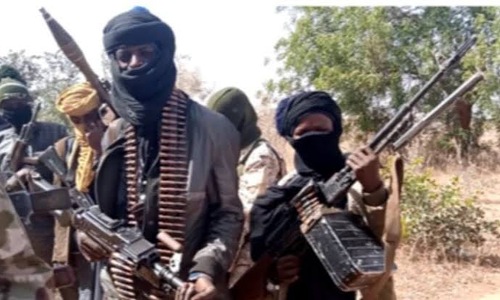
The National Emergency Management Agency (NEMA) has distributed humanitarian relief materials to families displaced by armed banditry in communities across Shagari and Tureta Local Government Areas of Sokoto State.
The intervention, carried out as part of the Federal Government’s efforts to support communities affected by insecurity, took place in Yabo town, Yabo Local Government Area, where the displaced families are currently taking temporary refuge.
The distribution was approved by NEMA Director-General, Mrs Zubaida Umar, on behalf of the Federal Government, following an assessment conducted by the agency’s Sokoto Operations Office.
SEE MORE: NEMA Urges Federal Government Aid As Flood Forces Adamawa Residents To Flee
The relief materials included bags of rice and beans, cartons of spaghetti, vegetable oil, iodised salt, mosquito nets, nylon mats, foam mattresses and blankets.
The intervention comes against the backdrop of repeated bandit attacks in parts of Sokoto State, which have forced residents to abandon their homes and seek safety in other communities.
In June 2026, NEMA reported that attacks on Dan Gulbi community in Tureta Local Government Area on June 7 and 9 had displaced thousands of residents, with many fleeing to public facilities and neighbouring settlements.
The security situation also deteriorated in parts of Shagari Local Government Area in October, when police confirmed attacks on communities in the area. A police inspector was reportedly killed during the incident, while residents raised concerns over the movement of armed bandits around Sanyin Nawal and surrounding communities.
The recurring attacks have heightened humanitarian concerns in the affected areas, particularly for families forced to leave their homes and sources of livelihood.
During the latest relief distribution, beneficiaries expressed appreciation to the Federal Government and NEMA for the assistance, describing the intervention as a demonstration of compassion and solidarity with communities affected by insecurity.
The exercise was conducted in collaboration with the Sokoto State Emergency Management Agency (SEMA).
NEMA said the intervention was part of ongoing efforts to alleviate the suffering of people affected by insecurity and other humanitarian emergencies.
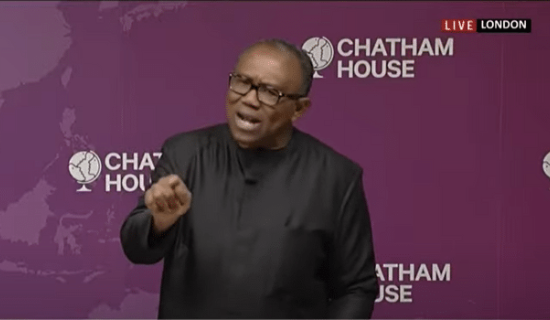
Presidential candidate of the Nigeria Democratic Congress (NDC), Peter Obi, has called on security agencies to investigate the attack on the convoy of his running mate, Senator Rabiu Musa Kwankwaso, in Bichi Local Government Area of Kano State, and arrest those responsible.
Obi condemned the attack, which reportedly left several members of the entourage injured and about seven vehicles vandalised, describing the incident as unacceptable and a threat to democratic participation.
SEE MORE: Peter Obi, Kwankwaso to Hold NDC Town Hall Meeting in Benue Today
In a statement issued on Monday, November 16, the former Anambra State governor urged the Nigeria Police Force and other relevant security agencies to identify the perpetrators, including anyone suspected of sponsoring the violence, and ensure they are brought to justice.
“I strongly condemn this unfortunate incident. Reports indicate that several members of the entourage sustained injuries, while about seven vehicles were vandalised. This is unacceptable and must not be allowed to become part of our political culture,” Obi said.
He stressed that political disagreements should not lead to violence, intimidation or destruction of property, insisting that every Nigerian has the right to participate in the democratic process without fear of attack.
“Democracy is not warfare. Political differences should never be a reason to resort to violence, intimidation or the destruction of property,” he stated.
Obi also expressed solidarity with Kwankwaso, the Kano State NDC leadership and others affected by the incident, while wishing those injured a speedy recovery.
He maintained that political competition should be driven by dialogue, persuasion and ideas rather than violence, adding that the party remained committed to pursuing political change through peaceful engagement and the ballot.
How Kwankwaso’s Convoy Was Attacked in Kano
The attack occurred on Sunday, November 15, during a political visit by Kwankwaso and members of his entourage to Bichi Local Government Area of Kano State.
The NDC vice-presidential candidate was accompanied by the party’s Kano State governorship candidate, Comrade Aminu Abdussalam Gwarzo, and other party members as part of their engagements across the state.
According to Ibrahim Garba Shu’aibu, spokesperson for Gwarzo, the delegation had earlier visited Tofa, Rimin Gado, Kabo, Gwarzo, Shanono and Bagwai local government areas before proceeding to Bichi.
Shu’aibu, in an interview with Arewa Update, alleged that the team encountered resistance from individuals who opposed their activities in the area.
He claimed that some youths threw stones at the convoy, while armed individuals later emerged around the Bichi Local Government Secretariat and attacked members of the delegation.
The spokesperson further alleged that several members of the entourage sustained injuries and about seven vehicles were vandalised during the incident.
Kwankwaso’s media aide, Saifullahi Hassan, also called attention to the attack in a Facebook post.
The incident has raised concerns over the safety of political candidates and supporters as political activities gather momentum ahead of the 2027 general elections.
Obi reiterated that political differences should not divide Nigerians or justify attacks on political opponents, maintaining that the country’s democratic process must be protected.
“No political ambition is worth the life of any Nigerian,” he said, adding that “A new Nigeria is POssible.”

Nigeria’s prolonged security crisis is once again at the centre of national debate following the announcement that President Bola Tinubu’s proposed Five-Year Strategic Defence Operations Plan is ready, raising questions about whether a new security framework can finally deliver lasting peace in a country battling terrorism, banditry, kidnapping and other forms of violent crime.
The plan was announced by the All Progressives Congress (APC) Presidential Campaign Council on Sunday, November 15, 2026, as part of the administration’s efforts to strengthen Nigeria’s defence architecture through improved military capacity, intelligence gathering, technology, manpower expansion and better coordination among security agencies.
SEE ALSO: Tinubu Gov’t Unveils North Central Development Projects Across Eight Sectors
In a statement signed by Dele Alake, spokesperson of the APC Presidential Campaign Council on Sunday, the administration described the initiative as a comprehensive framework for aligning defence priorities, operational requirements, capability development and expenditure with Nigeria’s present and anticipated security challenges.
The announcement comes against the background of years of military operations that have failed to completely eliminate the threats posed by Boko Haram insurgents, Islamic State West Africa Province (ISWAP), armed bandits and other criminal networks operating across different parts of the country.
While the proposed strategy signals an attempt to address longstanding weaknesses in Nigeria’s security system, its ultimate success will depend on whether the government can translate its objectives into measurable improvements in the safety of citizens.
A Five-Year Strategy Built Around Military Expansion
The proposed defence plan is expected to provide a long-term framework for coordinating military operations, strengthening intelligence capabilities, improving combat readiness and ensuring that security expenditure addresses clearly identified national threats.
Its development dates back to August 2026, when Tinubu directed the establishment of an 11-member presidential committee to prepare a National Threat Assessment and a rolling five-year Strategic Defence Operations Plan.
The committee, coordinated by the President’s Special Adviser on Homeland Security, Major General Adeyinka A. Famadewa, was expected to identify the country’s major security threats, assess operational weaknesses and recommend the capabilities required to address them.
The President had also directed the committee to submit the completed documents within 90 days for his consideration and approval.
This distinction is important. Although the APC Presidential Campaign Council has announced that the plan is ready, the public announcement does not, by itself, establish that the President has formally approved the final document or that its implementation has commenced.
The proposed framework nevertheless represents an important opportunity to move Nigeria’s security response away from fragmented operations towards a more coordinated national strategy.
More Soldiers and Police Officers: Will Numbers Make the Difference?
One of the most significant components of the administration’s proposed security expansion is its focus on increasing the number of personnel available to confront security threats.
According to Alake, Tinubu has approved the recruitment of an additional 28,000 soldiers and 50,000 police officers, bringing the proposed increase in military and police personnel to 78,000.
The administration has also created four new Army divisions and restructured existing military formations to improve operational coverage and enable faster responses to security threats.
In addition, two new Army depots have been approved in Osogbo, Osun State, and Amasiri-Edda, Ebonyi State. Each facility is designed to accommodate 6,000 recruits at a time, giving them a combined training capacity of 12,000.
The Osogbo facility reportedly has 5,210 recruits undergoing training.
These investments could strengthen Nigeria’s security capacity, particularly in areas where inadequate personnel and overstretched formations have limited effective responses to attacks.
However, increasing the number of security personnel is only part of the solution.
Recruitment must be accompanied by adequate training, modern equipment, intelligence support, effective leadership, operational logistics and improved welfare.
Deploying additional personnel without addressing these challenges could increase the size of security agencies without necessarily improving their effectiveness.
The proposed 700-unit military barracks in Ikere-Ekiti, Ekiti State, also highlights the administration’s recognition that personnel accommodation and operational infrastructure are important to military effectiveness.
The broader question is whether these investments will translate into a more capable and responsive security system across the country.
The 15,000 Terrorists and 130,000 Surrender Figures
Another major claim in the APC Presidential Campaign Council’s announcement concerns the reported results of military operations under the Tinubu administration.
Alake stated that more than 15,000 Boko Haram terrorists and bandits had been eliminated in the last three years, while over 130,000 Boko Haram fighters and their dependants had surrendered through Operation Safe Corridor, the Federal Government’s rehabilitation programme for repentant insurgents.
The figures, if properly substantiated, would represent significant developments in the country’s counterterrorism efforts.
However, they also raise important questions about the relationship between military operations, insurgent surrenders and the actual security situation in affected communities.
The campaign council did not provide a detailed breakdown of the reported 130,000 figure, including how many were fighters, dependants or other individuals processed through the programme.
This distinction matters because the surrender of dependants cannot automatically be interpreted as the surrender of an equivalent number of armed insurgents.
Similarly, the number of terrorists reportedly eliminated does not independently establish that their organisations have been dismantled or that their operational networks can no longer threaten communities.
The real measure of success should include reduced attacks, disrupted supply networks, rescued victims, restored government control and the safe return of displaced residents.
Without such indicators, large operational figures may tell only part of the story.
Why Insecurity Remains a Major Challenge
Despite years of military operations and successive security interventions, Nigeria continues to face multiple forms of insecurity.
The threats are no longer limited to the Boko Haram insurgency in the North-East. Banditry, mass kidnappings, communal violence and attacks on rural communities have expanded the country’s security challenges.
A UNHCR assessment of Nigeria’s 2025 humanitarian situation reported that the country had 3.57 million internally displaced persons by the end of the year, alongside more than 126,000 refugees and asylum seekers.
The report identified persistent conflict in the North-East, banditry and communal violence in the North-West and Middle Belt as major factors contributing to displacement.
More recent figures also demonstrate the scale of the challenge.
A November 2026 security assessment by SARI Global, reported by Nairametrics, recorded at least 835 security-related deaths across 612 incidents in October 2026, making it the deadliest month of the year according to the assessment.
The report attributed the increase to armed conflict, mass-casualty attacks, banditry and other security-related incidents.
These figures underline the difficulty facing the Tinubu administration. Even as the government highlights military gains, communities continue to experience attacks, displacement and threats to their livelihoods.
For Nigerians living in affected areas, the success of any security strategy will ultimately be judged by whether they can travel, farm, attend school, conduct business and sleep without fear of attacks or abduction.
Intelligence and Technology Could Be the Turning Point
One of the more important aspects of the proposed five-year strategy is its emphasis on intelligence-led and technology-enabled operations.
Nigeria’s security challenges require more than deploying troops after attacks have occurred. Security agencies must be able to identify threats early, monitor the movements of armed groups, share intelligence and prevent attacks before they happen.
Improved surveillance, intelligence gathering, communication systems and coordination between the military, police and intelligence agencies could significantly strengthen the country’s response.
Tinubu had earlier emphasised the importance of coordination when directing the preparation of the five-year plan.
At the time, he cited the rescue of pupils and teachers abducted in Oriire Local Government Area of Oyo State as an example of what cooperation among security agencies could achieve.
He said: “The operation demonstrated what can be achieved when our agencies work together with a clear objective and the necessary intelligence.”
That observation captures one of the central challenges confronting Nigeria’s security architecture: the need to ensure that intelligence is not only gathered but also effectively shared and translated into timely action.
However, technology alone cannot guarantee security. Surveillance equipment, drones and intelligence systems must be supported by trained personnel, reliable funding, maintenance and effective operational decisions.
The Funding and Accountability Question
Perhaps one of the most important tests of the proposed five-year plan will be its financing and implementation.
Nigeria has repeatedly invested substantial resources in military equipment, security operations, recruitment and infrastructure. Yet persistent insecurity raises questions about how effectively these resources are being deployed.
A five-year defence strategy could provide greater consistency in planning and expenditure, reducing the uncertainty associated with short-term interventions.
However, the government must demonstrate how the plan will be funded, how procurement decisions will be monitored and how security agencies will be held accountable for their performance.
The proposed alignment of defence expenditure with identified national threats is a positive direction, but transparency and effective oversight will be essential.
There must also be clear performance targets, implementation timelines and regular assessments to determine whether the strategy is producing measurable results.
Without accountability, a comprehensive security document could become another policy announcement without sufficient impact on the lives of ordinary Nigerians.
Beyond Military Operations: Addressing the Causes of Insecurity
Another important consideration is that Nigeria’s security crisis cannot be addressed entirely through military operations.
Poverty, unemployment, weak local governance, illegal arms trafficking, communal tensions and the absence of effective state institutions in vulnerable communities can create conditions in which criminal and extremist groups operate.
Military operations may weaken armed groups, but lasting stability requires communities to have access to education, healthcare, economic opportunities and effective justice systems.
The Federal Government’s Operation Safe Corridor programme reflects an attempt to combine military action with rehabilitation and reintegration.
However, rehabilitation must be accompanied by proper screening, monitoring and community engagement to ensure that individuals who surrender do not return to violence.
The government must also pay attention to victims and communities affected by insurgency. Reintegration programmes should not overlook the rights, safety and concerns of people who have suffered years of violence.
Ultimately, rebuilding public confidence in security institutions will be as important as strengthening their operational capacity.
Can Tinubu’s Five-Year Defence Plan Deliver?
The proposed Five-Year Strategic Defence Operations Plan presents an opportunity for the Tinubu administration to address some of the structural weaknesses that have affected Nigeria’s security response over the years.
Its emphasis on military expansion, intelligence gathering, technology, operational coordination and long-term defence planning addresses several important areas of concern.
Nevertheless, the announcement of a plan is not the same as achieving security.
The administration must demonstrate that the proposed recruitment drive will produce well-trained personnel, that additional military formations will improve operational coverage and that intelligence-led operations will prevent attacks rather than simply respond to them.
It must also show that resources will be properly managed and that communities affected by insecurity will experience tangible improvements.
Most importantly, the government must establish clear benchmarks against which Nigerians can assess progress throughout the five-year period.
For a country that has endured years of insurgency, banditry and kidnappings, another security strategy will only inspire confidence if it delivers results beyond official figures and policy statements.
Tinubu’s five-year defence plan may provide a new direction for Nigeria’s security architecture, but whether it finally ends the country’s insecurity will depend less on the ambition of the document and more on the government’s ability to implement it effectively.






Peter Obi Challenges Nigerians to Verify His Anambra Governance Record

Sokoto Bandit Attacks: NEMA Distributes Relief Materials to Displaced Families

Atiku Accuses Tinubu of Seeking Plateau’s Forgiveness Only for 2027 Votes

From Katsina to Bichi: Timeline of Reported Attacks on Peter Obi and His Political Associates Since 2023

Peter Obi Demands Arrest of Perpetrators After Attack on Kwankwaso’s Convoy

Can Tinubu’s Five-Year Defence Plan Finally End Nigeria’s Insecurity?

Trump’s Family Unveils New Cryptocurrency Platform

Senate Denies Receiving Petitions Against Tinubu’s Ambassadorial Nominees

Dangote Cement Lights Up Benue Host Communities With CSR Initiatives

Reps Recommend 3-year Jail Term For Aviation minister

Tems Sets New Record On Billboard Hot 100 Chart
