
NEWS
Reps Summon Minister Over $300m Malaria Fund Misuse

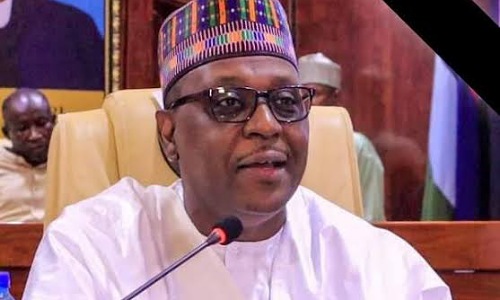
Amid mounting concerns over the handling of funds allocated for malaria eradication, the House of Representatives Committee on Anti-Malaria, HIV/AIDS, and Tuberculosis has delivered a firm ultimatum to Health Minister Mohammed Ali Pate and Permanent Secretary Daju Kachollom.
The officials are urged to appear urgently within 72 hours to address allegations of misusing a significant $300 million budget since 2021.
With tensions rising, the committee underscores its seriousness by warning of potential consequences for non-compliance, including the possible arrest of Permanent Secretary Kachollom, who has failed to attend three prior summons.
At the heart of the inquiry lies accusations of procurement irregularities, particularly the alleged exclusion of local manufacturers from critical insecticidal net contracts.
Amobi Ogah, the Chairman of the Committee and a member representing Isuikwato/Umuneochi Federal Constituency, Abia State, expressed his members’ disappointment over the absence of the Permanent Secretary.
Ogah, who spoke on behalf of the committee during Tuesday’s session at the National Assembly, conveyed their dissatisfaction with the situation.
He said, “Nigeria borrowed $100m from the Islamic Bank, which was approved by the National Assembly in 2021.
“Out of the $100m, $10m was granted, and another $200m borrowed from World Bank in the same year for Impact Project (Malaria Financing Agreement), making it a total of $300m
“The resolution by the National Assembly is that local content must be prioritised to encourage local manufacturers, but the ministry went ahead to contract the United Nations Office for Project Services to do the procurement process at a cost of over $3m for the purchase of anti-malaria commodities.”
Labeling malaria as an epidemic in Nigeria, Ogah emphasized the government’s continuous efforts to assist the populace. He lamented the challenges posed by civil servants, stating, “Most times, the civil servants are our problem.”
Ogah highlighted that funds had been allocated since 2021 and stressed the committee’s repeated invitations to the Permanent Secretary, expressing frustration at her failure to provide explanations despite being summoned for the third time.
He continued, “Have they used the money? If they have not used the money, where is the money? It is a matter of simple explanation. But they have been running away, calling all manner of people to talk to us. But we are here to defend Nigerians.
“We were elected to represent our people. Nigerians cannot continue to die of malaria, even when the government has made every necessary effort to see that eradication is being achieved by 2030.
“The National Assembly will no longer tolerate the attitude of civil servants taking parliament for a ride. Enough is enough. We are elected by our people to represent them. We are elected to talk for them and defend them.
“And we are talking about a disease that has turned to an epidemic. We will not hesitate to invoke our constitutional right to compel the Permanent Secretary to be arrested if she fails to honour the summons.”
The lawmaker highlighted recent developments, stating that the committee had received a petition from Seasons Law Firm, representing Rosies Textile Mills Limited.
The petition accused the Ministry of Health and the Permanent Secretary of obstructing indigenous manufacturers from participating in contracts for procuring insecticidal nets and related products.
Ogah emphasized the need for parliamentary intervention to address this issue promptly.
He assured “It is clear that the National Assembly has to intervene on this issue. We are going to intervene to forestall this matter ending in litigation. We will mediate and bring the parties involved to a round table with a view to resolving the matter amicably,”

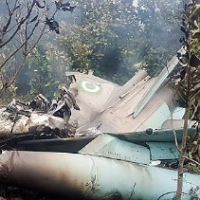
Rights activist, public affairs analyst and Chief Executive Officer of The Dialogue, Shehu Muhammad, has questioned the continued occurrence of military aircraft crashes despite the huge budgetary allocations to the country’s defence and security sector.
Muhammad spoke while reacting to the recent Nigerian Navy aircraft crash in Irele Local Government Area of Ondo State during an interview on Channels Television’s The Morning Brief.
Describing the incident as “one incident too many,” he recalled that Nigeria had recorded several military aircraft crashes involving the Nigerian Air Force and Nigerian Army over the years.
RELATED NEWS: Military Gear Found at Ondo Crash Site as Helicopter Burns to Rubble
He said the recurring incidents had raised concerns among members of the public about the condition of military aircraft and the process through which military hardware is procured.
“People have begun to cast aspersions as to the honesty, sincerity, and openness in the purchase of military hardware, including airplanes,” Muhammad said.
According to him, the concerns are heightened by the substantial funds allocated to the military and other security agencies over the years.
“There are insinuations by the public that, after all, the military receive the highest amount of money from the budget year in, year out,” he said.
Muhammad also questioned the transparency of defence procurement, particularly the process of selecting contractors for the supply of military equipment.
He argued that the repeated crashes should prompt authorities to examine military aviation operations, aircraft procurement and the management of defence resources.
The latest crash occurred in Irele, Ondo State, with recovery efforts reportedly complicated by the difficult terrain around the crash site.
Muhammad said the latest incident should not be treated in isolation, but should lead to broader questions about military aviation safety and the management of resources allocated to the defence sector.
He called for greater transparency and accountability in the procurement and management of military hardware to restore public confidence.

Rights activist and public affairs analyst, Shehu Mohammed, has called for the scrapping of the National Youth Service Corps (NYSC), saying the scheme has outlived its usefulness amid growing security concerns across the country.
Shehu made the call on Wednesday during an interview on Channels Television’s The Morning Brief, while reacting to the kidnapping of prospective corps members travelling to orientation camps in Akwa Ibom and Anambra states.
He described the incident as “one incident too many,” noting that kidnapping, maiming and the detention of victims in kidnappers’ camps had become frequent in several parts of the country.
SEE ALSO: 2027: North Should Back South-West To Complete 8 Years In Power — Shehu Sani
“I think it is just a case of one incident too many. There are more unreported cases of kidnapping and maiming and detention in kidnappers’ den, almost all over the country, especially in the northern part of the country: the Middle North West, North East, and North Central. It’s a daily, daily happening,” Sani said.
He said the security situation had made him question the continued relevance of the NYSC scheme, which was established to promote national unity.
“When Bukola was saying that she objects to the scrapping of NYSC, I tend to take a different view. My view is that the entire NYSC was meant to unite Nigeria, but if in uniting Nigeria you lose your daughter, you lose your son, you lose your uncle, you lose your sister, you lose your neighbour, then it’s not worth the trouble,” he said.
Shehu argued that corps members should instead be allowed to serve in their respective states, eliminating the need for young Nigerians to travel long distances to orientation camps.
“This NYSC issue should be scrapped, removed from the constitution, allow each and every corps member to serve in his own state, traveling with all the dangers, with all the costs,” he said.
He also highlighted the financial burden placed on families when corps members are posted far from their home states.
“If a child is going from Katsina to Anambra State to report to the camp, minimum that you give him is three hundred thousand naira for transfer cost, three hundred. How many parents have three hundred thousand naira to give their wards?” Sani asked.
He said the financial burden was only one aspect of the problem, with corps members also facing security risks and possible trauma during interstate travel.
“Minus all the dangers, the consequences, the uncertainties, the traumas involved. If your child has to go through a trauma, through uncertainty, through pain, through kidnapping, through raping, eventually through killing, why do you have to go for NYSC?” he said.
“As far as I’m concerned, the NYSC project has outlived its usefulness. It should be scrapped.”
Shehu also warned that kidnapping in Nigeria was taking a new dimension, with criminal groups increasingly targeting vulnerable groups.
“Corps members are vulnerable groups. Travelers for commercial purposes all over the country are vulnerable groups. Therefore they are now going for soft targets,” he said.
According to him, kidnappers also use abductions to blackmail victims’ families and government authorities into paying ransom.
“The next one is blackmailing either the parents or blackmailing government to collect money,” he said.
Sani alleged that ransom payments were subsequently used to finance criminal activities.
“So they can finance their arm purchase. They can finance their purchase of hard drugs to enable them operate without pity and compassion, and to send permanent fear into the community,” he said.
He added that the kidnappers were using their activities to create fear within communities, despite being relatively few in number.

The Nigerian Content Development and Monitoring Board (NCDMB), in collaboration with Zeconia Global Investment CO. Ltd, has successfully completed the Training on Digital Oilfield Operation & Data Analytics for 50 participants in Lagos State.
The 5-day intensive capacity-building program, which was held from September 28 to October 2, 2026 in Lagos, came to a successful close with participants equipped with cutting-edge digital skills for the oil and gas industry.
The training was designed to bridge the digital gap in the sector, exposing beneficiaries to practical knowledge on digital oilfield architecture, production optimization, real-time data monitoring, IoT applications, predictive analytics, and data-driven decision making in upstream operations.
READ ALSO: 40 Oil Blocks up for Grabs as NUPRC Opens 2026 Bid Round
At the closing ceremony, the Managing Director of Zeconia Global Investment Co. Ltd, Olawore Oladipupo, conducted the official handover to participants, applauding their commitment, active participation and eagerness to learn throughout the duration of the training.
He charged them to leverage the knowledge gained to add value to the industry and position themselves for emerging opportunities in the digital energy space.
Participants expressed profound appreciation to NCDMB and Zeconia Global for the life-changing opportunity, describing the training as impactful, practical and timely for the evolving global oil and gas landscape.
The programme once again demonstrates NCDMB’s unwavering commitment to human capital development, local content growth and strategic partnerships aimed at empowering Nigerians with relevant skills for the future of work.






‘Military Gets Huge Budgets, Yet Air Crashes Persist’ — Shehu Muhammad

2027: INEC Can Deliver, But Must Fix 2023 Pitfalls — Civil Society Leader
‘NYSC Has Outlived Its Usefulness, Should Be Scrapped’ — Shehu Muhammad
2027: NRM Candidate Esther Okereke Backs Death Penalty for Corruption

NUPRC Outlines Major Offshore Investment Pipelines
NCDMB, Zeconia Global Train 50 on Digital Oilfield Operations

Trump’s Family Unveils New Cryptocurrency Platform

Senate Denies Receiving Petitions Against Tinubu’s Ambassadorial Nominees

Dangote Cement Lights Up Benue Host Communities With CSR Initiatives

Reps Recommend 3-year Jail Term For Aviation minister

Tems Sets New Record On Billboard Hot 100 Chart
