
NEWS
‘Resign and Go in Peace’ — Okonkwo Tells Tinubu, Faults INEC Endorsement

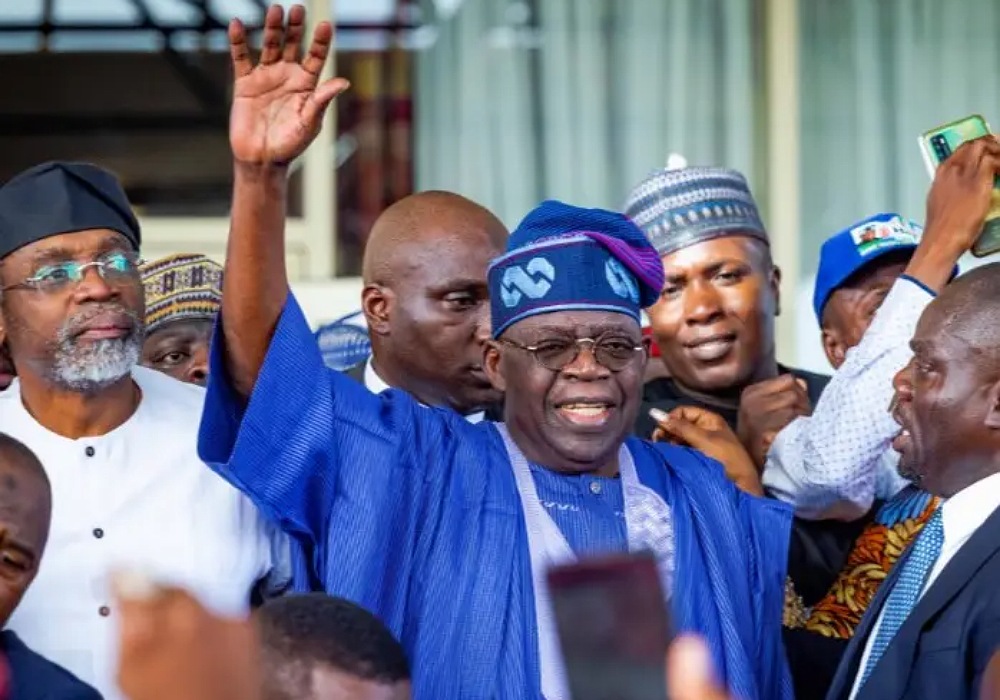
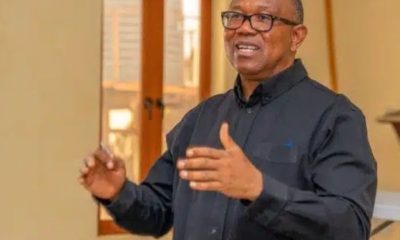
A chieftain of the African Democratic Congress (ADC), Kenneth Okonkwo, has criticised President Bola Tinubu for defending the Independent National Electoral Commission (INEC), insisting that the electoral body should be allowed to address concerns over its credibility without presidential intervention.
Speaking on Channels Television’s Sunrise Daily on Friday, Okonkwo faulted Tinubu’s recent remarks affirming INEC’s neutrality, arguing that the commission has not done enough to convince Nigerians of its impartiality.
“It is very sad. Any country that has a president who has morphed into the chief spokesperson of INEC is in trouble,” Okonkwo said.
SEE MORE: Account for N7.98tn Oil Windfall – Atiku to Tinubu
He maintained that unresolved issues from the 2023 general election, particularly the commission’s reported technical glitches, continue to raise questions about its credibility.
“You can imagine President Tinubu telling the whole world that INEC is neutral. The same Tinubu who, during the 2015 campaign, said they would form a parallel government if INEC rigged the election.
“The same people who were once critical of INEC are now saying INEC is neutral. An INEC that recorded a technical glitch in 2023 and has not satisfactorily explained it to Nigerians cannot simply be declared neutral. We are urging INEC to be neutral; as of today, it is not,” he stated.
Okonkwo also criticised the Tinubu administration’s performance in governance and security, arguing that it could affect the President’s chances of securing a second term in office.
“Tinubu should not even allow the election to hold; he should resign and go in peace,” he said.
The ADC chieftain also reacted to the recent Court of Appeal judgment that overturned an earlier decision directing INEC to deregister the ADC and four other political parties, describing the verdict as a victory for the opposition.
“I had boasted that ADC does not have any legal challenge because we know the only challenge it has is the APC trying to use some instruments in the judiciary to litigate us out of existence. We resisted them, and they are failing and falling like a pack of cards,” Okonkwo said.
He further accused the ruling All Progressives Congress (APC) of attempting to weaken opposition parties and limit democratic competition ahead of the 2027 general election.




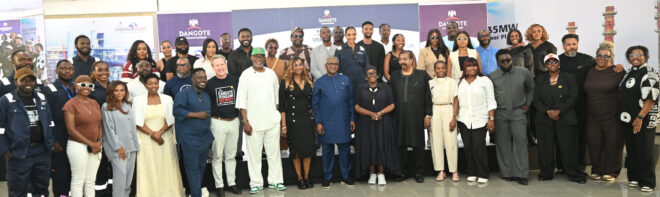
President and Chief Executive of Dangote Industries Limited, Aliko Dangote, has challenged Nigerian entrepreneurs and creative industry practitioners to think beyond conventional limits, build globally competitive enterprises and create enduring legacies, declaring that Africa must take responsibility for its own economic transformation rather than depend on foreign investors for prosperity.
Dangote gave the charge while hosting leading figures from Nigeria’s creative industry at the Dangote Petroleum Refinery and Petrochemicals complex in Lekki, Lagos, where he also disclosed that the Group was considering raising its US$100 billion Vision 2030 target in response to its expanding industrial investments and growth ambitions. The delegation, comprising Nollywood stars, content creators, comedians and other entertainment and lifestyle personalities, toured the industrial complex before engaging Dangote in a conversation on entrepreneurship, innovation, ambition, and legacy.
Addressing the creatives, Dangote urged Nigerians to match their creativity and entrepreneurial drive with discipline, perseverance and the courage to pursue ambitious projects, stressing that lasting success should be measured not merely by personal wealth but by the businesses built, opportunities created and contributions made to society.
“It is not just about money; it is about legacy. We have often been taken for granted, and in many ways, we have contributed to that by waiting for foreigners to come and make our continent prosperous. That will never happen. We must take responsibility for building Africa’s prosperity ourselves,” he declared.
READ ALSO: Renaissance, Sterling Bank Back Indigenous Oil and Gas Contractors Financially
Speaking on the Group’s long-term ambitions, Dangote revealed that its US$100 billion Vision 2030 target was being reconsidered, with a more ambitious target expected to be unveiled in January.
“We realised that our Vision 2030 target was too modest. We are working towards unveiling a new vision in January, with a revised target that reflects our ambition to achieve far more than US$100 billion,” he said.
He explained that the Group’s continued industrial expansion was driven by a determination to build enduring institutions, strengthen Africa’s productive capacity and demonstrate that the continent could develop enterprises capable of competing globally. Drawing lessons from Singapore’s economic transformation, Dangote said nations could overcome difficult beginnings through deliberate investment, enterprise and a commitment to developing their own capabilities. He challenged Nigerian entrepreneurs to reject limiting assumptions about what could be achieved, noting that transformative accomplishments often required the courage to pursue ideas others considered impossible.
Reflecting on his entrepreneurial journey and the development of the refinery, Dangote identified perseverance, disciplined execution and sound judgement as essential ingredients of business success. He cautioned, however, that ambition must be tempered by the ability to recognise when an investment was no longer commercially viable.
“Before embarking on any venture, you must carefully consider all the issues involved. We have made mistakes too, and I share these experiences so others can learn from them,” he said. “One important lesson is never to keep putting good money into a bad investment. Some situations are simply too difficult to turn around, no matter how much you invest.”
Turning to the creative industry, Dangote commended Nigerian entertainers for building a formidable international presence despite operating in a challenging business environment and receiving limited government support. He described Nollywood’s growing global influence as evidence of Nigeria’s creative potential, urging practitioners to build on their achievements through stronger business structures, innovation and collaboration. According to him, the industry’s next phase of growth should go beyond international recognition to building sustainable enterprises, creating employment and strengthening Nigeria’s position in the global creative economy.
Veteran Nollywood actor Richard Mofe-Damijo (RMD), who moderated the interactive session, praised Dangote’s accomplishments, describing his industrial investments as an enduring contribution to Nigeria’s development.
“Your legacy has already been built, and its continuation is assured. You deserve all the praise and recognition you have received for what you have accomplished,” RMD said.
Nollywood actor Abdullateef Adedimeji described the visit as an inspiration, saying the scale of the refinery had challenged him to raise his ambitions and pursue greater accomplishments in the creative industry.
“Coming here today is a source of motivation for us. As someone in the film industry, this experience inspires me to push beyond my limits, broaden my imagination and strive for greater achievements, including making a more meaningful impact in my community,” he said.
Adedimeji also called for greater collaboration among Nollywood practitioners, drawing lessons from the coordination and partnerships underpinning Dangote’s industrial operations.
“That is what we need in Nollywood. The more we collaborate, the stronger and more successful we become,” he said.

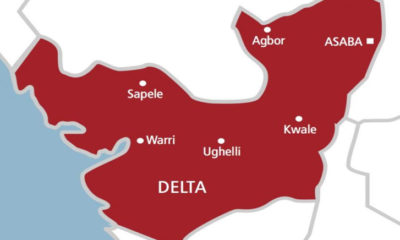
No fewer than 10 people are feared dead after a protest against a vessel belonging to an indigenous oil company turned tragic at Kula community in Rivers State, following an alleged collision involving a community boat and a Nigerian Army gunboat.
The incident reportedly occurred on Tuesday morning when members of the community took to the water in a boat to protest against the oil company’s vessel.
A community leader, Chief Anabs Sara-Igbe, disclosed this in a telephone interview with journalists in Port Harcourt.
Sara-Igbe, a former spokesman of the Pan Niger Delta Forum (PANDEF), alleged that a gunboat belonging to the Nigerian Army hit the protesters’ boat, causing some of its occupants to drown.
READ ALSO: Renaissance, Sterling Bank Back Indigenous Oil and Gas Contractors Financially
He said efforts were ongoing to recover the remains of those who drowned during the incident.
The circumstances that led to the protest, the identities of the victims and the precise sequence of events surrounding the alleged collision were not immediately clear.
The Nigerian Army’s response to the allegation was also not immediately available as of the time of filing this report.
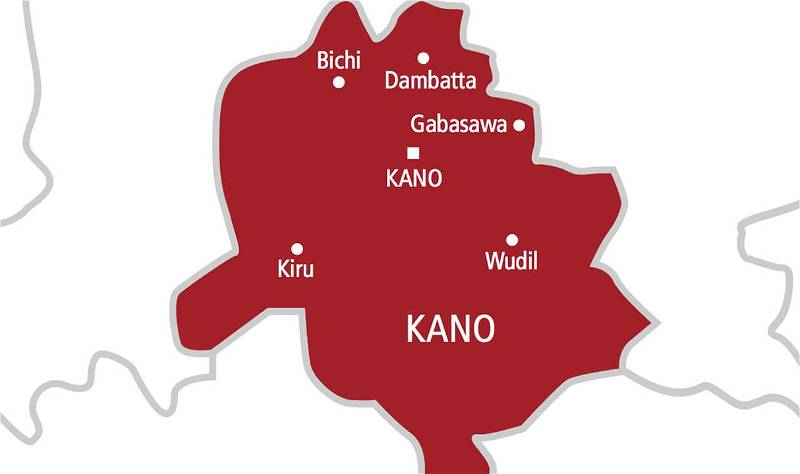
The Federal Road Safety Corps (FRSC), Kano Sector Command, has confirmed the death of two persons in a road crash involving a fully loaded tipper truck and a Mercedes-Benz car along the Kano-Zaria Road at Dangi Underpass.
The fatal crash occurred on Tuesday, October 20, 2026, and involved a Howo tipper truck with registration number RMG 332 XA, loaded with bitumen, and a Mercedes-Benz C180 with registration number ABJ 783 GB.
According to a statement signed by the FRSC Kano Sector Public Education Officer, Abdullahi Labaran, four male adults were involved in the crash, with two confirmed dead.
SEE ALSO: DPRP’s Free Fuel Delivery Expands to Kano, Imo, Nearly 10 More States
Preliminary reports indicated that the crash was caused by brake failure in the loaded tipper truck, resulting in the driver losing control of the vehicle.
The truck reportedly slid backwards and collided with the Mercedes-Benz behind it, leading to the fatal incident.
FRSC rescue personnel and other emergency responders evacuated the victims to Aminu Kano Teaching Hospital for medical attention.
Reacting to the incident, the Kano Sector Commander, Corps Commander Idris Mohammed Lawal, expressed condolences to the families of the deceased and prayed for the repose of their souls.
Lawal also urged the affected families to find the strength to bear the loss.
The Sector Commander warned motorists, transport unions, construction companies and fleet operators against neglecting regular vehicle maintenance, particularly the inspection and servicing of critical components such as braking systems and tyres.
He emphasised the importance of defensive driving, urging motorists to maintain safe following distances, remain alert to changing road conditions and ensure their vehicles are roadworthy before embarking on journeys.
Lawal stressed that regular vehicle maintenance, responsible driving and strict compliance with road safety regulations remain essential to preventing avoidable road crashes and saving lives.






With Crude at $111, IEA Sees Prolonged Crisis
NCDMB Joins Hand with Manufacturers to Boost Local Oil, Gas Components Production

Dangote Preaches Ambition, Africa First to Nigerian Creatives

Protest Against Oil Company’s Vessel in Rivers Takes 10 Lives

FRSC Warns Drivers After Brake Failure Kills Two in Kano Crash

AAC Seeks Tinubu’s Approval, Logistical Support for 5,000 at Campaign Event

Trump’s Family Unveils New Cryptocurrency Platform

Senate Denies Receiving Petitions Against Tinubu’s Ambassadorial Nominees

Dangote Cement Lights Up Benue Host Communities With CSR Initiatives

Reps Recommend 3-year Jail Term For Aviation minister

Tems Sets New Record On Billboard Hot 100 Chart
