
NEWS
Senate panel uncovers N34 billion fixed Deposit Account linked to PEF without remitting interest




An International Arbitration Tribunal under the auspices of the International Chamber of Commerce (ICC) in Paris has ruled in favour of Nigeria, rejecting claims brought by Sunrise Power and Transmission Company Limited over the long-delayed Mambilla Hydroelectric Power Project in Taraba State.
The tribunal, in its award issued on Thursday, September 17, 2026, also ordered Sunrise Power and its promoter, Leno Adesanya, to reimburse Nigeria 75 per cent of the legal fees and expenses incurred in the arbitration, amounting to $11.8 million.
The ruling came nearly nine years after Sunrise commenced arbitration proceedings against Nigeria in October 2017.
SEE MORE: N33.8bn Power Fraud: EFCC Nabs Ex-Minister Saleh Mamman After Months on the Run
According to details of the award, Nigeria’s legal fees and expenses were assessed at $11,819,506.51. Of the amount, $2.5 million is to be released from funds held in escrow by the ICC, while Sunrise Power and Adesanya are required to pay the remaining $9,319,506.51, with interest accruing at an annual rate of 10 per cent, compounded annually, until the outstanding amount is fully paid.
The tribunal also fixed the arbitration costs at $1,656,500, with Sunrise Power and Adesanya responsible for 75 per cent and Nigeria responsible for the remaining 25 per cent.
The dispute is connected to the development of the Mambilla Hydroelectric Power Project, which the Federal Government has identified as a major power project in Taraba State.
The company had made a claim against the Federal Republic of Nigeria, demanding $680 million as a settlement sum and interest in respect of another arbitration in which it was claiming more than $2.7 billion in compensation and interest relating to disputes associated with the development of the project.
In a separate aspect of the dispute, Sunrise Power had sought an order compelling Nigeria to pay $400 million, comprising a $200 million settlement sum and a further $200 million default sum.
The tribunal rejected the claim and dismissed Sunrise Power’s assertion that Nigeria had breached its contractual obligations under the settlement agreement and its addendum.
The panel also declared that Leno Adesanya, the promoter of Sunrise Power, was bound by the arbitration agreement with Nigeria under the settlement agreement and addendum. It further held that it had jurisdiction over Nigeria’s counterclaim against Adesanya and his firm.
The arbitration dates back to a disputed 2003 agreement concerning the construction of a hydroelectric power plant in Taraba State.
President Bola Ahmed Tinubu said the original contract was for a 3,050-megawatt hydroelectric plant under a build-operate-transfer model, but maintained that the Federal Executive Council never authorised the contract.
The broader Mambilla project has subsequently been associated with a planned capacity of 3,960MW.
Reacting to the ICC award, President Tinubu said the decision affirmed Nigeria’s determination to resist what he described as “predatory and exploitative claims by corrupt local and international entities and their enablers and funders.”
Tinubu also commended the Attorney-General of the Federation and Minister of Justice, Prince Lateef Fagbemi, and the entire team at the Federal Ministry of Justice for their efforts in defending Nigeria’s position.
He also praised Nigeria’s defence team, led by Elizabeth Oger-Gross and Tolu Obamuroh of Paul Hastings LLP, for what he described as their professional and excellent defence of the country.
The President further commended the patriotism and support of former President Olusegun Obasanjo and late former President Muhammadu Buhari, who testified in the case.
He noted that the dispute dated back to the controversial 2003 contract for the proposed hydroelectric plant in Taraba State.
Tinubu also thanked former ministers Babatunde Raji Fashola, SAN, and Suleiman Adamu, as well as the experts and other witnesses who participated in the proceedings and helped defend Nigeria’s interests.
The President acknowledged the support of the National Security Adviser and commended the Economic and Financial Crimes Commission (EFCC) for its investigation into the case.
Tinubu described the ICC decision as a major development for the Mambilla project, saying the ruling had cleared the “single biggest legal hurdle” that had paralysed the hydropower project for years.
The President assured that Nigeria remained committed to partnering with genuine investors and honouring its legal obligations.
However, he said the country would continue to defend what he described as opportunistic claims against the nation’s commonwealth.
The ICC ruling therefore brings a major chapter of the long-running legal dispute surrounding Sunrise Power and the Mambilla project to a close, while removing the immediate arbitration claim that had exposed Nigeria to billions of dollars in potential liability.


In response to the recent security alerts, the Osun State Government has approved the establishment of a Joint Security Taskforce to strengthen security response and alert to threats to lives and properties in the state.
According to a government house statement on Thursday, to ensure smooth take off of the JTF, the state government declared its readiness to provide all necessary logistics that will strengthen the protection of lives and property of the people throughout Osun State .
The decision was adopted at the State Security Council (SSC) meeting convened yesterday by Governor Ademola Adeleke and presided over by the Deputy Governor, Prince Kola Adewusi with the new Commissioner of Police personally in attendance alongside other security top brass.
READ ALSO: NCDMB Book Reading Features Nwabuikwu
The Deputy Governor while opening the meeting conveyed the best wishes of the state Governor to the service commanders and lauded their steadfastness during recent security challenges and tasked them not to relent in the face of fresh security threats.
Accompanied by the Attorney General of the state, Hon Wole Jimi-Bada; the Head of Service, Elder Ayanleye Aina; and the Governor’s Special Adviser on Security, Mr Samuel Ojo, the Deputy Governor told the commanders that the governor is committed to further empowering the security agencies to secure the state while calling on the traditional rulers to sustain their local security oversight.
The Council during its deliberations also used the opportunity of the meeting which lasted several hours to further allay the fears of the residents on their security and protection, noting that Osun state remains safe and secured.
The Council further tasks residents to be extra vigilant particularly in churches, mosques and schools, tasking stakeholders to put extra security measures around their premises.
While assuring the public of their safety, the Council further requested timely intelligence sharing to security agencies by members of the public to forestall attacks by suspected terrorists and bandits.
The Nigeria Police in conjunction with other security agencies were also directed to be on a 24 hour red alert to curtail the threats of the said bandits and terrorists.
At the meeting, an agreement was also reached between the Ministry of Justice, the Nigeria Police, and the DSS, to collaborate with a view to ensuring that all the suspects are properly investigated and prosecuted accordingly without delay.
The meeting ended with a commendation of the new Commissioner of Police, Mr Ibrahim Zungura for instituting policing reforms since his assumption of office and for attending the security meeting in person.
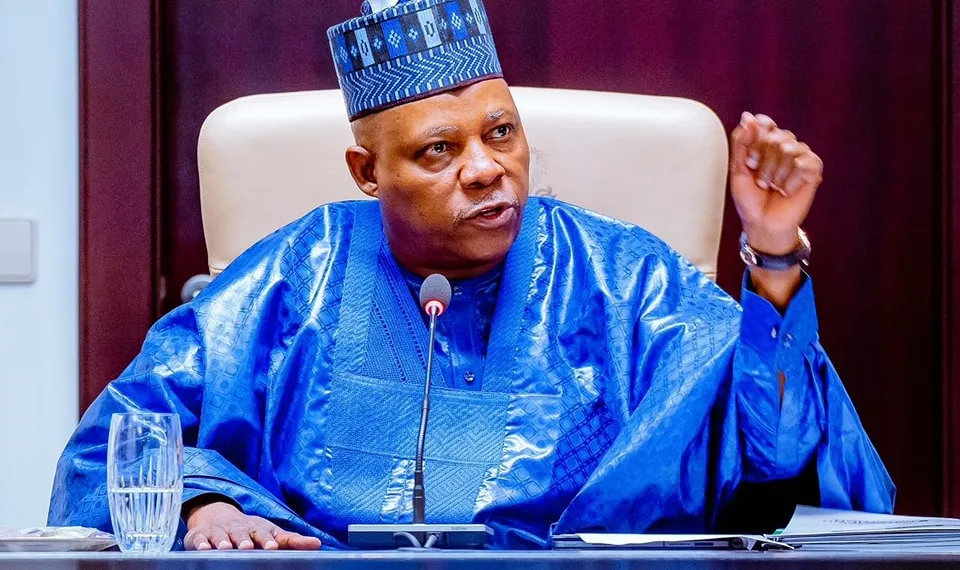
Vice President Kashim Shettima has arrived in Yola, Adamawa State, to lead a Federal Government delegation on a condolence visit to the family of the late elder statesman, Alhaji Bamanga Muhammad Tukur.
Shettima’s visit is at the instance of President Bola Ahmed Tinubu, following the death of the former Governor of the old Gongola State and former National Chairman of the Peoples Democratic Party (PDP).
The Vice President was received in Yola by Adamawa State Governor, Ahmadu Umaru Fintiri, alongside members of the state executive council.
Tukur, who died on September 12, 2026, was a prominent businessman, politician and elder statesman whose career in public service and business spanned several decades.
SEE MORE: 2027: PDP Drops Fresh Revelation on Wike’s Support for Tinubu
He served as Governor of the defunct Gongola State and later became National Chairman of the PDP. He was also recognised for his contributions to Nigeria’s political development and Africa’s business community.
The presidential delegation accompanying Shettima includes the APC Deputy National Chairman (North), Hon. Ali Bukar Dalori; former Minister of Transportation, Senator Sa’idu Ahmed Alkali; Deputy Chief of Staff to the President (Office of the Vice President), Senator Ibrahim Hassan Hadejia; and Senior Special Assistant to the President on National Assembly Matters (Senate), Senator Abdullahi Abubakar Gumel.
Others on the delegation are Hon. Abdulrazaq Sa’ad Namdas; Sarkin Gabas Adamawa, Dr Mahmood Halilu Ahmed (Modi); and APC National Vice Chairman (North-East), Comrade Mustapha Salihu, among others.
The condolence visit comes as political leaders, government officials and other Nigerians continue to mourn the death of the former governor and PDP national chairman.






Mambilla: ICC Orders Sunrise Power to Pay Nigeria $11.8m After 9-Year Battle

How Nigeria’s Foreign Reserves Rose to $54.61bn in 2026
Terror Threats: Osun Establishes Joint Security Task Force

Shettima Arrives Yola to Condole With Bamanga Tukur’s Family

Middle East Crises Pump Fuel Prices Upwards with Attacks on Iran, Saudi Arabia

NCDMB Book Reading Features Nwabuikwu

Trump’s Family Unveils New Cryptocurrency Platform

Senate Denies Receiving Petitions Against Tinubu’s Ambassadorial Nominees

Dangote Cement Lights Up Benue Host Communities With CSR Initiatives

Reps Recommend 3-year Jail Term For Aviation minister

Tems Sets New Record On Billboard Hot 100 Chart