
Politics
SERAP Sues Tinubu Over Missing $3.4bn IMF Loan

The Socio-Economic Rights and Accountability Project (SERAP) has dragged President Bola Tinubu to court on the $3.4 billion COVID-19 loan from the International Monetary Fund (IMF) which remains unaccounted for.
The SERAP in a statement averred that its action was over “the failure to probe the grim allegations that $3.4 billion loan obtained by Nigeria from the International Monetary Fund (IMF) to finance the budget and respond to COVID-19 is missing, diverted or unaccounted for.”
The anti-corruption crusader made it clear that it action was predicated on information gleaned from the recently published 2020 Nigeria’s annual audited report by the Auditor-General of the Federation.
In the suit number FHC/ABJ/CS/269/2024 filed last Friday at the Federal High Court, Abuja, SERAP is asking the court “to direct and compel President Tinubu to probe the allegations that $3.4 billion loan obtained by Nigeria from the IMF to finance the budget and respond to COVID-19 is missing, diverted or unaccounted for.”
The SERAP is also seeking: “an order of mandamus to direct and compel President Tinubu to ensure the effective prosecution of anyone suspected to be responsible for the alleged mismanagement and diversion of the $3.4 billion IMF loan obtained by Nigeria to finance the budget and respond to the COVID- 19 pandemic.
“An order of mandamus to direct and compel President Tinubu to ensure the full recovery of the missing $3.4 billion IMF loan obtained by Nigeria to finance the budget and respond to the COVID- 19 pandemic.”
In the suit, the SERAP argued that: “Investigating these grave allegations, bringing suspected perpetrators to justice and recovering any missing IMF loan would contribute to addressing the country’s economic crisis and debt burden.”
The SERAP is also arguing that, “The findings by the Auditor-General suggest a grave violation of the public trust, the provisions of the Nigerian Constitution 1999 [as amended], national anticorruption laws, and the country’s obligations under the UN Convention against Corruption.”
According to the SERAP, “Servicing IMF loan that is allegedly missing, diverted or unaccounted for is double jeopardy for Nigerians—they can neither see nor benefit from the projects for which the loan was approved; yet, they are made to pay back both the loan and accrued interests.”
The SERAP is arguing that, “Unless the President is directed and compelled to get to the bottom of these damning revelations, suspected perpetrators would continue to enjoy impunity for their crimes and enjoy the fruits of their crimes.”
The suit filed on behalf of the SERAP by its lawyers Kolawole Oluwadare and Andrew Nwankwo, read in part: “There is a legitimate public interest in ensuring justice and accountability for these serious allegations. Granting the reliefs sought would end the impunity of perpetrators and ensure justice for victims of corruption.
“Granting the reliefs sought would facilitate the effective implementation of the recommendations by the Auditor-General in the 2020 annual report that the missing $3.4 billion IMF loan be fully recovered and remitted to the public treasury and those responsible be ‘sanctioned and handed over to anticorruption agencies’.
“The allegations of corruption in the spending of IMF loan documented by the Auditor-General undermine economic development of the country, trap the majority of Nigerians in poverty and deprive them of opportunities.
“According to the 2020 annual audited report by the Auditor-General of the Federation published last week, the US$3.4 billion emergency financial assistance obtained from the International Monetary Fund (IMF) to finance the budget and respond to the COVID-19 pandemic is missing, diverted or unaccounted for.
“According to the Auditor-General, no information or document was provided to justify the movement and spending of the Fund.
“The Auditor-General has recommended that the money should be fully recovered and remitted to the public treasury and for the evidence of remittance to be forwarded to the Public Accounts Committee of the National Assembly.
“The Auditor-General has also recommended that anyone suspected to be involved should be ‘sanctioned and handed over to the EFCC and ICPC for investigation and prosecution, as provided for in paragraph 3112 of the Financial Regulations’.
“According to SERAP’s information, Nigeria has signed an agreement to spread the repayment of the IMF loan/interests from 2023 to 2027. The first instalment, due in 2023, is worth $497.17 million. The second instalment, due in 2024, will be worth $1.76 billion. The third instalment, due in 2025, will be worth $865.27 million.
“The final two instalments, due in 2026 and 2027, will each be worth $33.99 million. These instalments will only be interest payments.
“Impunity for corruption in the management of loans obtained by Nigeria will continue as long as high-ranking public officials go largely unpunished for their alleged crimes.
“The consequences of corruption are felt by citizens on a daily basis. Corruption exposes them to additional costs to pay for health, education and administrative services.
“The Nigerian government has a sacred duty to ensure that the country’s loans including those obtained from the IMF are transparently and accountably used solely for the purposes for which the loans are obtained, and for the effective development of public goods and services as well as the general public interests.
“Section 13 of the Nigerian Constitution 1999 [as amended] imposes clear responsibility on the Nigerian government to conform to, observe and apply the provisions of Chapter 2 of the constitution. Section 15(5) imposes the obligations on the government to ‘abolish all corrupt practices and abuse of power’ in the country.
“Under Section 16(1) of the Constitution, the Nigerian government has a responsibility to ‘secure the maximum welfare, freedom and happiness of every citizen on the basis of social justice and equality of status and opportunity.’
“Section 16(2) further provides that, ‘the material resources of the nation are harnessed and distributed as best as possible to serve the common good.’
“Similarly, articles 5 and 9 of the UN Convention against Corruption also impose legal obligations on the Nigerian government to ensure proper management of public affairs and public funds including loans obtained by the country, and to promote sound and transparent administration of public affairs.
“The UN Convention against Corruption and the African Union Convention on Preventing and Combating Corruption to which Nigeria is a state party obligate the Nigerian government to effectively prevent and investigate allegations of corruption and mismanagement of public funds including loans obtained by the country.
“Specifically, article 26 of the UN convention requires the Nigerian government to ensure ‘effective, proportionate and dissuasive sanctions’ including criminal and non-criminal sanctions, in cases of grand corruption.
“Article 26 complements the more general requirement of article 30, paragraph 1, that sanctions must take into account the gravity of the corruption allegations.”
Joined in the suit as Respondent is Lateef Fagbemi, the Attorney General of the Federation and Minister of Justice.
No date has been fixed for the hearing of the suit.







A former senator representing Sokoto East Senatorial District, Abubakar Umar Gada, has assured members and supporters of the Peoples Democratic Party (PDP) that the party remains strong and united in Sokoto State despite recent defections by some political figures.
Gada gave the assurance in a statement issued on Thursday in Sokoto, where he urged party loyalists to remain calm, focused and committed to the ideals of the PDP.
According to him, political defections are not unusual in Nigeria’s democratic landscape and should not be seen as a threat to the stability and strength of the party in the state.
SEE MORE: PDP’s Festering Crisis Chases Tambuwal to ADC
The former lawmaker stressed that the PDP still enjoys a strong grassroots presence in Sokoto, noting that the party’s structure across the state remains intact and capable of delivering electoral victories.
He explained that the strength of the PDP lies in the loyalty and dedication of its members, leaders and supporters who have remained committed to the party through various political challenges.
Gada also pointed out that politics allows individuals the freedom to make personal decisions, but maintained that the PDP as an institution remains resilient and firmly rooted in the aspirations of the people of Sokoto State and Nigeria.
He further disclosed that the party’s national leadership has already initiated measures aimed at strengthening internal unity and consolidating party structures across the country.
According to him, consultations and reconciliation efforts are currently ongoing among key stakeholders to address emerging concerns and reinforce unity within the party.
Gada noted that such engagements are designed to ensure the PDP moves forward with renewed focus, stronger unity and a clear commitment to democratic values.
He recalled that the party has successfully navigated several political challenges in the past and has consistently emerged stronger.
The former senator therefore urged PDP members in Sokoto State to remain steadfast and avoid actions capable of creating divisions within the party.
He also called on supporters to intensify grassroots mobilisation and strengthen party structures across all levels as the party prepares for future political contests.

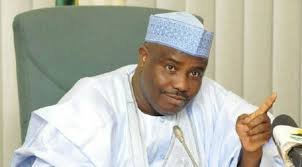
The lingering intra-party crisis in the Peoples Democratic Party (PDP) has forced senator representing Sokoto South, Aminu Tambuwal to dump the party for the African Democratic Congress (ADC).
Tambuwal, a former governor of Sokoto State, disclosed this in a resignation letter dated March 11, 2026, addressed to the PDP ward chairman in Tambuwal/Shinfiri Ward of Tambuwal Local Government Area.
The letter, which was made available to journalists on Thursday, said the decision followed consultations with his political associates and supporters.
ALSO READ: NNPC Secures Tinubu’s Approval for $20bn FID on Bonga Deepwater Project
“After deep reflection and extensive consultations with my political associates and supporters, I have decided to resign my membership of the Peoples Democratic Party with immediate effect,” Tambuwal stated.
According to the former Speaker of the House of Representatives of Nigeria, lingering disputes and leadership disagreements in the PDP made it increasingly difficult for him to remain in the party.
“The persistent internal crises, leadership disagreements and growing divisions within the party have made it increasingly difficult for me to continue my membership,” he added.
Despite leaving the party, the senator expressed appreciation to the PDP for the opportunities it gave him to serve in different capacities.
“I remain grateful to the party for the platform it provided me to serve Nigeria as Speaker of the House of Representatives and later as Governor of Sokoto State,” he said.
Tambuwal confirmed that he had joined the ADC alongside his political associates and supporters, describing the move as part of efforts to strengthen democratic values and provide a credible political alternative.
“My decision is guided by the conviction that Nigeria requires a stronger political platform built on integrity, accountability, inclusiveness and a clear commitment to national development,” he added.
Tambuwal served as Speaker of the House of Representatives between 2011 and 2015 before emerging governor of Sokoto State in 2015 under the All Progressives Congress (APC). He later defected to the PDP the same year and was re-elected governor in 2019.
After completing his second term in 2023, he was elected to the Nigerian Senate to represent Sokoto South.
His defection to the ADC is expected to alter the political dynamics in Sokoto State, where he remains one of the state’s most influential political figures.
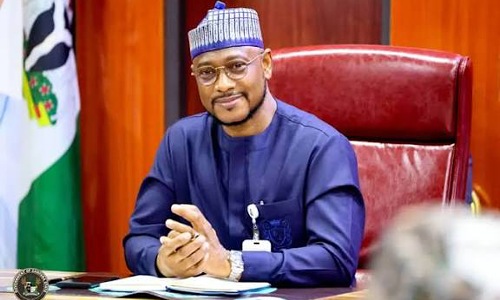
Governor Dauda Lawal of Zamfara State has explained that the persistent crisis and legal disputes within the Peoples Democratic Party compelled him to defect to the All Progressives Congress.
The governor’s defection was formally announced on Monday by his deputy, Mani Mummuni, after a stakeholders’ meeting held at the Government House in Gusau.
In a statement issued by the governor’s spokesperson, Sulaiman Bala Idris, the move was described as a necessary step taken in the interest of the state and supported by political stakeholders across Zamfara.
SEE ALSO: JUST IN: PDP Crisis Deepens as Appeal Court Upholds Ban on Ibadan Convention
According to the statement, Governor Lawal had remained committed to the PDP despite the ongoing leadership crisis and had made several efforts to reconcile factions within the party.
However, attempts to achieve peace and unity reportedly failed, leading to prolonged legal battles.
The development followed a judgment by the Court of Appeal in Abuja, which dismissed an appeal filed by the PDP challenging an earlier ruling of the Federal High Court.
The earlier judgment had restrained the Independent National Electoral Commission from recognising the outcome of the party’s national convention held in Ibadan, Oyo State.
The governor was said to have informed political stakeholders during a series of meetings that he would make a final decision about his political future after the appellate court delivered its ruling.
Following the judgment, Lawal concluded that joining the APC would better position him to continue what he described as the “Zamfara Rescue and Rebuild Mission.”
His defection marks a significant shift in the political landscape of Zamfara State and could influence political alignments ahead of the 2027 general elections.






Airfares Likely to Rise as Aviation Fuel Price Spikes by 80%

Shell Completes Turnaround Maintenance on FPSO, Resumes Production at Bonga

Sahara Group expands fleet with new 40,000 cbm LPG Carrier

NATO Shoots Down Third Iranian Missile in Turkey

Inside Tinubu’s Closed-Door Meeting With Opposition Leaders – SDP, IPAC Reveal Details

Defections Won’t Break PDP in Sokoto, Says Former Senator Gada

Trump’s Family Unveils New Cryptocurrency Platform

Reps Recommend 3-year Jail Term For Aviation minister

Dangote Cement Lights Up Benue Host Communities With CSR Initiatives

Senate Denies Receiving Petitions Against Tinubu’s Ambassadorial Nominees

Things To Know About Threads, Zuckerberg’s Twitter-like App
