
Business
SERAP Threatens Zuckerberg, Meta With Lawsuit Over Privacy Rights Breaches, $220m Fine

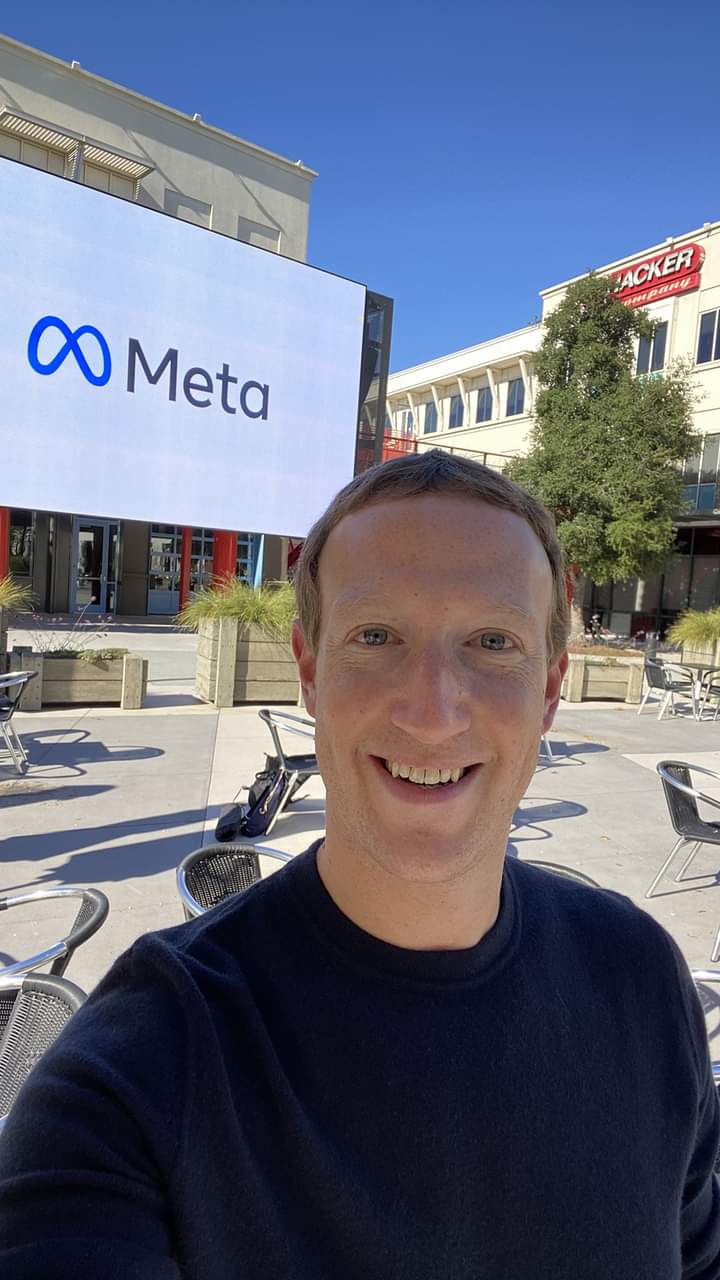
The Socio-Economic Rights and Accountability Project (SERAP) has urged Mark Zuckerberg, Chairman and Chief Executive Officer, Meta Platforms Incorporated (Facebook) to “immediately pay the $220 million fine imposed on Meta by the Federal Competition and Consumer Protection Commission (FCCPC), and upheld by the Competition and Consumer Protection Tribunal.”
In a statement, the SERAP admonished Zuckerberg and Meta “to provide (in addition to the fine) justice and effective remedies, including adequate compensation and guarantees of non-repetition for the victims of the grave violations of Nigerian consumer, data protection and privacy laws and international human rights standards.”
The SERAP also urged Zuckerberg and Meta to “immediately pay the $35,000 awarded by the Tribunal to the FCCPC as cost of investigation.”
ALSO READ: Australia To Raise International Student Visa Fee To A$2,000
The SERAP urged Zuckerberg and Meta to “immediately halt the violations found by the Tribunal and prevent their re-occurrence, as well as ensure the accountability of any person(s) responsible for the violations.”
Recall that last Friday the Competition and Consumer Protection Tribunal upheld the $220 million fine against Meta by Nigeria’s FCCPC for the grave violations of consumer, data protection and privacy laws.
The SERAP’s position was detailed in a letter dated 26 April 2025 and signed by its deputy director Kolawole Oluwadare.
It stated, “As Chairman and CEO, you ought to ensure enhanced transparency, human rights due diligence, accountability and remediation by Meta to ensure that Nigerians’ human rights are not threatened or violated.”
The SERAP said, “The Tribunal’s judgment confirms that the operations of Meta (Facebook) in Nigeria have violated Nigerians’ human rights and continued to have a chilling effect on the enjoyment of human rights on Meta platforms.”
The open letter, read in part: “SERAP is concerned that the human rights violations found by the Tribunal may be ongoing, and have a high risk of recurrence if not adequately and effectively redressed.”
“SERAP urges you and Meta not to unnecessarily prolong the harms suffered by the victims by resisting the temptation to pursue any appeal against the Tribunal’s judgment under the provisions of section 55 the FCCP Act.”
“The Tribunal’s judgment also shows clear and strong evidence that the operations of Meta in Nigeria are inconsistent and incompatible with international human rights standards including the UN Guiding Principles on Business and Human Rights.”
“We would be grateful if these measures are taken within 7 days of the receipt and/or publication of this letter. If we have not heard from you by then, SERAP shall take all appropriate legal actions at the national, regional or international levels to compel you and Meta to comply with our requests in the public interest.”
“Our requests are brought in the public interest, and in keeping with the requirements of the Nigerian Constitution 1999 [as amended], Federal Competition and Consumer Protection Act, the UN Guiding Principles on Business and Human Rights and other applicable international human standards binding on Meta.”
“SERAP is concerned that Meta has not only grossly violated the provisions of the FCCP Act as confirmed by the Tribunal but also international human rights standards including the UN Guiding Principle on Business and Human Rights.”
“SERAP notes that your companies have a responsibility to respect human rights as set forth by the UN Guiding Principle on Business and Human Rights.”
“This responsibility requires that Meta avoid causing or contributing to adverse human rights impacts through its own activities, and adequately and effectively redress such impacts when they occur.”
“Meta should seek to prevent or mitigate adverse human rights impacts that are directly linked to its operations, products or services.”
“Your companies also have the responsibility to contribute to and facilitate the exercise of the rights to privacy and to ensure data security and privacy, and ensure that the use of data is in compliance with international human rights law.”
“Section 152 of the Federal Competition and Consumer Protection (FCCP) Act provides that where – (a) the consumer’s right has been violated, or (b) a wrong has been committed, the consumer shall in addition to the redress which the Commission may impose have a right of civil action for compensation or restitution.’”
“Under section 154 of the FCCP Act, victims of the grave violations by Meta are entitled to adequate compensation for the harm suffered.”
“Section 54 of the FCCP Act provides that ‘An order, ruling, award or judgment of the Tribunal shall be- (a) binding on the parties [including Meta] before the Tribunal; and (b) registered with the Federal High Court for the purpose of enforcement only.’”
“According to our information, the Competition and Consumer Protection Tribunal on Friday, April 25, 2025 upheld the $220 million fine against Meta Platforms for the grave violations of Nigerian consumer, data protection and privacy laws and international human rights standards.”
“The Tribunal’s judgment followed the administrative penalty imposed on Meta on July 19, 2024 by the FCCPC after concluding that the companies engaged in discriminatory and exploitative practices against Nigerians.”
“The Tribunal’s judgment followed a 38-month joint investigation initiated by the FCCPC and the Nigeria Data Protection Commission (NDPC) into the conduct, privacy practices, and consumer data policies of Meta Platforms and WhatsApp.”
Consequently, the SERAP urged Mr. Zuckerberg and Meta to:
- Publicly commit to immediately obeying the Tribunal’s judgment and paying the $220 million fine against Meta for the grave violations of Nigerian consumer, data protection and privacy laws and international human rights standards.
- Publicly commit to immediately identifying the victims and providing them justice and effective remedies, including adequate compensation and guarantees of non-repetition for the grave violations they have suffered.
- Publicly commit to immediately paying the $35,000 awarded by the Tribunal to the FCCPC as cost of investigation.
- Promptly provide information as to what human rights due diligence steps, as set out in the United Nations Guiding Principles on Business and Human Rights, if any, have been undertaken by your companies to identify, mitigate, and remedy the impact of the violations found by the Tribunal on Nigerians’ enjoyment of their human rights, including the right to privacy.
- Promptly provide information as to how Meta is applying the UN Guiding Principles on Business and Human Rights and other applicable international human rights standards to all stages of its operations in Nigeria, following the Tribunal’s judgment.
- Promptly provide information as to the steps your companies have taken, or are considering, in publishing transparency reports regarding the violations found by the Tribunal, and putting international human rights standards at the centre of your business model.








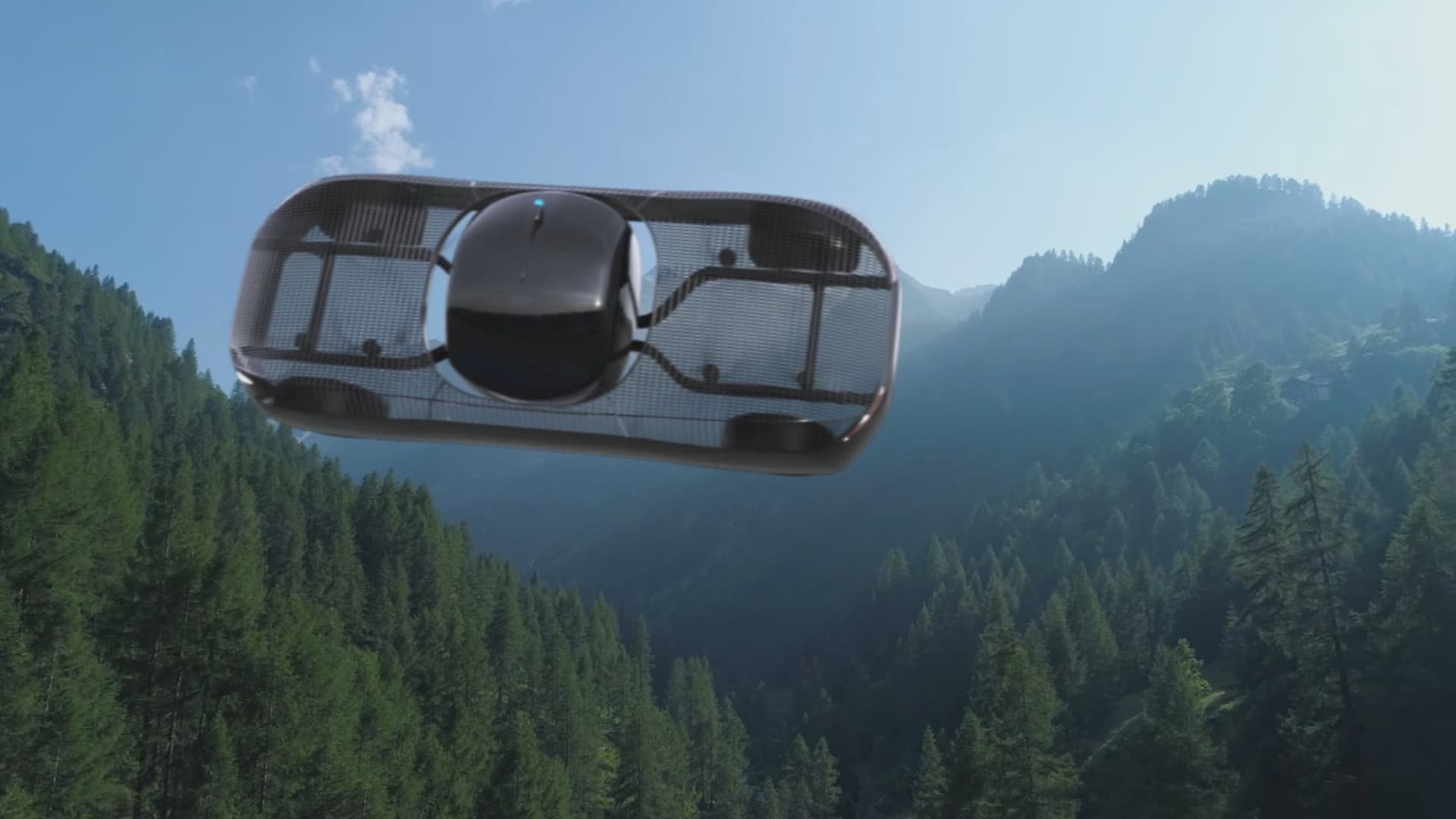
Tesla has set a 2028 commercial production date for its new Roadster sports car that can briefly rise into the air using rocket technology.
According to CNN, the date was revealed when the manufacturers demonstrated its functionality on Thursday at a SpaceX testing facility in Texas, United States, where the two-seater vehicle performed a series of manoeuvres, including driving upside down before making a short airborne movement.
The prototype was operated without a driver during the test, with Musk saying the decision was taken “to make sure we don’t kill anyone.”
“Success is not guaranteed. I mean that. It’ll probably work, but if it doesn’t work, we’re at a safe distance,” he said.
READ ALSO: 2027 Election: ‘Your Future Is More Valuable’ — IGP Warn Youths Against Political Violence
CNN reported that the vehicle uses 10 nozzles and high-pressure air tanks to generate thrust, with Musk claiming it could accelerate from zero to 60 miles per hour in less than a second.
The Tesla boss attributed the development to cooperation between the electric vehicle manufacturer and SpaceX, the rocket company he also leads.
He described the project as “the results of what happens when you have a collaboration with the world’s best car company and the world’s best rocket company.”
Musk also sought to assure spectators that the demonstration was genuine, saying, “We need an audience to prove that it’s not AI or SI. So you guys can tell people you saw it with your eyes, because what you see with your eyes, you will not believe.”
Despite the display, questions remain about whether the vehicle can achieve sustained flight and how practical it would be for everyday transportation.
Roger Conner, curator for vertical flight at the Smithsonian’s National Air and Space Museum, told CNN that combining the requirements of road vehicles and aircraft presented significant engineering challenges.
“Aircraft are extremely sensitive to weight, whereas with ground vehicles you want them to have bumpers and crumple zones and all that,” he said.
“Inevitably, something that is a hybrid between the two is going to be a poor performing aircraft and a poor performing vehicle, and also quite expensive,” he added.
Conner questioned whether the demonstration amounted to flying in the conventional sense.
“We’re not talking about sustained flight. We are literally talking about hopping,” he said.
However, Jim Dukhovny, chief executive of flying car startup Alef, said the technology was achievable, while pointing to the difficulties involved in making such vehicles transition safely from vertical take-off to forward flight.
“It absolutely is 100% feasible,” he told CNN.
“That being said, the hardest part on all eVTOLs, and for us, it’s a transition from (rising) vertical to (moving) forward. It needs to be extremely careful, making sure you do not lose lift, and making sure it’s very stable,” he added.
CNN also reported that Alef’s prototype weighs about 254 pounds, uses eight propellers and is designed to carry one person.
Musk said Tesla intended to begin production of the new Roadster in 2028.
CNN reported that the latest display adds to Musk’s ambitions to push Tesla’s vehicle technology beyond conventional electric cars, although the prototype’s ability to operate as a practical flying vehicle has yet to be established.
The Petroleum Products Retail Outlets Owners Association of Nigeria (PETROAN) has urged the Federal Government to add its member-stations to the petrol discount programme.
It cautioned that the current arrangement could limit the reach and deny vast consumers in underserved communities the benefits of the 30-day discount window.
The PETROAN also urged the FG to allocate at least 30 percent of the discounted petrol volume to outlets operated by its members.
READ ALSO: Tanzania Nears Completion of $42bn Equinor, Shell-Led LNG Project
The calls followed last week’s announcement by the Minister of Finance and Coordinating Minister of the Economy, Taiwo Oyedele, of a petrol discount at Nigerian National Petroleum Company Limited (NNPC Ltd) retail outlets, with priority given to public transport operators nationwide.
According to the National Publicity Secretary, Independent Petroleum Marketers Association of Nigeria (IPMAN), Chinedu Ukadike, the exclusion of independent marketers could undermine the programme’s effectiveness, particularly in communities where NNPC retail outlets have limited presence.
He argued that independent marketers, with their extensive nationwide distribution networks, were better positioned to extend the benefits of the intervention to consumers in remote and underserved areas.
“Independent oil marketers have over 90 percent coverage and presence in the nooks and crannies of this country. You are giving NNPC that is situated only in the town. So how do the poor masses, whom you intend to ensure that this petroleum product will alleviate their sufferings, how would they now get it?” Ukadike asked.
He said the association was not opposed to the government’s policy but insisted that independent marketers should be included to ensure wider access to the discounted product.
“But it’s government policies; we are not against government policies, but let it be all-inclusive; let independent marketers be part of it,” he said.
Ukadike also urged the government to extend the discount period to 60 days, citing logistical challenges that could delay the movement of petrol from coastal depots to other parts of the country.
“And the 30 days should be extended to 60 days. Because of the circulation of petroleum products, most times it takes two weeks for a truck to leave Apapa and get to Gombe, Maiduguri, because of the bad road and all the rest of them and loading process,” he added.
Similarly, PETROAN National President, Billy Gillis-Harry, urged the Federal Government to allocate 30 per cent of the discounted petrol volume to the association’s retail outlets to facilitate broader national distribution.

In the bid to transform Tanzania into the East African regional energy hub, the country is on the verge of concluding an agreement with a consortium of energy companies, including a $42 billion LNG project.
It was gathered that the project is designed to tap the 47.13 tcf of gas discovered in Tanzania’s deep offshore fields, part of the country’s estimated 57.54 tcf in total discovered reserves, the sixth-largest in Africa, behind Nigeria, Algeria, Senegal, Mozambique and Egypt.
READ ALSO: Shell Identifies Keys to Nigeria’s Energy Future
Equinor and Shell would be the lead operators, alongside involvement from ExxonMobil Pavilion Energy and Medco Energi, while state oil major, the Tanzania Petroleum Development Corporation (TPDC), would also hold an equity stake in the project.
“It’s almost there,” Khamis Mussa Omar, Tanzania’s finance minister, told Reuters.






Gov Uba Sani Hands Over Land Titles to Displaced Residents of Nine Kaduna Communities

NDC Withdraws Recognition of Diaspora Chapters Over Court Rulingq

2027: Presidential Aide Nkwocha Warns South-East Over One-Term Presidency Deal
‘Impartiality in Doubt’ – ADC Urges Senate to Reject INEC Nominee Over Sokoto Governor Link

Sanwo-Olu Pledges Full Support as Lagos Prepares to Host 2026 CAF Awards

JUST IN: Presidency Rejects Makinde’s Claim of ₦250bn NLNG Dividends for Each State

Trump’s Family Unveils New Cryptocurrency Platform

Senate Denies Receiving Petitions Against Tinubu’s Ambassadorial Nominees

Dangote Cement Lights Up Benue Host Communities With CSR Initiatives

Reps Recommend 3-year Jail Term For Aviation minister

Tems Sets New Record On Billboard Hot 100 Chart

he blog was how do i say it… relevant, finally something that helped me. Thanks
In this awesome design of things you’ll get a B+ for effort. Exactly where you actually confused everybody was on your facts. As as the maxim goes, details make or break the argument.. And that could not be much more true right here. Having said that, let me tell you just what did do the job. Your writing can be very engaging which is most likely the reason why I am taking the effort to opine. I do not really make it a regular habit of doing that. Secondly, while I can see the leaps in reason you come up with, I am definitely not certain of exactly how you appear to connect the points which in turn help to make the conclusion. For the moment I will yield to your position however wish in the near future you link the dots better.
Hi, Neat post. There’s a problem together with your website in web explorer, may test this… IE nonetheless is the marketplace chief and a huge element of people will pass over your great writing due to this problem.
It?¦s really a great and useful piece of information. I?¦m glad that you just shared this useful information with us. Please keep us informed like this. Thanks for sharing.
naturally like your website but you need to check the spelling on quite a few of your posts. Many of them are rife with spelling problems and I find it very bothersome to tell the truth on the other hand I will definitely come back again.
I’d incessantly want to be update on new content on this site, saved to bookmarks! .
Saved as a favorite, I really like your blog!
It is in reality a nice and helpful piece of info. I am glad that you shared this useful information with us. Please stay us up to date like this. Thank you for sharing.
Some truly interesting details you have written.Helped me a lot, just what I was searching for : D.
Hello, you used to write fantastic, but the last few posts have been kinda boring?K I miss your super writings. Past several posts are just a little bit out of track! come on!
Hello, i believe that i saw you visited my web site thus i came to “go back the favor”.I’m trying to find issues to improve my website!I suppose its good enough to make use of a few of your concepts!!
Nice post. I learn something tougher on completely different blogs everyday. It would at all times be stimulating to read content material from different writers and apply just a little one thing from their store. I’d want to use some with the content material on my blog whether you don’t mind. Natually I’ll provide you with a link in your web blog. Thanks for sharing.
Hello there! Do you know if they make any plugins to safeguard against hackers? I’m kinda paranoid about losing everything I’ve worked hard on. Any recommendations?
I am constantly thought about this, thanks for putting up.
What i do not realize is actually how you are not actually much more well-liked than you may be right now. You are so intelligent. You realize thus considerably relating to this subject, made me personally consider it from a lot of varied angles. Its like women and men aren’t fascinated unless it is one thing to accomplish with Lady gaga! Your own stuffs great. Always maintain it up!
Its superb as your other posts : D, thankyou for posting. “Too much sensibility creates unhappiness too much insensibility leads to crime.” by Charles Maurice de Talleyrand.
I have been surfing on-line greater than 3 hours these days, but I by no means discovered any interesting article like yours. It¦s lovely worth sufficient for me. Personally, if all web owners and bloggers made excellent content as you probably did, the net will likely be much more helpful than ever before.
Hi there! I’m at work browsing your blog from my new apple iphone! Just wanted to say I love reading your blog and look forward to all your posts! Keep up the outstanding work!
Thanks for the auspicious writeup. It in reality used to be a amusement account it. Glance complicated to more delivered agreeable from you! By the way, how can we keep in touch?