
Business
Stronger U.S. data spurs world shares, yen falls

LONDON – World shares rose toward six-year highs on Thursday and the yen languished at fresh lows against the euro and dollar after sentiment was boosted by a batch of strong U.S. economic data.
The signs of an improving U.S. jobs market and more cheerful consumers had spurred Wall Street to a record close on Wednesday, while reinforcing talk the Federal Reserve could start scaling back its stimulus, which supported the dollar.
“Markets have taken on board the view that (U.S.) rates are not going up next year even if they start tapering soon,” said Simon Smith, chief economist at FXPro.
As the buoyant mood spread, Japan’s Nikkei hit its highest close in nearly six years .N225, and Asian shares outside Japan .MIAPJ0000PUS rose 0.6 percent to reach a one-week high.
In Europe, Germany’s DAX index touched an all-time high as trading got underway while the pan-European FTSEurofirst 300 index .FTEU3 was up 0.4 percent and on track to post its third straight month of gains.
MSCI’s world equity index, which tracks share moves across 45 countries, gained 0.2 percent, reaching its best level since the start of 2008 .MIWD00000PUS.
DOLLAR DEMAND
In the currency markets, the dollar popped above 102.00 yen for the first time since May 29, while the euro traded just under $1.36 and came within striking distance of 139.00 yen, reaching its highest against Japan’s currency since June 2009.
So far this month, both the euro and dollar are up nearly 4 percent on the yen which investors have been selling to raise funds for carry trades as the Bank of Japan remains committed to keeping ultra-loose monetary policy to shore up growth.
The surging greenback, which gains as the heightened tapering expectations push bond yields upwards, was also putting pressure on commodity bloc currencies like the Australian and New Zealand dollars and many emerging market currencies with weak economic prospects.
The Indonesian rupiah hit the 12,000 per dollar for the first time in nearly five years, while the Thai baht slid to the weakest level in 11 weeks. <EMRG/FRX>
INFLATION CONCERN
European bond markets were focused on the outlook for inflation and its implications for the European Central Bank, which holds a policy meeting next week.
Spanish inflation rose 0.3 percent year-on-year in November from zero in the previous month, fuelling expectations that overall euro zone inflation figures, due on Friday, will come out above a 0.8 percent forecast.
“The Spanish inflation figure … will take a little bit of pressure off the ECB to do something at the next meeting,” said Elwin de Groot, senior market economist at Rabobank in Utrecht.
German inflation due at 1300 GMT though could have a bigger influence on market expectations about the ECB outlook. Ahead of that data, 10-year German Bund yields were up 3.5 basis points to 1.74 percent.
Elsewhere, Italian 10-year yields were flat at 4.065 percent before an auction of up to 2.5 billion euros of 2024 bonds. The small amount on offer will ensure a smooth sale, analysts said.
Among commodities, Brent crude was holding above $111 a barrel as supply worries offset the positive outlook for demand from the signs of solid U.S. recovery.
Gold snapped a two-day decline, gaining 0.3 percent to about $1,241.7 an ounce and moving away from a four-month low of $1,227.34 hit on Monday, though the outlook remained weak.
“In view of the apparent improvement in the (U.S.) economy, investors are slowly pulling funds out of gold for better avenues of investment,” said Phillip Futures analyst Joyce Liu.
– REUTERS

Emeritus Professor of Economics, Akpan Ekpo, has said Nigeria needs to achieve and sustain double-digit economic growth for between 15 and 20 years to make a significant impact on poverty.
Ekpo made the submission while reacting to the latest World Bank assessment of Nigeria’s economic outlook, which raised the country’s 2026 growth forecast to 4.3 per cent.
ALSO READ: Obi Asks World Bank, Banks to Verify Anambra Debt Claims
Recall that the World Bank, in its October 2026 Africa Economic Update, projected that Nigeria’s economy would grow by 4.3 per cent in 2026, up from an estimated 4.0 per cent in 2025, before rising to 4.4 per cent annually in 2027 and 2028.
The lender attributed the improved outlook to improving macroeconomic stability, stronger investor confidence and a gradual recovery in private investment.
However, Ekpo cautioned against celebrating single-digit growth, arguing that economic growth alone does not amount to development.
“I don’t think we should celebrate the 4.1% growth. The World Bank itself knows that growth is not development,” Ekpo said.
According to the economist, Nigeria needs to grow at least 10 per cent annually and sustain such expansion for about 15 to 20 years to make a meaningful dent in poverty.
“You have to grow at least double-digit, sustained for about 15–20 years to have a dent on poverty,” he said.
‘4% Growth Is Too Weak’
Ekpo said even the World Bank’s assessment indicates that the current pace of growth remains insufficient to create the jobs and opportunities Nigeria needs.
He noted that the World Bank had identified electricity, reliable internet access, infrastructure and human capital development among the areas requiring attention.
“But the problem is that the 4.1% growth cannot achieve those things,” he said.
The World Bank has similarly stressed that stronger growth must translate into better living standards, productive jobs and poverty reduction, with investment in infrastructure, human capital and productivity needed to sustain the gains.
Ekpo said Nigeria therefore needs to move beyond celebrating modest improvements in GDP and focus on achieving structural economic transformation.
Ekpo Faults Manufacturing Contribution
The economist also criticised the structure of Nigeria’s economy, particularly the limited contribution of manufacturing.
According to him, Nigeria’s economic transformation should involve movement from agriculture and mining into industry and manufacturing before services become dominant.
“They left out the issue of manufacturing, that is where the crux of the matter is,” he said.
Ekpo argued that manufacturing should contribute at least 40 per cent of Nigeria’s GDP for the economy to undergo meaningful structural transformation.
“An economy has—the structure has to be transformed where that sector called manufacturing contributes at least 40% to GDP,” he said.
He claimed that manufacturing had contributed less than 12 per cent to Nigeria’s GDP over the past 60 years.
The economist also pointed to Nigeria’s trade structure, saying manufactured exports account for about two per cent of total exports, while manufactured imports account for about 48 per cent.
“So you cannot say with that that the economy has been transformed,” he said.
Ekpo Questions Macroeconomic Stability
Ekpo also questioned the description of Nigeria’s economy as enjoying broad macroeconomic stability.
He acknowledged improvements on the monetary side but said significant challenges remained on the fiscal side.
“On the monetary side, yes, the CBN has restored some integrity in that sub-sector. But on the fiscal side, we still have challenges,” he said.
He argued that economic stability should also be assessed from the perspective of households and businesses, which collectively form the broader economy.
“You can’t have stability on only one side of the economy, that is relative stability, and say the economy is stable,” Ekpo said.
‘It Is a Warning Signal’
While describing the World Bank report as balanced, Ekpo said it should be treated as a warning to policymakers rather than a reason for celebration.
“The report, in my view, is balanced. I’m not a World Bank fan, but it’s balanced because they raised fundamental issues that those who manage the economy, we have to do for us to make progress,” he said.
He maintained that although growth is necessary for development, growth alone does not guarantee development.
“Yes, you need to grow to develop, but you can grow and not be developed. And that growth must be double-digit, 10% and above, and sustained for about 15 or 20 years,” Ekpo said.
He called for deliberate government action to fix electricity, tackle insecurity and reduce poverty, while also warning that persistent double-digit inflation remains a challenge.
“I don’t think the report is what we should celebrate, but it’s a warning signal that we should do more,” he said.
“Inflation is still double-digit, so the report has to be treated cautiously.”

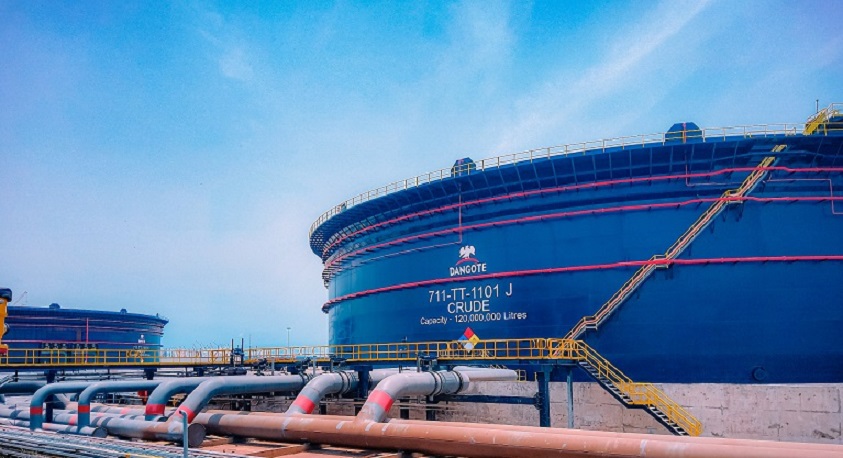
The Aliko Dangote Foundation (ADF) has unveiled the Women’s Share Subscription Grant Initiative (WSSGI), a pioneering financial inclusion programme aimed at increasing women’s participation in Nigeria’s capital market through the ongoing Initial Public Offering (IPO) of Dangote Petroleum Refinery and Petrochemicals FZE (DPRP).
The nationwide initiative is designed to support up to two million Nigerian women, with a special focus on low- and middle-income earners, as well as vulnerable women. Through the programme, ADF seeks to expand access to equity ownership, promote a culture of savings and long-term investing, and empower women with greater opportunities for wealth creation through responsible participation in the capital market.
The initiative is open to several categories of beneficiaries, including independent applicants earning ₦100,000 or less per month, verified participants in designated ADF programmes such as CRoWN, ADFIN, and Mu Shuka Iri, eligible non-commissioned servicewomen and service spouses, as well as verified service widows.
To accommodate different categories of participants, the initiative provides two pathways for entry: Matching Grant Track: Eligible independent applicants who subscribe to a minimum of 10 shares will receive an ADF-funded application for an additional 10 shares in their name.
Unconditional Grant Track
The ADF will fund an application for 20 shares on behalf of eligible beneficiaries who satisfy programme eligibility, investor identification, and Know Your Customer (KYC) requirements.
This category covers verified beneficiaries from designated ADF programmes and verified service widows.
Under both tracks, grant funds will be applied directly through the designated issuing house. No cash payments will be made to beneficiaries, government agencies, or sponsors. Any shares successfully allotted will be credited solely to the beneficiary and held in her name.
Eligibility Requirements
Applicants must be Nigerian women aged 18 years and above; resident in Nigeria; meet the eligibility requirements of their respective participation category; successfully complete all required identity verification and KYC processes; and receive no more than one ADF share grant across all Foundation share grant schemes.
The ADF is implementing the initiative in partnership with Vetiva Capital Management and the Nigerian Exchange Group (NGX) through the Securities and Exchange Commission (SEC)-approved IPO subscription infrastructure.
The Foundation will not receive, collect, or hold applicants’ or sponsors’ subscription funds. All applications, payments, allotments, and refunds will be handled in accordance with the IPO Prospectus, applicable regulatory requirements, and the approved basis of allotment.
Participation in the programme is entirely voluntary. Prospective investors should note that share prices may fluctuate, dividends are only payable when declared, and neither allotment nor investment returns are guaranteed.
To facilitate broad participation, applicants are not required to have an existing Central Securities Clearing System (CSCS) account. Where necessary, accounts will be created through Vetiva upon successful completion of the IPO’s KYC requirements.
Eligible independent applicants may submit their applications exclusively through the official ADF portal at ipo.alikodangotefoundation.org.
READ ALSO: 40 Oil Blocks up for Grabs as NUPRC Opens 2026 Bid Round
Beneficiaries affiliated with the ADF programmes and verified service widows will receive application guidance through approved Foundation channels.
The offer closes on 13 October 2026.
The ADF urges prospective participants to remain vigilant against fraud. Applicants should not make payments to agents, individuals, or personal bank accounts in exchange for grants or promises of guaranteed allotment. Passwords, PINs, and one-time passwords (OTPs) should never be shared, and any unexpected payment request or online link should be verified through official channels before action is taken.
Through this initiative, the ADF is reinforcing its commitment to inclusive economic empowerment, broadening access to investment opportunities, and enabling more Nigerian women to participate meaningfully in the nation’s wealth creation journey.
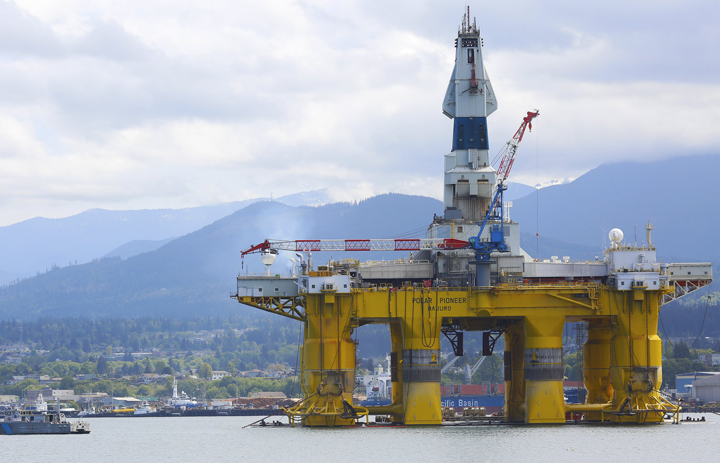
The Nigerian Upstream Petroleum Regulatory Commission (NUPRC) has unveiled a pipeline of major offshore projects with the potential to attract significant new investment into Nigeria’s upstream petroleum sector.
This is as the commission has intensified efforts to convert the country’s substantial hydrocarbon resources into producing assets and sustainable economic value, the NUPRC said in a statement.
According to the statement, Nigeria’s upstream investment outlook was presented at the Nigeria Investment Forum 2026 in New York by the Commission Chief Executive (CCE), Oritsemeyiwa Eyesan.
Eyesan, who was represented by the Executive Commissioner, Corporate Services and Administration, Dr. Kelechi Ofoegbu, highlighted the emerging investment opportunities across Nigeria’s offshore, gas and brownfield assets, noting that the combination of regulatory reforms, improved project economics and a growing pipeline of development-ready assets is creating new opportunities for investors and industry partners.
READ ALSO: NCDMB, Zeconia Global Train 50 on Digital Oilfield Operations
A key feature of the presentation, it said, was the identification of 22 major offshore projects, comprising 12 deepwater and 10 shallow-water developments, as part of the pipeline capable of driving substantial new capital into the sector.
According to the commission, the projects include major developments such as Bonga Southwest, Aparo, Zaba Zaba, Owowo, Bosi and Egina South.
The NUPRC also highlighted recent capital commitments across projects including Bonga North, Obeta Gas Development, HIN Associated Gas Development and Iseni Gas Development, demonstrating the movement of investment interest towards actual project development.





World Bank Report: ‘Nigeria Needs 10% Growth for 20 Years to Reduce Poverty’ — Ekpo
Yenagoa Hosts NCDMB 2026 Content Forum

IPO: ADF Opens Wealth Creation Pathway for 2m Vulnerable Nigerian Women

2027: Tinubu Will Beat Atiku, Obi by Wide Margin, Says Bwala

‘Dem Dey Use Stick Dey Flog Women’ — Nigerians in India Camp Cry Out

2027: I’ll Bring Petrol Price Down to ₦300, Says Donald Duke

Trump’s Family Unveils New Cryptocurrency Platform

Senate Denies Receiving Petitions Against Tinubu’s Ambassadorial Nominees

Dangote Cement Lights Up Benue Host Communities With CSR Initiatives

Reps Recommend 3-year Jail Term For Aviation minister

Tems Sets New Record On Billboard Hot 100 Chart
