
Politics
Success of 2023 general elections depends on INEC – Nwosu

By John Danjuma
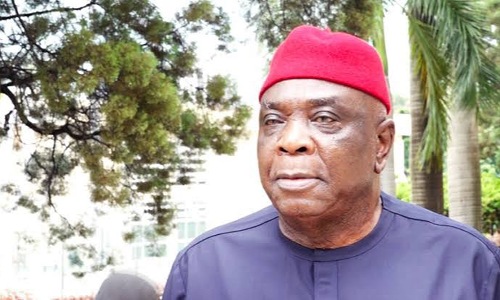
The President of Ugwumba Centre for Leadership Development in Africa (UCLDA), Mr. Uche Nwosu, has suggested that the Independent National Electoral Commission (INEC), should be made to sign a peace accord along with political parties and candidates.
This, he noted, because the success or otherwise of the 2023 general elections depends on the electoral umpire.
Nwosu, who was a governorship candidate in Imo State in the 2019 elections said things would augur well if INEC conducts free and fair elections.
Read also>>>Trending Video: Obasanjo hands over his seat to Obi, says ‘my job is done’
He insisted that INEC must also sign the peace accord along with the candidates of various political parties as step towards peaceful elections in 2023.
Nwosu said the role of INEC in peaceful, free, fair and credible election is crucial.
According to him, “the only thing that can mar the 2023 election is INEC. If INEC does the right thing, believe me, people will be happy.
He said problems come when people’s votes are not counted; and when people vote and at the end of the day, their votes become useless.
“The problem is the electoral umpire, the people that will conduct the election. For us the masses, the voters, we are ready; it’s left for them to guide us. Our security agencies too should wake up.
“The last time I spoke at Radio Nigeria and they were asking about the peace accord, I told them that the peace accord was between the candidates: PDP, APC, Labour Party, SDP and other presidential candidates. INEC must be made to come and join and become part of the peace accord.
“Where the APC, APGA, Labour, ADC, etc candidates sign; what of INEC? What if someone from INEC office declares fake results? Are you going to hold one of the presidential candidates responsible if there is problem, meanwhile the person who caused the problem is going free. So, they should be made to sign so that if anyone from INEC does anything wrong, he should be made to bear the consequences.
Mr. Nwosu commended the electoral umpire for the assurances it has consistently given on the 2023 elections saying people have to take them by their words
‘Looking at the various elections after the 2019 general elections, if it were before, like in Osun state they will say ruling party, but you have seen that INEC is neither working for the Federal Government nor for President Muhammadu Buhari.
“If INEC was working for President Buhari and APC, the result might be the other way round in Osun state. If INEC did not look at the ruling party to declare the results in Osun state, we believe that INEC can do better in 2023”, he said.
He advised Nigerian voters to look at the candidates of the various political parties on their antecedents to equip the voters with the relevant information that will make them take the right decision on election day.
However, the former gubernatorial candidate of Action Alliance (AA) Party said what is uppermost in his mind now the work of Ugwum Leadership Centre, which has trained and empowered more than 5,000 youth.
He said the training has impacted in people’s lives from 2013 to date, adding that they do this with their partners. “Most of the funding comes from our partners. Last two years, one of our partners distributed $150,000 to train 111 youths in Masters degree courses in USA. The same thing with one of our partners in the UK who donated pounds to do training and they all got their certificates”.




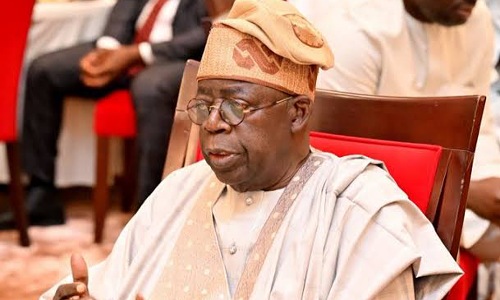
All zones in Northern Nigeria have made up their minds to support President Bola Tinubu in the 2027 presidential election, according to All Progressives Congress (APC) chieftain, Sola Ebiseni.
Ebiseni made the claim during an appearance on Channels Television’s Politics Today, where he argued that Northern political interests were already looking beyond the 2027 election towards 2031.
According to him, the North has effectively conceded the next presidential election to Tinubu and is looking ahead to the possibility of power returning to the region in 2031.
SEE MORE: ‘Tinubu Has Procured Proxies’ — Sam Amadi on President’s 2027 Campaign Strategy
“As I tell you from our own research, every zone of the North is looking forward to 2031. They’ve conceded 2027 to Tinubu, the Southwest, of course,” Ebiseni said.
When asked about the basis of his assertion, Ebiseni maintained that the North had settled on supporting the President.
“The entire North has made up its mind for Tinubu,” he said.
During the discussion, Ebiseni was confronted with a contrasting projection that at least 10 of the 19 Northern states would support Tinubu, but he maintained that the entire North had made up its mind in favour of the President.
Ebiseni defended his position, saying it was based on research conducted by organisations to which he belonged, although he did not provide specific details of the research during the interview.
He also argued that Northern Nigeria should not be treated as a politically uniform region, pointing to differences between the Middle Belt, Northwest and Northeast.
“The destiny of the Middle Belt is different from the destiny of the Northwest. It’s different from the destiny of the Northeast, where the current Vice President comes from. And that is going to play out in 2027,” he said.
Ebiseni identified security as a major consideration for voters in Northern Nigeria, arguing that the establishment of state police would strengthen internal security arrangements.
He acknowledged that security efforts under the Tinubu administration could never be sufficient on their own, but maintained that state police would give individual states greater capacity to address security challenges.
“One of the efforts is state police, so that each state will have the capacity for internal security,” he said.
He also questioned the positions of other presidential aspirants on state police, asking how many had openly expressed support for the proposal.
Ebiseni further criticised proposals to restore fuel subsidies, questioning the economic implications of returning to the policy.
His comments come amid political mobilisation ahead of the 2027 general election, with parties and political figures seeking to consolidate support across Nigeria’s geopolitical zones.
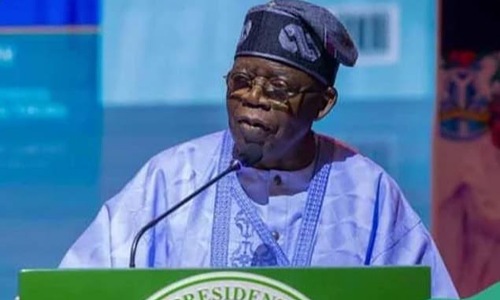
Dr Sam Amadi, Director of the Abuja School of Social and Political Thought, has questioned President Bola Tinubu’s approach to the 2027 presidential election, saying the president appears to be relying on state governors to make his case to Nigerians.
Amadi made the remarks during an appearance on Arise News Prime Time, where he discussed Tinubu’s political strategy, the challenges facing the country and the expected intensity of campaigns ahead of the 2027 general election.
ALSO READ: Tinubu Charges PCC Members to Deliver Wards
According to him, Tinubu’s apparent decision to limit his travels across the country may be a calculated political strategy, but he argued that it raises questions about governance and the president’s engagement with Nigerians.
“No doubt about it, this president’s age, frailty, we’ve seen that happen before, even in governance, he has not traveled across the country, he has not visited sites where there are tragedies,” Amadi said.
He added that the president’s approach could be understood as a strategy designed around his perceived strengths and weaknesses.
“I think, first, it’s a question of strategy, and strategy builds on your strength and weakness,” he said.
Amadi argued that the country’s economic situation makes it important for political leaders to explain their records to voters, regardless of their party affiliations.
“For example, just this week, the World Bank says we have the highest number of multidimensional poor people. So anyhow you look at it, whether you’re APC, PDP, or NDC, the facts are that this is a bad time in terms of economic outcomes,” he said.
Tinubu Relying on Governors, Says Amadi
The political analyst said second-term presidents typically travel across the country to defend their records and explain their policies to voters as they seek another mandate.
He suggested that Tinubu’s approach differs from that expectation because of the apparent reliance on political allies, particularly state governors.
“So in second term presidents usually go, you know, the whole course, they go down the road, they are hitting the road, making their case. Give explanations. And this president, you know, has procured proxies. You know, if you have 37 state governors, you’ve got good proxies,” Amadi said.
He added: “So tactically, he withdraws. That’s what it looks. The alibi around or the excuse around the weight of governors.”
Amadi maintained that governing and campaigning are not mutually exclusive, arguing that a president can continue to discharge official responsibilities while also engaging voters ahead of an election.
“Of course, presidents, as I say, you can chew gum and walk. Presidents govern. That’s why they have the cabinet, but they also make sure they campaign,” he said.
Amadi Raises Questions Over Opposition Campaigns
Amadi also discussed how political parties could approach the 2027 election, suggesting that their campaign strategies would be shaped by their respective strengths and weaknesses.
He said the ruling party would have to consider the intensity of the campaigns expected from opposition figures, including those associated with the African Democratic Congress (ADC), Atiku Abubakar and Peter Obi.
“So each party will carve out strategy around how can we minimize our weakness, which is essentially that is the president who doesn’t have the energy to do this round, you know, round three,” he said.
Amadi further warned that the debate over Tinubu’s public appearances could become more consequential if opposition parties continued to raise questions about his engagement with voters.
He suggested that the issue could extend beyond nationwide campaign tours to include presidential television debates and opportunities for Nigerians to hear directly from the president.
“That’s where the strategy might be a bad one, because if the opposition, I suspect, drag this matter out, the question will now be, can the president also turn up for television debates? Can the president also willingly engage?” he asked.
Responding to the suggestion that television debates would not require extensive travelling, Amadi said direct engagement with voters could help address concerns about the president’s limited physical campaigning.
“So if he can get involved in actively talking to voters and answer their concern, that may compensate for less energy,” he said.
A chieftain of the Peoples Democratic Party (PDP), Dan Ulasi, has questioned the moral justification for another eight-year presidential tenure for northern Nigeria following the completion of former President Muhammadu Buhari’s two terms in office.
Ulasi argued that although the Constitution does not prohibit another northern president from serving after Buhari, such an arrangement would be morally wrong in view of the informal power rotation between the northern and southern parts of the country.
SEE ALSO: Nigerians Must Rise, Reject Inducement and Intimidation at Polls — PDP Chairman
He made the remarks on Arise News’ The Morning Show on Friday, October 16, 2026, during a discussion on opposition politics and the political calculations ahead of the 2027 general elections.
According to the PDP chieftain, Nigeria’s political leadership has traditionally been shaped by an informal understanding that presidential power should alternate between the North and the South to promote fairness and a sense of inclusion.
He argued that the North having completed eight years under Buhari should be a consideration in determining the region that produces the next president.
“So if Buhari just finished eight years, I don’t see how nothing will again come out to run eight years. It is morally wrong. It is not constitutionally wrong, but it’s morally wrong. It is wrong,” Ulasi said.
His comments came as the discussion turned to the challenges confronting opposition parties and their preparations for the 2027 presidential election.
During the interview, Ulasi also addressed the role of religion in Nigerian politics, dismissing the suggestion that religious identity should determine political support.
He said he had never considered religion a decisive factor in his political discussions, stressing that the character and quality of individuals seeking public office should matter more.
“For me, they are Nigerians. Religion has never been part of my discussion in politics. Absolutely not,” he said.
The PDP chieftain maintained that Nigerians should be assessed as citizens regardless of their religious backgrounds.
When the discussion shifted to ethnicity, Ulasi acknowledged that ethnic identity was an undeniable part of Nigerian society but cautioned against using it as an instrument of political division.
He explained that a person’s name or ethnic background did not diminish their status as a Nigerian, arguing that national identity should remain central to political participation.
Ulasi also criticised opposition parties for failing to make sufficient use of Nigerians’ economic grievances against the ruling All Progressives Congress (APC).
He cited inflation, rising food prices and other economic difficulties as issues opposition parties could use to present alternative policies to voters ahead of the 2027 elections.
However, he questioned whether opposition figures were doing enough to engage Nigerians and explain how they would address the country’s challenges.
Ulasi said opposition parties should organise town hall meetings across the geopolitical zones to communicate their programmes and engage citizens directly.
He added that he had not seen the level of nationwide engagement he expected from opposition leaders.






‘The Entire North Has Made Up Its Mind for Tinubu’ — APC Chieftain

‘Tinubu Has Procured Proxies’ — Sam Amadi on President’s 2027 Campaign Strategy

Tesla Aims for 2028 Commercial Production of Flying Car

Corruption Trials: EFCC, NJI Push Specialised Judges, Digital Evidence Reforms

‘It Is Morally Wrong’ — PDP Chieftain Questions North’s Bid for Another Eight Years

2027 Election: ‘Your Future Is More Valuable’ — IGP Warn Youths Against Political Violence

Trump’s Family Unveils New Cryptocurrency Platform

Senate Denies Receiving Petitions Against Tinubu’s Ambassadorial Nominees

Dangote Cement Lights Up Benue Host Communities With CSR Initiatives

Reps Recommend 3-year Jail Term For Aviation minister

Tems Sets New Record On Billboard Hot 100 Chart
