
Other News
Tens of thousands suffer from armed conflict and other violence in Nigeria – ICRC

GENEVA – Conflict-affected people in Nigeria are struggling to meet basic needs. The ICRC, in cooperation with the Nigerian Red Cross Society, has brought aid to around 40,000 displaced and otherwise vulnerable people. It has also been granted greater access to places of detention.
“Violence, lack of security and growing anxiety over recent months have resulted in tens of thousands of people fleeing the conflict in the north-east of the country,” said Zoran Jovanovic, head of the ICRC delegation in Nigeria. “Thousands have been injured and hundreds have lost their lives.” Displaced people have sought safe havens elsewhere in the country or in Niger, Cameroon or Chad.
“The availability of shelter, food, water, clothes and health services has worsened in that region,” said Mr Jovanovic. As a direct consequence of the conflict, food prices have increased and shortages have arisen, especially along the borders with neighbouring countries. “The tenuous security situation, combined with communication disruptions, has made it difficult for family members to maintain contact with one another – and also for aid to be delivered,” he added.
Shelter materials and other essential supplies in the north-east
Since August 2013, more than 18,000 people affected by the conflict in Borno state, in the north-eastern part of the country, have received shelter materials, mosquito nets, blankets, hygiene items and household essentials distributed in cooperation with the Nigerian Red Cross. An estimated 45 per cent of the people receiving the aid were women, many of them widowed or elderly.
Nearly 250 women recently widowed by the conflict in Borno state are being given monthly food rations. “These women suddenly became the sole providers for their families. They will be provided with food for six months, during which they will be able to save some money so that they can start small business ventures,” said Ruth Muriungi, the ICRC delegate in charge of the programme. An estimated 1,500 people in the Maiduguri and Jere areas are now eating more and better food because of the programme put in place with the help of Borno widows’ associations. “Thanks to this, our family of six went from one meal a day to three,” said Hadiza, one of the widows in Jere. “God willing, I’ll soon be able to start selling food in the market.”
Emergency assistance after intercommunal violence
Meanwhile, Kaduna, Plateau, Nassarawa and Benue states, in central Nigeria, have been regularly hit by intercommunal violence over access to land and other resources. Thousands of people have been displaced and hundreds injured or killed. In 2013, around 20,000 people suffering the effects of violence in Plateau and Kaduna states received food, shelter materials and kitchen and hygiene items distributed in cooperation with the Nigerian Red Cross. ICRC engineers worked on water sources and pipes to improve access to safe drinking water in the villages of Riyom and Wase and in five health-care facilities in the states. “Our building had not had running water for over 10 years,” said Hajia Khadijat, who works in a clinic run by the Federation of Muslim Women’s Associations of Nigeria. “We could not afford to pay the bills, and the plumbing deteriorated. With the new fittings and pipes, our taps are working again.”
In the restive Niger Delta, in the south of the country, crime is on the rise and intercommunal clashes occur periodically. Owing to the worsening of the security situation in recent years, people in remote riverine areas have suffered in particular from increasingly difficult access to health care.
Progress visiting detainees
Since February 2013, in agreement with the Nigerian authorities, the ICRC has been visiting detainees in 15 police stations and six prisons all over the country. Repeated visits, the aim of which is to monitor the treatment and living conditions of detainees, have taken place in accordance with the ICRC’s standard working procedures, which include discussions with the detaining authorities, access to all the premises and private talks with the detainees.
In January 2014, for the first time ever, ICRC staff visited detainees held under the responsibility of the Nigerian Army in the capital of Borno state. During the previous months, the ICRC had negotiated access to the detainees with the Nigerian authorities. “Findings of our visits to detention places are confidential and are shared exclusively with the authorities concerned,” said Monique Crettol of the ICRC delegation in Nigeria.


The Lagos State Traffic Management Authority (LASTMA) has alerted motorists to traffic delays along Ogunnusi Road towards Ojodu-Berger due to ongoing rehabilitation work.
LASTMA disclosed this in a post on its official X account on Sunday, stating that the road rehabilitation was being carried out by the Lagos State Public Works Corporation (LSPWC).
According to the agency, “The ongoing work is affecting traffic flow, with vehicles moving at a slower pace in both directions.”
ALSO READ: Chaos On Lagos-Ibadan Expressway As LASTMA Shuts Otedola Bridge
To ease the situation, LASTMA said a contraflow arrangement had been introduced for motorists travelling from Omole Junction towards Vis Junction.
“A contraflow arrangement is in place for vehicles coming from Omole Junction towards Vis Junction to facilitate the movement of traffic,” the agency stated.
LASTMA added that its personnel had been deployed to manage traffic and ensure the continuous movement of vehicles around the affected area.
“Our personnel are on ground managing the traffic situation and ensuring the continuous flow of vehicular movement,” the agency said.
The traffic management authority advised motorists to remain patient and exercise caution while the rehabilitation work continues.
“Motorists are advised to exercise patience and drive with caution while the rehabilitation work continues,” LASTMA stated.


Leading economists, financial experts and industry stakeholders have described the Dangote Group’s investments as major drivers of industrialisation and economic transformation across Nigeria and Africa.
The experts cited the Group’s impact on job creation, import substitution, foreign exchange conservation and economic competitiveness.
They voiced their thoughts at the Lagos Economic Summit themed “The Real Deal: Africa’s Greatest Investment Opportunity,” where they urged governments to implement policies that strengthen local industries and accelerate economic diversification.
President and Chief Executive Officer of the Africa Finance Corporation (AFC), Samaila Zubairu, commended the Dangote Group’s sustained investments across Africa, describing them as critical to unlocking the continent’s economic potential.
He noted that while recent economic reforms have improved foreign exchange stability, strengthened reserves and eased inflationary pressures, the focus must now shift to growth in industry, productivity and employment.
READ ALSO: NMDPRA Shares July Domestic Cooking Gas Supply Details
Also speaking, Chief Executive Officer of the Centre for the Promotion of Private Enterprise (CPPE), Muda Yusuf, said industrialisation remains the most effective path to sustainable economic development.
He called for better alignment of trade and industrial policies, stressing that local manufacturers require strategic support to compete effectively and drive broader economic benefits.
Founder and CEO of Nairametrics, Ugodre Obi-Chukwu, said Africa’s growing population presents a significant industrial opportunity, noting that investments such as the Dangote Refinery are helping to retain capital within the continent while strengthening local production capacity.
In his keynote address, Managing Director of Financial Derivatives Company Limited, Bismarck Rewane, said Nigeria is gradually transitioning from a consumption-led economy to one driven by investment and production.
He added that sustained investments in productive sectors will continue to stimulate growth, create jobs and improve living standards.
Participants at the summit also advocated stronger credit infrastructure, improved national identification systems and increased investment in skills development to enhance the productivity and global competitiveness of Africa’s growing youth population.
Photo Caption: From Left – Chief Economist, Dangote Industries Limited, Dr. Hassan Mahmud; Lady Maiden Alex-Ibru; Chairman of Occasion/Special Guest of Honour, Samaila Zubairu; Key Note Speaker Session 1, Bismarck Rewane; during the Real Deal: Africa’s Greatest Investment Opportunity, Sponsored by Dangote Industry Limited in Lagos on Thursday 3, September 2026.
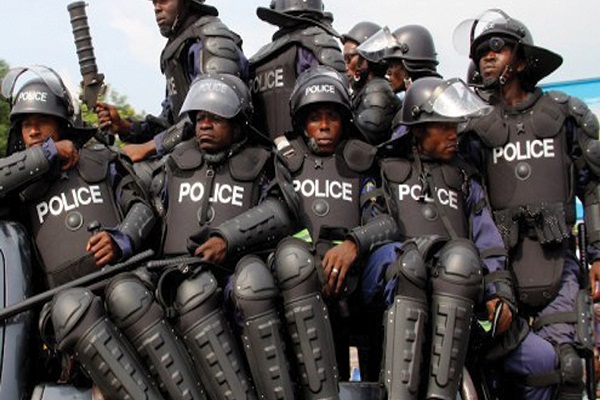
Social media critic Martins Vincent Otse, popularly known as VeryDarkMan (VDM), has released what he described as his first piece of evidence after the Nigeria Police Force challenged him to substantiate his allegations that some police officers allegedly collaborate with kidnappers.
VDM released a video on his Instagram handle on Thursday, August 27, 2026, shortly after the police invited him to provide evidence supporting the claims he made at the 66th Annual General Conference of the Nigerian Bar Association (NBA) in Port Harcourt.
SEE MORE: ‘Provide Evidence’ — Police React to VDM’s Explosive Kidnap Allegation
The activist captioned the video: “My evidence number 1.”
Recalled that VDM, who was a panellist at the NBA conference on Tuesday, had alleged that some police officers manning checkpoints along major highways provide kidnappers and bandits with information about travellers.
According to him, the officers allegedly relay details about the identities and movements of travellers to criminal groups, thereby facilitating abductions for ransom.
The allegation triggered a response from the Nigeria Police Force, which denied the claim and challenged VDM to substantiate his allegations.
The police invitation came as the force sought evidence to support the serious claims made by the social media critic.
In response, VDM released the video, describing it as his “evidence number 1”, signalling that he may provide further material to support his allegations.
The development has continued to attract attention, with the controversy placing renewed focus on allegations of possible collaboration between security personnel and criminal groups involved in kidnapping and banditry.






30 Nigerians Bag Postgraduate Scholarship from NNPC Ltd, Eni

2027: ‘Algorithms Will Not Decide Election Results’, INEC Chairman Declares

Navy Recovers 98,000 Litres of Suspected Stolen Crude in Rivers

DPRP’s Appeal Against Fuel Import Licence Ruling Earns Stakeholder Backing

State Govs, Wike Endorse One-Party State, Join APC Campaign Council

2027: ‘Tinubu Has Done Well’ – Wike Tells Opposition to Speak the Truth

Trump’s Family Unveils New Cryptocurrency Platform

Senate Denies Receiving Petitions Against Tinubu’s Ambassadorial Nominees

Dangote Cement Lights Up Benue Host Communities With CSR Initiatives

Reps Recommend 3-year Jail Term For Aviation minister

Tems Sets New Record On Billboard Hot 100 Chart
