
NEWS
Terrorism reporting: You have 48 hours to withdraw threat to sanction BBC, Daily Trust – SERAP to Buhari

Socio-Economic Rights and Accountability Project (SERAP) has urged President Muhammadu Buhari to “urgently instruct Mr Lai Mohammed, Minister of Information and Culture to withdraw the threat to sanction the BBC and Daily Trust over their documentaries on terrorism in the country, whether through the Nigeria Broadcasting Commission (NBC) or any other agency of government.”
According to reports, Mr Mohammed had last Thursday stated that the Federal Government would sanction the BBC and Trust Tv for airing documentaries that allegedly “glorify”, “promote”, and “fuel” terrorism and banditry in Nigeria.
In a letter dated 30 July, 2022 and signed by SERAP deputy director Kolawole Oluwadare, the organization said, “The media has the duty to impart information and ideas on issues of public importance. If carried out, the threat to sanction the BBC and Daily Trust would inhibit the media from reporting on issues of public interest.”
According to SERAP, “Media houses and journalists ought to be given the room to determine how best to present information of public interest, especially information about the growing violence and killings across the country.”
The organization said, “Rather than punishing the media for promoting access to diverse opinions and information on issues of public importance, your government should focus on delivering your promises to ensure the security of Nigerians.”
The organization also said, “Carrying out the threat to sanction the BBC and Daily Trust would lessen the flow of diverse viewpoints and information to the public.”
The letter, read in part: “We would be grateful if the requested action is taken within 48 hours of the receipt and/or publication of this letter. If we have not heard from you by then, SERAP shall take all appropriate legal actions in the public interest.”
“A free, uncensored, and unhindered press or other media is essential in any society to ensure freedom of opinion and expression and the enjoyment of other rights. It constitutes one of the cornerstones of a democratic society.”
“Sanctioning the BBC and Daily Trust would be entirely inconsistent and incompatible with Nigeria’s obligations under article 9 of the African Charter on Human and Peoples’ Rights and article 19 of the International Covenant on Civil and Political Rights.”
“The threat if carried out would impermissibly restrict the constitutional and international rights to freedom of expression, access to information, and victims’ right to justice and effective remedies that are central to public debate and accountability in a democratic society.”
“Access to information is essential for the enjoyment of other human rights and freedoms and constitutes a fundamental pillar for building a democratic society and strengthening democracy.”
“Allowing the media to freely carry out their duties is essential to building secure society and leaving no one behind. Conversely, imposing impermissible restrictions on media houses, journalists and other Nigerians undermines the security that builds a healthy and vibrant society.”
“The grounds for sanctioning the BBC and Daily Trust as stated by Mr Mohammed fail to meet the requirements of legality, necessity, and proportionality.”
“The requirement of necessity also implies an assessment of the proportionality of the grounds, with the aim of ensuring that the excuse of ‘glorifying, promoting, and fuelling terrorism and banditry’ are not used as a pretext to unduly intrude upon the rights to freedom of expression and access to information.”
“Any interference with the constitutional and legal duties of the BBC and Daily Trust would not be justified in the context of the right to information.”
“The Federal Government has not shown that the documentaries by the media houses would impose a specific risk of harm to a legitimate State interest that outweighs the public’s interest in the information provided by the documentaries.”
“The documentaries by the BBC and Daily pose no risk to any definite interest in national security or public order.”
“It is inconsistent and compatible with the Nigerian Constitution 1999 [as amended] to invoke the grounds of ‘glorifying, promoting, and fuelling terrorism and banditry’ as justifications for suppressing freedom of expression or withholding from the public information of legitimate public interest that does not harm national security.”
“It is contrary to both the Nigerian Constitution and international standards to threaten or punish journalists and media houses such as the BBC and Daily Trust for disseminating such information.”
“The vague and overbroad definitions of ‘glorifying’, ‘promoting’, and ‘fuelling’ raise concerns that the threat by the Federal Government if carried out would unduly interfere with the rights to access to information, and disproportionate to any purported legitimate governmental aim. Ill-defined and/or overly broad grounds are open to arbitrary application and abuse.”
“The broad definitions of what may constitute ‘glorifying’, ‘promoting’, and ‘fuelling’ also heighten concerns of overreach, confer far-reaching discretion on the government, and suggest that the grounds cited by the Federal Government are more intrusive than necessary.”
READ ALSO: SERAP frowns at AGF advice on NNPC’s missing $20bn
“These words do not indicate precisely what kind of individual conduct would fall within their ambit.”
“The use of these words by the Federal Government, given their opaque and ambiguous meaning, leaves open the possibility for application beyond unequivocal incitement to hatred, hostility, or violence. Such words may function to interpret legitimate reporting by media houses, journalists, and other Nigerians as unlawful.”
“The grounds cited by the Federal Government for sanctioning the BBC and Daily Trust also fail to establish a direct and immediate connection between the reporting by the media houses and any risks to national security and peace.”
“The threat if carried out would also create an environment that unduly deters and penalizes media houses and journalists, and the reporting of government wrongdoing more generally.”
“The cumulative effect of any attempt to sanction the BBC and Daily Trust would be the gagging of the media from reporting on cases of violence and killings by terrorists and kidnappers, the reporting and information that is clearly in the public interest.”
“SERAP recalls that in your 2022 new year message, you raised concerns about persistent insecurity in certain parts of the country and promised to remain ‘resolute in giving utmost attention to the problem.’”
“While your government has the obligation to maintain national security, this obligation is not set apart from the obligation to protect and ensure human rights. National security is a necessary and integral part of the right to security guaranteed to each person individually.”







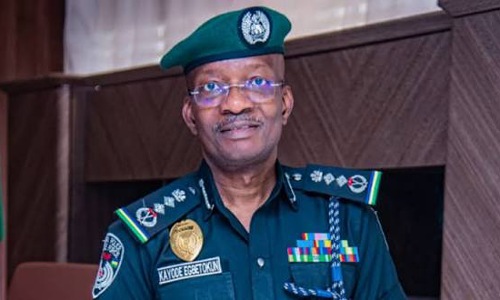
Former Inspector-General of Police, Kayode Egbetokun, has explained why he believes his retirement from the leadership of the Nigeria Police Force came at the perfect time, describing it as the fulfilment of God’s divine plan.
Egbetokun made the remarks during a retirement thanksgiving service held in his honour at the Force Headquarters Chapel in Abuja.
The event also featured the inauguration of the Police Chaplaincy building and was attended by senior police officers, clergy and other worshippers.
SEE MORE: Adeleke Urges IGP to “Call Osun CP to Order“
Reflecting on his appointment as Inspector-General in 2023, the former police chief revealed that he never expected the role when it came.
According to him, the first thing he did after entering his office was to pray.
“I was not expecting the appointment when it came. The first thing I did when I entered the office alone was to pray,” he said.
Egbetokun disclosed that after assuming office, he made three personal prayers to God.
He said he prayed for wisdom to effectively lead the police institution, the grace to complete his tenure successfully, and the ability not to remain in office beyond the time divinely allotted to him.
“My first prayer was for wisdom to run the office, the second was for grace to end well, and the third was not to stay a day longer than God permits. I believe God has answered those prayers,” he added.
The retired police boss also reflected on his career journey, noting that faith played a significant role in his rise from his early days after graduating from the police academy to eventually becoming Nigeria’s top police officer.
He further recounted a dream he had before joining the force, in which he saw himself as a Deputy Inspector-General of Police travelling in a police vehicle bearing the registration number “NPF02.”
According to him, the experience later taught him that life can unfold in unexpected ways.
Egbetokun added that throughout his career he remained conscious of how his actions could influence public perception of the police, a reality he said guided his conduct while in office.
“I knew whatever I did would affect the image of the force, so I made it my duty to remain professional and uphold integrity, transparency and fairness,” he stated.
In his remarks, the Force Chaplain, Joshua Omoyele, commended Egbetokun for completing the Police Chaplaincy building project during his tenure, describing it as a lasting legacy.
Omoyele also praised the former police boss for his strong commitment to Christian service even before his appointment as Inspector-General, noting that he maintained that devotion throughout his time in office.
He further highlighted Egbetokun’s past roles in the police force, including his tenure as Commissioner of Police in Kwara State and Assistant Inspector-General in Zone 7.

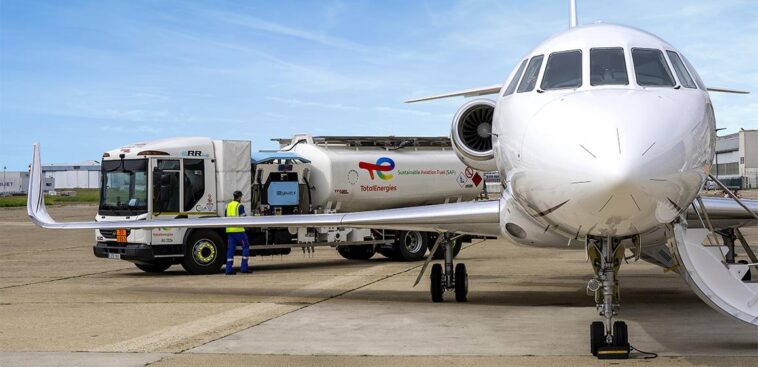
The Airline Operators of Nigeria (AON) has declared that airlines operating in Nigeria have come under financial pressure following a sharp increase in the price of Jet-A1, also known as aviation fuel.
According to the group, the price of aviation fuel, has surged to about N1,800 per litre in many parts of the country, from about N1,000 per litre two weeks ago. This amounts to almost an 80 per cent increase within a short period.
Aviation fuel remains the largest cost component in airline operations, accounting for about 30 to 35 per cent of total operating expenses.
Industry stakeholders have linked the latest spike to the ongoing conflict in the Middle East, which has pushed up global energy prices.
ALSO READ: Shell Completes Turnaround Maintenance on FPSO, Resumes Production at Bonga
Speaking on Channels Television on Friday, the spokesperson for the Airline Operators of Nigeria, Prof Obiora Okonkwo, said the surge had placed airlines under severe financial strain.
According to him, most carriers have so far refrained from immediately transferring the additional cost burden to passengers, despite the pressure on their operations.
“Two weeks ago, we were getting Jet-A1 at about N1,000 per litre, which today is about N1,800, and even more in some stations. We have experienced an increase of about 80 per cent. That’s quite a spike,” Okonkwo said.
He explained that airlines were currently absorbing the losses in order to avoid worsening the economic burden on the travellers.
“We are not in a business where you can easily adjust your ticket price. Right now what we are doing is that we are bleeding. We are taking the blow. We are selling tickets at very non-profitable prices. We are losing a lot of money,” he said.
Okonkwo warned that the situation might not be sustainable if fuel prices continue to rise without government intervention.
“Obviously, adjustments will be expected anytime soon. But again, we are very sensitive to the economic situation of Nigerians and our travellers,” he added.
He noted that developments in the global oil market, particularly the recent release of reserve crude oil, could influence fuel prices in the coming weeks.
Okonkwo also urged the Federal Government to explore engagement with the Dangote Refinery as part of efforts to stabilise aviation fuel supply locally.
“We were more hopeless in a situation where there was no refinery in Nigeria in the last two years. Now that we have a refinery, we are hopeful that we can find a solution around it,” he said.
According to him, if the spike persists, some airlines may struggle to continue absorbing the losses associated with the rising cost of aviation fuel.
Meanwhile, the AON spokesperson also reacted to the decision by the Federal Competition and Consumer Protection Commission to sanction about five airlines over alleged price fixing.
Okonkwo said while the commission has regulatory powers, the aviation sector remains deregulated, making coordinated price fixing unlikely.
“There is no meeting of airlines where they agree to fix prices. Fixing prices would mean operating as a cartel, and that is not the case,” he said.
He explained that airline ticket pricing varies widely because different aircraft types attract different operating costs.
“Each airline determines its fares based on its own operational costs,” he said.
Okonkwo added that airlines must also demonstrate financial viability to regulators as part of the conditions for maintaining their operating licences.
“At every point in time, you must prove to the regulators that you are financially viable and capable of sustaining operations,” he said.
He urged regulators to take into account the fragile nature of the aviation industry when making policy decisions affecting airlines.
Modupe Asudo
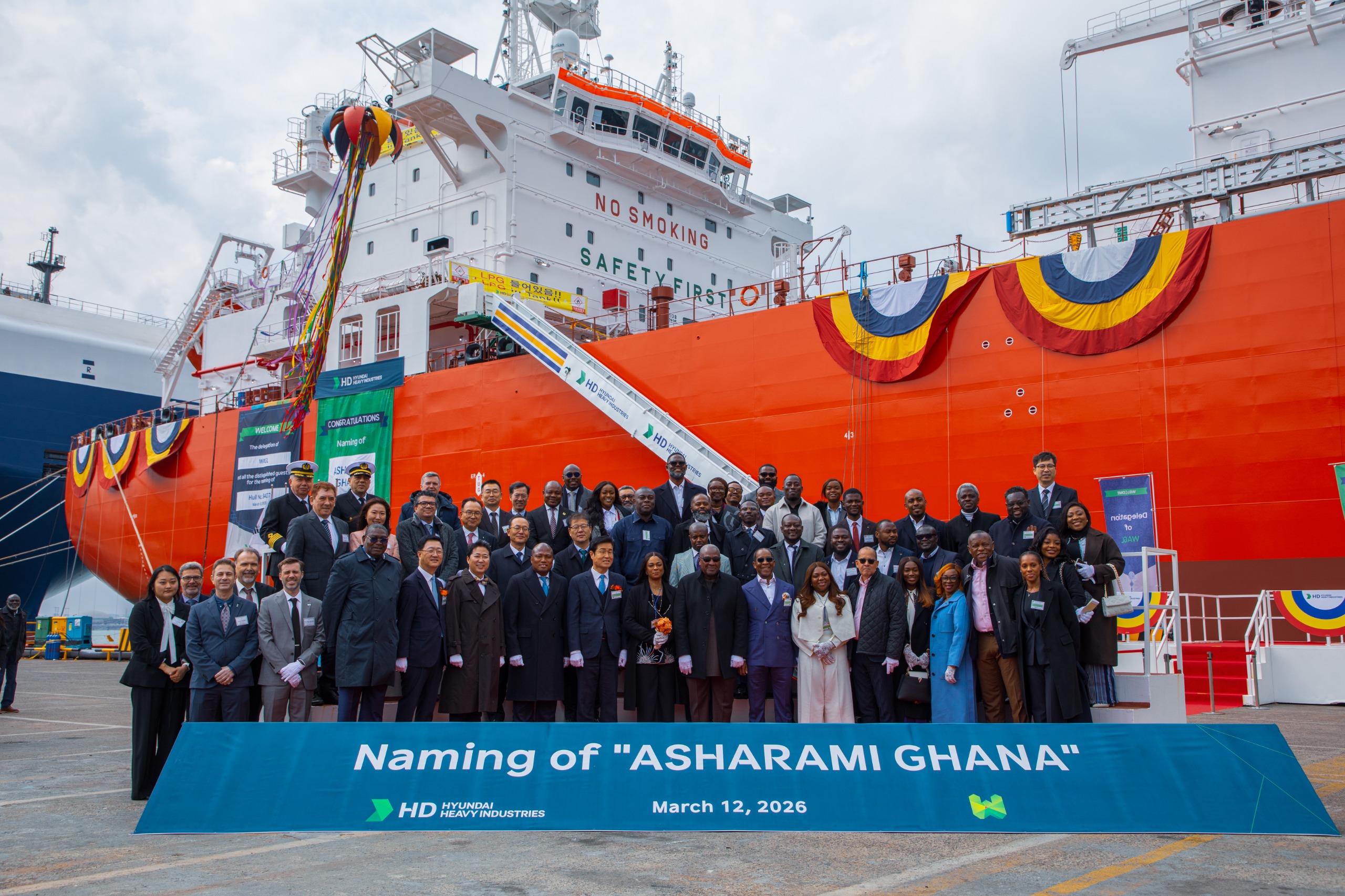
Sahara Group, a leading global energy and infrastructure conglomerate, has commissioned MT Asharami Ghana, a 40,000‑cubic‑metre Liquefied Petroleum Gas (LPG) carrier, expanding its fleet capacity, while strengthening Ghana’s clean energy supply chain and LPG distribution network.
The dual‑fuel vessel improves operational efficiency, enhances supply reliability, and supports lower‑emission LPG logistics as consumption grows across Ghana and the wider sub‑region.
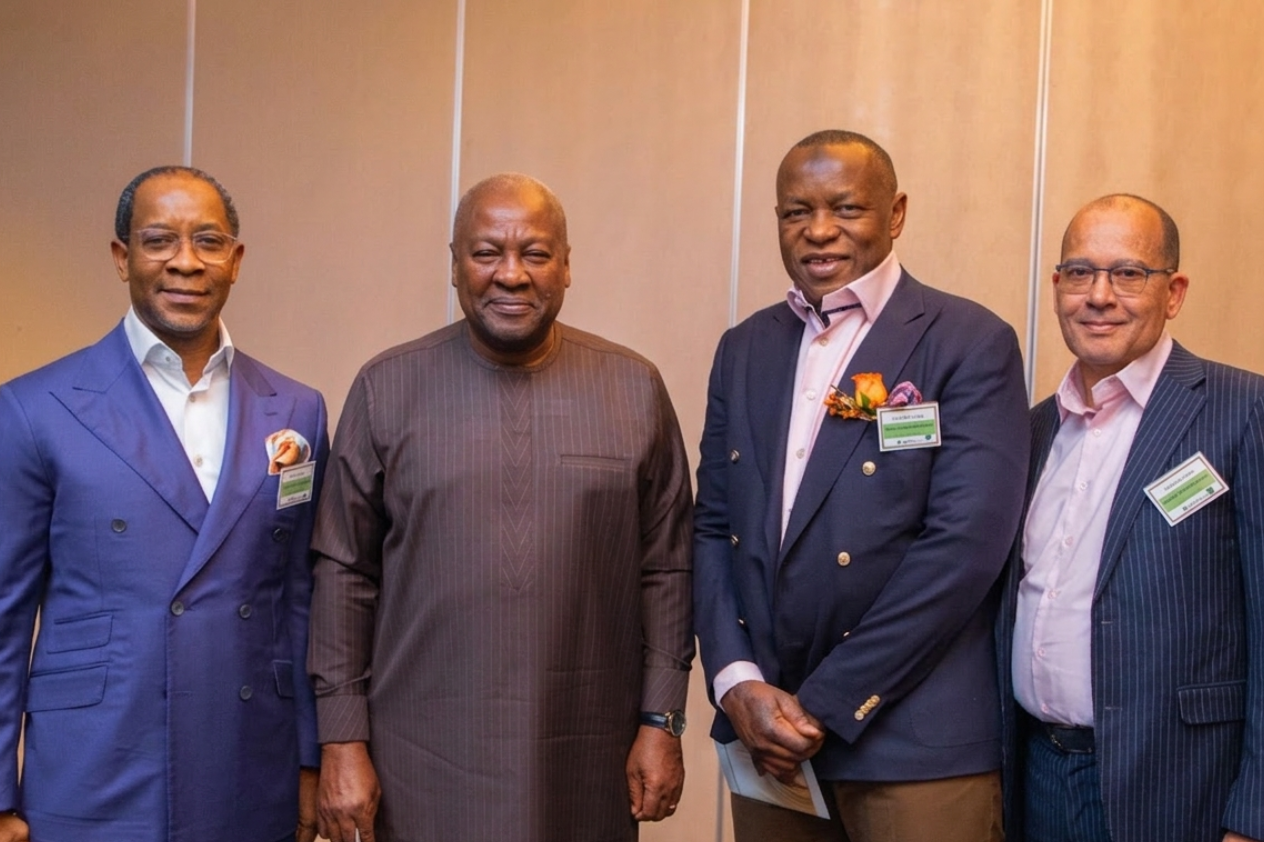
Ghanaian President Mahama and Sahara Executive Directors
Speaking at the commissioning in Ulsan, South Korea, President John Dramani Mahama described the vessel as “a significant milestone in strengthening the infrastructure that underpins the global LPG supply chain,” noting that expanded shipping capacity is critical to improving supply security, reliability and efficiency for countries that rely partly on LPG imports.
He commended Sahara Group, WAGL Energy and all partners involved for their “leadership, technical expertise and strategic foresight,” adding that the project reflects “the power of partnership” in advancing safe, efficient, and responsible energy distribution.
President Mahama wished the MT Asharami Ghana safe sails, expressing confidence that the vessel would inspire further investment and collaboration across Africa’s energy value chain.
According to Wale Ajibade, Executive Director, Sahara Group, the vessel supports Ghana’s clean energy ambitions through integrated infrastructure.
“MT Asharami Ghana is more than a vessel; it is part of a deliberate strategy to strengthen LPG supply security and support Ghana’s clean energy ambitions. It secures an additional 25,000-Metric-tonne stock security for the Ghana economy, alongside the soon to be commissioned 6000-metric-tonee of 12.000-metric-tonne land storage in Tema,” he said.
With the addition of Asharami Ghana, Sahara Group’s LPG carrier fleet now comprises six delivered vessels with a combined capacity of 202,000 cubic metres. Supported by partnerships with WAGL Energy, NNPC Limited and other stakeholders, an additional 270,000 cubic metres of capacity is under construction and due for delivery by September 2028.
Temitope Shonubi, Executive Director, Sahara Group, said Asharami Ghana is part of Sahara’s integrated LPG infrastructure strategy spanning shipping, storage, and downstream distribution globally, including the development of a 12,000‑metric‑tonne land‑based LPG storage terminal in Tema, with a 6,000‑metric‑tonne first phase scheduled for completion in May 2026.
He thanked Yaa Serwaa Alifo, MD of Asharami Ghana, for her resilience and insistence to dedicate a ship of “this magnitude solely to the Ghana Market and its landlocked neighbours.”
Ghana is targeting LPG adoption of 50 per cent of households by 2030, up from about 30 per cent today. Sahara’s investments will support clean energy access for more than 35 million people, while strengthening Ghana’s role in regional LPG trade to neighbouring and landlocked West African markets.
The commissioning comes in Sahara Group’s 30th anniversary year, guided by the Sahara Beyond XXX milestone, underscoring Sahara’s focus on building an enduring enterprise that delivers responsible growth, shared prosperity and long‑term impact across its markets.






Leadership Shakeup: ADC Kicks Off Nationwide Elections

‘Why My Retirement Came at the Perfect Time’ — Ex-IGP Kayode Egbetokun

Airfares Likely to Rise as Aviation Fuel Price Spikes by 80%

Shell Completes Turnaround Maintenance on FPSO, Resumes Production at Bonga

Sahara Group expands fleet with new 40,000 cbm LPG Carrier

NATO Shoots Down Third Iranian Missile in Turkey

Trump’s Family Unveils New Cryptocurrency Platform

Reps Recommend 3-year Jail Term For Aviation minister

Dangote Cement Lights Up Benue Host Communities With CSR Initiatives

Senate Denies Receiving Petitions Against Tinubu’s Ambassadorial Nominees

Tems Sets New Record On Billboard Hot 100 Chart
