
NEWS
‘They’ll Be Free Soon’ – DIG Gives Fresh Update on Abducted Oyo Pupils, Teachers

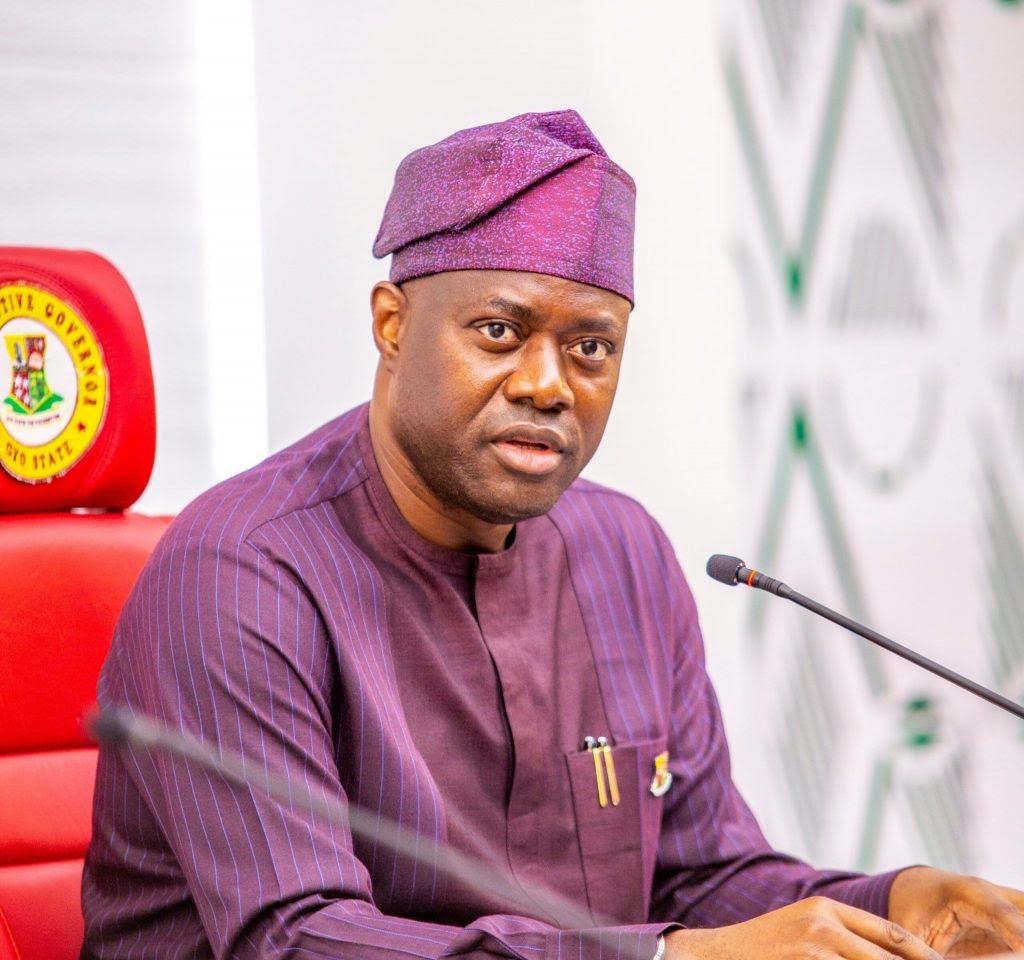
The South-West Coordinating Deputy Inspector-General of Police (DIG), Adegoke Fayoade, has reassured Nigerians that the abducted pupils and teachers in Oyo State will soon regain their freedom as security agencies intensify rescue operations.
Speaking during an official working visit to the Lagos State Police Command Headquarters in Ikeja on Monday, Fayoade expressed confidence that ongoing efforts by law enforcement agencies and government authorities would yield positive results in the shortest possible time.
According to him, all available resources are being deployed to secure the safe release of the victims, while security operatives remain focused on rescue efforts rather than engaging in discussions about ransom demands.
ALSO READ: Oyo APC Rejects LG Election, Says Makinde Wants to Rule by Proxy After Exit
“All agencies, including government authorities, are working tirelessly. I can assure Nigerians that within the shortest possible time, the children and their teachers will be free,” the DIG stated.
Fayoade dismissed reports suggesting that the abductors had altered their demands, insisting that the police were unaware of any negotiations involving ransom payments or the release of suspected accomplices.
“We do not discuss ransom. Our priority is ensuring the safe rescue of those in captivity,” he said.
The senior police officer explained that his visit to Lagos was part of a broader strategy to strengthen supervision across police commands in the South-West and engage officers on effective approaches to tackling emerging security threats.
He disclosed that discussions with officers centered on manpower development, welfare improvement, and operational efficiency.
Fayoade noted that the ongoing recruitment of 40,000 police personnel would help address manpower shortages across the country, while improved welfare packages would boost officers’ morale and effectiveness.
The DIG also highlighted the Nigeria Police Force’s commitment to adopting modern technology in crime fighting.
He revealed that efforts were underway to complete a central data centre that would enable security agencies to share intelligence and improve crime detection nationwide.
He added that the force was preparing to introduce artificial intelligence into criminal investigations and intelligence gathering to enhance policing and improve response times.
“Technology remains a major priority. Very soon, our officers will begin specialized training on the use of artificial intelligence in investigations and intelligence operations,” he said.
Fayoade further urged members of the public to cooperate with law enforcement agencies, stressing that effective policing requires mutual trust and respect between officers and citizens.
The assurance comes amid growing concern from parents and residents over the fate of the abducted pupils and teachers, with many hoping for a swift and safe resolution to the incident.










The Kaduna State Universal Basic Education Board (SUBEB) has commenced a promotion exercise for 24,000 eligible staff as part of efforts to clear outstanding teachers’ promotions dating back to 2021.
The development was disclosed on Friday as the administration of Governor Uba Sani intensifies efforts to address promotion backlogs, recognise teachers’ years of service and improve staff welfare across the state.
The exercise covers outstanding promotions from 2021 to 2026 and is expected to provide eligible teachers and other staff with opportunities for career progression.
SEE ALSO: Kaduna Clears N18bn Pension Arrears, Raises Agric Funding to N100bn
According to the announcement, eligible personnel will undergo an assessment process, after which promotions will be implemented for those who successfully meet the requirements.
The initiative is part of efforts to strengthen the education sector by recognising the contributions of teachers and supporting their professional development.
The state government has emphasised the importance of investing in teachers, noting that a motivated and valued teaching workforce is essential to building a stronger education system.
The exercise is also expected to address long-standing staff concerns relating to career advancement within the state’s basic education sector.

The Director of the Abuja School of Social and Political Thoughts, Dr Sam Amadi, has predicted that the Federal Government’s ₦60-per-litre petrol discount is unlikely to translate into an immediate reduction in transport fares, questioning its ability to ease the economic hardship facing Nigerians.
Amadi said the intervention, introduced through Nigerian National Petroleum Company Limited (NNPC) retail stations, was too insignificant to make a meaningful difference in the lives of citizens struggling with rising living costs.
He made the remarks during an interview on Arise News on Friday, October 9, 2026.
ALSO READ: Fuel Subsidy: Atiku Showing Symptoms of Desperation — Afegbua
The Federal Government recently introduced a 30-day petrol discount window as part of a 10-point intervention announced by the Minister of Finance and Coordinating Minister of the Economy, Taiwo Oyedele.
Under the arrangement, NNPC Retail will forgo its profit margin and sell petrol at cost price, with the expected reduction estimated at ₦60 per litre.
The government said the temporary measure was designed to cushion the impact of global oil price shocks and reduce transportation costs, particularly for commercial transport operators.
Oyedele also clarified that the initiative was not a return to the fuel subsidy regime.
However, Amadi expressed doubts about whether the discount would provide meaningful relief, arguing that its economic impact would be minimal.
“Will transport costs change tomorrow? I predict they will not change. As a matter of fact, it’s so insignificant that you might even see some transport costs going higher as people respond to it disproportionately,” he said.
The policy expert added that the intervention was unlikely to significantly improve the living conditions of Nigerians facing the consequences of rising transportation and other household expenses.
“I don’t think this is going to touch the lives of the people. Politically-economically speaking, it’s meaningless. Politically, maybe marginally useful,” he said.
Amadi Criticises Government’s Economic Policies
Beyond the petrol discount, Amadi criticised the government’s approach to economic reforms, arguing that the removal of petrol and electricity subsidies, alongside the floating of the naira, had contributed significantly to Nigeria’s cost-of-living crisis.
He described the petrol discount as a belated response to mounting public dissatisfaction with the administration’s economic policies.
“First, I think it’s a face-saving strategy. Again, the government has been too late, too little. The World Bank recently came back to subsidy as a tool. So the government’s religious taboo around subsidy was a wrong idea,” Amadi said.
He also argued that the manner in which the petrol subsidy was removed had worsened the economic difficulties experienced by households and businesses.
“Secondly, it’s clear—as Atiku and others have argued—that the drastic, reckless manner in which subsidy was removed, compounded with the removal of electricity subsidies and the floating of the naira, is the source of the current cost of living crisis,” he added.
According to Amadi, the government’s latest intervention also appears to be a response to growing political pressure, particularly in Northern Nigeria, where calls for the restoration of fuel subsidies have gained attention.
He maintained that the ₦60 reduction could offer the government some political advantage without imposing the substantial fiscal burden associated with restoring the former subsidy regime.
“This government is smart. The state governors don’t want subsidy back because their fiscal buoyance depends on it. So if it’s ₦60 only for NNPC for transporters, the fiscal impact is almost nothing to the government.
“At the same time, they hope to play a political game: less fiscal loss, more political gain. But it’s nothing,” he said.
2027 Elections Could Shape Fuel Pricing Debate
Amadi further suggested that political considerations ahead of the 2027 general elections could be influencing the government’s approach to petrol pricing.
He argued that the administration was attempting to respond to public concerns about fuel costs while avoiding a full return to the subsidy system.
The policy expert also questioned the implications of the intervention for the Petroleum Industry Act (PIA), noting that its implementation still had unresolved issues.
He said the government could explore different pricing mechanisms and targeted interventions to make petrol more affordable without necessarily undermining market forces.
“The government is running into trouble regarding the PIA. Don’t forget that we haven’t reached full-scale implementation; there are still a lot of blind spots. In this case, they’re responding to politics, and maybe they should, because this is bound to be a major issue going into 2027,” Amadi said.
The Federal Government and state governments have stepped up efforts to tackle child malnutrition and stunting, with a renewed commitment to take nutrition interventions to communities and households across Nigeria’s 774 local government areas.
The initiative, known as Nutrition 774, is designed to strengthen grassroots action through coordinated interventions in healthcare, education, agriculture, water supply, sanitation and social protection.
The development was disclosed by Stanley Nkwocha, Senior Special Assistant to the President on Media and Communications in the Office of the Vice President, in a statement released on Friday, October 9, 2026.
SEE ALSO: FG Reveals Six Locations for Proposed 24-Hour Power Supply Zones
The statement followed the Nigeria–Ethiopia Nutrition Leadership Exchange in Addis Ababa, Ethiopia, where Nigerian officials are studying strategies adopted by the East African country to improve nutrition outcomes.
The Nigerian delegation is led by Vice President Kashim Shettima, with state governors and federal ministers participating in discussions on how to translate nutrition policies into measurable improvements in the lives of Nigerians.
Nigeria, Ethiopia to Develop Nutrition Roadmap
The Coordinating Minister of Health and Social Welfare, Professor Muhammad Ali Pate, said Nigeria and Ethiopia would develop a roadmap based on lessons from the leadership exchange to accelerate progress in tackling malnutrition.
Pate described nutrition as a critical component of human capital development, stressing that addressing the challenge required cooperation across government institutions and society.
“Nutrition is key to human capital development, and it requires sectors to work together in a whole-of-government and whole-of-society approach,” he said.
The minister acknowledged progress made through national interventions and community-based programmes but called for stronger implementation.
“We have to now go back and deepen the progress, accelerate,” Pate added.
He expressed optimism that sustained efforts over the next four to five years could produce significant results, particularly for children.
“There are reasons to be optimistic that if we continue in this direction over the next four to five years, Nigeria will achieve remarkable success in dealing with key issues affecting the people of Nigeria, particularly the children who are the future of our country,” he said.
Adeleke, Otti Highlight Need for Better Nutrition Policies
Osun State Governor Ademola Adeleke said nutrition interventions should prioritise children under five and pregnant women, noting that Nigeria needed to build on the progress already recorded.
“Especially for the young ones under five and, of course, pregnant women, it is very, very important,” Adeleke said.
He added that learning from Ethiopia’s experience could help Nigeria improve its approach.
“We have some success, but we can improve on it. That is why I am here, to learn from our counterparts in Ethiopia,” the governor said.
Abia State Governor Alex Otti also urged Nigerian authorities to learn from countries that had made progress in addressing nutrition challenges.
“There’s nothing wrong with saying that we have not done as well. And there’s also nothing wrong in learning from those who have done it, so that you don’t go reinventing the wheel,” Otti said.
He explained that malnutrition could not be addressed through food security alone, as healthcare, education, agriculture, climate change and poverty reduction were closely connected.
“Today, we have learned that it’s not just about food security. It’s also about health. It’s about education. It’s about climate change. It’s about agriculture. So, a whole lot of things are intertwined,” he said.
The governor also highlighted Abia’s investment in education, including the recruitment of 9,469 teachers, the development of 20 smart schools and the rehabilitation of more than 200 primary and secondary schools.
He said the state was committing approximately 20 per cent of its annual budget to education.
Insecurity Complicates Nutrition Efforts in Zamfara
Zamfara State Governor Dauda Lawal said insecurity had made it more difficult for the state to address nutrition challenges, despite its history of substantial food production.
“In the past, when you spoke about nutrition, we didn’t even have anything like that in the state because we produced enough to feed our people. However, because of those challenges now, it has become difficult,” Lawal said.
He, however, insisted that insecurity should not prevent the state from pursuing development initiatives.
“Should we be defined by the insecurity? The question is no. What else can we do?” he asked.
Lawal said Zamfara would continue to align with Federal Government programmes while adapting interventions to the specific needs of its communities.
Jigawa Trains 600 Women in Child Nutrition Programme
Jigawa State Governor Umar Namadi said Ethiopia’s experience under the Seqota Declaration offered useful lessons for Nigeria’s Nutrition 774 Initiative.
He stressed that the programme must extend beyond national and state institutions to reach local governments, wards, communities and individual households.
“The one thing that is very important with 774 is the fact that it will have to go down from the national level to each local government, each ward, each community and each household,” Namadi said.
The governor also highlighted Jigawa’s homegrown nutrition programmes, including the Masaki initiative and a Tom Brown programme designed to promote nutritious food for children.
According to Namadi, approximately 600 women had been trained to produce nutritious food for children under the Tom Brown programme.
The initiative reflects the role state governments can play in complementing federal policies with community-based interventions.
Education Minister Warns of Consequences of Poor Early Nutrition
The Minister of Education, Dr Maruf Tunji Alausa, said efforts to tackle malnutrition must begin during pregnancy and continue through the critical early years of a child’s development.
He warned that inadequate nutrition during this period could have lasting consequences for children’s future.
“If we miss that period, the 2,000 days, we’ve set those children up for failure in life,” Alausa said.
The minister explained that the Nutrition 774 agenda was designed to move nutrition interventions from the Federal Government to state governments, local authorities and communities.
“We have an expansive 774 nutrition agenda that drives our nutrition agenda from the federal to the subnational government, state, local government and the community,” he said.
FG Links Nutrition to Water Supply, Sanitation
The Minister of Water Resources and Sanitation, Professor Joseph Utsev, said improved nutrition depended on reliable water supply, sanitation, agricultural production and healthy living conditions.
“When we talk about the workforce, we must first talk about healthy living. A human being must be healthy before he can impact positively in any role given to him,” Utsev said.
He stressed that water was essential not only for drinking and sanitation but also for irrigation and food production, making it an important part of Nigeria’s broader nutrition strategy.
The Federal Government’s renewed commitment places state and local governments at the centre of efforts to improve nutrition outcomes.






Kaduna Moves to Clear 5-Year Promotion Backlog for 24,000 Teachers

Fuel Discount: Sam Amadi Predicts No Immediate Drop in Transport Fares

Malnutrition: FG, States Take Nutrition 774 Initiative to 774 LGAs

NNPC Petrol Discount: Oyedele Explains How Lower Margins Could Boost Profits

Presidency Explains Petrol Discount Offering

NUPRC Shares Priorities for Next Phase of Growth

Trump’s Family Unveils New Cryptocurrency Platform

Senate Denies Receiving Petitions Against Tinubu’s Ambassadorial Nominees

Dangote Cement Lights Up Benue Host Communities With CSR Initiatives

Reps Recommend 3-year Jail Term For Aviation minister

Tems Sets New Record On Billboard Hot 100 Chart
