
Politics
Tinubu Promises Federal University Autonomy, Student Loan Scheme

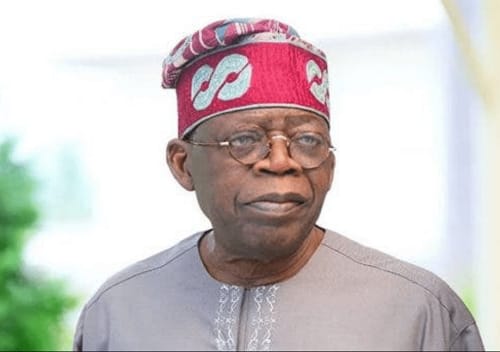
Bola Tinubu, the All Progressives Congress’ presidential candidate, pledged to give federal universities complete freedom to function autonomously.
The announcement was made during a rally for his presidential campaign at Abuja’s Eagle Square on Saturday.
During his address, Tinubu stated that the youth are frustrated due to unemployment, underdevelopment, and the recurrent closures of tertiary institutions caused by the Academic Staff Union of Universities (ASUU).
To address this issue, he stated that he will grant the universities autonomy and follow through with his student loan initiative as outlined in his manifesto.
“We are ready to make those changes and be more creative in a way that you definitely will enjoy your tomorrow.
“University will be autonomous, you have to be able to do your course, take student loan if necessary, finish a four years course in four years, be a scientist and a discoverer. Be a great researcher and builder. Get education and not dereliction. We are grateful that you have voted us to power. We will serve you and continue to serve you,” he said.
Autonomy for universities has been a key request from lecturers and is outlined in the ASUU and federal government’s 2009 agreement.
However, previous governments have failed to implement this agreement, leading to last year’s eight-month shutdown of government-owned universities. The lecturers were only able to resume their duties following a ruling from the National Industrial Court of Nigeria.
Despite the 2003 Universities Autonomous Act granting decision-making powers to university governing councils, federal government funding and involvement in administration still persist in federal government-owned universities.
ASUU remains resolute in their stance that the government should continue funding these institutions and vehemently opposes any increase in tuition fees.
In his manifesto, Tinubu promised to implement a student loan system, allowing schools to implement cost-reflective fees.
“We will institute a pilot student loan regime like the program established by the Lagos and Kaduna State Governments. This will expand access to education to all Nigerians regardless of their backgrounds. At the same time, this will give institutions the ability to charge more cost-reflective tuition fees,” the manifesto reads.

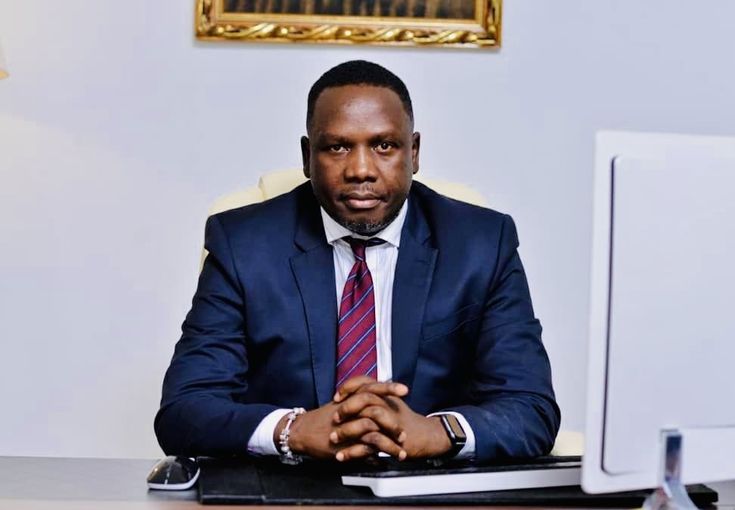
Daniel Bwala, Special Adviser to President Bola Tinubu on Policy Communication, has predicted that President Tinubu will defeat his major challengers by a wide margin in the 2027 presidential election.
Bwala made the prediction on Wednesday during an appearance on Channels Television’s Politics Today, where he discussed the political strength of the Tinubu administration and the state of the opposition ahead of the 2027 elections.
He said the margin of victory for Tinubu would be so wide that Nigerians would be surprised.
SEE ALSO: Tinubu Celebrates Adviser Daniel Bwala On 50th Birthday
“Let me tell you, and let me say it categorically, and I’ll be happy to come back. The margin of gap that President Bola Tinubu will give each and every one of these candidates will be so much that you won’t believe it,” Bwala said.
Explaining the basis for his prediction, Bwala pointed to the number of governors he said had aligned with the president, arguing that governors control important political structures within their respective states.
“No, I am saying—you asked me to give data now. So this is data. You used to conjecture, I speak to data,” he said.
“Since then, President Bola Tinubu has got how many governors on his side? How many governors have joined him? The governors are the chief executive officers of their respective states. They coordinate the structures of the state. They won their own election to be governors.”
Bwala said the support of the governors would translate into political structures, resources and goodwill for Tinubu ahead of the election.
“These people say, ‘We are putting our goodwill, our resources, our structure, and our support to the President.’ You multiply that by the number of people that have come to him, then you stretch it further by the people who are impacted positively by his… what do you call it? By his policy,” he added.
The presidential aide also cited what he described as progress under Tinubu since 2023.
“Then you look at how his… Before he became President, the Naira… you couldn’t trade with the Naira around the world. You can do it now!” he said.
“So these are facts, verifiable data to suggest that President Bola from 2023 to now has made a marked progress.”
Bwala Claims Atiku, Obi Have Lost Key Supporters
Bwala also turned his attention to former Vice President Atiku Abubakar and former Anambra State Governor Peter Obi, who are among the prominent opposition figures expected to feature prominently in the 2027 presidential contest.
He claimed Atiku had lost a significant number of key political figures who previously worked with him.
“But in terms of the other candidates who said he will not win: Atiku Abubakar lost close to 35% of key people that you know around him,” Bwala said.
“All the governors that worked for him that time are not going to be with him, I need you to know that in case you don’t know.”
Bwala also claimed Obi had lost most of the critical figures who supported his 2023 presidential campaign.
“Peter Obi lost 75% of the critical people that carried his campaign—they’ve all disappeared,” he said.
“And some of them went to Atiku, some of them went wherever they could go to. In terms of the other candidate, they just came to mark presence there.”
‘They Lost the Election Already’
Bwala further accused some opposition politicians of displaying what he described as a “defeatist attitude” ahead of the 2027 election.
“But I’m talking of these people that you think they are making a case—what they have is what we call defeatist attitude,” he said.
“How can you in one breath say you’re winning election, and in another breath you’re already threatening Nigeria will be… there will be no Nigeria, there will be all those things?”
He added: “Even the talking points of their campaign will suggest to you that they’ve lost the victory. They lost the election already.”
Bwala Defends Tinubu’s Policies
The presidential aide also defended the administration’s policies, arguing that they were improving the lives of Nigerians, particularly those in the informal sector.
“See, how can our policy… Our policy is raising a lot of people from the doldrums,” Bwala said.
“Look at the people in the informal sector of the economy, the women… You need to see—some of these your news media have been covering it.”
He also questioned the level of engagement some opposition politicians had with ordinary Nigerians before becoming prominent political figures.
“In terms of these people you’ve mentioned, tell me the last time they were actively involved in caring about the internal… When was the last time Amechi, before today, before he was made Vice President, that he had any engagement with the masses?” he asked.
“So you can come overnight, immediately, and just start talking?”
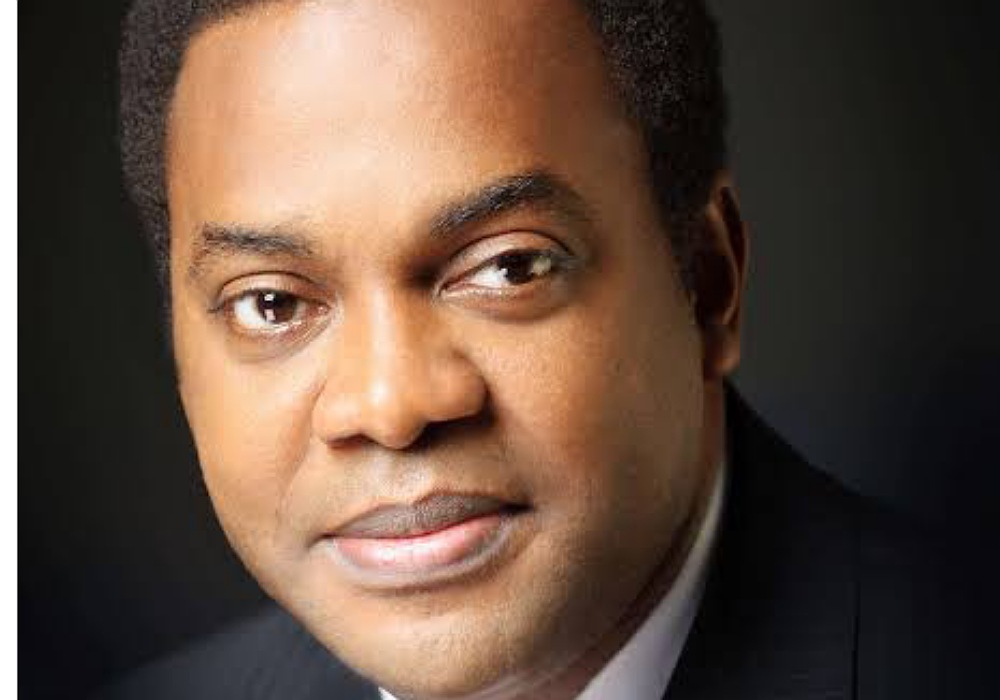
Peoples Redemption Party (PRP) presidential candidate, Donald Duke, has said he would bring the price of petrol down to about ₦300 per litre if elected president in the 2027 general election.
Duke disclosed this on Wednesday while explaining his proposed approach to crude oil production and domestic fuel supply.
ALSO READ: 2027: INEC Must Prove Nigerians Wrong on Election Credibility — Donald Duke
When asked about the realistic price of petrol under his presidency, the former Cross River State governor said his target would be to reduce the pump price to about ₦300 per litre.
“To bring it to about 300 Naira. I’ve told you… it sounds so outlandish, but I’ve given you the arithmetic,” Duke said.
He explained that his proposal would be based on allocating a portion of Nigeria’s crude oil production for domestic consumption and selling the remaining volume.
According to him, if the country’s daily consumption requires 600,000 barrels, that volume would be allocated for domestic use, while the remaining one million barrels would be sold.
“Because I allocate 600,000 barrels if that’s what you consume daily. Allocate that to yourself. The other one million, you can sell,” he said.
His proposal comes as the cost of petrol remains a major issue in Nigeria, with fuel prices having significant implications for transportation, businesses and household expenses.
Duke is seeking the presidency on the platform of the PRP in the 2027 general election.
Peoples Redemption Party (PRP) presidential candidate for the 2027 general election, Donald Duke, has challenged the Independent National Electoral Commission (INEC) to prove to Nigerians that it can deliver a free and fair election.
Duke made the call on Wednesday while speaking about the credibility of Nigeria’s electoral process and public confidence in INEC.
The former Cross River State governor said the onus was on the electoral commission to convince Nigerians that the 2027 election would be free and fair, noting that previous developments had left many citizens sceptical about INEC.
SEE ALSO: 2027: Donald Duke Reveals Why He Wants to Be Nigeria’s President
“INEC has to prove… the onus is on them actually to convince Nigerians that there will be a free and fair election,” Duke said.
He recalled the postponement of the 2019 general election, which was announced just hours before voting was scheduled to begin.
According to him, the development contributed to Nigerians’ growing distrust of the electoral commission.
Duke said INEC had assured the public of its preparedness for the election before the postponement, which was announced around 4am on election day.
He criticised the explanations given for the postponement, saying the commission should have taken responsibility for the situation.
The PRP candidate, who contested the 2019 presidential election on the platform of the Social Democratic Party (SDP), said he was on the ballot at the time but did not participate because his party was involved in court proceedings.
Duke further said the fact that the same electoral institution remains responsible for conducting elections means INEC must now work to restore public confidence.
“That same INEC, the institution still exists, so the onus is on them,” he said.
He added: “The onus is really on INEC. They’ve got to prove the skeptics wrong. But so far, their records in the past, there’s a lot to… expectations are poor.”
Duke also recalled concerns surrounding the Bimodal Voter Accreditation System (BVAS) during the 2023 general election.
“The last election in ’23, the BVAS suddenly stopped working. Now, he says it’s going to work. Let’s see,” he said.
The PRP candidate’s comments come as political parties and candidates intensify preparations for the 2027 general election, with INEC expected to conduct the presidential and National Assembly elections in January 2027.





World Bank Report: ‘Nigeria Needs 10% Growth for 20 Years to Reduce Poverty’ — Ekpo
Yenagoa Hosts NCDMB 2026 Content Forum

IPO: ADF Opens Wealth Creation Pathway for 2m Vulnerable Nigerian Women

2027: Tinubu Will Beat Atiku, Obi by Wide Margin, Says Bwala

‘Dem Dey Use Stick Dey Flog Women’ — Nigerians in India Camp Cry Out

2027: I’ll Bring Petrol Price Down to ₦300, Says Donald Duke

Trump’s Family Unveils New Cryptocurrency Platform

Senate Denies Receiving Petitions Against Tinubu’s Ambassadorial Nominees

Dangote Cement Lights Up Benue Host Communities With CSR Initiatives

Reps Recommend 3-year Jail Term For Aviation minister

Tems Sets New Record On Billboard Hot 100 Chart

724435 89703Spot up for this write-up, I seriously believe this internet site needs a whole lot a lot more consideration. Ill apt to be once more to learn additional, appreciate your that information. 703411
397224 456944After examine a couple of with the weblog posts on your web web site now, and I genuinely like your manner of blogging. I bookmarked it to my bookmark internet site record and will probably be checking back soon. Pls take a appear at my web page as nicely and let me know what you believe. 490902
542496 205201Some genuinely fantastic information , Gladiola I discovered this. 465021
342937 625143There is noticeably a great deal to realize about this. I suppose you produced certain nice points in features also. 198823
915290 484538Its rare knowledgeable folks within this subject, nevertheless, you seem like theres much more youre talking about! Thanks 498767