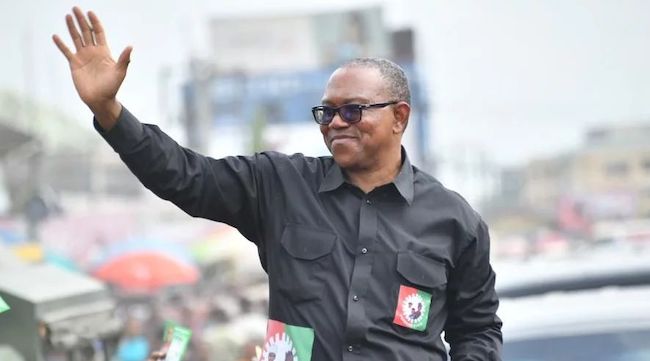
The obstruction of the 2027 presidential candidate for the Nigeria Democratic Congress (NDC), Peter Obi’s convoy in Benue State has stirred up political controversy ahead of the 2027 general election.
Interestingly, security operatives have swung into action with as many as 46 people arrested, while the former Anambra State governor has demanded action for more stringent action from security agencies.
On its part the Benue State government, under the leadership of Governor Hyacinth Alia denying any involvement in the ugly incident which has drawn wide condemnation across Nigeria and beyond. However, the Catholic priest turned governor, speaking through his aides has insisted that Obi ought to have followed established protocols.
Recall that Obi was in Benue on Tuesday, September 8, intending to travel to Yelwata in Guma Local Government Area, where he planned to meet victims of the deadly attacks that occurred in the community in June 2025.
His convoy, however, was stopped along the Makurdi-Gboko federal highway by youths who reportedly barricaded the road and shouted for him to leave which forced Obi to turn back.
The incident has since developed into a political dispute, with Obi’s camp alleging political mobilisation behind the blockade, while the Benue State Government has rejected the accusation and said it had no prior knowledge of his visit.
The police have meanwhile arrested 46 suspects and commenced an investigation into the incident.
Obi: “This Rascality Cannot be Allowed”
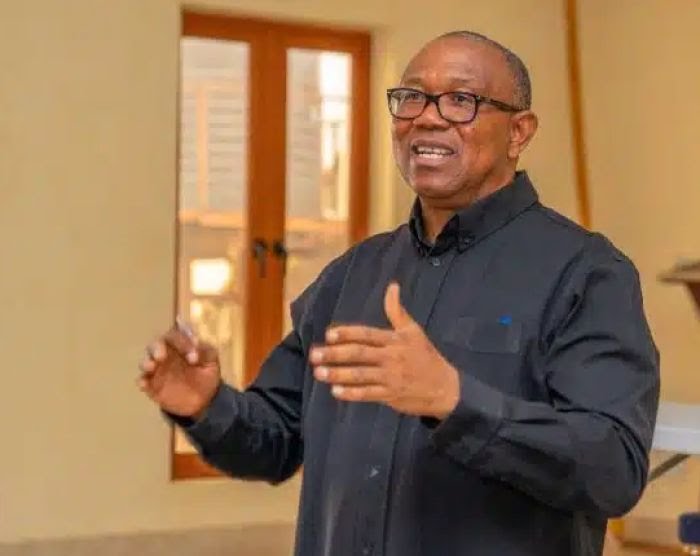
Obi said his purpose in travelling to Yelwata was to sympathise with families affected by the killings. According to him, the youths blocked his convoy and repeatedly shouted, “Peter Obi, go back.”
Rather than force his way through, Obi said he chose to withdraw to prevent the confrontation from escalating.
“It is ridiculous. Our experience this morning is very, very worrisome,” Obi added. He also appealed to security agencies to investigate the incident.
He maintained that “This rascality cannot be allowed.” And alleged that the youths were mobilised by a Special Assistant to Gov Alia.
However, that allegation has not been independently established, while the Benue State Government strongly denied it.
Benue Government Denies Involvement
The Alia administration says it neither organised nor sponsored the blockade.
Gov Alia’s Chief Press Secretary, Tersoo Kula, said the state government was not aware of Obi’s visit beforehand and rejected claims that government officials mobilised the youths against him.
The government maintained that it does not “engage, patronize, or deploy thugs as instruments of governance or security.”
It also challenged those making allegations against government officials to produce evidence.
Benue Commissioner for Information and Culture, Solomon Iorpev, offered another key part of the government’s explanation.
He said Obi, as a former governor and presidential candidate, should have formally notified the state government before embarking on such a high-profile visit.
“A high-profile person who has been a former governor of a state is coming into the state; he should have written a letter to the State Government.”
According to Iorpev, the issue was not that Obi was prohibited from entering Benue, but that security arrangements should have been properly coordinated.
The government therefore maintains that Obi should have followed the appropriate notification and security protocols, while denying any connection to the people who blocked his convoy.
Police Arrest 46 Suspects
The police investigation has now become central to the controversy.
Benue State Commissioner of Police Cletus Nwadiogbu said the police command was informed of Obi’s planned visit at about 5:30pm on Monday, September 7, after which security personnel were deployed.
He said three police escort vehicles led by an Assistant Commissioner of Police were assigned to the movement.
Despite the security arrangements, the convoy encountered the group blocking the road.
The police said they avoided immediate use of force because of the possibility that the confrontation could result in casualties or damage to property.
Following the incident, 46 suspects were arrested, while the Police said efforts were continuing to identify and apprehend other people believed to have been involved.
Nwadiogbu also warned against political intolerance as the 2027 election approaches.
The investigation could ultimately determine whether the blockade was spontaneous, locally organised, politically directed or motivated.
Why the 2025 Dispute Matters
The confrontation is significant because it is not the first major disagreement between Obi and the Alia administration over the former’s activities in Benue.
Recall that in April 2025, Obi planned to visit internally displaced persons in the state following attacks on communities, but the Alia administration warned against what it described as an unscheduled visit, saying visitors to IDP camps were expected to obtain approval through the relevant state authorities.
Gov Alia later defended the position, insisting that the issue was security rather than politics.
“I can never politicise this issue.”
The governor said high-profile visitors should notify the state government because it was responsible for security within the state.
“If you are coming into someone’s state as a very high-profile personality, there are protocols.”
Obi, however, accused the administration of politicising what he described as a simple humanitarian mission.
That disagreement is now part of the background to the latest confrontation.
Benue’s 2023 Presidential Election: Obi Nearly Won
The political significance of Benue State becomes clearer when the 2023 presidential election is examined, as Obi came extremely close to winning the state, nearly beating President Bola Tinubu, who ran under the All Progressives Congress (APC).
During that election, President Tinubu, received 310,468 votes, while Obi polled 308,372 votes, the difference being only 2,096 votes. Atiku Abubakar of the Peoples Democratic Party (PDP) received 130,081 votes.
The narrow margin made Benue one of the most competitive states in the presidential election.
It was also significant because the state’s then-governor, Samuel Ortom, openly supported Obi’s presidential bid.
Ortom was one of the prominent political figures who backed Obi during the 2023 campaign, helping give the Labour Party (LP) candidate considerable political visibility in the state.
Despite that support, Obi narrowly lost Benue to Tinubu.
But the political equation has changed. The Benue Obi is returning to in 2027 is politically different from the one he contested in 2023.
Ortom is no longer governor while his successor, Gov Alia, is an APC governor, creating a different political environment for Obi’s second presidential campaign.
Even more significant is Ortom’s own political realignment.
The former governor who supported Obi in 2023 has now declared his support for President Bola Tinubu’s 2027 re-election bid.
Ortom recently acknowledged his previous support for Obi, saying:
“In 2023, I supported Obi.” But he explained that his position had changed after Tinubu assumed office.
He also said: “If you can’t beat them, you join them.”
Ortom subsequently stated that he and his supporters in Benue would work for Tinubu’s re-election.
The development represents a major shift from the political configuration that helped Obi nearly win the state in 2023.
Obi did not lose Benue by a wide margin, he lost by just 2,096 votes which means a relatively small change in voter preference could potentially alter the state’s presidential result in 2027.
But Obi now faces a different political landscape as the current governor is an APC member. In addition, the former governor who openly backed Obi in 2023 is now supporting Tinubu.
Obi is once again trying to build a nationwide coalition around his presidential campaign.
Whether those changes will translate into votes is impossible to know at this stage. But they make Benue a state worth watching closely as the 2027 campaign gathers momentum.
Prominent Figures Condemn the Blockade
The incident has attracted condemnation beyond Obi’s immediate political camp. The NDC vice-presidential candidate Rabiu Kwankwaso described the incident as: “A dark day for our democracy.”
He called for those responsible to be identified and prosecuted.
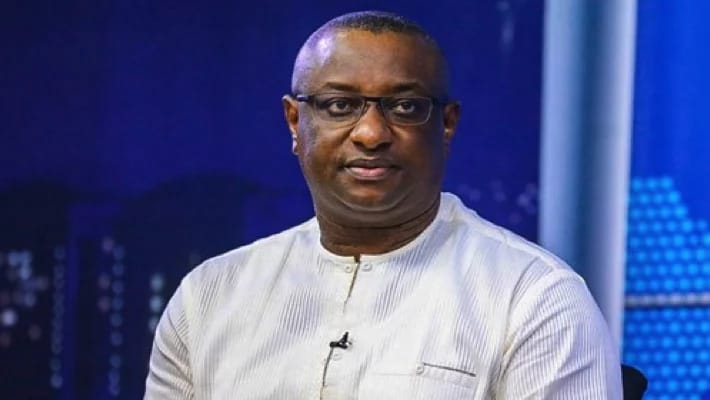
Minister of Aviation and Aerospace Development Festus Keyamo also condemned the obstruction.
Keyamo said political disagreements should not result in violence or prevent politicians from moving around the country.
“This should not be part of our democracy.”
He urged Nigerians to express their political preferences at the ballot box rather than through confrontation.
Benue PDP governorship candidate Michael Aondoakaa also condemned the incident, describing it as a “disgraceful assault on democracy” and calling for an investigation.
The Questions Still Unanswered
The competing accounts leave several questions for investigators.
1. Who organised the youths who blocked Obi’s convoy?
2. Were they acting independently or were they mobilised by political actors?
3. Was any government official involved?
4. Why did the group choose to prevent Obi from reaching Yelwata?
5. And why did the confrontation occur despite the presence of police escorts?
For now, the available evidence confirms the blockade, the police response and the arrest of 46 suspects.
It does not establish that Gov Alia ordered or sponsored the incident.
The state government has denied involvement and maintained that Obi should have followed the appropriate protocols.
The police investigation will therefore be critical in determining what happened behind the roadblock.
The 2027 Political Battle
The Benue confrontation comes at a politically sensitive time.
In 2023, Obi nearly defeated Tinubu in the state, losing by only 2,096 votes.
The governor who succeeded Ortom is now an APC governor.
Ortom, who supported Obi in 2023, is now supporting Tinubu.
Obi is back in the presidential race.
And the latest confrontation has placed Benue’s political atmosphere under renewed scrutiny.
The roadblock, therefore, may prove to be more than an isolated incident.
It has exposed the political tensions surrounding Obi’s activities in a state where he came within a few thousand votes of victory three years ago—and where the political alliances that shaped that contest have since changed dramatically.
Whether the incident becomes an isolated confrontation or an early indication of a more intense political battle remains to be seen.
For now, the most important issue is establishing the truth behind the blockade.
Who mobilised the youths, why were they determined to stop Obi, and will the police investigation provide answers before the 2027 campaign enters its decisive phase?