
Business
U.S. Stocks inch higher


NEW YORK – Today, U.S. Stocks inched higher as investors digested a few soft readings on U.S. economic growth.
The Dow Jones Industrial Average rose 13 points, or 0.1%, to 16546. The S&P 500 added three points, or 0.2%, to 1891. The Nasdaq Composite Index edged up 12 points, or 0.3%, to 4143.
Trading volumes have been light in recent days, with Wall Street desks citing caution on the part of investors about making big bets in either direction. Investors continued to hold tight Thursday after a trio of slightly weaker-than-expected readings on the economy.
“Once again, we entered the year thinking there’d be a growth acceleration, and…people are realizing the economy is not ready to break out,” said Dan Greenhaus, chief market strategist at New York brokerage firm BTIG.Existing-home sales for April rose 1.3% on the month to a seasonally adjusted annualized rate of 4.65 million, below expectations for a 2% rise to 4.68 million. The Conference Board’s leading economic index rose 0.4%, missing forecasts for a 0.5% rise. Initial claims for jobless benefits in the latest week rose 28,000 to 326,000, versus expectations of a rise to 310,000, after falling to a seven-year low the week before.
Slight moves in early Thursday trading contrasted with big swings in the last two sessions. On Wednesday, the Dow rallied 159 points, or 1%, to post the biggest one-day point and percentage gain since April 16. That followed a 0.8% selloff on Tuesday to the lowest close since April 25.
The Russell 2000 index of small-capitalization stocks, which has underperformed the broader market by a wide margin in the last couple of months, added 0.5% on Thursday.
Some investors voiced concern about committing new money to stocks with major benchmarks trading just below all-time highs. Others are wary after being burned by sharp declines in Internet shares, biotechnology stocks, and shares of small companies, which have sold off sharply in recent months. Mostly, investors are standing pat, traders said.“A lot of people did take risk off the table, but the S&P 500 has held up because people don’t have any other place to go except U.S. equities,” said Yousef Abbasi, a market strategist at brokerage JonesTrading Institutional Services.
The yield on the 10-year Treasury note edged higher to 2.544% from 2.536% late Wednesday. Crude-oil futures added less than 0.1% to $104.09 a barrel, after settling Wednesday at a one-month high. Gold futures gained 0.9% to $1,299.30 a troy ounce. The dollar gained against the euro and the yen.
European markets gained after data showed business activity in the euro zone continued to grow, but at a slower pace. The Stoxx Europe 600 ticked up 0.1%. Markit’s composite purchasing managers index for the euro zone slipped to 53.9 in May from 54.0 in April, matching expectations. Readings above 50 signal expansion. Germany’s composite PMI was unchanged at 56.1, while France’s composite PMI declined to 49.3 from 50.6.In Asia, Japan’s Nikkei Stock Average shot up 2.1%, boosted by data showing May manufacturing activity contracted at a slower pace than in April and a weaker yen. China’s Shanghai Composite slipped 0.2%, although HSBC’s preliminary manufacturing PMI for May rose to a five-month high of 49.7, but still signaled contraction.
In corporate news, Best Buy rallied 4.4% after the consumer electronics retailer topped fiscal-first-quarter earnings estimates, but fell short on revenue and said it expected declines in same-store sales for the current and third quarters.
Williams-Sonoma rallied 7.3% after the housewares and furniture company reported late Wednesday fiscal-first-quarter earnings and revenue that exceeded expectations and raised its full-year outlook, citing strong sales growth in its West Elm and Pottery Barn businesses.
Hess rose 1.7% after the exploration-and-production company announced an agreement to sell its retail business to Marathon Petroleum’s Speedway unit for $2.6 billion in cash. Hess also said it increased its share buyback program by $2.5 billion to $6.5 billion. Marathon shares gained 0.9%.
– WALLSTREET JOURNAL

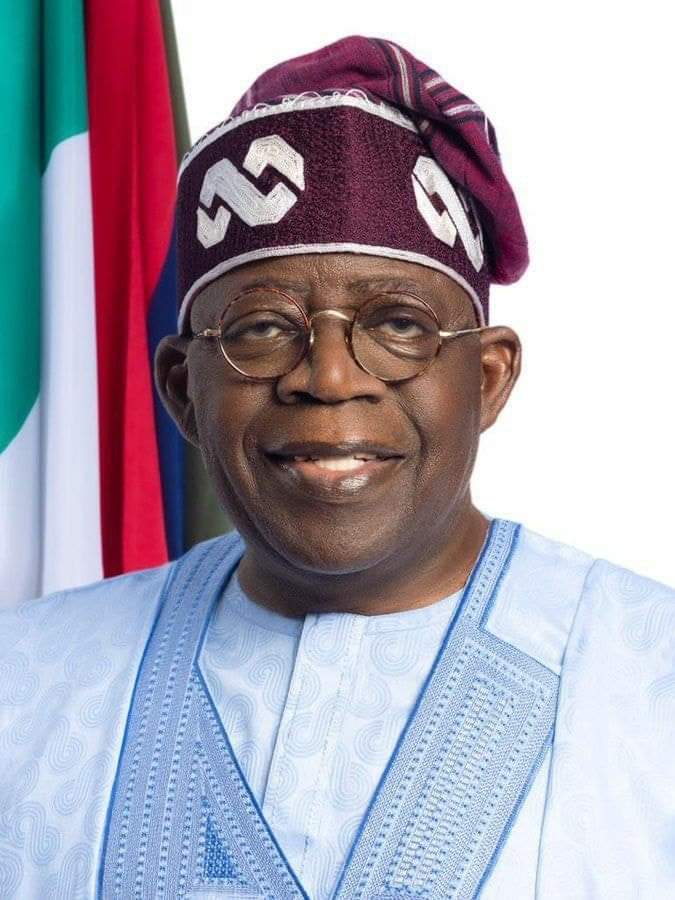
The Petroleum Products Retail Outlets Owners Association of Nigeria (PETROAN) has urged the Federal Government to add its member-stations to the petrol discount programme.
It cautioned that the current arrangement could limit the reach and deny vast consumers in underserved communities the benefits of the 30-day discount window.
The PETROAN also urged the FG to allocate at least 30 percent of the discounted petrol volume to outlets operated by its members.
READ ALSO: Tanzania Nears Completion of $42bn Equinor, Shell-Led LNG Project
The calls followed last week’s announcement by the Minister of Finance and Coordinating Minister of the Economy, Taiwo Oyedele, of a petrol discount at Nigerian National Petroleum Company Limited (NNPC Ltd) retail outlets, with priority given to public transport operators nationwide.
According to the National Publicity Secretary, Independent Petroleum Marketers Association of Nigeria (IPMAN), Chinedu Ukadike, the exclusion of independent marketers could undermine the programme’s effectiveness, particularly in communities where NNPC retail outlets have limited presence.
He argued that independent marketers, with their extensive nationwide distribution networks, were better positioned to extend the benefits of the intervention to consumers in remote and underserved areas.
“Independent oil marketers have over 90 percent coverage and presence in the nooks and crannies of this country. You are giving NNPC that is situated only in the town. So how do the poor masses, whom you intend to ensure that this petroleum product will alleviate their sufferings, how would they now get it?” Ukadike asked.
He said the association was not opposed to the government’s policy but insisted that independent marketers should be included to ensure wider access to the discounted product.
“But it’s government policies; we are not against government policies, but let it be all-inclusive; let independent marketers be part of it,” he said.
Ukadike also urged the government to extend the discount period to 60 days, citing logistical challenges that could delay the movement of petrol from coastal depots to other parts of the country.
“And the 30 days should be extended to 60 days. Because of the circulation of petroleum products, most times it takes two weeks for a truck to leave Apapa and get to Gombe, Maiduguri, because of the bad road and all the rest of them and loading process,” he added.
Similarly, PETROAN National President, Billy Gillis-Harry, urged the Federal Government to allocate 30 per cent of the discounted petrol volume to the association’s retail outlets to facilitate broader national distribution.
In the bid to transform Tanzania into the East African regional energy hub, the country is on the verge of concluding an agreement with a consortium of energy companies, including a $42 billion LNG project.
It was gathered that the project is designed to tap the 47.13 tcf of gas discovered in Tanzania’s deep offshore fields, part of the country’s estimated 57.54 tcf in total discovered reserves, the sixth-largest in Africa, behind Nigeria, Algeria, Senegal, Mozambique and Egypt.
READ ALSO: Shell Identifies Keys to Nigeria’s Energy Future
Equinor and Shell would be the lead operators, alongside involvement from ExxonMobil Pavilion Energy and Medco Energi, while state oil major, the Tanzania Petroleum Development Corporation (TPDC), would also hold an equity stake in the project.
“It’s almost there,” Khamis Mussa Omar, Tanzania’s finance minister, told Reuters.
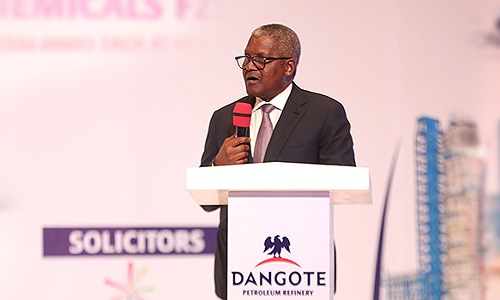
President of Dangote Group, Aliko Dangote, has reaffirmed his commitment to ensuring broad-based participation in the Dangote Refinery’s Initial Public Offering (IPO).
In a statement, the industrialist announced that investors applying with ₦50,000 and below will receive priority consideration as the company seeks to democratize ownership of one of Africa’s most significant industrial assets.
Dangote made the declaration during the final leg of the nationwide IPO roadshow held in Port Harcourt, Rivers State, where investors, financial market experts, business leaders and other stakeholders gathered to discuss the investment opportunity and its implications for Nigeria’s economic transformation.
READ ALSO: Sahara Champions Global Shipping Collaboration for $20m Mercy Ships Healthcare Impact
Speaking at the event, Dangote emphasised that the IPO should be viewed not merely as an investment opportunity, but as a chance for Nigerians to become shareholders in a landmark enterprise that is reshaping the country’s industrial landscape.
“We will prioritise people with ₦50,000 and below,” Dangote stated, underscoring the Group’s determination to make the offering accessible to small and medium-scale investors across the country.
He noted that while international and African investors had already committed substantial capital to the refinery, the IPO now offers Nigerians a rare opportunity to participate directly in the ownership of a world-class industrial project built on Nigerian soil.
According to him, investing in the refinery goes beyond financial returns, representing a vote of confidence in Nigeria’s future, institutional development, corporate governance standards and industrial capacity.
“African investors have invested in this refinery. Now it is time for Nigerians to invest in themselves and participate in a project that is creating value, jobs and opportunities for generations to come,” he said.
Dangote also encouraged prospective shareholders to adopt a long-term investment perspective, noting that participation in the IPO presents a pathway to wealth creation, portfolio diversification and increased public engagement with the capital market.
He added that wider participation in the stock market would deepen financial literacy, promote a savings and investment culture, and enable more Nigerians to better understand how businesses create value and contribute to economic growth.
The roadshow also featured insightful presentations from leading economists and market analysts on the refinery’s economic significance and the broader opportunities associated with the public offering.
Renowned economist Bismarck Rewane highlighted the enormous economic potential of the South-South region and stressed the need to convert the area’s resource endowment into sustainable prosperity, infrastructure development and improved living standards. He also noted that the IPO presents an opportunity to deepen Nigeria’s capital market by encouraging citizens to participate actively in wealth creation.
Similarly, economist Dr. Muda Yusuf outlined the refinery’s far-reaching impact on economic diversification, domestic value addition, energy security, capital formation and employment generation.
According to Yusuf, the refinery represents far more than a petroleum-processing facility, serving as a catalyst for growth across multiple sectors including petrochemicals, packaging, manufacturing, logistics and other downstream industries.
He further emphasized that policy consistency, regulatory stability and sustained stakeholder engagement remain critical to maintaining investor confidence and attracting long-term capital into Nigeria’s industrial sector.
Speaking on the investment outlook, stakeholders urged prospective investors to consider the company’s operational performance, valuation metrics and long-term fundamentals when evaluating the offer.
Yusuf also described the refinery as a major example of domestic value addition, noting that its extensive local content and industrial linkages would significantly amplify its contribution to the Nigerian economy.
Discussions at the event further highlighted the importance of sound monetary policy, affordable financing and a predictable business environment in supporting investment-led growth and industrial expansion.
The Port Harcourt engagement was particularly significant for the South-South region, with legal luminary and business leader Paul Usoro expressing satisfaction at the level of participation from investors across the region.
“My joy is to see the South-South well represented,” Usoro said, stressing the importance of ensuring that investors from the region take advantage of the opportunity presented by the IPO.
The Port Harcourt event marked the final stop of the nationwide IPO roadshow, concluding a series of engagements designed to deepen public awareness and expand participation in what is widely regarded as one of the most significant capital market offerings in Nigeria’s history.
For Dangote Group, the objective remains clear: to provide Nigerians from all backgrounds with an opportunity to participate in the ownership of a transformative industrial enterprise while contributing to economic growth, employment generation and national development.






2027 Election: ‘Your Future Is More Valuable’ — IGP Warn Youths Against Political Violence

Tinubu Charges PCC Members to Deliver Wards

Marketers Eye Portion of FG’s Petrol Discount

Tanzania Nears Completion of $42bn Equinor, Shell-Led LNG Project

IEA Puts UAE’s Oil Output at 5.3mbpd for September

Africa’s Energy Security Conversations Pull Industry Executives Together

Trump’s Family Unveils New Cryptocurrency Platform

Senate Denies Receiving Petitions Against Tinubu’s Ambassadorial Nominees

Dangote Cement Lights Up Benue Host Communities With CSR Initiatives

Reps Recommend 3-year Jail Term For Aviation minister

Tems Sets New Record On Billboard Hot 100 Chart
