
NEWS
Understanding African Rebellion: Fani Kayode Explores Root Causes

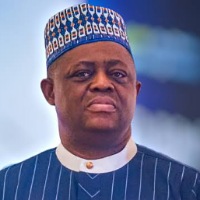
In a compelling post, Fani Kayode, a renowned Nigerian political commentator and writer, delved into the concerning surge of military coups unfolding across the African continent.
He disclosed this in a series of tweet titled “WHEN REBELLION IS A VIRTUE (PART 1)” via his X account on Sunday morning.
Fani Kayode expressed deep concern over the alarming trend of seven successful military coups in as many African nations within the past three years.
He highlighted the critical questions surrounding the legitimacy of these coups and the mandates of the leaders they unseated.
The post reads in part “Unfolding events in Africa continue to intrigue the world & the fact that no less than seven military coups have been successfully effected in no less than seven African countries in the last 3 years gives cause for concern.
“What is the cause of these violent acts of mutiny & rebellion and can there be any justification for such behaviour?
“How legitimate were the mandates of those that have been toppled & are the soldiers that have carried out these ostensibly illegal acts of insurrection, revolution & treason & taken power by the barrel of a gun criminals & rebels that should be shot at the stake or God-sent & divinely-inspired heroes, liberators & deliverers of their respective countries & people?
“Can their actions be justified in some cases or are they appropriate for all & can such a course of action ever be deemed appropriate for our country Nigeria? When is rebellion a virtue & when is it a curse? When is mutiny, revolution & a call to arms appropriate & when is it not?
“What does one do with civilian dictators & sit-tight Presidents who have sold and mortgaged the future & destiny of their nation to the Western imperialists & neo-colonial powers & who torment their people & refuse to leave office.
“These are just some of the questions that yours truly seeks to answer in this contribution. Enjoy the ride! On the 13th March 1962, in his address on the first anniversary of the Alliance For Progress, President John F. Kennedy of the United States of America, said the following:
“Those who make peaceful revolution impossible will make violent revolution inevitable”.
“In the history of humanity few have enunciated such a profound yet obvious home truth as President Kennedy has done with these famous words.
“Sadly even fewer have learnt anything from them. Those that doubt this have much to learn. Consider the following.
“Pres. Paul Kagame of Rwanda & Pres. Paul Biya of Cameroon have ruled their African countries for 23 & 42 years respectively.
“Approximately 1 week ago they were both constrained to sack, retire, redeploy & replace much of their Military High Command, senior Army commanders & thousands of commissioned & non-commissioned officers in the light of the wave of military coups that have swept West & Central Africa & just one day after the one that took place in Gabon.
“This was clearly a panic measure on both their parts. They did it out of rabid fear & in a desperate attempt to thwart, pre-empt & prevent a military coup & stave off an anticipated mutiny in their respective Armed Forces.
“Unfortunately for them such peripheral & ineffectual remedies & desperate attempts to ward off all opposition & dissent in an attempt to hold on to power forever will not work because their so-called “mandates” lack legitimacy & they do not have the backing of the people.
“Worse still they are both oblivious of & totally blind to the rationale & ethos of mutiny & armed rebellion & are clearly ignorant of the essence & motivation for military coups.
“Simply put, no matter who your senior military commanders are, whether the old or the new & no matter how many times you sack, retire, redeploy or change them, when you are an illegitimate, depraved & evil leader who crushes, murders, persecutes & incarcerates members of the opposition & who rigs elections, refuses to leave power, torments the people & imposes a corrupt, bloodthirsty & blood-lusting dictatorship & dynasty of barbarism & tyranny on his nation, coups, mutiny, rebellion, revolution & insurrection become inevitable: it is only a question of time.”
“Is it any wonder that sit tight rulers and life-long dictators like Kagame, Biya and others are scared of their own shadow, are shivering under their beds and enjoy no peace?
“If you do not stand up, resist, fight back and “breed unnatural troubles” when confronted with wickedness, injustice and tyranny, you cannot expect to ever enjoy your God-given right of freedom and neither will you ever witness emancipation from subjugation and oppression.
How else would you remove and replace power-obsessed dictators like Ali ‘Make Some Noise’ Bongo of Gabon, Field Marshall Idi Amin Dada of Uganda, Papa Doc and his son Baby Doc Duvalier of Haiti and the mentally-ill Jean Bedie Bokassa of the Central African Republic (who declared himself the Black Napoleon and Emperor for life and who kept the freshly decapitated heads of his enemies in his fridge)?
“To move against such monsters and topple them by ANY means possible is surely a divine duty and obligation and one which every single one of the Holy Books not only encourages but also insists on. Can we be expected to do anything less?
“Is it not the injustice and tyranny that the French, the Russian, the American, the English, the Chinese and many others were subjected to hundreds of years ago that pushed them to the wall and inspired and provoked them to take up arms and unleash some of the most violent and bloodthirsty rebellions and revolutions in the history of humanity?
“Was this not the right and proper thing for them to do and had it not been for their resistance to such barbarous oppression and subjugation from their erstwhile oppressors and slave masters would they be the free, civilised, great and powerful nations that they are today?
“Had it not been for Flt. Lieutenant Jerry Rawlings’ revolution and coup d’etat in 1979 and 1983 respectively would Ghana be the great and stable nation and flourishing democracy that she is today?




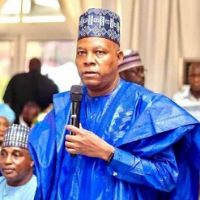



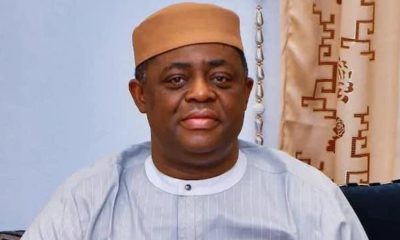


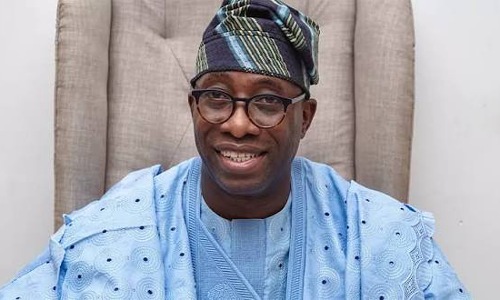
Otunba Segun Showunmi, a member of the Tinubu/Shettima Presidential Campaign Council (PCC) for 2027, has urged the South-East to assess President Bola Tinubu’s administration based on verifiable projects and measurable results rather than political propaganda.
Showunmi made the call in a statement posted on X on Saturday, urging Nigerians to evaluate the government’s performance based on infrastructure delivery, funds committed to projects and their impact on communities.
He said federal infrastructure initiatives targeting the South-East under Tinubu’s administration deserved serious scrutiny and factual assessment, adding that unfulfilled promises should continue to be pursued until the expected results were delivered.
SEE ALSO: 2027 Election: ‘Look Beyond the Noise’ – Showunmi Urges Nigerians to Give Tinubu More Time
“Our message is clear: We will not trade facts for propaganda, nor accountability for political loyalty!” he said.
The political figure challenged critics of the administration to provide evidence to support their claims, while urging those defending the government to present the projects and demonstrate their impact.
He also called on government officials to publish relevant figures, disclose project timelines and provide measurable results, insisting that no public official should be exempt from scrutiny.
According to Showunmi, the South-East deserves infrastructure that supports economic growth, including roads that connect markets, investments that create jobs and policies that expand economic opportunities.
He maintained that political representation must translate into tangible benefits for citizens, stressing that public office should deliver value to the people.
As part of his call to action, Showunmi urged Nigerians to scrutinise government records, challenge misinformation with evidence and demand the completion of outstanding projects.
He further called for public commitments to be matched by measurable delivery, arguing that leadership should be assessed by facts and results rather than political rhetoric.
Ending his statement with the slogan, “Asiwaju is a goal,” Showunmi called for accountability and greater inclusion of the South-East in Nigeria’s development.
Showunmi is associated with The Alternative and is a member of the Tinubu/Shettima Presidential Campaign Council for the 2027 elections.

The Lagos State Traffic Management Authority (LASTMA) on Saturday announced a temporary road closure near Apostolic Church, inward Toll Gate, to allow engineers to install a beam on a height-restriction structure.
The agency said the installation was aimed at preventing high-rise trailers from accessing the newly constructed pedestrian bridge.
ALSO READ: LASTMA Alerts Motorists to Traffic Delays on Ogunnusi Road
“Currently, one lane has been occupied to facilitate the ongoing construction work, while the remaining two lanes are available to motorists,” LASTMA stated.
The agency advised road users to approach the affected corridor with caution and follow the directions of its personnel deployed to the area.
“Road users are advised to approach the affected corridor with caution and follow the directions of our personnel who are on ground to ensure the smooth flow of vehicular movement,” the statement added.
LASTMA also urged motorists to remain patient while the installation work continued.
“Motorists are encouraged to exercise patience while the installation work is in progress,” the agency stated.
Nigerian national Ekene Chukwuma has said he returned to Nigeria with assistance linked to Oseni Rufai rather than the Nigerians in Diaspora Commission (NiDCOM), while renewing allegations against the commission’s chairperson, Abike Dabiri-Erewa, over his travel documents.
Chukwuma made the remarks in an interview in which he explained how he returned to Nigeria after spending months at a deportation camp in India.
RELATED NEWS: Rufai Oseni Row: NiDCOM Breaks Silence on Nigerians Detained in India, Addresses Ekene’s Case
“My name is Kenneth Chukwu, from Enugu State,” he said, introducing himself before explaining how he returned to the country.
“I came back here with the assist of Osini Roufai, a good friend of him,” he said.
Chukwuma denied that NiDCOM facilitated his return, alleging that the commission had published false information about his case.
“NiDCOM made a lots of false, uh, news acquisition against me, which is still in Abike Dabiri handle in Twitter,” he said.
He also accused Dabiri-Erewa of sharing his expired international passport and a travel certificate he claimed was issued six months after he entered the detention camp.
“He also, she also posted my international passport that expired. He also, she also posted my TC that issued after 6 months,” he said.
His comments renew questions surrounding the handling of his case and the circumstances under which he obtained the documents needed to return to Nigeria.
Chukwuma’s detention in India previously sparked a public disagreement between ARISE News presenter Oseni Rufai and Dabiri-Erewa over NiDCOM’s response to reports of his situation.
Oseni raised concerns about Chukwuma’s detention and the commission’s handling of the case, while Dabiri-Erewa defended NiDCOM’s position and explained the process for submitting information to the commission.
NiDCOM subsequently issued its account of Chukwuma’s detention, stating that he had been arrested in India over a visa overstay and addressing the circumstances surrounding his travel documents.
The differing accounts prompted public debate about the commission’s response to Nigerians facing immigration difficulties abroad.






Showunmi Urges South-East to Judge Tinubu by Projects, Not Propaganda

2027: ‘North Has No Reason to Break Agreement’ — Gov Yusuf Backs Tinubu

Aircraft Averts Crash, After Losing Door Mid-Air in Abuja

Bandits Kill 70-Year-Old Man in Katsina, 27 Victims Rescued

‘Nigeria Is Doomed Under Tinubu’ — Kenneth Okonkwo Backs Atiku for 2027

Lagos: LASTMA Announces Traffic Restrictions Along Route to Toll Gate

Trump’s Family Unveils New Cryptocurrency Platform

Senate Denies Receiving Petitions Against Tinubu’s Ambassadorial Nominees

Dangote Cement Lights Up Benue Host Communities With CSR Initiatives

Reps Recommend 3-year Jail Term For Aviation minister

Tems Sets New Record On Billboard Hot 100 Chart
