Connect with us

NEWS

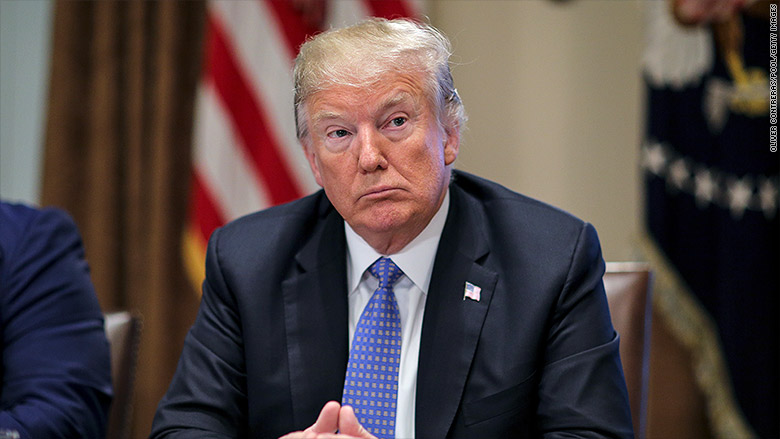
US Court Indicts Donald Trump Organization Over Tax crimes

Published

on

Houston Tx– A Manhattan grand jury on Wednesday indicted the Trump Organization and its chief financial officer, Allen Weisselberg, according to people familiar with the matter.

The charges, which people familiar with the matter told CNN earlier Wednesday are related to alleged tax crimes in connection with an array of perks and benefits awarded to employees, are expected to be unsealed Thursday. It was not immediately clear how many charges are in the indictments.
Though former President Donald Trump faced multiple federal and state prosecutorial inquiries during his administration, the district attorney’s indictment would be the first to charge his namesake company with criminal conduct.
Trump himself isn’t expected to be charged, his lawyer has said.
The Wall Street Journal first reported the expected charges.
Weisselberg is expected to turn himself into prosecutors Thursday morning, two sources with knowledge told CNN.
Mary Mulligan, a lawyer for Weisselberg, declined to comment. A spokesman for Manhattan District Attorney Cyrus Vance declined to comment. A lawyer for the Trump Organization didn’t respond to a request for comment.
The expected charges are set to come after lawyers for the Trump Organization met twice with prosecutors in recent days to present arguments about why the company shouldn’t face criminal charges.
And they will come after more than two years of investigation that began with an inquiry into accounting connected to hush-money payments made by former Trump lawyer Michael Cohen and expanded to include questions about whether the company or certain employees paid taxes on benefits including rent-free apartments, car leases or private school tuition.
Prosecutors have also scrutinized cash bonuses paid to employees and whether appropriate taxes were paid on them, CNN reported Wednesday.
Though prosecutors have focused on Weisselberg in an effort to coax him into cooperating with their investigation, his lawyers recently informed the district attorney’s office that he would not cooperate, people familiar with the matter said.
An indictment against him would likely significantly increase the pressure on him to comply with prosecutors’ demands.
However, a source familiar with the matter says the pressure on Weisselberg has not been successful for a reason.
“Consider the possibility that Allen has nothing to flip on,” the source said.
Investigators’ scrutiny of Weisselberg began late last year, as prosecutors gathered evidence on him with the assistance of his former daughter-in-law, Jennifer Weisselberg. Since then, she has turned over boxes of financial records and has met with investigators multiple times, her lawyer Duncan Levin told CNN.
On Wednesday, Levin said she was pleased to learn of forthcoming charges against her former father-in-law and his longtime employer.
“We have been working with prosecutors for many months now as part of this tax and financial investigation and have provided a large volume of evidence that allowed them to bring these charges,” Levin said. “We are gratified to hear that the DA’s office is moving forward with a criminal case.”
In recent weeks, as prosecutors have inched closer to bringing charges, Trump has lashed out at their inquiries, deriding the probe — led by Vance and New York state Attorney General Letitia James, both Democrats — as conducted by “radical left” officials.
“Having politically motivated prosecutors, people who actually got elected because they will ‘get Donald Trump,’ is a very dangerous thing for our Country,” he said in a statement earlier this week. “Why would anyone bring their company to New York, or even stay in New York, knowing these Radical Left Democrats would willingly target their company if viewed as a political opponent? It is devastating for New York!”
-CNN

NEWS

Fire Ravages Gombe Technology Centre, N4m Property Lost

Published

on

A fire outbreak has ravaged part of the Technology Incubation Centre near the Police Headquarters in Gombe, destroying property estimated at N4 million.

The incident occurred on Friday and affected five shops at the centre, according to the Federal Fire Service, Gombe State Command.

The command said its prompt intervention prevented the fire from spreading further, enabling firefighters to save property estimated at N15 million.

SEE MORE:Tragedy Strikes Algeria: Orphanage Fire Kills 11, Injures 19

The Federal Fire Service said it received a distress call about the incident at approximately 10:14 a.m., after which a multipurpose water tender was immediately deployed to the scene.

The firefighting operation was led by ASF II Mukhtar Shehu, with IF Bernard serving as the driver.

The crew successfully contained the blaze and extinguished it using one medium jet of water.

According to the command, four of the five affected shops were successfully saved, limiting the extent of the damage.

The command’s Public Relations Officer, ASF MB Muazu, said firefighters carried out a thorough inspection after extinguishing the flames and confirmed that there was no immediate threat of re-ignition.

Muazu said, “The Federal Fire Service, Gombe State Command, has successfully contained a fire outbreak involving five shops at the Technology Incubation Centre, near the Police Headquarters, Gombe.”

He added, “Four of the five affected shops were successfully saved, with property estimated at N15m salvaged, while the estimated loss stood at approximately N4m.”

The fire appliance and crew returned to the station at about 11:09 a.m. after confirming that the fire had been completely extinguished.

The Federal Fire Service reaffirmed its commitment to responding promptly to emergencies and protecting lives and property.

Muazu urged members of the public to report fire incidents promptly and adhere to basic fire safety precautions to prevent avoidable losses.

Continue Reading

NEWS

OPEC Hails Tinubu’s Reforms, Oil Output on Nigeria’s Economy

Published

on

2021 Global Oil Demand Growth Stands at 5.7 mb/d - OPEC

The Organisation of the Petroleum Exporting Countries (OPEC) has expressed the view that Nigeria’s positive economic outlook is predicated on the strategic reforms of the President Bola Ahmed Tinubu administration and improved crude oil output.

The views were expressed in its latest assessment of the Nigerian economy, in which it noted that the country’s economy expanded by 3.9 percent year-on-year in Q1, 2026.

It added that the growth rate was only slightly below the 4.0 percent recorded in the fourth quarter of 2025, a confirmation that economic growth remained close to recent highs.

ALSO READ: NMDPRA Licenses LCFE for Petroleum Liquids Trading

According to the oil producers’ organisation, the non-oil economy continued to provide the main support for growth, with activity driven by agriculture, manufacturing, construction, trade, finance and insurance.

It pointed out that higher oil output had also improved fiscal revenues, foreign exchange inflows and external buffers. “The economy expanded by 3.9 percent, year-on-year, in 1Q26, only slightly below the 4Q25 pace of 4.0 percent, confirming that growth remains close to recent highs,” OPEC stated.

The organisation said survey indicators pointed to continued, though moderating, momentum in private-sector activity. It noted that the Stanbic IBTC Bank Nigeria Purchasing Managers’ Index (PMI) eased to 52.5 in July, from 53.4 in June and 54.1 in May.

The July reading, it said, was the weakest since March but still signalled a sixth consecutive monthly improvement in private-sector conditions. The OPEC said firms again reported a marked increase in new orders, supported by improved customer demand, better pricing and new product launches.

It added that output and employment also rose modestly during the month. The organisation predicted that higher domestic refining capacity, particularly improved fuel supply from the Dangote Petroleum Refinery and Petrochemicals (DPRP), should further support energy availability and reduce some of the pressures associated with petroleum imports.

“Higher domestic refining capacity, including improved fuel supply from the Dangote refinery, should continue to support energy availability and reduce some import-related pressures,” OPEC stated.

The DPRP, with a nameplate capacity of 650,000 barrels per day, has become a major source of locally refined petroleum products as its operations have expanded.

The refinery’s increased supply of petrol and other refined products has also reduced some of the country’s reliance on imported petroleum products, in line with the impact highlighted by the OPEC.

On inflation, the OPEC said pressures had begun to soften, with headline inflation standing at 15.9 percent year-on-year in both June and May. “The July PMI pointed to softening input costs, despite higher fuel and raw material costs,” the organisation stated.

The report said the moderation in input costs was an indication that some cost pressures facing businesses had begun to ease, although higher fuel and raw material costs remained a challenge.

The OPEC said Nigeria’s near-term outlook remained positive, with oil production, reform progress, infrastructure investment and stronger business activity providing support.

“Overall, Nigeria’s near-term outlook remains positive, supported by oil production, progress on reforms, infrastructure investment, and stronger business activity,” it stated.

Continue Reading

NEWS

State Police Bill: FG Extends Deadline for Nigerians to Submit Memoranda

Published

on

The Presidential Working Group on the National Policing Bill has extended the deadline for the submission of memoranda and position papers on the proposed legislation to Friday, August 21, 2026.

The extension, announced on Thursday, is aimed at giving Nigerians, institutions and other stakeholders more time to prepare and submit substantive contributions to the proposed reform of the country’s policing architecture.

SEE ALSO: Tinubu Pushes State Police, Sends Constitutional Amendment Bill to Reps

Chairman of the Working Group and Chief of Staff to President Bola Tinubu, Femi Gbajabiamila, said the additional time was necessary to ensure broad consultation and enable stakeholders to make well-considered and technically sound contributions.

“The Presidential Working Group is committed to ensuring that the process of developing the National Policing Bill benefits from broad consultation and the informed perspectives of Nigerians and relevant stakeholders.

“The proposed legislation is intended to provide the operational, administrative, institutional and funding framework necessary for an effective policing architecture that responds to Nigeria’s evolving security needs while providing appropriate safeguards for accountability, professionalism and the protection of citizens’ rights,” Gbajabiamila said.

The Working Group had initially set August 13 as the deadline for public submissions but has now shifted it to 5:00 p.m. WAT on August 21.

Gbajabiamila urged legal practitioners, civil society organisations, security sector professionals, state governments, professional bodies, academics, experts and other interested members of the public to take advantage of the extension.

“All submissions must be made on or before 5:00 p.m. WAT on Friday, August 21, 2026, exclusively through the official National Policing Bill portal, nationalpolicingbill.com,” he stated.

According to the Working Group, the proposed legislation will address critical areas including sustainable funding, command and control structures, recruitment and training standards, operational jurisdiction, inter-agency coordination, accountability mechanisms and safeguards against political interference or abuse.

Gbajabiamila said these issues make extensive stakeholder engagement essential to producing a policing framework that is effective, accountable, sustainable and responsive to the security needs of communities across the federation.

“The Working Group recognises that developing an effective policing framework requires careful consideration of critical issues, including sustainable funding, command and control structures, recruitment and training standards, operational jurisdiction, inter-agency coordination, accountability mechanisms and safeguards against political interference or abuse.

“These considerations underscore the importance of robust stakeholder engagement in developing a framework that is effective, accountable, sustainable and responsive to the peculiar security needs of communities across the Federation,” he said.

The Working Group, inaugurated by President Tinubu to develop the legal framework for the implementation of state police, is expected to present a final, implementation-ready draft of the National Policing Bill for onward legislative processing.

The proposed bill is being developed alongside the constitutional amendment process required to establish state police, with the legislation expected to provide the detailed operational framework for federal and state policing.


Continue Reading

Copyright © 2022. Biztellers, powered by Alphaxristi.