
NEWS
WAEC Raises Alarm Over Massive Failure In 2025 Exams

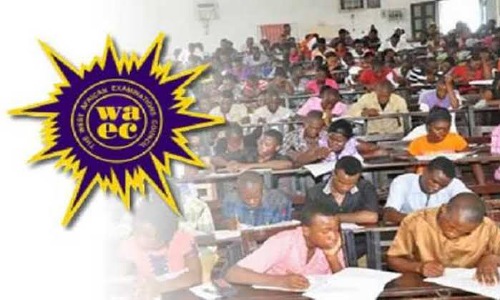
The West African Examinations Council (WAEC) has expressed deep concern over the sharp decline in the performance of candidates who sat for the 2025 West African Senior School Certificate Examination (WASSCE), describing it as the worst recorded in the last five years.
According to the results released on Monday, only 38.32% of the 1,969,313 candidates who took part in the exam obtained credits and above in at least five subjects, including English Language and Mathematics a drastic fall from the 72.12% recorded in 2024.
Speaking at a media briefing in Lagos, the Head of Nigeria’s Office of WAEC, Amos Dangut, revealed that several new examination reforms introduced to combat malpractice may have contributed to the poor performance.
READ MORE: JUST IN: WAEC Announces Release Of 2025 WASSCE Results
“Under this approach, each candidate was assigned a specific paper type, making collusion and other forms of examination malpractice extremely difficult to perpetrate,” Dangut said, referring to the serialisation method used in objective questions.
“Despite sternly advising candidates to work independently, we still recorded cases of candidates assigned different question papers who copied one another and had the same answers in virtually all questions. The effect of this activity was evident in the overall performance of candidates in the said papers,” he added.
WAEC introduced the Computer-Based Test (CBT) format in some schools for the first time, while others retained the traditional paper-based format. Dangut explained that the objective papers recorded a noticeable decline, though essay papers performed at levels similar to previous years.
In addition to the dismal performance, the exam body withheld the results of 192,089 candidates, representing 9.75% of the total, due to reported cases of malpractice a slight drop from 11.92% recorded last year.
A total of 1,973,365 candidates registered for the examination across 23,554 secondary schools, with 1,969,313 eventually sitting for the exams in Nigeria, as well as in affiliated schools in Benin Republic, Côte d’Ivoire, and Equatorial Guinea.
Dangut also noted that 12,178 special-needs candidates were accommodated during the examination, including those who were visually and hearing-impaired, mentally challenged, and physically disabled.
On the processing of results, he stated that 77.06% of the candidates have had their full results released, while 22.94% have pending results due to technical or data issues, which WAEC is working to resolve.
Experts React to Poor Performance
Reacting to the development, former Dean of the Faculty of Education at the University of Lagos, Prof. Monday Ubamgha, attributed the decline to poor teacher quality and student distractions.
“No educational system can rise above the quality of its teachers. Teachers are not motivated and most of them see teaching as a part-time hustle. They engage in other things. The academic preparation before entering class is lacking,” Ubamgha said.
He blamed excessive social media use for students’ declining reading habits: “Instead of students taking advantage of new innovations to enhance learning, they spend most of their time on Facebook and Instagram.”
Educationist Dr. Nelson Ayodele also criticized the sudden implementation of CBT, especially in rural schools.
“The renewed effort of the examination bodies to curb malpractice and a change in examination procedures caught many schools unawares. They found it difficult to circumvent the new procedures as they were used to doing in the past,” Ayodele said.
He added that a lack of digital literacy and poor classroom management contributed to the outcome. “Students are now inundated with media and technological distractions to the extent that focus on their studies now plays a second fiddle.”
Calls for Urgent Reform
Counselor Nike Ogunjobi added that a poor reading culture, low teacher morale, and absence of parental supervision are worsening the academic situation.
“Most of the teachers go into this profession because they did not get any other job. They took up the job just for survival, not because they want to add value,” she said.
She called for renewed focus by both students and educators: “The students have to get their priorities right by focusing on their studies. Teachers should know they are not just teaching they are nurturing future leaders.”
Education stakeholders are now calling for the Federal Ministry of Education, state governments, and school proprietors to address the root causes of poor academic outcomes ahead of the next WASSCE cycle.








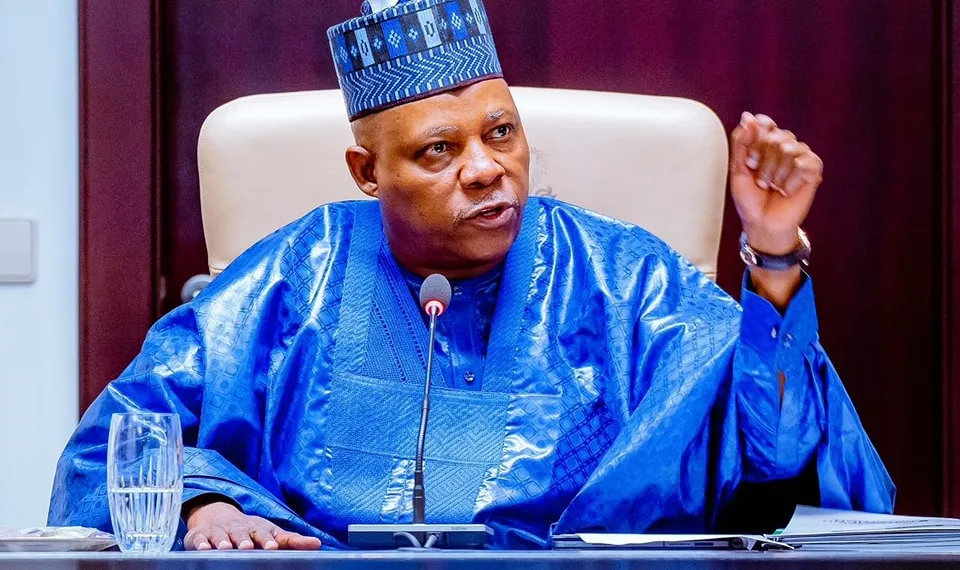
Vice President Kashim Shettima has urged Nigerians to celebrate President Bola Tinubu, saying his leadership saved the country from a potential implosion.
Shettima said Nigeria’s economy had been teetering on the edge of collapse before Tinubu’s intervention, adding that the country could have faced a different situation.
“The economy was teetering on the edge of collapse, we were on a cliff edge,” the Vice President said.
ALSO READ: Subsidy Removal, FX Reforms Driving Fresh Oil Sector Investment – Shettima
“So he literally saved the nation from an implosion. That could have been the scenario. So, instead of demonizing him, Nigerians ought to celebrate this poor man.”
Shettima also called for a return to the drawing board, expressing confidence in the leadership’s commitment and the prospects for the 2027 elections.
“I believe on the bottom of my heart that with this presentation I have seen, and with the commitment of our leadership, by the grace of God, we are going to win,” he said.
Speaking about the 2027 elections, the Vice President reminded his audience that social media platforms should not be mistaken for actual polling stations.
“There are no polling stations on Facebook or Instagram,” he said.
Shettima also expressed gratitude for the efforts made towards promoting the cause of the 2027 elections.

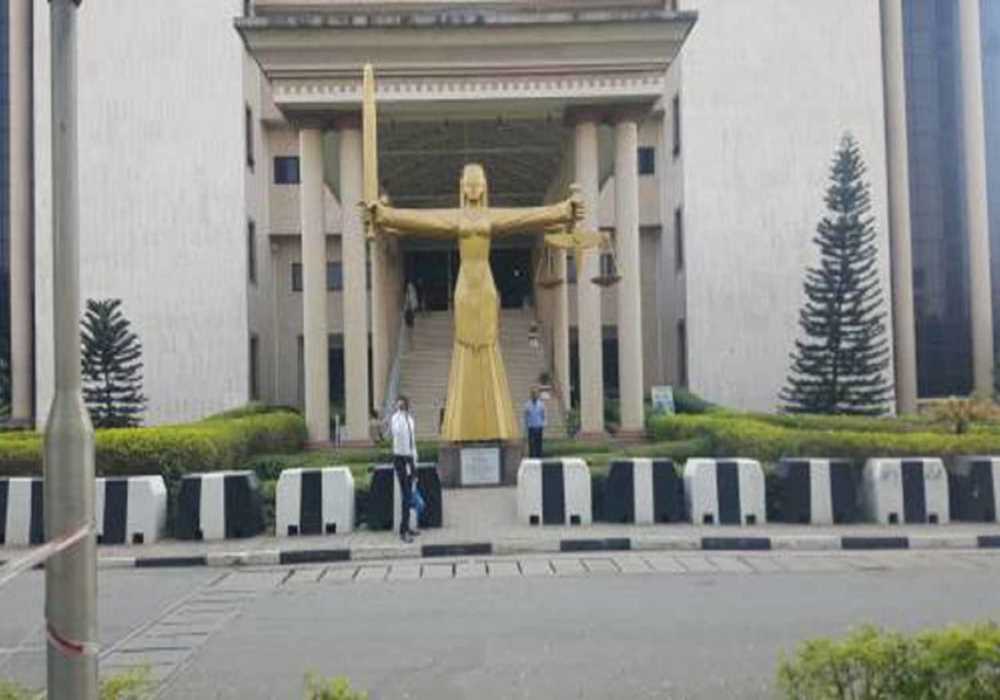
Following observed mis-steps, the Federal Government of Nigeria has withdrawn the eight-count criminal charge brought against the alleged fake Director General (DG) of the Presidential Foreign Intervention Promotion Council (PFIPC), Adeniyi Adeyemi.
Biztellers reports that the matter, in accordance with the counsel of the Attorney General of the Federation (AGF) and Minister of Justice, Prince Lateef Olasunkanmi Fagbemi, (SAN), the matter will be filed at the High Court of the Federal Capital Territory (FCT), instead of the Federal High Court (FHC).
Consequently, upon an unopposed application for termination by the prosecution counsel and Director of the Public Prosecution of the Federation (DPPF), Rotimi Oyedepo (SAN), on Monday, Justice Mohammed Umar of a Federal High Court, Abuja on Monday, struck out the matter.
READ ALSO: Shell Identifies Keys to Nigeria’s Energy Future
In a motion for the termination of the charges, Oyedepo informed the court that the Attorney General of the Federation (AGF) and Minister of Justice has carried out a review of the case file of Adeyemi and the charge filed by the Inspector General of Police (IGP) and found some loopholes.
The DPPF added that the documents allegedly forged by Adeyemi during his operations of the fake agency are those that can be prosecuted by the High Court of the Federal Capital Territory (FCT).
He also informed the court that a new charge has been filed at the High Court of the FCT and that Adeyemi would be expeditiously arraigned afresh.
He therefore urged the judge to strike out the charge as required by law.
Following no objections from Ibrahim Angulu (SAN), who stood in for Adeyemi, Justice Umar subsequently terminated the charge.
Adeniyi, 38, was being tried alongside two others whose whereabouts are unknown, on charges bordering on conspiracy and forgery.
The two others said to be at large were identified as Femi (surname unknown) and Anu (surname unknown).
The charge marked: FHC/ABJ/CR/25/2025, was entered against the defendant by the DPPF.

To secure a bright energy for her teeming population, Nigeria must sustain the momentum of reform, accelerate investment, and deepen partnerships.
This view was expressed by Managing Director, Shell Nigeria Exploration and Production Company of Nigeria Limited (SNEPCo) Ronald Adams in Lagos at the weekend.
Delivering a keynote address at the Africa Energy Conference (AEC) of the Lagos Business School (LBS), Adams called for regulatory certainty through efficient execution of reforms, sustained investment appeal to enable projects to move more swiftly from opportunity to production and partnership by operators, regulators, NNPC Limited and communities to unlock the full value of Nigeria’s resources.
Adams cited Nigeria’s huge oil and gas resources as an advantage but pointed out: “Resources alone do not guarantee prosperity. Prosperity comes when resources are matched with investment, technology, sound policy and disciplined execution. Success will be determined not by the size of our resources, but by our ability to convert them into investment and economic growth.”
Adams pledged the support of Shell towards a bright energy future of Nigerians. He said: “For more than six decades, Shell has been part of Nigeria’s energy journey. Together with our partners, we have helped develop major energy infrastructure, supported Nigerian businesses, invested in talent, and contributed to economic development. Bonga remains a powerful example of what technology, partnership and Nigerian capability can achieve in deepwater operations. Today, that story continues through Bonga North.”
READ ALSO: ADF Targets 5 Million Students, 2 Million Vulnerable Women
Issuing a clarion call for action by all stakeholders, he added: “The world is not standing still. Capital is moving, technology is advancing and competition is intensifying. The countries that attract investment tomorrow are those that improve competitiveness today. Nigeria has begun that journey. Our task is to sustain the momentum and translate reform into projects, projects into growth, and growth into shared prosperity.”
The conference, the 4th in the series had at its theme; “Securing Nigeria’s Energy Future: Policy Reform, Capital Mobilisation, and Pathways to a Sustainable Power and Energy Market” and was attended by top government officials, industry captains, energy professionals, and students.
Lagos State Deputy Governor Obafemi Hamzat represented Lagos State Governor Babajide Sanwo-Olu as the guest of honour. SNEPCo was a principal sponsor of the Africa Energy Conference (AEC) and mounted a well-received exhibition on its deepwater operations and social investments across Nigeria.






2027: ‘Tinubu Has Done Well’ – Wike Tells Opposition to Speak the Truth

‘Celebrate This Poor Man’ – Shettima Defends Tinubu Over Economic Crisis
FG Withdraws Charges Against ‘Fake Agency’ DG, Adeniyi Adeyemi

Shell Identifies Keys to Nigeria’s Energy Future

Nigeria Records Biggest Rise in Multidimensional Poverty Among Five Countries – UN

Katsina Students Get ₦689.79m Bursary as Gov Radda Doubles Allowances

Trump’s Family Unveils New Cryptocurrency Platform

Senate Denies Receiving Petitions Against Tinubu’s Ambassadorial Nominees

Dangote Cement Lights Up Benue Host Communities With CSR Initiatives

Reps Recommend 3-year Jail Term For Aviation minister

Tems Sets New Record On Billboard Hot 100 Chart

I really like gathering useful info, this post has got me even more info! .
Its excellent as your other content : D, thanks for putting up.
I¦ve read some excellent stuff here. Definitely value bookmarking for revisiting. I wonder how a lot effort you set to make the sort of magnificent informative web site.
Thank you for every other fantastic post. Where else could anybody get that type of information in such an ideal method of writing? I’ve a presentation next week, and I am at the look for such info.
It’s really a great and useful piece of information. I am glad that you shared this helpful info with us. Please keep us up to date like this. Thank you for sharing.
I will right away snatch your rss feed as I can’t find your email subscription hyperlink or newsletter service. Do you have any? Please allow me understand so that I may subscribe. Thanks.
you’ve gotten a terrific weblog here! would you prefer to make some invite posts on my weblog?
Greetings! This is my first visit to your blog! We are a collection of volunteers and starting a new initiative in a community in the same niche. Your blog provided us valuable information to work on. You have done a marvellous job!
Great line up. We will be linking to this great article on our site. Keep up the good writing.