
Energy
We have Over N600bn Worth Of Petrol In Store ― Dangote

. . . Zambia Seeks Dangote’s Investment In Energy Sector
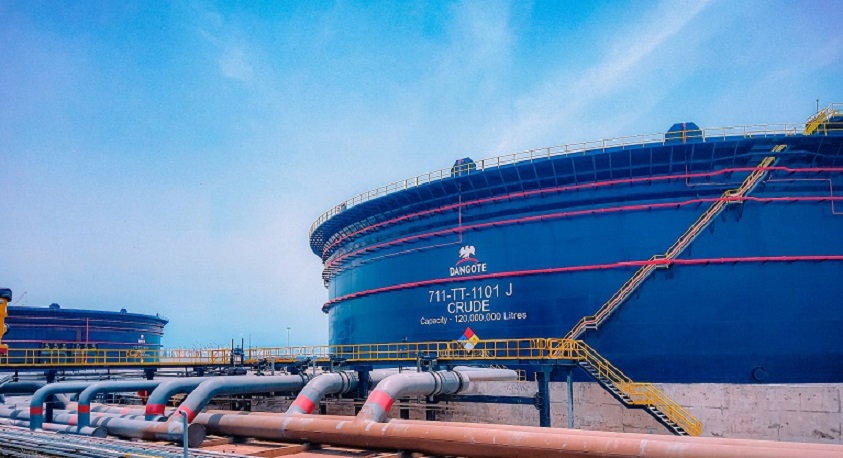
The Dangote Petroleum Refinery and Petrochemicals Limited has enough Premium Motor Spirit (PMS), otherwise known as petrol, in storage to meet the local needs of Nigeria.
President of Dangote Industries Limited (DIL), Aliko Dangote made the disclosure in a statement over the weekend.
According to him, the Dangote Refinery has “more than half a billion litres of petroleum and over 600 billion Naira worth of products in its tanks.
Dangote stressed that, “…as we speak, right now we have more than half a billion litres. The Refinery is producing enough refined products, like gasoline, diesel, and kerosene, to meet 100 percent of Nigeria’s requirements.”
ALSO READ: Shell Calls For Collaboration For Development Of Nigerian Economy
After a tour of the Refinery complex by a Zambia Government delegation, led by the country’s Minister of Energy, Makozo Chikote, Dangote stated that the refinery project, like other projects in the past, is not for Nigeria alone.
“This refinery is not only for Nigeria; it is for Africa. We must sustain the African Continental Free Trade Area (AfCFTA) deal. We are trying to see how we trade with other African countries,” he pointed out.
The Zambian Minister of Energy said his takeaway from the Dangote Refinery working visit was that the President, Aliko Dangote, is truly focused on the bigger picture for Africa.
Chikote, who led a delegation of energy experts to the Dangote Petroleum Refinery to partner Zambia on energy solutions, expressed satisfaction and readiness to work with the African manufacturing giant.
After a tour of the Dangote complex at the Free Trade Zone, Ibeju Lekki, starting from the Single Point Mooring to the Dangote Jetty, the biggest fertiliser plant in Africa and the 650,000bpd largest single-train refinery in the world, the Minister enthused that the presentation by the Vice President, Oil and Gas of Dangote Industries Limited, Edwin Devakumar, made their hearts “jump”.
He stated that the presentation speaks to the challenges of his country, Zambia.
The energy minister added, “In Zambia, we created an environment for the private sector to participate in the growth and development of our country. Currently, 100 percent of our petroleum is done by the private sector.
“We are targeting increased productivity in mining, agriculture, and other sectors. Your presentation is an immediate solution to our energy needs. We are trying to promote competition among our private players.
“We are looking at Dangote coming on board, which would lead to efficient, reliable, quality, and competitive products, and we want these done like yesterday.
“Coming to the Dangote Petroleum Refinery, we have learned so many advantages of bringing many players for competition, which has improved the lives of the citizens.”
According to him, “From what we have seen, we need to promote trade within Africa to promote each other. We need these countries together to make Africa efficient, and a reliable trade hub.
“We have seen here that we can learn from what Dangote has done, and this would lead Africa and Africans to stand on their feet and not depend on overseas support in terms of trade. I believe going forward that people have learned a few lessons. The one lesson I have learned from this visit is that Dangote looks at the bigger picture for Africa.”
Another member of the Zambia delegation, Samuel Maimbo, the Vice President of Budget, Performance Review, and Strategic Planning at the World Bank Group, presently campaigning for the presidency of the African Development Bank (AfDB), explained that there is not enough development aid to develop Africa.
“There is also not enough government funding to develop Africa. The only way we can finance Africa’s growth at a pace and scale that solves our problem is by working through the private sector, which is why we are here today, to learn and to see what an ambitious programme looks like,” he stated.
He added that it is only the private sector that can help develop the continent of Africa.
On his part, Devakumar stated that the Refinery produces the best quality products as its core business strategy.
“The project concept was to process the crude from Nigeria and add value. But we also wanted to provide some flexibility to process most of the African crudes and some of the Middle Eastern crudes,” Devakumar said.
He added “In another concept, what we did was maximum value extraction. That is a process where every barrel of crude which goes in, the value addition should be the best.”
According to Devakumar, “the Refinery can meet all our requirements. 44 per cent can meet the entire requirements of Nigeria, and 56 per cent of the production would be exported. Every day, we produce lighter products of 104 million litres; 57 million litres of petrol every day; 20 million litres of jet fuel; and 27 million litres of diesel production.
“The local consumption is just around 46 million litres, and the remaining 58 million litres will be exported daily,” he added.







In a confirmation of expectations that more policy adjustments will not occur until 2027, OPEC+ oil-producing countries have voted to keep December production targets steady.
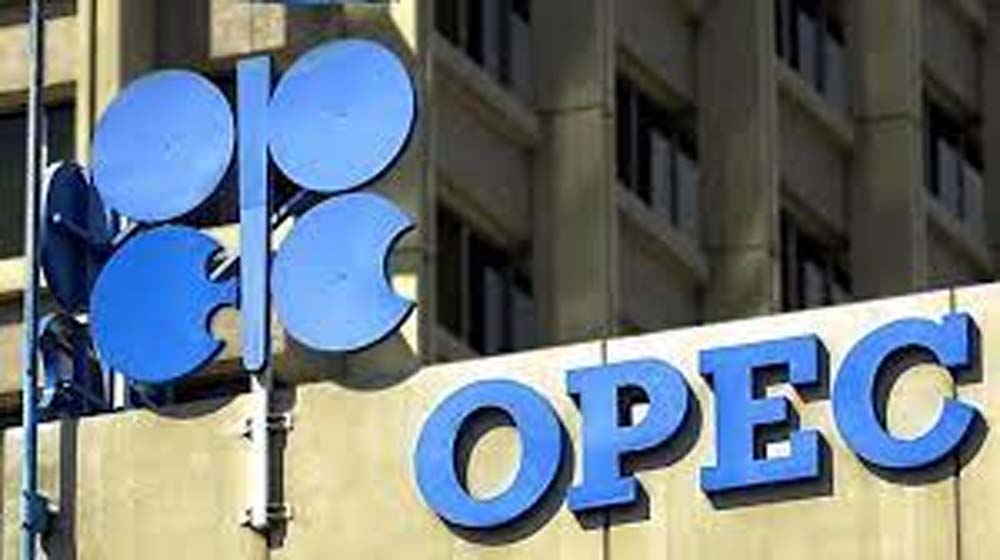
The OPEC+ alliance, yesterday, agreed in principle to keep its combined December oil output targets unchanged at 30.9 million barrels per day (bpd), with Saudi Arabia’s individual target held at 10.5 million bpd.
The resolution was passed at a virtual meeting attended by seven core OPEC+ members- Saudi Arabia, Russia, Iraq, Kuwait, Algeria, Kazakhstan and Oman.
This is as the group continues to struggle with export disruptions from the Middle East crisis, while Gulf members have been boosting exports that have been disrupted for months by the conflict, most are still pumping well below their targets.
OPEC+ comprises the Organisation of the Petroleum Exporting Countries (OPEC) and allies including Russia. Only the seven members — plus the United Arab Emirates (UAE) until it quit OPEC in May — have been involved in monthly output decisions in recent years.
READ ALSO: Gas Infrastructure Fund Sets Terms for Indigenous Access to Funding
All members of the 21-country group are due to meet on November 29, when it will decide 2027 quotas.
“Today’s decision was the easy one,” said Jorge Leon, an analyst at Rystad. “The much more important test comes at the November 29 ministerial meeting, when OPEC+ will decide its 2027 production framework.”
Oil prices jumped more than two per cent on Friday, with Brent crude settling at almost $118 a barrel, the highest since April, as traders braced for a potential escalation in the Iran war after the US midterm elections.
“OPEC+ faces an extremely difficult call for 2027,” Leon added. “The group has to plan around huge uncertainty over the US-Iran war, the pace of recovery through the Strait of Hormuz, and the size of the surplus that could emerge once disrupted barrels return.”
The seven members have been boosting output targets for much of 2026 and in September completed the phased rollback of a 1.65 million-barrel-per-day supply cut first agreed in 2023. At earlier meetings, they kept the targets steady for October and November.
OPEC+ still has one more layer of production cuts of about two million bpd covering most members through the end of 2026.
The group needs to complete a review of members’ production capacity during the fourth quarter before setting the 2027 baselines that will determine future quotas and shape plans to unwind those cuts, sources have said.
The Iran war has disrupted projects to expand capacity across the Middle East, throwing estimates of future production potential into uncertainty, Reuters reported in October. As a result, the review is now expected to be completed by mid-November.
With a view to accelerating infrastructure development and reducing operating costs, the U.S. Department of Transportation is contemplating a new set of safety regulations for liquefied natural gas facilities.
This is coming as American exporters prepare for another major expansion in global natural gas markets.
It was gathered that the proposal, issued by the Pipeline and Hazardous Materials Safety Administration (PHMSA), would modernize federal LNG safety requirements by incorporating standards developed by the National Fire Protection Association.
READ ALSO: Investors Embrace DPRP IPO Globally, 120 Countries, 54 African Nations
The changes are to address facility location, engineering, construction, operations, and maintenance, with greater flexibility to adopt newer technologies.
Transportation Secretary, Sean Duffy estimates that the updated framework could save LNG operators approximately $100 million annually while maintaining safety protections. The projected savings are an agency estimate, and the proposal has not yet become a final regulation.
The initiative comes as the United States strengthens its position as the world’s largest LNG exporter. American export capacity is expected to increase by approximately 100 million metric tons annually by the end of the decade, supported by projects already under development and additional planned investments.
Global LNG demand has also become more sensitive to geopolitical disruptions. Interruptions to Middle Eastern gas shipments associated with the conflict involving Iran have encouraged international buyers to evaluate alternative suppliers and diversify long-term procurement arrangements.
U.S. LNG developers have responded with additional investment commitments. Projects representing more than 50 million metric tons of annual capacity have reached final investment decisions since the beginning of 2025.
Major exporters, including Cheniere Energy and Venture Global, are pursuing additional development opportunities as federal policy places greater emphasis on expanding domestic energy infrastructure.
However, regulatory modernization does not eliminate the financial or operational challenges associated with LNG construction.
Developers must still secure the Federal Energy Regulatory Commission (FERC) approvals, complete environmental reviews, arrange financing, and address potential legal challenges. Pipeline connections, specialized equipment availability, construction costs, and long-term customer contracts also influence project schedules.
Delfin LNG, which is developing a floating export facility, illustrates the importance of infrastructure safety approvals. Its associated pipeline has not received publicly confirmed PHMSA clearance to resume operations following an explosion earlier this year.
Separately, FERC has proposed a streamlined authorization framework for certain modifications and expansions at existing LNG facilities, including activities that could qualify for automatic approval or shortened review periods.
For energy investors, the combined regulatory initiatives could improve development visibility and reduce some costs, although their financial impact will depend on final requirements and individual project circumstances.
Additional LNG export capacity could support demand for U.S. natural gas production, particularly from major producing regions connected to Gulf Coast terminals.
Midstream operators, engineering companies, compression equipment manufacturers, and construction contractors could also benefit from continued infrastructure investment.
At the same time, greater export demand may increase domestic natural gas price sensitivity to international markets, creating different implications for producers, utilities, and industrial consumers.
Investors will be monitoring the final PHMSA regulations, FERC permitting developments, LNG project financing decisions, and the pace at which proposed export capacity enters commercial service.
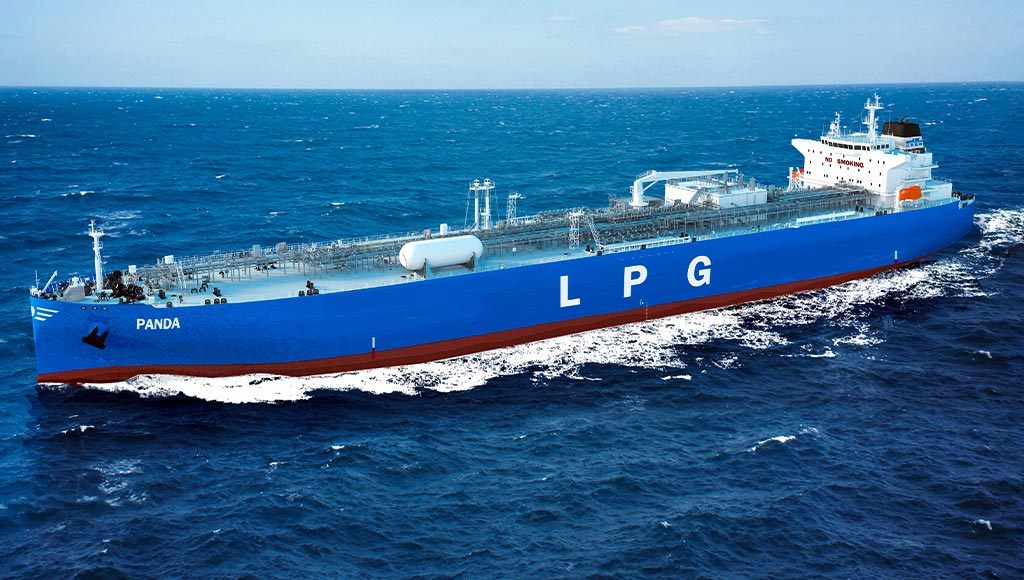
The Nigerian Association of Liquefied Petroleum Gas Marketers (NALPGAM) has urged operators in Nigeria’s liquefied petroleum gas (LPG) industry to strengthen safety standards, improve regulatory compliance and adopt digital technologies to reduce operational losses and drive business growth.
The association said improved operational practices would help protect investments, enhance efficiency, build consumer confidence and support the sustainable expansion of C.
The call followed its 2026 webinar, themed “Downstream LPG Operational Excellence and Compliance,” which brought together industry operators, regulators and other stakeholders to discuss safety risks, market volatility, operational inefficiencies and regulatory requirements in the downstream LPG sector.
Speaking at the event, NALPGAM National President, Edu Inyang, said the industry’s long-term growth would depend on more than increased consumption and supply volumes, stressing the need to embed safety and operational efficiency in everyday business practices.
“The future of Nigeria’s LPG industry cannot be achieved by increasing volumes alone. We must grow safely, responsibly, efficiently and sustainably. Safety is not an occasional campaign; it must become a continuous industry culture,” he said.
READ ALSO: Tinubu Promises to Boost Local Production with NNPC Refineries
A major outcome of the webinar was a proposal for a NALPGAM Standard of Operational Excellence, anchored on four principles: safe and well-maintained facilities, competent and adequately trained operators, regulatory-compliant processes, and consumer protection.
Participants urged operators to integrate safety into routine operations, strengthen preventive maintenance and comply with licensing and incident-reporting requirements.
They also called for an end to unsafe practices, including unauthorised propane blending and illegal decanting, warning that such activities could expose businesses and consumers to avoidable risks.
Inyang said compliance should be viewed as a means of strengthening business performance rather than merely fulfilling regulatory obligations.
“Compliance is not merely a regulatory burden; it is a business advantage. Well-managed LPG operations reduce accidents, improve efficiency, protect investments and strengthen public confidence in our industry,” he said.
The webinar also highlighted the role of digital technologies in improving operational efficiency and accountability across the LPG value chain.
Participants identified smart filling systems, automated tank gauges, load cells, flow meters and vehicle-tracking systems as practical tools for monitoring product movements, reducing losses and improving inventory management.
Wider adoption of these technologies, they said, could help operators strengthen operational controls, minimise discrepancies and improve the reliability of LPG distribution.
The discussions come as Nigeria seeks to expand LPG consumption to approximately five million tonnes annually by 2030, a target that will require increased investment, stronger distribution networks and wider consumer access.
Stakeholders called for greater industry participation in the Decade of Gas LPG penetration programme, alongside stronger collaboration to expand access, improve cylinder traceability and promote certified local manufacturing.
The NALPGAM also urged regulators and programme coordinators to involve its members more actively in implementing LPG penetration and cylinder recirculation initiatives.
According to the association, its members’ nationwide presence and proximity to consumers could help improve the reach and effectiveness of programmes designed to increase LPG adoption.
Reiterating the association’s position, Inyang said the industry must establish clear operational standards that protect consumers while supporting efficient and sustainable business practices.
“Our aspiration is clear: every LPG facility must be safe and properly maintained, every operator competent and adequately trained, every process compliant, and every customer protected. This is the standard of operational excellence we must collectively pursue,” he said.
The NALPGAM reaffirmed its commitment to working with government agencies, regulators and industry stakeholders to develop a safer, more efficient and competitive LPG market.
The association maintained that embedding safety, strengthening compliance and deploying appropriate technologies would be critical to improving operational performance and supporting the long-term growth of Nigeria’s LPG industry.





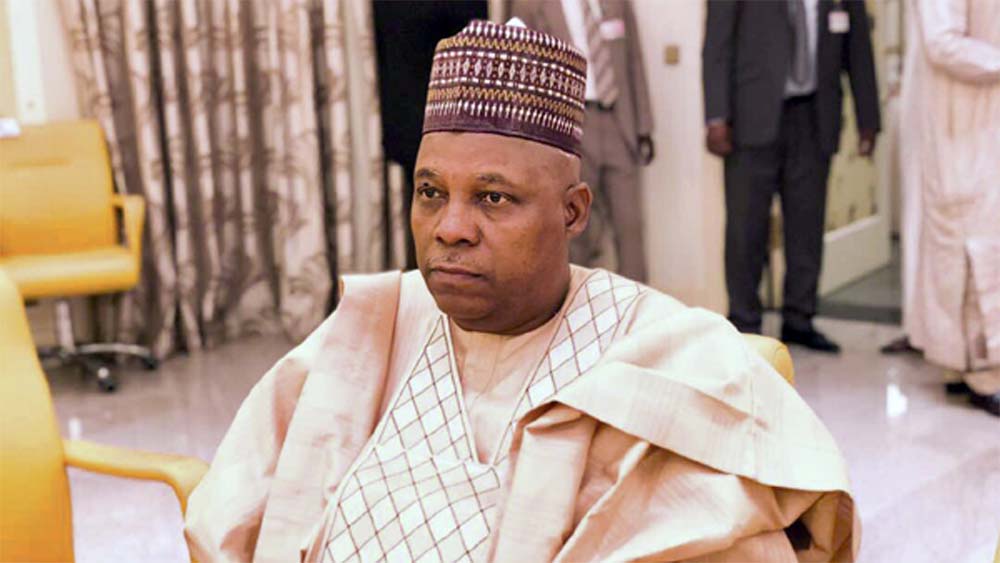
2027: Shettima Arrives in Uyo for APC Presidential Campaign Rally

NDC Warns Judiciary Against Turning Courts Into Tools for Political Opposition

Elohor Aiboni Honoured with DTN@100 Changemaker Award
APC Pressuring Hotels to Deny Opposition Parties Venues – NDC Raises Alarm

Tinubu Hails Flamingos After Historic World Cup Final Qualification, Urges Team to Win Trophy

‘The Panic Is Real’ – Atiku Accuses APC of Plot to Weaken ADC

Trump’s Family Unveils New Cryptocurrency Platform

Senate Denies Receiving Petitions Against Tinubu’s Ambassadorial Nominees

Dangote Cement Lights Up Benue Host Communities With CSR Initiatives

Reps Recommend 3-year Jail Term For Aviation minister

Tems Sets New Record On Billboard Hot 100 Chart

7l0yr4
9oiala
51js7f
Excellent post. I was checking continuously this blog and I am impressed! Extremely helpful info particularly the last part 🙂 I care for such information much. I was seeking this certain information for a long time. Thank you and best of luck.
amei este site. Pra saber mais detalhes acesse nosso site e descubra mais. Todas as informações contidas são conteúdos relevantes e exclusivos. Tudo que você precisa saber está ta lá.
I’m commenting to let you be aware of what a really good experience my cousin’s daughter encountered studying yuor web blog. She mastered so many things, which included what it is like to have an awesome coaching character to have most people without hassle know just exactly some complex subject matter. You truly exceeded visitors’ desires. Many thanks for offering the warm and friendly, dependable, educational and also fun tips about the topic to Sandra.
I am glad to be one of many visitors on this great site (:, thankyou for posting.
I know this if off topic but I’m looking into starting my own blog and was curious what all is needed to get setup? I’m assuming having a blog like yours would cost a pretty penny? I’m not very web smart so I’m not 100 sure. Any suggestions or advice would be greatly appreciated. Thanks
I like this blog very much, Its a real nice spot to read and receive information.
Rattling nice pattern and superb subject matter, nothing at all else we want : D.
Thanks , I have recently been searching for information about this topic for ages and yours is the best I have discovered so far. But, what about the bottom line? Are you sure about the source?
I have to show some appreciation to this writer just for bailing me out of this condition. As a result of looking throughout the the web and seeing opinions which are not productive, I assumed my entire life was gone. Living minus the approaches to the problems you’ve sorted out by means of your guideline is a critical case, as well as those that could have badly affected my entire career if I had not noticed your web blog. Your actual expertise and kindness in taking care of every aspect was very useful. I don’t know what I would have done if I had not encountered such a thing like this. I can also at this point relish my future. Thank you very much for the reliable and result oriented guide. I won’t be reluctant to endorse your web blog to any person who needs guide on this subject.
Nice weblog here! Additionally your website rather a lot up very fast! What host are you the usage of? Can I am getting your affiliate link to your host? I wish my site loaded up as fast as yours lol
Would you be all in favour of exchanging links?
I am glad to be a visitor of this perfect site! , thankyou for this rare info ! .
Very nice article and straight to the point. I don’t know if this is actually the best place to ask but do you people have any ideea where to get some professional writers? Thanks 🙂
Its like you read my mind! You appear to know so much about this, like you wrote the book in it or something. I think that you can do with some pics to drive the message home a bit, but other than that, this is excellent blog. A great read. I’ll certainly be back.
I was curious if you ever considered changing the structure of your site? Its very well written; I love what youve got to say. But maybe you could a little more in the way of content so people could connect with it better. Youve got an awful lot of text for only having one or two images. Maybe you could space it out better?