Business
NMDPRA Commends NLNG, Supports Growth Strategy

The Nigerian Midstream and Downstream Petroleum Regulatory Authority (NMDPRA) has commended the Nigeria LNG’s regulatory compliance and significant contributions to Nigeria’s economy.
The Authority Chief Executive, Rabiu Abdullahi Umar, who described the NLNG as a responsible corporate citizen and a source of national pride, gave the commendation during his first visit to the company’s plant on Bonny Island, Rivers State.
Umar was received by the company’s Managing Director and Chief Executive Officer, Adeleye Falade.
The visit provided an opportunity to discuss regulatory requirements, safe and reliable operations, and the investments needed to sustain NLNG’s contributions to Nigeria’s domestic gas market and international liquefied natural gas (LNG) supply.
READ ALSO: Sahara’s MT Asharami Geneva to Boost Africa’s LPG Supply
Umar explained that NMDPRA’s mandate was to ensure that operations were conducted consistently and transparently in line with required standards. He emphasised that the Authority remains firm in regulation, fast in decision-making and fair in its conduct.
He expressed the Authority’s readiness to collaborate with NLNG to support the company’s efforts to expand production capacity and increase gas supply to the domestic market, including by providing an enabling regulatory environment for the development of additional production trains.
“Our engagement with operators is important to ensuring that regulatory requirements are understood and possible concerns are addressed early. For the gas industry, maintaining these standards while creating the enabling environment that supports responsible investment and reliable supply is essential to Nigeria’s energy security and economic development,” he said.
Welcoming the delegation, Falade said the visit offered an opportunity to build on previous engagements and provide a first-hand understanding of the scale, complexity and demands of managing NLNG’s infrastructure, sustaining production, meeting regulatory obligations and delivering reliably to customers.
He noted that NLNG had played a defining role in Nigeria’s gas commercialisation since its first LNG cargo departed Bonny Island in 1999.
He added that the company has helped establish Nigeria as a reliable supplier in the international LNG market while generating significant revenue for the country with six operational trains and an installed production capacity of 22 million tonnes per annum,
Falade explained that sustaining this contribution depended on an integrated value chain supported by feedgas security, asset integrity, process safety and shipping reliability.
These, he said, were essential to meeting long-term commercial commitments in an increasingly competitive global energy market.
On the company’s growth plans, he said Train 7 was 95 per cent complete and would increase NLNG’s installed production capacity to approximately 30 million tonnes per annum.
He described the project as a strategic investment in Nigeria’s energy future, strengthening the company’s ability to meet global demand and expand the country’s participation in international gas trade.
He added that the investment reflected NLNG’s confidence in Nigeria’s gas potential, he acknowledged that feedgas constraints and infrastructure challenges required sustained attention, coordinated action and investment across the gas value chain.
Turning to domestic energy needs, Falade reiterated that NLNG dedicates 100% of its liquefied petroleum gas (LPG) production to the Nigerian market. He said this commitment supported access to cleaner household cooking gas, thereby reducing dependence on traditional cooking fuels, such as firewood, and guaranteeing sufficient availability of LPG for Nigerian consumers.
He stressed that NLNG’s role extended beyond supplying international markets, with the company also focused on ensuring that Nigeria’s natural gas resources delivered tangible benefits to its people and economy.
Falade said a productive relationship with NMDPRA was important to sustaining these investments and commitments. He acknowledged the Authority’s responsibility to uphold regulatory standards and safeguard operational integrity across the midstream and downstream sectors.
“An effective regulatory environment is essential not only to sustaining existing operations but also to unlocking the investments and partnerships required to realise Nigeria’s gas ambitions. We therefore remain committed to constructive engagement and collaboration with the Authority in advancing the development of the country’s gas sector,” he said.
Falade also highlighted NLNG’s Decarbonisation Roadmap and longer-term development aspirations, alongside its priorities of sustaining reliable production, supporting domestic energy security and managing its environmental responsibilities.
He recognised the competence and commitment of the teams responsible for the facilities as central to maintaining operational performance and the confidence of customers and stakeholders.
NMDPRA regulates Nigeria’s midstream and downstream petroleum operations, including monitoring and enforcing compliance with the conditions of licences, permits and authorisations issued by the Authority.
NLNG remains committed to constructive engagement with relevant authorities, with safety, regulatory compliance and operational excellence central to its business as it harnesses Nigeria’s natural gas resources to support economic growth and improve lives sustainably.


The commissioning of MT Asharami Geneva, a new 7,500-cubic-metre Liquefied Petroleum Gas (LPG) carrier in Japan will strengthen the infrastructure required to grow LPG supply across Africa.
Sahara Group expressed its commitment to cleaner energy access across Africa with what Sasaki Shipbuilding Co., Ltd. built in Hiroshima, – a fully pressurised vessel, developed by WAGL Energy Limited, the NNPC Limited-Sahara Group joint venture.
The commissioning extends a significant year of LPG infrastructure investment for Sahara. In 2026 alone, Sahara has commissioned MT Asharami Ghana, a 40,000-cubic-metre LPG carrier, and a 6,000-metric-tonne LPG storage facility at the Tema Oil Jetty in Ghana, while breaking ground on a 30,000-metric-tonne LPG terminal in Mombasa, Kenya.
Together, these investments, among others in Nigeria, Cote D’Ivoire, Tanzania and Senegal, make Sahara a leading force in Africa’s LPG ecosystem, strengthening supply reliability, improving LPG availability, and supporting cleaner energy access across key African markets.
The NNPC Limited Group Chief Executive Officer, Bashir Bayo Ojulari, who was represented by Morenike Adeyemi, Chief Relations Officer of NNPC Limited, said the vessel would strengthen maritime capability and support safe, reliable, and efficient energy transportation. “This vessel shows what we can achieve when excellence, innovation and partnership come together.”
Ojulari has been widely commended for his commitment to tackling energy poverty and supporting cleaner energy solutions that reduce reliance on firewood and support more sustainable communities.
Also speaking, Chairman of WAGL Energy Limited and Executive Director at Sahara, Temitope Shonubi, said the commissioning underscores the value of the partnership between Sahara and NNPC Limited and the contribution of the teams behind the project.
“Our partners in NNPC have remained integral to this journey. This achievement shows what is possible when people, expertise and partnerships come together around a shared objective.”
Shonubi also expressed gratitude to the banks and multilateral partners whose support continues to enable Sahara’s investments in cleaner energy infrastructure. “We remain grateful to our bankers and multilateral partners who give us the wings to fly, enabling us to expand access to cleaner energy while contributing to a safer environment,” he said.
READ ALSO: Oando Calls for Greater Inclusion in Energy Sector
Executive Director, Sahara, Ade Odunsi, said the vessel’s significance would ultimately be measured by the impact on African households. “This ship matters. MT Asharami Geneva will carry LPG for millions of African families, meaning cleaner cooking, less firewood, less kerosene, less smoke and a much better environment.”
Managing Director of WAGL Energy Limited, Mohammed Sani Bello, described the vessel as more than additional shipping capacity. “The vessel represents more than an addition to our fleet. It reflects our shared vision for excellence, partnership, and business growth.”
The investment reflects Sahara’s Beyond XXX vision of advancing transformation through innovation, strategic partnerships and investments that deliver sustainable value and expand energy access to more African homes and businesses.
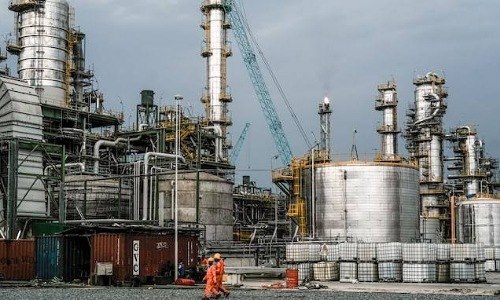
Nigerian-Indian economic ties has been boosted with two Indian engineering companies, Kirloskar Brothers Ltd. and its joint venture, Kirloskar Ebara Pumps Ltd., set to supply Nigeria’s Dangote Petroleum Refinery and Petrochemicals (DPRP) with specialised pumping systems worth $38.94 million.
Under the contracts, Kirloskar Ebara Pumps will execute orders worth $21.34 million, equivalent to approximately ₹201 crore, while Kirloskar Brothers will supply equipment valued at $17.60 million, or about ₹165 crore.
The companies disclosed the contracts in an exchange filing on November 20, stating that the orders were received from the DPRP through several purchase orders.
However, they did not disclose the delivery schedule or indicate whether the equipment would be deployed at the existing refinery or as part of its planned expansion.
The two Indian companies manufacture pumping systems that meet American Petroleum Institute (API) standards and other specifications for use in refineries, petrochemical and fertiliser plants, gas processing facilities, liquefied natural gas terminals and offshore platforms.
They have also supplied pumping systems to more than 140 offshore oil fields.
READ ALSO: Osun SEC Approves Draft 2027 Budget
Kirloskar Brothers holds a 45 percent stake in Kirloskar Ebara Pumps, its joint venture with Japan’s Ebara Corporation, and accounts for the investment as an associate company. Consequently, sales generated by the joint venture are not included in Kirloskar Brothers’ consolidated revenue.
The 650,000-barrel-per-day DPRP, located in the Lekki Free Zone near Lagos, was built at an estimated cost of $20 billion and is regarded as the world’s largest single-train refinery.
The facility’s owner, Aliko Dangote, plans to increase its capacity to 1.4 million barrels per day, further strengthening its position in the global refining industry.
The refinery is also concluding a record initial public offering on the Nigerian Exchange, which attracted bids worth approximately $4.3 billion from nearly 3.8 million investors.
Business
Dangote Cement Honours Outstanding Drivers for Safety Excellence, Records 60% Reduction in Road Traffic Accidents
Dangote Cement Plc has achieved a remarkable 60 percent reduction in road traffic accidents following the implementation of a comprehensive driver safety programme, underscoring the company’s unwavering commitment to protecting lives and promoting road safety across its transportation operations.
The milestone was announced at the 2026 Customer Truck Scheme (CTS) Annual Driver Safety Award and Recognition Programme, themed “Rewarding Safety Excellence for Safer Roads,” where the company celebrated drivers who demonstrated exemplary safety performance and maintained accident-free records throughout the assessment period.
The achievement builds on an earlier 30 per cent reduction in road traffic accidents recorded in 2023, following the introduction of the company’s Safety Improvement Plan. As part of the initiative, approximately 3,000 drivers were trained in defensive driving techniques and safe road-use practices.
According to the company, the sustained decline in accidents reflects the effectiveness of continuous driver training, behavioural monitoring, corrective interventions, and the deliberate recognition of safe driving practices.
Speaking at the event on behalf of the Group Sales and Marketing Director, the National Sales Director of Dangote Cement Plc, Mr. Dolapo Ali, noted that the rapid expansion of the company’s transportation operations had made road safety a critical business priority.
READ ALSO: APPO Lauds Nigeria on Energy Bank Initiative
He disclosed that the CTS fleet had grown significantly from 469 trucks in 2017 to over 2,500 trucks today, increasing the need for a more structured and proactive safety management approach.
“Our business has experienced tremendous growth over the years, and with that growth comes greater responsibility. As the number of trucks and drivers operating across our roads increases, so too does our exposure to road safety risks. Protecting lives and ensuring safe operations must therefore remain at the heart of our transport strategy,” he stated.
Mr. Ali explained that road traffic accidents peaked in 2021 and 2022, prompting the company to introduce its Safety Improvement Plan in early 2023.
A key component of the programme was an intensive defensive-driving training initiative through which approximately 3,000 drivers received professional safety training. The intervention delivered immediate results, with accident rates declining by 30 per cent in 2023 compared to the previous year, followed by a further 60 per cent reduction thereafter.
To strengthen compliance and encourage safer driving behaviour, Dangote Cement also deployed advanced telematics technology across its fleet operations. The system enables real-time monitoring of critical driving behaviours, including over-speeding, harsh braking, and aggressive acceleration.
According to him, customers whose drivers record excessive safety violations are routinely engaged and supported with corrective measures aimed at preventing accidents before they occur.
“Our approach goes beyond responding to incidents after they happen. We proactively identify unsafe driving behaviours and intervene early to reduce risks and prevent accidents,” he said.
He described the annual recognition programme as an important platform for celebrating drivers who consistently uphold the highest safety standards while inspiring others to emulate their example.
The company recognised its top five drivers based on outstanding safety performance, including low levels of driving violations and zero recorded road traffic accidents throughout the evaluation period.
Congratulating the award recipients, Mr. Ali described their achievements as proof that safe driving is attainable through discipline, vigilance, commitment, and personal responsibility.
“Behind every safety statistic is a human life, a family, and a story. When accidents are prevented, it means someone returned home safely to their loved ones. That remains the ultimate objective of our safety programme,” he said.
He urged all CTS drivers to view every journey as a shared responsibility to protect themselves, their colleagues, and all other road users.
“Drive safely because your family is waiting for you. Drive safely because someone else’s family is also waiting for their loved one. Every road user deserves to arrive safely at their destination.”
Representing the Federal Road Safety Corps (FRSC), Assistant Corps Commander Abdullahi Osunomu Muhammad of RS 2.19 Neku Command commended Dangote Cement’s commitment to road safety and called for stronger collaboration among fleet operators, regulators, transport owners, and professional drivers to improve safety standards across the industry.
He stressed that the success of haulage operations should not be measured solely by the number of deliveries completed or revenue generated, but also by the ability to conduct business without endangering lives.
The FRSC official advised truck operators to employ qualified and properly licensed drivers, maintain vehicles regularly, conduct pre-trip and post-trip inspections, provide appropriate safety equipment, and avoid unrealistic delivery schedules that encourage speeding and driver fatigue.
He further cautioned drivers against distracted driving, dangerous overtaking, overloading, route violations, poor vehicle maintenance, unnecessary night journeys, and operating vehicles while fatigued or unwell.
Highlighting the unique risks associated with heavy-duty vehicles, he emphasised the importance of understanding truck blind spots, maintaining safe braking distances, and exercising additional caution on the road.
“Never make assumptions when driving. If you cannot clearly see your blind spot, seek assistance. Safety must always come first.”
The FRSC representative also encouraged truck operators to install and maintain speed-limiting devices, ensure vehicles are roadworthy, and properly secure all cargo before embarking on trips.
He urged truck owners and beneficiaries to make safety a core operational value by obeying traffic regulations, maintaining vehicles diligently, respecting other road users, and refusing to compromise safety in pursuit of profit or delivery targets.

NEC Approves ₦130bn Additional Funding for Police Colleges, Endorses $850m World Bank Projects

Shettima Arrives Maiduguri for Project Commissioning, APC Rally

NMDPRA Commends NLNG, Supports Growth Strategy
Sahara’s MT Asharami Geneva to Boost Africa’s LPG Supply

‘Tinubu Must Go’: Sowore Leads Fresh Protest at INEC, Knocks Opposition Aspirants
Oando Calls for Greater Inclusion in Energy Sector

Trump’s Family Unveils New Cryptocurrency Platform
Senate Denies Receiving Petitions Against Tinubu’s Ambassadorial Nominees

Dangote Cement Lights Up Benue Host Communities With CSR Initiatives

Reps Recommend 3-year Jail Term For Aviation minister

Tems Sets New Record On Billboard Hot 100 Chart