
Energy
NMDPRA Gets Senate Nod for Six Executive Directors


The Senate has confirmed the appointments of six Executive Directors of the Nigerian Midstream and Downstream Petroleum Regulatory Authority (NMDPRA).
The confirmation followed the consideration and adoption of a report by the Senate Committees on Petroleum Resources (Downstream) and Petroleum Resources (Gas), presented by Senator Suleiman Kawu (Kano South), on Tuesday.
Those confirmed for reappointment are Abiodun Adeniji, Executive Director, Finance and Accounts; Ogbugo Ukoha, Executive Director, Distribution Systems, Storage and Retailing Infrastructure; and Dr Mustapha Lamorde, Executive Director, Health, Safety, Environment and Community.
READ ALSO: Atiku Accuses Tinubu of Seeking Plateau’s Forgiveness Only for 2027 Votes
The three nominees approved for new appointments are Mobolaji Musa, Executive Director, Hydrocarbon Processing Plants, Installation and Partnership; Ogechukwu Modie, Executive Director, Economic Regulation and Strategic Planning; and Said Abutalib, Executive Director, Corporate Services and Administration.
The confirmation followed a request by President Bola Tinubu to the Senate to screen and confirm the appointments of the executive directors and the Secretary of the NMDPRA Board.
Tinubu’s request was conveyed in a letter addressed to Senate President Godswill Akpabio and read during plenary last week.




The sum of $1.5 billion was raised to finance the Ajaokuta-Kaduna-Kano (AKK) Gas Pipeline Project, on the basis of the projected throughput from the facility.
The Nigerian National Petroleum Company Limited (NNPC Ltd) made the disclosure, as the state oil major moves towards completing the 614-kilometre infrastructure designed to expand gas supply across northern Nigeria.
Group Chief Executive Officer of the NNPC Ltd, Bashir Ojulari, stated this in an interview with the News Agency of Nigeria (NAN) in Abuja at the weekend, explaining that the financing was secured solely on the basis of anticipated gas transportation volumes through the pipeline.
According to Ojulari, the mainline section of the project had been completed, with overall execution reaching 95 percent, while the outstanding 5 percent involved completing some stations and connecting the pipeline to end-users.
READ ALSO: Axxela Expands Ogun Gas Network with New 17km Pipeline
He said the company was targeting the delivery of gas to Abuja before the end of 2026, with Kaduna and Kano expected to receive supplies in 2027.
“The AKK gas pipeline, all the way from Ajaokuta, Kaduna to Kano, the main pipeline has been completed. The remaining 5 percent has to do with some of the stations where we need to then link offtakes from the main pipeline to users.
“We are hoping that before the end of the year, we will get the gas to Abuja, which is the first step, and by 2027 we will get the gas to Kaduna and Kano,” Ojulari said.
The $1.5 billion financing is significant as it demonstrates the potential of the country’s gas transportation infrastructure to attract funding based on projected commercial flows, rather than relying exclusively on conventional government-backed financing.
Ojulari said the pipeline would support power generation, factories, data centres and industrial hubs, while also improving the availability of Compressed Natural Gas (CNG) across the northern region.
He explained that the completion of the mainline would make it easier to extend gas supply to additional locations, reducing the difficulty and cost associated with transporting gas from southern Nigeria to the North.
“We already solved the first line because we now have the Abuja power plant. As we move north and we build those connections, the CNG availability will increase phenomenally.
“But keep in mind that we still then have to go towards Maiduguri and Sokoto, right? So there’ll be more work to be done, but it’s now much easier than just taking gas from all the way from Port Harcourt to those locations,” he added.
The NNPC Ltd chief explained that although the main pipeline had been completed, additional infrastructure would be required to extend distribution to other northern locations, particularly Maiduguri and Sokoto.
The AKK project is a 40-inch, 614-kilometre pipeline system running from Ajaokuta in Kogi State to Kano, with associated intermediate and terminal gas facilities and other equipment designed to transport natural gas to industrial and other off-takers.
Its completion is expected to expand access to domestic gas, support electricity generation and provide feedstock for industries, while opening up opportunities for greater CNG penetration in northern Nigeria.

Transit Gas Nigeria Limited (TGNL), a subsidiary of Axxela Limited, has announced the successful commissioning of an additional 17km natural gas pipeline network in Ogun State.
Developed in partnership with NNPC Gas Marketing Limited (NGML), the pipeline extension runs from Ilishan to Ososa and the Sagamu-Benin Expressway, expanding the existing natural gas distribution network serving the area.
The project represents another milestone in Axxela’s commitment to expanding domestic gas utilisation and strengthening the energy infrastructure required to support industrial and commercial growth.
READ MORE: Shell Bags Best IOC Award at NAPE Confab
Commenting on the development, Moshood Olajide, Group Chief Executive of Axxela, emphasised the strategic importance of expanding natural gas infrastructure to bolster economic development.
“Reliable access to natural gas is a critical enabler of industrial productivity, commercial growth, and broader economic development. By expanding our distribution infrastructure in Ogun State, we are strengthening the foundation for businesses to access the energy they require to sustain operations, increase production capacity, and realise their growth ambitions.
This milestone also underscores the value of our partnership with NNPC Gas Marketing Limited in advancing critical gas infrastructure and deepening domestic gas utilisation in Nigeria,” he said. The expansion is particularly significant given Ogun State’s growing industrial clusters, and its position as a key hub for manufacturing, agro-allied and commercial activity. Improved access to piped natural gas offers businesses a cost-efficient, energy source.
As demand for reliable energy continues to rise, investments in natural gas distribution infrastructure will remain essential to enabling industrial development.
Through TGNL and its broader portfolio of subsidiaries, Axxela continues to advance Nigeria’s domestic gas market by bridging the gap between natural gas supply and demand through reliable infrastructure and innovative energy solutions.
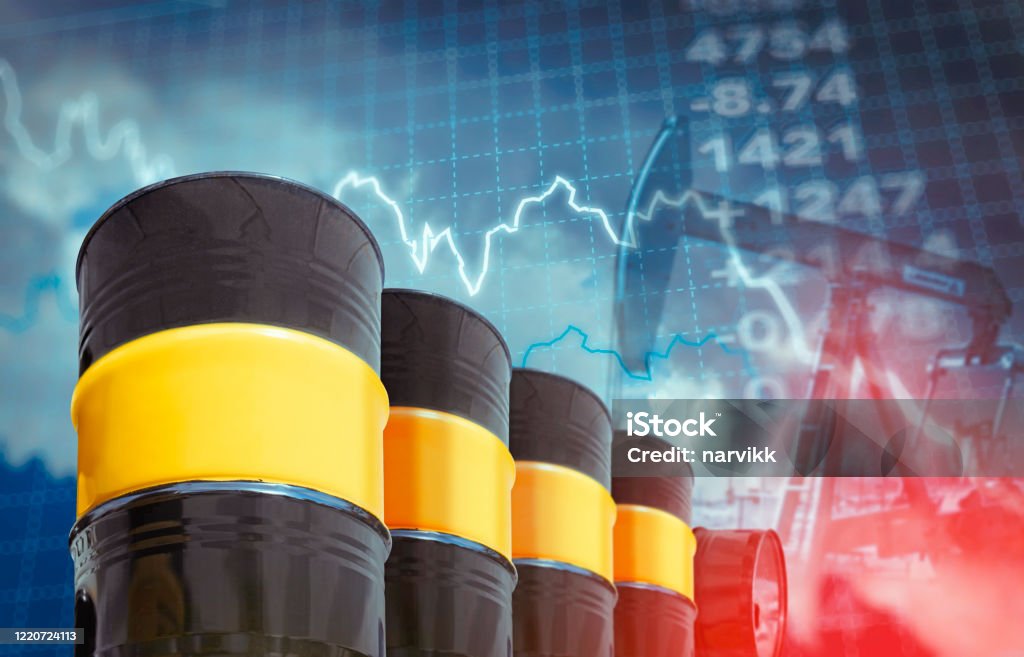
Global oil supply is expected to rebound by 6.6 million barrels a day (mb/d) to reach an average of 108.1 mb/d in 2027.
The view was shared by the Energy Agency (IEA), in its Oil Market Report (OMR), which also forecasts global oil demand to fall by 2.7 mb/d in 2026, to 102.3 mb/d, before rebounding by 2 mb/d in 2027.
It added that the year-on-year decline is set to ease to 2.7 mb/d in 4Q26, from an average 4.4 mb/d over 2Q26 and 3Q26. LPG/ethane and naphtha will account for around 80 per cent of the increase next year as supply chains normalise, while transport fuels will see very modest gain, as high prices accelerate electrification and fuel efficiencies across the global car fleet.
READ ALSO: Navy Destroys Two Illegal Refining Sites, Recover Stolen Crude
The figures were reflected in detailed statistics and commentary on oil supply, demand, inventories, prices and refining activity, as well as oil trade for IEA and selected non-IEA countries.
Following an increase of 3 mb/d in September, global oil supply rose by a further 2.3 mb/d to 105.4 mb/d in October on lofty Gulf exports despite ongoing attacks on energy infrastructure and tankers.
The higher flows underpin a sharp upward revision to 4Q26 supply, while 2027 has been lowered due to constrained Iranian shipments. After a decline of 4.8 mb/d in 2026,
The report also showed that global refinery runs fell by 1.3 mb/d m-o-m to a seasonal low of 81.3 mb/d in October and are forecast to rebound to 84.7 mb/d in December. Global throughputs are projected to rebound by 2.5 mb/d to 84.3 mb/d in 2027, following an average annual decline of 2.2 mb/d in 2026.
Margins weakened almost everywhere in October as record freight costs hit Asian refiners. US refiners benefited from cheaper crude, but lower gasoline prices weighed on profits.
It stated that observed oil inventories rebounded by 52 mb (+1.7 mb/d) in October, the first increase since June, as oil on water surged by 86 mb to its highest level since January on robust crude exports from the Gulf.
On-land stocks continued to fall, however, and remain at their lowest level since at least 2016. OECD total stocks declined by 47 mb, with industry inventories down 41 mb. Observed global stocks have fallen by a cumulative 462 mb since the start of the war.
The North Sea Dated crude oil prices tumbled by 32 per cent, dropping from a high of $136/bbl in early October to $93/bbl at the time of writing, as a sustained recovery in Gulf exports eased market tightness.
Diesel prices also fell by 11 per cent in Europe over the same period but, at close to $180/bbl, remained 77 per cent above pre-war levels. Freight rates for moving crude from the Middle East to Asia held near record levels, while the costs of Aframaxes and Suezmaxes eased.
The IEA report shows that the oil market is showing tentative signs of rebalancing, with global oil supplies surpassing demand for the first time since the outbreak of the war in Iran.
Observed oil inventories rose by 52 mb, or 1.7 mb/d, in October as Gulf exports recovered much faster than global oil demand. North Sea Dated crude oil prices plunged by more than 30 per cent from a high of $136/bbl on 8 October to around $93/bbl at the time of writing but remained $22/bbl above pre-war levels.
Global oil supplies surged by 2.3 mb/d to 105.4 mb/d in October, lifting output by an extraordinary 5.3 mb/d since August.
The sharp increase narrowed the year-on-year output decline to 2.9 mb/d, compared with an average 8 mb/d loss over the March-September period. Despite continued attacks on tankers, Gulf oil exports, excluding Oman, reached 18.4 mb/d last month, 26 per cent below pre-war levels.
The recent increase was led by crude, with flows rising to 15 mb/d, equivalent to 82 per cent of pre-war levels in October.
The higher export rates resulted in a significant uplift to our expectations for global oil supply for the remainder of the year, with 4Q26 estimates raised by 3.3 mb/d.
The fourth quarter rebound helped trim the average annual 2026 decline to 4.8 mb/d, with losses from the Middle East and Russia partly offset by growth from producers outside the Gulf.
Notably, the Americas Quintet – the United States, Canada, Brazil, Argentina and Guyana – are on track to boost output by 1.6 mb/d this year.
In 2027, global supply is projected to recover by 6.6 mb/d to 108.1 mb/d, including a 5.3 mb/d increase in Gulf production and a further 1.1 mb/d gain from the Quintet.
Global oil demand continues to be weighed down by ongoing disruptions to exports of refined products and LPG from the Gulf, remaining at roughly half of pre-war levels, and high fuel prices.
The pace of the contraction is nevertheless set to narrow to 2.7 mb/d y-o-y in 4Q26, compared with declines of 5 mb/d in 2Q26 and 3.8 mb/d in 3Q26 – for an annual average fall of 2.7 mb/d.
The shortfall versus 2025 levels is expected to ease further before shifting to growth around March next year, resulting in an overall increase of 2 mb/d in 2027. Petrochemical feedstocks – the products most affected by the war – will account for almost 80 per cent of 2027 gains, while high prices, electrification and fuel efficiency in the global vehicle fleet dampen the rebound in road fuels demand.
The report shows that November supply and demand balances suggest that the global oil market will return to a surplus in 4Q26, with a more substantial build in 2027.
As always, downside risks to the forecast persist, as attacks on shipping undermine maritime security, which is pivotal to a sustained recovery.
For now, the severe tightness in product supply, especially for diesel, remains the overriding concern of the broader market and consumers.
Persistent attacks on Russian energy infrastructure continue to choke off the country’s diesel supplies to international markets, adding to losses from the Middle East. At the same time, Atlantic Basin refineries, particularly in the United States, are running hard to capture high margins, while improved crude availability in Asia and fresh Chinese product export quotas could support higher refinery throughput rates in the region.
Notably, the accelerated release of IEA emergency diesel stocks over the coming months will provide a critical bridge across the supply gap until the global refinery system and product output recover.






Five Key Considerations When Choosing Nigeria’s President in 2027

Verdant Capital Wins Two Africa Global Funds Awards

Sunbeth Energies Expands, Unveils New Self-service Station in Ibadan

FG Eyes 167 CNG Stations as Investments Hit $2.6bn
NMDPRA Gets Senate Nod for Six Executive Directors

Asharami Synergy Kenya Eyes Connecting 10 Million Homes to Affordable LPG by 2028

Trump’s Family Unveils New Cryptocurrency Platform
Senate Denies Receiving Petitions Against Tinubu’s Ambassadorial Nominees

Dangote Cement Lights Up Benue Host Communities With CSR Initiatives

Reps Recommend 3-year Jail Term For Aviation minister

Tems Sets New Record On Billboard Hot 100 Chart
