
NEWS
FG Tackles Transportation Costs with 5 New CNG Stations in Lagos


As part of efforts to expand access to cheaper alternative fuel and reduce transportation costs, the federal government has commissioned five Compressed Natural Gas (CNG) daughter and last-mile retail stations in Lagos State.
The facilities, developed by the Ibile Oil and Gas Corporation (IOGC) with support from the Midstream and Downstream Gas Infrastructure Fund (MDGIF), were commissioned on Wednesday by the Minister of State for Petroleum Resources (Gas), Ekperikpe Ekpo.
Speaking at the commissioning, Ekpo said Lagos occupied a special place in the public-service journey of President Bola Ahmed Tinubu, noting that his administration was extending the development philosophy pursued during his tenure as governor to the national level.
READ ALSO: NLNG, NCDMB Endow Research Chairs in Six Nigerian Varsities with $9m
He said Lagos had demonstrated the importance of long-term planning, institution building, infrastructure development and the mobilisation of private capital for economic growth.
According to him, the federal government is applying similar determination through the Renewed Hope Agenda to ensure that Nigeria’s abundant gas resources support industrial growth, businesses, transportation and job creation while reducing the cost pressures faced by citizens.
“Through the Renewed Hope Agenda, the President has made it clear that Nigeria’s abundant gas resources must work for Nigerians. They must power our industries, support businesses, improve transportation, create employment and, ultimately, reduce the cost pressures faced by ordinary citizens,” he said.
The five stations are located in Idimu and Abule Egba in Alimosho Local Government Area; Ogolonto in Ikorodu West Local Government Area; Ajah in Eti-Osa Local Government Area; and Oko-Oba in Agege Local Government Area.
Each facility has a CNG compression capacity of 24,000 standard cubic metres per day and a storage capacity of 9,800 standard cubic metres.
The stations are designed as last-mile retail outlets to bring CNG closer to consumers in their residential and business locations.
Ekpo said the facilities would improve access to alternative fuel for motorists and commercial transport operators, while supporting the government’s objective of expanding cleaner energy infrastructure nationwide.
“These stations represent access. They represent affordability. And they represent the determination of government to take the benefits of Nigeria’s gas resources directly to the people,” he said.
He disclosed that President Tinubu had directed the expansion of CNG infrastructure across the country, including the development of an additional 500 refuelling stations towards a planned national network of 1,000 stations.
He said the initiative was aimed at ensuring that the benefits of the country’s gas resources translated into lower transportation costs for Nigerians.
According to the minister, expanding CNG infrastructure in Lagos would provide motorists and commercial transport operators with viable alternative fuel options, while bringing cleaner energy closer to consumers.
“Our objective is therefore not simply to count the number of stations commissioned. Success must ultimately be measured by impact: whether the infrastructure helps reduce operating costs for transporters and businesses, whether those savings reach commuters, and whether Nigerian families begin to feel tangible relief,” he said.
Ekpo said the Ministry of Petroleum Resources (Gas), in collaboration with the Presidential CNG Initiative, MDGIF, state governments, investors and other industry stakeholders, was working to expand refuelling and associated infrastructure to improve access to cleaner and cheaper fuel.
He commended IOGC and the Lagos State Government for embracing the initiative, describing the project as an example of the federal government, state governments and private sector working together to develop critical infrastructure.
The minister also praised MDGIF for its catalytic role in supporting gas infrastructure development, assuring investors of the government’s commitment to providing an enabling environment for investments to translate into physical projects and economic benefits for Nigerians.






A collaboration of the Nigeria LNG Limited (NLNG) between the Nigerian Content Development and Monitoring Board (NCDMB) has launched a $9 million professorial chair endowment programme across six Nigerian universities.
The organisations stated that the move is to develop commercially viable solutions to industry challenges, strengthen local research capacity and advance technological innovation.
Under the Nigerian Content Research and Development (NC-R&D) Professorial Chair Endowment Programme, each university is to receive $1.5 million to establish a specialised professorial chair focused on agreed industry research priorities.
The initiative is being implemented in partnership with the NCDMB, under the supervision of its Planning, Research and Statistics Directorate, the organisations said in a joint statement.
According to the statement, the schools include: The University of Ibadan, Oyo State, Rivers State University; Modibbo Adama University, Yola, Adamawa State and Aliko Dangote University of Science and Technology, Kano State.
Others are: University of Nigeria, Nsukka, Enugu State, and Yakubu Gowon University, formerly the University of Abuja.
Speaking at the kick-off ceremony, NLNG’s Managing Director and Chief Executive Officer, Adeleye Falade, described the programme as an investment in Nigeria’s capacity to translate academic knowledge into practical solutions.
His keynote address, titled: “Reshaping Nigeria’s Future Through Innovation, Research and Capacity Development,” emphasised the importance of sustained collaboration between government, industry and academia.
READ ALSO: Dangote Refinery, Fertiliser Expansion to Employ Over 90,000 in Lagos
He said: “In the energy industry, we understand that technology and energy systems are evolving and the requirement for sustained research cannot be overemphasised.”
He noted that the programme would support research into challenges central to the energy industry’s future, including improving operational efficiency, managing emissions, strengthening safety, maintain-ing critical infrastructure and making industrial processes more sustainable.
Beyond the research endowments, Falade outlined opportunities for a “triple helix” approach that brings government, industry and academia together through specialised programmes, sabbaticals, ex-change opportunities, practical testing of research assumptions and the joint development of postgrad-uate curricula.
The six beneficiary universities will undertake research in distinct areas and the NLNG Research and Innovation Centre for Computer and Electrical Engineering (RICCEE) at Rivers State University is envisaged as the coordinating point for these collaborations among the universities, the statement stressed.
Falade said discussions were already underway with the university on implementation arrangements and commended its Vice-Chancellor, Prof. Isaac Zeb-Obipi, for his role in advancing the proposed collaboration.
“We have already gotten indications of other partners like Google, Cisco and MTN who are showing interest to support this initiative,” he said.
Falade also highlighted the opportunities for younger researchers to deepen their expertise, investigate industry problems and learn from experienced academics and practitioners.
He urged the beneficiary institutions to build on the endowments by strengthening research partnerships, attracting additional funding and pursuing the commercialisation of intellectual property.
“Expand the scope, reach for more grants and funding which can push the frontiers of knowledge and commercialisation of intellectual property,” he said.
Acknowledging NCDMB’s role in bringing the initiative to fruition, Falade called for sustained commit-ment to technology transfer and the development of homegrown solutions without compromising quality assurance or safety.
He emphasised that the programme’s lasting value would lie in stronger institutions, research outcomes deployed in the field and the development of the next generation of Nigerian researchers and industry professionals.
Also speaking, the Executive Secretary of the NCDMB, Felix Ogbe said the $9 million endowment programme represents a strategic investment in the future of Nigeria’s research and innovation ecosystem.
The initiative, he said, complements the Board’s ongoing investments in research infrastructure, including the establishment of specialized R&D centres of excellence across six universities in the country.
“Taken together, these interventions demonstrate the Nigerian oil and gas industry’s commitment to creating an integrated research ecosystem that connects academic expertise, modern research infra-structure, industry requirements, and commercialisation opportunities,” he stated.
Represented by the Senior Technical Adviser, Austin Uzoka, the executive secretary underscored that by supporting specialised professorial chairs in critical areas of the industry operations, NLNG and NCDMB were creating opportunities to bridge the longstanding gap between academic research and industrial application.
He further charged the universities to deliberately transition from research for publication to research for application, and from innovation as an academic pursuit to innovation as a driver of industrial trans-formation.
“The beneficiary universities must see this endowment as both an opportunity and a responsibility and they would be expected to deliver clearly defined research objectives, measurable outcomes, prudent resource utilization, effective stakeholder engagement, and sustained collaboration with industry partners,” he added.
He urged beneficiaries to ensure that the professorial chairs generate commercially viable solutions, strengthen local technological capabilities, support industrial competitiveness, and contribute meaningfully to the long-term sustainability of Nigeria’s oil and gas industry.
Details of the endowment indicates that the University of Ibadan will focus on natural gas processing, pollution control and environmental management, while Rivers State University will concentrate on digital engineering, intelligent energy systems, automation and asset integrity.
Also, Modibbo Adama University will undertake research in energy transition and the environment. Aliko Dangote University of Science and Technology will focus on sustainable energy innovation and climate-resilient food systems.
Besides, the University of Nigeria, Nsukka, will specialise in green energy production and geo-environmental engineering, while Yakubu Gowon University, formerly the University of Abuja, will focus on geoscience and satellite intelligence for resilient gas infrastructure.
“Each university will work towards agreed research targets and commercialisation pathways, providing a framework for measuring progress and translating findings into practical applications.
“The institutions will also jointly host an information management hub to support knowledge sharing and exchange programmes.
The funding includes provision for minor civil works and infrastructure upgrades to transform identified spaces into fit-for-purpose research centres.
“Proposed arrangements would enable industry professionals to contribute practical expertise in tech-nical and non-technical disciplines while pursuing master’s and doctoral degrees. This would give students greater exposure to industry experience while strengthening the connection between postgraduate study and practical problem-solving,” the statement noted.
The programme, according to the statement, reinforces NLNG’s commitment to developing Nigerian capability and creating opportunities for local expertise to address industry needs, guided by its recently approved ‘NextGen Nigerian Content Strategy’.
The NLNG said it plans to sustain the gains through focused delivery of previous commitments in align-ment with the NCDMB as well as enable its business by facilitating deeper adoption of Nigerian Content Development as a business principle.
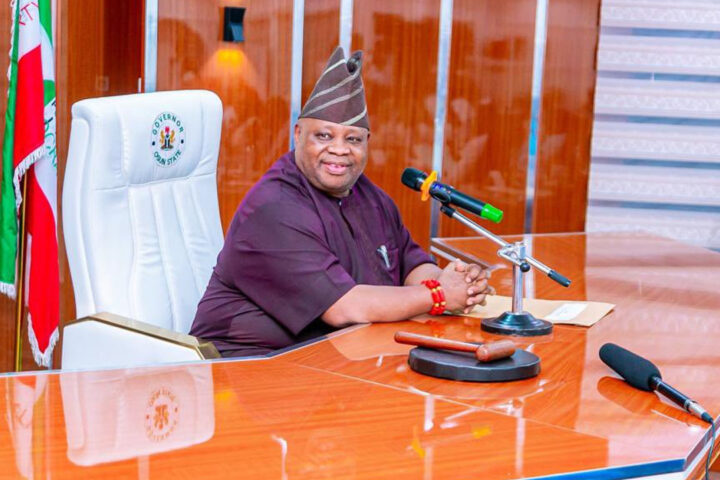
Osun State Governor, Senator Ademola Adeleke has denied taking foreign loans either secretly or openly since he took over the reign of governance in November 2022, describing any insinuation in that line as mere fake news.
The governor was responding to a recent publication of the state foreign debt stock by the Debt Management Office (DMO) which showed an increase by approximately $26.56 million between December 2024 and June 2026.
The DMO’s external debt stock report as at June 30, 2026, puts Osun State’s total external debt at $101.70 million, compared with $75.14 million recorded as at December 31, 2024. The difference represents an increase of approximately $26.56 million within 18 months.
A breakdown of the DMO figures shows that the state’s multilateral debt increased from approximately $67.60 million in December 2024 to $94.15 million in June 2026. Its bilateral debt also recorded a marginal increase, moving from approximately $7.54 million to $7.55 million within the same period.
Clarifying the details of the debt profile, the governor stated that the DMO had reflected the sum of $25.8 million dollars external loan taken by the previous administration for the Rural Access and Agricultural Marketing Project (RAAMP).
READ ALSO: Tinubu Hails Flamingos After Historic World Cup Final Qualification, Urges Team to Win Trophy
The loan repayment process had matured by December 2025, hence its inclusion by DMO in its report, the state governor explained.
The governor further submitted that there are four similar external loans by the previous administration which have matured for repayment and which may soon be reflected in the state external debt stock.
Gov Adeleke also noted that his administration has not taken any external loan as a strategy for sustainable financial management of the state resources, chiding those accusing the state government of secretly taking foreign loans as ignorant of the statutory procedures for applying for and accessing foreign loan.
“The above clarification is necessary to set the records straight. If at all, our administration is to take loans for any reason, it will be open to the public with utmost transparency and compliance with due process”, the governor was quoted as saying.

The Ogun State Police Command has dismissed reports alleging that the Awujale Palace in Ijebu-Ode was under siege by thugs and miscreants, describing the presence of security personnel at the palace as a preventive measure to maintain law and order.
The Command also clarified the circumstances surrounding the invitation and subsequent release of Chief Adebisi Adaran, popularly known as Gbenden, amid the ongoing controversy surrounding the vacant Awujale stool.
In a press release issued on Wednesday, November 11, 2026, the Police Public Relations Officer, DSP Oluseyi B. Babas e y i, said the deployment of police personnel to the palace was aimed at safeguarding lives and property and preventing any breakdown of public peace.
SEE ALSO: Ogun Police Win Public Safety Award as Ojajuni Emerges NUJ Golden Jubilee Ambassador
The Command disclosed that an Assistant Commissioner of Police (ACP) was deployed to supervise the security arrangement and ensure effective operational coordination.
Addressing reports surrounding Chief Adaran, the police said he was invited following a written petition containing allegations against him.
According to the statement, the traditional chief honoured the invitation, was questioned in connection with the allegations and subsequently released on self-recognisance.
The police, however, confirmed that investigations into the matter were still ongoing.
The Command stressed that the invitation should not be interpreted as an indication of guilt, describing it as part of a legitimate investigative process.
It stated that the police remained committed to professionalism, impartiality and respect for the rights of individuals in carrying out their statutory responsibilities.
The statement urged members of the public to remain calm, disregard misleading reports and avoid circulating unverified information capable of generating unnecessary tension.
The Command reiterated its commitment to protecting lives and property and maintaining public order across Ogun State.
The latest development comes amid an ongoing disagreement over the traditional administrative structure of Ijebuland following the death of the former Awujale, Oba Sikiru Kayode Adetona, in July 2025, after more than six decades on the throne.
The controversy centres on the administration of Ijebuland during the interregnum and disagreements between the Ogun State Government and sections of the traditional institution over the legitimacy of the interim administrative arrangement.
The state government had established the Awujale Interregnum Administrative Council (AIAC) to oversee the affairs of Ijebuland pending the emergence of a new monarch.
However, some traditional chiefs subsequently announced the formation of the Adele Oba Awujale-in-Council, an alternative arrangement they said was rooted in the customs and traditions of Ijebu-Ode.
Chief Adebisi Adaran, popularly known as Gbenden, was among the traditional chiefs associated with the Adele Oba Awujale-in-Council.
The development triggered a disagreement with the Ogun State Government, which maintained that the AIAC remained the legally recognised administrative body authorised to oversee the affairs of Ijebuland during the interregnum.
The government subsequently reconstituted the AIAC, rejecting the alternative arrangement.
The disagreement has also moved to the courts, with the Adele Oba Awujale-in-Council instituting a suit against the Ogun State Government and members of the reconstituted AIAC, challenging the legality of the interim administrative structure.
Tensions heightened on Tuesday, November 10, when reports emerged that Adaran had been arrested in Ijebu-Ode amid the dispute.
Some reports alleged that his arrest was connected to the ongoing disagreement over the administration of Ijebuland, although the circumstances surrounding the development had initially remained unclear.





FG Tackles Transportation Costs with 5 New CNG Stations in Lagos

Nigeria Hit Daily Averages 1.69mbpd of Crude, Condensate in October

NLNG, NCDMB Endow Research Chairs in Six Nigerian Varsities with $9m

Rig Count Hits 100, as NUPRC Approves 740 Drilling Jobs

Adeleke Clarifies Osun Debt Profile

Ogun Police Deny Awujale Palace Siege, Explain Chief Gbenden’s Invitation

Trump’s Family Unveils New Cryptocurrency Platform

Senate Denies Receiving Petitions Against Tinubu’s Ambassadorial Nominees

Dangote Cement Lights Up Benue Host Communities With CSR Initiatives

Reps Recommend 3-year Jail Term For Aviation minister

Tems Sets New Record On Billboard Hot 100 Chart
