
Politics
Why I Delegated Others To Answer Questions For Me At Chatham House – Tinubu

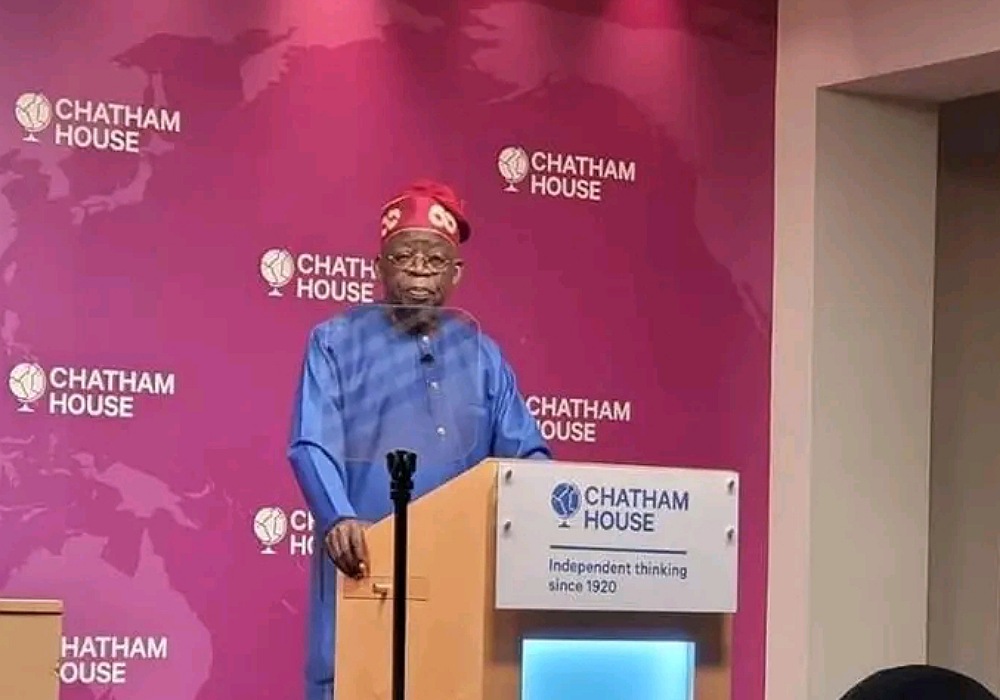
The presidential candidate of the All Progressives Congress (APC) Asiwaju Bola Ahmed Tinubu has explained why he delegated some members of the party to respond to questions posed to him.
According to the former Lagos Governor, he adopted the delegation method “to show team-ship”.
Tinubu spoke at the Chatham House lecture titled: ‘Nigeria’s 2023 elections: In conversation with Bola Ahmed Tinubu’, monitored by The Nation.
At the lecture, Tinubu after his opening remarks, assigned Kaduna Governor Nasir El-Rufai to speak on how his (Tinubu-led) government would address insecurity and asked the Director of Strategic Communication of the All Progressives Congress (APC) Presidential Campaign Council, Dele Aleke, to respond to the question on oil theft.
Tinubu also delegated a former Commissioner for Finance in Lagos State, Wale Edun, to respond to a question on how he (Tinubu) would boost the economy if elected.
Others, including the Speaker of the House of Representatives, Femi Gbajabiamila; former Ekiti Governor, Kayode Fayemi; APC National Women’s Leader, Dr Betta Edu; also answered questions.
Tinubu said: “Let me demonstrate here one of those philosophies and doctrines that I believe firmly in, it is team-ship, unbreakable team. To demonstrate that, I’ll assign it to my team.”
On education, Tinubu promised to provide student loans and reform the Almajiri educational system practiced in northern Nigeria.
El-Rufai who answered questions on security, stated that banditry, terrorism, separatism, and oil theft require a new approach including increasing the number of security operatives.
“The numbers must change and the Bola Tinubu administration already has a blueprint which is embedded in our action plan to address this. We will scale up the numbers of the armed forces. We’ll ramp up not only the numbers but the training and the equipment,” the Kaduna governor said.
Alake, on his part, answered the question on how Tinubu plans to lift Nigerians out of poverty if elected and also curb oil theft in six months. “The key to his policy for increasing economic growth is to enable the private sector to make the investment that will increase productivity, grow the economy, create jobs, and reduce poverty,” he said.
Also, Gbajabiamila responded to the question on the strategies of Tinubu on defence, the APC national women’s leader answered the question on healthcare delivery, and how to convert brain drain into gain gain for the country amongst others.







The National Chairman of the All Progressives Congress (APC), Professor Nentawe Yilwatda, has cited infrastructure projects and key political appointments under President Bola Tinubu’s administration as reasons the North Central region should support his re-election bid in 2027.
Yilwatda made the remarks on Saturday at the North Central Grand Endorsement Rally for Tinubu and Vice President Kashim Shettima in Lafia, Nasarawa State.
He declared that the region would reward Tinubu with massive votes in the 2027 presidential election, insisting that the president had done more for the North Central region than previous Nigerian leaders.
ALSO READ: ‘APC Not Innocent of Playing Dirty, We Don’t Sleep With Both Eyes Closed’ — Baba-Ahmed
“Mr President has done what no president has done for North-Central. Who will stand with him? Who will work with him? Who will vote for him?” Yilwatda asked supporters at the rally.
Yilwatda Highlights Road Projects Across North Central
Speaking partly in Hausa, the APC chairman highlighted road construction and other infrastructure projects as evidence of Tinubu’s contributions to the region.
He referenced several road projects connecting communities across parts of Benue, Nasarawa, Plateau, Kwara and the Federal Capital Territory, mentioning routes linking locations such as Akwanga, Lafia, Jos and Keffi.
According to Yilwatda, the projects demonstrate the administration’s commitment to improving road connectivity across the region.
He insisted that the scale of the developments represented a significant change for the North Central region.
“President Bola Ahmed Tinubu has done for North-Central what people should come and see,” he said, according to the English rendering of his remarks in the supplied transcript.
Yilwatda urged residents to recognise the administration’s infrastructure investments and support the president in the forthcoming elections.
Cites Akume’s Appointment, APC Leadership Position
Beyond infrastructure, Yilwatda pointed to political appointments as another reason the region should support Tinubu.
He specifically mentioned Senator George Akume’s appointment as Secretary to the Government of the Federation (SGF), describing it as an example of the region’s representation in the federal government.
The APC chairman also referenced his own emergence as the national chairman of the ruling party, arguing that the administration had provided opportunities for people from the North Central region to occupy prominent positions.
He maintained that the appointments demonstrated the region’s inclusion in the administration and the ruling party’s leadership structure.
APC Chairman Seeks Support at All Levels
Yilwatda called on APC members and supporters across the North Central region to unite behind Tinubu and work towards electoral victories for the party at all levels in 2027.
Reiterating his confidence in the region’s support for the president, he urged party members to mobilise voters ahead of the elections.
“North-Central stand with Mr President. North-Central appreciate Mr President,” he said.
He added that the region would support the APC from the presidential level down to other elective positions.
Yilwatda also thanked party leaders, stakeholders and supporters who attended the rally, expressing appreciation for their participation in the party’s mobilisation efforts.
The rally in Lafia brought together APC leaders and supporters to endorse Tinubu and Vice President Kashim Shettima ahead of the 2027 general elections.

With the 100-day countdown to Nigeria’s 2027 general election, there are signals that the poll might be marred by voter-apathy.
With the Independent National Electoral Commission (INEC) kicking off the display of the National Register of Voters (NRV) and the distribution of Permanent Voters Cards (PVCs) last Friday, indications from various states show low voter turnout at the Ward/Registration Area levels.
READ ALSO: 2027: Tinubu Will Beat Atiku, Obi by Wide Margin, Says Bwala
The INEC, however, attributed the low turnout to the exercise being in its opening day and expressed optimism that there would be an improvement with time.
While the exercise began smoothly and peacefully in many states, eligible voters in Umuahia, Abia State, expressed anger and disappointment over their inability to collect their PVCs following the absence of INEC officials at some designated collection centres.
The exercise followed an announcement by the Commission that PVCs are now ready for collection.
The INEC in inviting the public to the exercise declared, “Registered in 2025? Your PVC is now ready for collection. The cards are available for fresh registrants, transfers, replacements, and those who carried out information updates or reviews in 2025. Voters from previous registration exercises can also collect theirs.
“If you registered, requested a transfer, or applied for a replacement of a lost or damaged PVC during the first phase, your PVC will be available for collection.”
It added that “Uncollected PVCs from previous voter registration exercises will also be available.”
Collection at the Registration Areas (RAs) runs from Friday, October 9, to Thursday, October 15, 2026, between the hours of 9am to 3pm. From Friday, October 16, 2026, it moved to the Local Government Areas LGAs.
In the same period, the Commission said, “From Friday, 9th to Thursday, 15th October 2026, the Independent National Electoral Commission INEC will display the National Register of Voters for public scrutiny at all Registration Areas nationwide.”
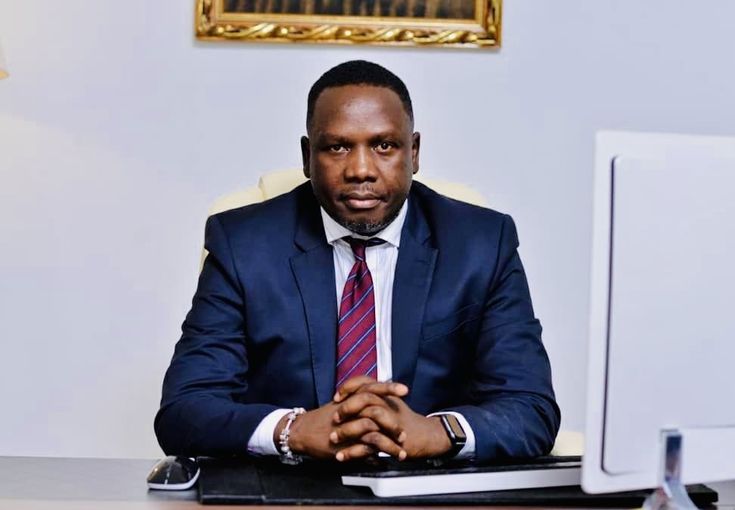
Daniel Bwala, Special Adviser to President Bola Tinubu on Policy Communication, has predicted that President Tinubu will defeat his major challengers by a wide margin in the 2027 presidential election.
Bwala made the prediction on Wednesday during an appearance on Channels Television’s Politics Today, where he discussed the political strength of the Tinubu administration and the state of the opposition ahead of the 2027 elections.
He said the margin of victory for Tinubu would be so wide that Nigerians would be surprised.
SEE ALSO: Tinubu Celebrates Adviser Daniel Bwala On 50th Birthday
“Let me tell you, and let me say it categorically, and I’ll be happy to come back. The margin of gap that President Bola Tinubu will give each and every one of these candidates will be so much that you won’t believe it,” Bwala said.
Explaining the basis for his prediction, Bwala pointed to the number of governors he said had aligned with the president, arguing that governors control important political structures within their respective states.
“No, I am saying—you asked me to give data now. So this is data. You used to conjecture, I speak to data,” he said.
“Since then, President Bola Tinubu has got how many governors on his side? How many governors have joined him? The governors are the chief executive officers of their respective states. They coordinate the structures of the state. They won their own election to be governors.”
Bwala said the support of the governors would translate into political structures, resources and goodwill for Tinubu ahead of the election.
“These people say, ‘We are putting our goodwill, our resources, our structure, and our support to the President.’ You multiply that by the number of people that have come to him, then you stretch it further by the people who are impacted positively by his… what do you call it? By his policy,” he added.
The presidential aide also cited what he described as progress under Tinubu since 2023.
“Then you look at how his… Before he became President, the Naira… you couldn’t trade with the Naira around the world. You can do it now!” he said.
“So these are facts, verifiable data to suggest that President Bola from 2023 to now has made a marked progress.”
Bwala Claims Atiku, Obi Have Lost Key Supporters
Bwala also turned his attention to former Vice President Atiku Abubakar and former Anambra State Governor Peter Obi, who are among the prominent opposition figures expected to feature prominently in the 2027 presidential contest.
He claimed Atiku had lost a significant number of key political figures who previously worked with him.
“But in terms of the other candidates who said he will not win: Atiku Abubakar lost close to 35% of key people that you know around him,” Bwala said.
“All the governors that worked for him that time are not going to be with him, I need you to know that in case you don’t know.”
Bwala also claimed Obi had lost most of the critical figures who supported his 2023 presidential campaign.
“Peter Obi lost 75% of the critical people that carried his campaign—they’ve all disappeared,” he said.
“And some of them went to Atiku, some of them went wherever they could go to. In terms of the other candidate, they just came to mark presence there.”
‘They Lost the Election Already’
Bwala further accused some opposition politicians of displaying what he described as a “defeatist attitude” ahead of the 2027 election.
“But I’m talking of these people that you think they are making a case—what they have is what we call defeatist attitude,” he said.
“How can you in one breath say you’re winning election, and in another breath you’re already threatening Nigeria will be… there will be no Nigeria, there will be all those things?”
He added: “Even the talking points of their campaign will suggest to you that they’ve lost the victory. They lost the election already.”
Bwala Defends Tinubu’s Policies
The presidential aide also defended the administration’s policies, arguing that they were improving the lives of Nigerians, particularly those in the informal sector.
“See, how can our policy… Our policy is raising a lot of people from the doldrums,” Bwala said.
“Look at the people in the informal sector of the economy, the women… You need to see—some of these your news media have been covering it.”
He also questioned the level of engagement some opposition politicians had with ordinary Nigerians before becoming prominent political figures.
“In terms of these people you’ve mentioned, tell me the last time they were actively involved in caring about the internal… When was the last time Amechi, before today, before he was made Vice President, that he had any engagement with the masses?” he asked.
“So you can come overnight, immediately, and just start talking?”






2027: Yilwatda Lists Tinubu’s Projects, Appointments as Reasons for North Central Support

Domestic Flight delays, Cancellations Compound Air Travellers’ Woes

2027 Election Might Witness Voter-Apathy as Registered Voters Shun PVC Collection

TCN Restores Power Supply to Katampe Substation After Shiroro Line Fault

2027 Elections: FG Warns Politicians Against Promises on Fuel Subsidy

PETROAN Expects Fuel Discount to Combat Inflation

Trump’s Family Unveils New Cryptocurrency Platform

Senate Denies Receiving Petitions Against Tinubu’s Ambassadorial Nominees

Dangote Cement Lights Up Benue Host Communities With CSR Initiatives

Reps Recommend 3-year Jail Term For Aviation minister

Tems Sets New Record On Billboard Hot 100 Chart
