
Crime
Why We Assassinated Naval Officer, Suspects Admit

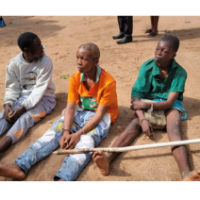
The three suspect detained in connection with the murder of Sub-Lt. Samuel Akingbohun, a naval officer, in ldo-Ani, Ose Local Government Area, Ondo State, have explained why and how they killed the officer following an incident.
The accused, Ayomide Sambo, Johnson Adeleke, and Shagari Francis, all 17, admitted to killing the officer in an interrogation when they were being paraded by the state police command. They did this because the officer had attacked one of them.
The three suspects have just graduated from the town’s high school.
They narrate how they used an iron rod to hit the deceased officer’s head and scrotum.
Ayomide Sambo, aged 20, narrated that the naval officer physically assaulted his friend, Johnson Adeleke, by slapping and giving him a headbutt, while trying to contest for the right of way in the community.
“We were so annoyed that we went after him and we cornered him at a junction, where we attacked him using an iron rod.
“We were on our way to collect a power bank when we encountered the naval officer. He was coming from the opposite direction, and the portion he was coming from was bad.
“We were both trying to take a good path when my friend used his shoulder to shove the officer. “In annoyance, the naval officer slapped him and also gave him a headbutt. We started to beg the naval officer. After the naval officer had left, my friend said it was fake military personnel.
“It was then that we took a bike and traced him to the junction and challenged him.
“The naval officer and my friend started fighting. It was in the process that I picked up an iron rod and began to hit him all over his body. My friend also collected the iron rod from them and started hitting him.
“But the two of my friends are now denying it and saying that I was the only one that hit him with the iron rod.
“We have never seen the officer before. That was the first time we set our eyes on him. Even the Okada rider that carried us was saying that where my friend hit him with the iron rod was dangerous.
“We were arrested while trying to flee from the town. I was first arrested, while the other two were arrested the following day after I told the naval officers their whereabouts. The two of them are now saying that I was the only one that hit him.”
The second suspect, Johnson Adeleke, aged 20, however denied his involvement in the beating and killing of the officer.
Adeleke said: “When I was on my way to remove my power bank, I mistakenly hit my elbow with the navy officer. He slapped me and gave me a headbutt. At that moment, we didn’t know that he was a naval officer.
“After the fisticuffs, we took a bike and traced him. After catching up with him, I confronted him, but he refused to say anything.
“The friend of the naval officer used his elbow to hit Ayomide, it was at that point that Ayomide picked up the iron rod and started hitting him. I did not hit him at all, it was Ayomide that was hitting him.
“I was already out of Idoani in a bid to escape when my mother’s elder brother called me to report to the station.”
The third suspect, Shagari Francis, 17, in an interview said: “I didn’t hit the naval officer. I was just following them. I was arrested when my mother took me to the station to ask if I was part of them.”
Commenting, the spokesperson for the command, Funmi Odunlam, said the suspects would soon be charged in court for prosecution after police investigation.
Odunlami said, “Currently, three suspects are in custody, and in the course of interrogation, we realised that one Ayomide Sambo was one of those mobilised to the scene, and when he got there, he carried an iron rod, hit him on his head and his testicles, and started stoning him.
“Later, he became unconscious, and he was rushed to the hospital in the town, where he was confirmed dead by the Doctor.”
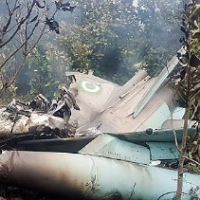








The Nigerian Navy (NN) has uncovered three suspected illegal refining sites containing about 98,000 litres of petroleum products in Okarki community, Ahoada West Local Council of Rivers State.
It was gathered that the discovery was made on October 10, 2026, during an operation conducted by Nigerian Navy Ship (NNS) Pathfinder under Operation Delta Sentinel.
The Director of Naval Information, Navy Captain Abiodun Folorunsho, gave the details in a statement, exposing that the sites contained approximately 65,000 litres of suspected stolen crude oil and 33,000 litres of products suspected to be illegally refined Automotive Gas Oil (AGO), commonly known as diesel.
The products were stored in about 12 dugout pits and containers across the three locations.
The Navy said no arrests were made because the suspected operators had fled before the arrival of the naval team, adding that the sites and products were subsequently handled in accordance with established procedures.
READ ALSO: NNPC Petrol Discount: Oyedele Explains How Lower Margins Could Boost Profits
According to the statement, the discovery highlights the scale of suspected illicit petroleum storage in the area and the risk of the products entering unlawful distribution channels.
The Navy said the operation disrupted storage activities at the three locations and denied suspected operators access to a substantial quantity of petroleum products for further illegal handling and sale.
It added that it would sustain intelligence-led patrols and operations to identify illegal refining facilities, disrupt the storage and movement of suspected stolen petroleum products, and support efforts to bring those responsible to justice in accordance with the law.

The Oyo State Police Command has arrested a suspected cultist, Kingsley Odo, who allegedly travelled to the state to avenge the death of his brother.
The suspect was intercepted by operatives of the Safer Highway patrol team during a routine stop-and-search operation on a commercial bus along Ife Road.
The Police Public Relations Officer (PPRO) of the Oyo State Police Command, DSP Ayanlade Olushola Olayinka, said the operatives recovered a locally made, cut-to-size pistol and a cartridge during a search of the vehicle.
SEE ALSO: Oyo Police Begin Probe Into Abduction of Pastor’s Daughter In Ibadan
Olayinka said further questioning revealed that the suspect had travelled to Oyo State to carry out a revenge killing over his brother’s death.
“Further questioning revealed that he had travelled all the way from Anambra to Oyo State to carry out a revenge killing,” he said.
He added that the suspect had been arrested and was undergoing investigation to establish his connections and determine the extent of his alleged activities.
“All thanks to God and the good effort of the men of the Safer Highway, he was intercepted, arrested, and is currently undergoing investigation to know his connections and how wide it is,” Olayinka said.
Suspect Recounts Brother’s Death
During an interview following his arrest, Odo said the incident stemmed from the death of his brother in 2021, when he was working in Benue State.
He explained that his brother was schooling in Nsukka, Enugu State, when he received information that someone had killed him.
“It was in 2021. I was working in Benue State, so I had information that my brother, who was in school in Nsukka, had just died in the school, that somebody killed him in the school,” he said.
Odo added that his mother died a few weeks after his brother’s death.
He said he subsequently received information that the person allegedly responsible for his brother’s death was living in a southwestern state.
“So, last month, I had information that the boy is living in a state, a Yoruba state. So, I said okay, I will find out that place where he is living,” the suspect said.
He explained that he was travelling from Nsukka towards Oyo State when police operatives intercepted and arrested him.
When questioned about whether he knew the exact location of the person he intended to confront, Odo initially said he did not know the particular state but confirmed that he was heading to Oyo State.
“The information is with me,” he said, suggesting that he had information that could help him locate the individual.
Suspect Says He Bought Pistol for ₦20,000
When questioned about the firearm recovered from him, Odo said he purchased the pistol from a friend for ₦20,000.
“I bought it from my friend,” he said.
Asked what his friend did with firearms, the suspect said the individual might be a hunter.
“I don’t know, maybe he’s a hunter. A hunter who kills with pistol? Yes, he has this one and long, so he was the one that sell this one for me, 20,000,” he said.
Suspect Confirms Membership of Vikings Confraternity
During the interview, Odo was also questioned about reports that his deceased brother belonged to a cult group.
He said he could not confirm whether his brother was a member.
“Maybe he belongs, maybe he did not belong, because I was not there with him,” he said.
However, when asked whether he belonged to a cult group himself, the suspect answered in the affirmative and identified the group as Vikings.
The police said investigations were ongoing to establish the suspect’s connections and determine whether other individuals were involved in the alleged planned revenge killing.
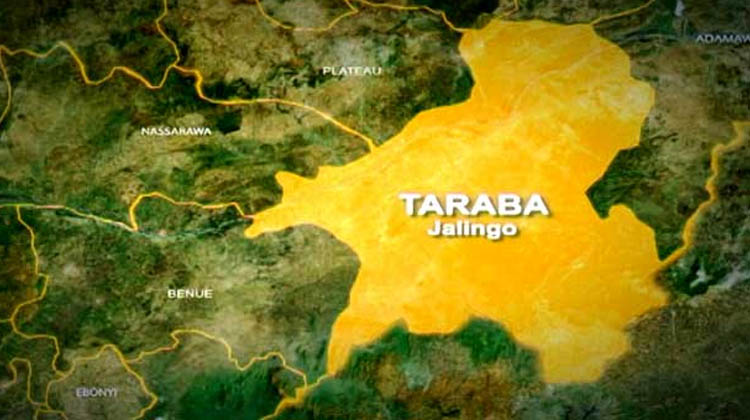
Police Rescue Three Kidnap Victims in Taraba After Sustained Pressure
The Nigeria Police Force has disclosed the rescue of three kidnapped victims in Taraba State following sustained pressure mounted by its rescue teams.
The victims were identified as Otuwe Torhumba, 37; Kenneth Nyiutse, 35; and Michael Emmanuel, 27.
The Force made the disclosure on Saturday, October 3, 2026, in its 24-hour operational update covering security operations recorded across the country on October 2.
ALSO READ: 2027: Ogun Police Begins Early Election Security Preparations, Warns Against Political Violence
According to the Police, “Due to sustained pressure by Police rescue teams, three of five kidnapped victims — Otuwe Torhumba (37), Kenneth Nyiutse (35) and Michael Emmanuel (27) — were rescued unharmed and reunited with their families.”
The Police said the three victims were rescued unharmed and subsequently reunited with their families.
The Force did not provide further details on the circumstances surrounding the abduction or the whereabouts of the remaining two victims in the operational summary.
The case is currently being investigated by the State Criminal Investigation Department (SCID), Jalingo.
The rescue was among several operational successes recorded by the Nigeria Police Force during the reporting period.






2027 Election: ‘Your Future Is More Valuable’ — IGP Warn Youths Against Political Violence

Tinubu Charges PCC Members to Deliver Wards

Marketers Eye Portion of FG’s Petrol Discount

Tanzania Nears Completion of $42bn Equinor, Shell-Led LNG Project

IEA Puts UAE’s Oil Output at 5.3mbpd for September

Africa’s Energy Security Conversations Pull Industry Executives Together

Trump’s Family Unveils New Cryptocurrency Platform

Senate Denies Receiving Petitions Against Tinubu’s Ambassadorial Nominees

Dangote Cement Lights Up Benue Host Communities With CSR Initiatives

Reps Recommend 3-year Jail Term For Aviation minister

Tems Sets New Record On Billboard Hot 100 Chart
