
NEWS
World Bank’s Fuel Import Advice Retrogressive, Violates PIA – Energy Expert

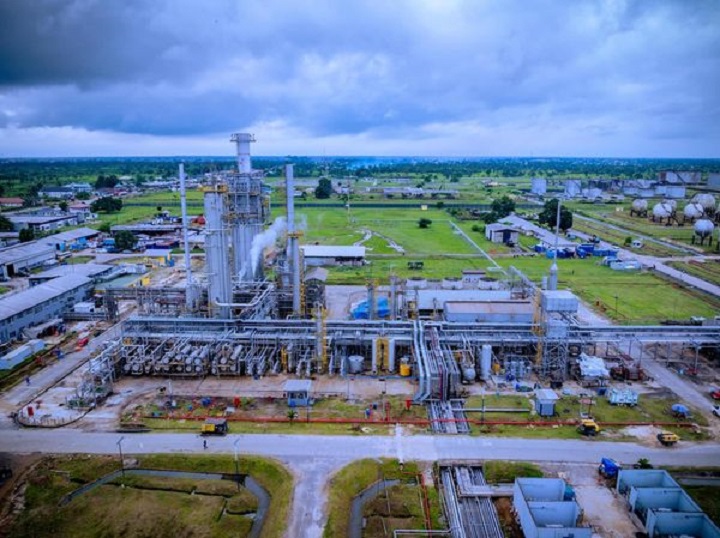
An energy economist, Prof Ken Ife, has strongly criticised recent recommendations by the World Bank urging Nigeria to deepen fuel importation and fully liberalise its downstream petroleum sector, describing the advice as “ill-timed, backward and inconsistent with Nigeria’s own laws.”
Speaking during a televised interview on Nigeria’s economic outlook, Ife argued that while parts of the World Bank’s latest Nigeria Development Update were analytically sound, its position on fuel importation undermines the country’s push for energy independence and local refining capacity.
“You cannot come to a country that is struggling and has suddenly developed a vision of becoming economically independent, and then advise it to reverse course and start importing again,” he said.
According to him, such recommendations run contrary to the provisions of the Petroleum Industry Act (PIA), which prioritises domestic crude supply for local refiners under the Domestic Crude Obligation framework.
“The law is very clear; priority must be given to local refining capacity. Advising Nigeria to abandon that and return to import dependence is not only against government policy but against the PIA law itself,” Ife stressed.
He warned that increased importation would expose Nigeria to global supply shocks, drain foreign exchange reserves and weaken ongoing investments in domestic refining, particularly at a time when private sector players are scaling up capacity.
“We are building refining capacity that will exceed local demand and position Nigeria as an energy exporter. How can anyone recommend that we abandon this and return to reckless importation?” he queried.
The economist further described the recommendation as lacking empirical grounding.
“This conclusion was parachuted into an otherwise strong report. There is no evidence to support telling Nigeria to depend on imports when major refining countries are restricting exports,” he said.
While acknowledging the World Bank’s accurate assessment of Nigeria’s macroeconomic trends such as GDP growth projections and sectoral performance. Ife maintained that its stance on fuel policy could worsen economic conditions.
ALSO READ: Refiners Hinge Price Differences on Imported Petrol on Quality
On inflation and cost of living, he argued that Nigeria’s challenges are not due to a lack of resources but policy inconsistencies in implementing domestic supply frameworks.
“Fuel price pressures in Nigeria are largely contrived. If local refiners are given crude at the terms stipulated by law, they will stabilise prices and reduce volatility,” he explained.
He also took issue with the Bank’s push for expanded social safety nets funded through borrowing, warning that such measures contradict Nigeria’s fiscal laws.
“Social safety nets are necessary, but you don’t borrow to share money. The law allows borrowing for capital projects and human development, not consumption. If support is needed, let it come as grants, not loans,” he said.
Professor Ife concluded that Nigeria’s long-term economic stability lies in reducing import dependence and strengthening local value addition across sectors.
“The sustainable path is clear; develop local refining, expand processing capacity and build economic sovereignty. Exporting raw materials and importing finished products only exports jobs and imports poverty,” he added.
It should be recalled that the World Bank’s recommendations have sparked renewed debate over Nigeria’s fuel policy, with critics warning that increased importation could undermine recent gains in local refining and expose the economy to external shocks.









The Presidency has highlighted major development projects across Nigeria’s North Central region under President Bola Tinubu’s Renewed Hope Agenda, covering eight key sectors, including road infrastructure, power, agriculture, education, aviation and security.
Sunday Dare, Special Adviser to the President on Media and Public Communication and Presidential Spokesperson, disclosed this on Sunday, November 15, 2026, in a post on his X account.
According to Dare, the projects are designed to improve regional connectivity, expand economic opportunities, strengthen food security and promote development across communities in the region.
ALSO READ: ‘Tinubu Built Northern Alliances Long Before Presidency’ – Sunday Dare
He highlighted interventions spanning major road construction, renewable energy, agricultural support, educational development, security infrastructure and empowerment programmes.
In the road infrastructure sector, the listed projects include the Mararaban Jama’a–Pankshin–Langtang–Shendam–River Ibi corridor dual carriageway, Phase II rehabilitation of the Babban-Lamba–Sharan Road and construction of the Akwanga–Jos–Bauchi–Gombe–Biu–Maiduguri Superhighway.
Others include the construction of the 600-metre Akwanga Underpass, completion of the Lafia Bypass, reconstruction of the Bali–Serti–Gembu Road and construction of the Gembu–Mbamnga–Yang Road, which commenced in early 2025. Improvement works are also listed along the Jalingo–Wukari corridor.
In the aviation sector, the government highlighted approval for the construction of an airstrip on the Mambilla Plateau.
The power and renewable energy initiatives include a 40-megawatt hydropower plant at the Kashimbila Multipurpose Dam, expected to supply electricity to the national grid, as well as irrigation channels to support year-round farming.
Other interventions include the deployment of solar-powered mini-grids, installation of solar streetlights and provision of solar home systems to households.
On agriculture and food security, the Renewed Hope Agricultural Support Programme is expected to provide farmers with improved seedlings, fertiliser and agricultural training.
The list also includes support for hybrid potato farming, expansion of irrigated farmland through dam infrastructure and development of agricultural processing centres.
For women and youth empowerment, the initiatives include agricultural support for women and young farmers through the First Lady’s Renewed Hope Initiative.
Vocational skills development and certification for women, start-up grants for small businesses, market women empowerment through business training and start-up tools, as well as rural grants and skills development programmes, are also highlighted.
In education, the Federal Polytechnic Nasarawa is listed for transformation into the Federal University of Mining, Engineering and Technology, alongside expanded scholarship opportunities and improved access to higher education.
On security, the government outlined plans for the establishment of a new Army Division in Jalingo, Taraba State, alongside strengthened security deployment to protect farming communities and improve safety.
The eighth area focuses on regional development, with the North Central Development Commission identified as a long-term regional development initiative. Additional federal road projects are also expected to improve connectivity and support economic activities.
Dare’s disclosure highlights the administration’s focus on infrastructure expansion, agricultural productivity, energy access and human capital development as part of its Renewed Hope Agenda.

Vice President Kashim Shettima has departed Abuja for Jos, Plateau State, alongside his wife, Hajiya Nana Shettima, ahead of the All Progressives Congress (APC) presidential campaign rally in the state.
The visit is part of the Tinubu–Shettima campaign’s engagements as the ruling party seeks to secure support for President Bola Ahmed Tinubu and Vice President Shettima ahead of the 2027 general elections.
The campaign’s visit to Plateau is expected to highlight the Federal Government’s infrastructure and economic development projects in the state, particularly those aimed at improving road connectivity, boosting commerce and supporting agricultural activities.
SEE ALSO: Tinubu, Shettima Head to Jos for APC Presidential Campaign Rally
Among the projects highlighted by the administration is the ongoing 125-kilometre Akwanga–Jos highway, which forms part of the Akwanga–Bauchi–Gombe–Maiduguri Superhighway.
Other projects include the rehabilitation of the Sharram–Garram–Babban Lamba Road in Kanke and the approved Mararaban Jama’a–Kanke–Langtang–Shendam–Ibi Road, which is expected to improve connectivity between Plateau and Taraba states.
The administration says the projects are part of its broader development agenda to connect communities, facilitate access to markets and provide farmers and businesses with improved infrastructure.
The APC campaign is expected to use the rally to present the administration’s achievements and future plans while seeking the confidence of Plateau residents to continue its development agenda beyond 2027.
The Ogun State Police Command has presented cheques totalling ₦10.65 million to families and next-of-kin of deceased police officers who served under the command, as part of efforts to support dependants of personnel who died in active service.
The cheques, amounting to ₦10,658,391.36, were presented on Saturday, November 14, 2026, by the Commissioner of Police, CP Bode Ojajuni, on behalf of the Inspector-General of Police, IGP Olatunji Rilwan Disu.
The statement was signed by the Police Public Relations Officer of the Ogun State Command, DSP Oluseyi B. Babaseyi, anipr, and dated November 14, 2026.
ALSO READ: How Ogun Driver Allegedly Stole Boss’s ₦45m Lexus and Plotted to Sell It for ₦10m in Cotonou
The presentation took place at the Command Headquarters in Eleweran, Abeokuta, under the Nigeria Police Force Group Life Assurance and the IGP Family Welfare Schemes.
The initiatives are designed to provide financial assistance to families of police officers who lost their lives while serving the country.
Accompanied by members of the Command Management Team, Ojajuni personally handed over the cheques to the beneficiaries.
Addressing the recipients, the police commissioner reaffirmed the Inspector-General’s commitment to the welfare of police personnel and their families.
He described the widows and families of the deceased officers as the “true superheroes”, acknowledging their resilience in coping with the loss of their loved ones who died in service to the nation.
Ojajuni noted that the financial intervention was a demonstration of the Force’s appreciation and institutional responsibility to support the families of fallen officers.
He said the initiative represented the Nigeria Police Force’s enduring commitment to standing by the dependants of personnel who paid the ultimate price in active service.
Responding on behalf of the beneficiaries, Mrs Ejembi Ada Veronica thanked the Inspector-General of Police and the Ogun State Police Command for remembering their families and providing financial assistance.
She assured the authorities that the money would be channelled towards the education, upkeep and general welfare of the children and dependants left behind by the deceased officers.
According to her, the intervention would provide timely relief and help improve the stability of the affected families.
The Ogun State Police Command reiterated its commitment to supporting the families of fallen officers, assuring them of its continued solidarity.





How Rising Costs Are Pushing Nigerian Bakeries to the Brink

FULL LIST: 18 Nollywood Actors and Actresses Who Died in 2026
Tinubu Gov’t Unveils North Central Development Projects Across Eight Sectors

Obi, Kwankwaso Pledge to Tackle Corruption, Reduce Cost of Living

Dangote Plans 10,000MW Power Intervention, Raises Africa Investment Ambition to $70bn

40% of Breadmakers Shut Down as Atiku Accuses Tinubu of Economic Failure

Trump’s Family Unveils New Cryptocurrency Platform

Senate Denies Receiving Petitions Against Tinubu’s Ambassadorial Nominees

Dangote Cement Lights Up Benue Host Communities With CSR Initiatives

Reps Recommend 3-year Jail Term For Aviation minister

Tems Sets New Record On Billboard Hot 100 Chart
