
NEWS
World Food Day: Severe Hunger Has Become An Unfortunate Member Of Many Households In Nigeria


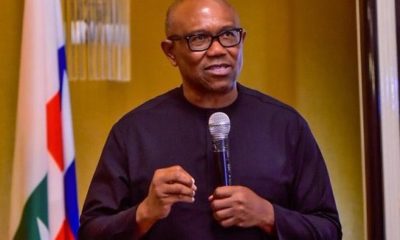
As the world marks the World Food Day (WFD), the presidential candidate of the Labour Party in Nigeria’s 2023 election, Peter Obi has decried that ‘basic food items are becoming unaffordable to most people’.
In a statement on his verified handle on micro-blogging site, X, on Wednesday, the former governor of Anambra State wept that “Nigeria – the once giant of Africa, a nation that has the most arable land in the continent”, has fallen to a level where “the Global Hunger Index ranks Nigeria among the 20 most hungry nations in the world”.
ALSO READ: BREAKING: Obi Laments Collapse Of National Grid
He, however, expressed optimism that “If we can prioritize investment in agriculture by combating insecurity which has kept farmers away from the farms, and adopting modern ways of mechanized farming, we will be able to combat hunger and achieve food security for the nation.”
Obi wrote, “Today, the world marks World Food Day, a very significant global event that raises awareness about the issues of hunger and food insecurity and serves as a reminder of the need to commit to food security and fight hunger to a standstill.
“This global observance is particularly important to us in Nigeria, where food prices are skyrocketing every day, and basic food items are becoming unaffordable to most people.
“Severe hunger has now become an unfortunate member of many households in Nigeria – the once giant of Africa, a nation that has the most arable land in the continent.
“Nigeria’s struggle with a food crisis and hunger today is saddening, considering the richly blessed and vast arable lands with which we are endowed as a nation.
“In the past, I used to lament that the majority of Nigerian households spent most of their income on food alone, sparing none for savings and other critical exigencies.
“Today, it is heartbreaking to note that most Nigerian households are no longer able to afford sustenance food with their income.
“Food prices are soaring, food inflation is skyrocketing, the food crisis is worsening by the day, and hunger has graduated to a national crisis.
“In a Food Security Update Report released last week, the World Bank likened Nigeria’s worsening food security crisis to war torn countries like Yemen, noting that we have a significant rise in the number of people facing acute food shortages and an epidemic of hunger.
“Today, the Global Hunger Index ranks Nigeria among the 20 most hungry nations in the world. In August 2024, it was reported that more than 31.8 million Nigerians were acutely short of food due to security challenges and the removal of fuel subsidies.
“It was also reported that 15.6 million children in Nigeria were facing hunger.
“The United Nations predicted that 82 million Nigerians, about 64 percent of the country’s population, may go hungry by 2030 if the government fails to tackle the menace of food insecurity.
“The domestic food inflation in Nigeria remains among the highest globally, with food prices increasing by 37.5% year-on-year as of August 2024.
“I believe these reports, sad as they are, only paint a lenient picture of the severity of the food crisis and hunger in reality.
“Over the years, I have maintained that moving the country from consumption to production remains the surest way of combating food insecurity and pulling the nation out of the present food crisis.
“I have equally stated, unequivocally, that the greatest asset our nation has is the vast uncultivated lands in the North coupled with our huge demographics.
“Therefore, we must be intentional with our agricultural investments.
“A state like Niger State, which is twice bigger in landmass than the Netherlands (excluding water) can neither feed itself nor feed the nation, while the Netherlands exports over $100 billion worth of agro products annually.
“If we can prioritize investment in agriculture by combating insecurity which has kept farmers away from the farms, and adopting modern ways of mechanized farming, we will be able to combat hunger and achieve food security for the nation.
“A nation booming in productivity, free from hunger, with an abundant food supply remains our commitment to a New more prosperous Nigeria. It is POssible! -PO”






The Nigerian Content Development and Monitoring Board (NCDMB) has launched a 5-day Hands-on Oracle Primavera P6 Training in Rivers State, targeting 50 participants.
The training, being executed by Mathnebi Nig. Ltd, commenced today, March 16th and will run until Friday, March 20th.
The intensive hands-on program aims to equip participants with practical skills in project management using Oracle Primavera P6, enhancing their capabilities in the energy and construction sectors.
The NCDMB’s sponsorship of the training underscores its commitment to boosting local capacity and driving Nigeria’s economic growth through skills development.
ALSO READ: Senate Approves Abe as Chairman, NUPRC Board
The training is expected to benefit participants and contribute to the development of Nigeria’s project management landscape.

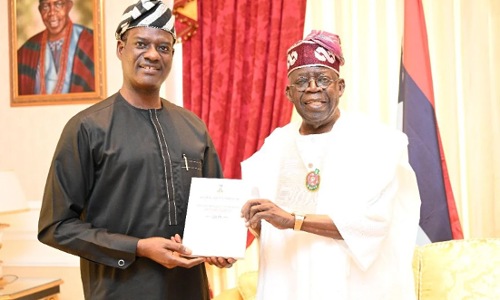
President Bola Ahmed Tinubu has sworn in Mr. Taiwo Oyedele as Nigeria’s new Minister of State for Finance at the Aso Rock Presidential Villa.
The swearing-in ceremony took place shortly after the Senate confirmed Oyedele’s nomination last Wednesday.
Oyedele, 50, from Ikaram, Akoko in Ondo State, brings over two decades of experience in fiscal policy and tax administration.
ALSO READ: SERAP Asks Tinubu To Probe N5.9bn Spent On NNPC Rebranding
He previously chaired the Presidential Committee on Fiscal Policy and Tax Reforms, which overhauled Nigeria’s tax system, introducing zero income tax for Nigerians earning N800,000 or less and exemptions for small businesses with turnovers below N50 million.
During his Senate screening, Oyedele described his appointment as “a call to serve at a critical time when Nigeria faces significant fiscal challenges and remarkable opportunities.”
He replaces Dr. Doris Uzoka-Anite, who has been redeployed to the Ministry of Budget and National Planning.
Oyedele also spent 22 years at PricewaterhouseCoopers, held executive programs at top global institutions including the London School of Economics and Harvard Kennedy School, and currently serves as a professor at Babcock University.
The minister’s appointment signals a continued focus on implementing the Tax Reform Acts, which took effect on January 1, 2026, and aim to simplify Nigeria’s tax system while boosting economic growth.
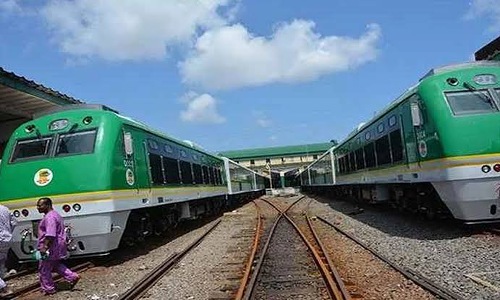
Passengers were thrown into panic on Monday after a train operating along the Abuja–Kaduna rail corridor derailed, leaving several passengers injured and disrupting services on the busy route.
The train, which was travelling from Kaduna to Abuja, reportedly failed to reach its destination as scheduled after the incident occurred along the rail line linking both cities.
According to passengers on board, the incident happened suddenly, sending shock through the coaches as the train came to an abrupt halt.
SEE MORE: Value Creation: NCDMB to train Six Young Engineers in Electrification Interdependency
Some passengers said they heard a loud bang before the train jolted violently, throwing several occupants off their seats.
Eyewitnesses said the sudden impact caused confusion inside the train compartments, with some passengers sustaining cuts and bruises after hitting seats and metal fittings.
Initial reports suggested that the Abuja-bound train might have collided with another train along the corridor, forcing rail operations to pause temporarily while authorities assessed the situation.
A source within the Nigerian Railway Corporation confirmed the incident but declined to give full details, noting that he was not authorised to speak publicly on the matter.
One of the passengers, Sada Malumfashi, shared his experience on social media shortly after leaving the train.
He described the moment as frightening, stating that the loud sound and sudden stop caused many passengers to be flung from their seats.
He said the train remained stationary for about 30 minutes before the journey resumed slowly toward Kubwa, located on the outskirts of Abuja.
When contacted, the spokesperson for the Nigerian Railway Corporation, Callistus Unyimadu, confirmed the development and said an official statement would be issued.
Authorities are yet to disclose the exact cause of the derailment or the full extent of injuries as investigations continue.





NCDMB, Renaissance Africa Train Pipeline Engineers

NLNG Inducts 103 Trainees Into Empowerment Scheme
NCDMB Sponsored Oracle Primavera P6 Training Underway In Rivers State

Senate Approves Abe as Chairman, NUPRC Board

Tinubu Swears in Taiwo Oyedele as Finance Minister

Burna Boy Breaks Record as Africa’s Top-Grossing Concert Artist

Trump’s Family Unveils New Cryptocurrency Platform

Reps Recommend 3-year Jail Term For Aviation minister

Dangote Cement Lights Up Benue Host Communities With CSR Initiatives

Senate Denies Receiving Petitions Against Tinubu’s Ambassadorial Nominees

Tems Sets New Record On Billboard Hot 100 Chart
