
NEWS
Amaechi Traces Electoral Flaws to Political Opposition

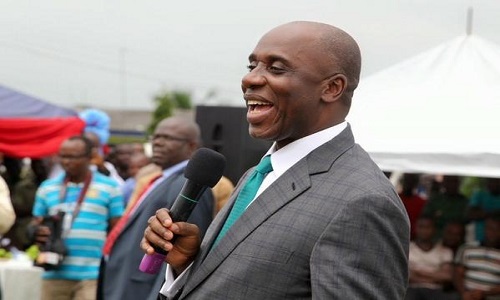
Nigeria’s former minister of transportation and a chieftain of the African Democratic Congress (ADC), Rotimi Amaechi, is of the opinion that opposition politicians should be held accountable for weak electoral processes.
He bared his mind at a public lecture in a video clip that trended on Friday, in which Amaechi said Nigeria’s President Bola Tinubu “is not invincible.”
In his view, the opposition parties remained Nigeria’s main problem.
His remarks came amid the lingering internal crises rocking opposition political parties, which have splintered into factions and weakened their ability to mount a formidable challenge to the ruling All Progressives Congress (APC).
ALSO READ: 2026 Armed Forces Remembrance: Fubara Orders Immediate Employment for Fallen Heroes’ Children
As the infighting deepens, several opposition figures have accused President Tinubu and the APC of fuelling the crisis by sponsoring defections from their parties.
Amaechi, however, dismissed such claims, blaming the opposition for the country’s political woes.
“Tinubu isn’t invincible; the opposition is the problem. I don’t see him as invincible, The problem is the opposition,” the former Rivers State governor said.
He argued that opposition parties were consumed by ethnic and regional power calculations rather than conversations about governance and national renewal.
“I tell the opposition party that you’re the problem. Nobody’s saying, ‘Oh, things are bad. How do we change the candidate? Do you want to do one term or not one term?’ That’s all. Nothing else is discussed.
“So, while the elites are busy discussing how to get to power, the voters, the citizens, are helping the elites to achieve that objective,” he said.
Recall that in July 2025, the ADC emerged as the coalition platform adopted by opposition leaders seeking to challenge President Tinubu in the 2027 general election.
Amaechi joined the party in July, followed by former Vice President Atiku Abubakar in November, while former Anambra State governor, Peter Obi, joined on December 31.
The trio all made public their intentions of contesting the ADC’s presidential ticket.
In the trending footage, Amaechi also revealed that he has been holding meetings with political actors ahead of the 2027 polls.
“If you ask those who meet with me, they will tell you that I have been having meetings and talking to them about the possibility of winning the 2027 election,” he said.
Amaechi criticised the inability of past administrations to deliver meaningful electoral reform, citing the experience under former President Muhammadu Buhari.
“The problem with elections in Nigeria is that there is no incumbent government that can achieve electoral reform. None! Buhari tried it and failed. In fact, the National Assembly passed the law and dropped it on his table, and the man held his pen to sign,” he said.
He claimed that fears of foreign interference, including claims that “Russia will rig the election,” stalled the reform process.
“I wish I were there. I would have told him that everything has an antidote. So, if there’s a Russia, there’s an America,” Amaechi said.
He explained that efforts to amend the electoral law in 2019 were frustrated, but that Buhari became determined by 2023, viewing electoral reform as the legacy he wanted to leave behind.
However, Amaechi said entrenched interests ultimately blocked the reforms.
“When they got to the National Assembly, they did not come back. By the time they realised that they had omitted people like us who were automatic delegates by being former speakers, Buhari refused to sign.
“People around him made sure he did not sign it into law and got what they wanted. Now, those same people are back here, shouting electoral reform,” he said.
Drawing from his experience managing Buhari’s campaigns, Amaechi stressed the power of citizen mobilisation in safeguarding elections.
“We made it difficult for any Nigerian governor to go to his state and come out freely. Any day Buhari was coming to any state, the governor was on the run because the madness of the citizens chased them away,” he said.
Recalling incidents in Bauchi and Jos during the 2015 campaign, Amaechi said his team mobilised Nigerians to resist electoral manipulation, warning that any attempt to rig elections would provoke resistance.
“If you rig us out, you rig problem. As far as we were concerned, they were going to rig the election, so show them that there will be what? Fire. And the whole world knew there would be fire,” he said.
Amaechi also criticised voter apathy, stressing that citizens, not the government, hold the key to electoral reform.
“Government won’t give you electoral reform. The first solution to electoral reform is the people. Don’t be shouting electoral reform, electoral reform. You are the problem.
“The more you say they have written the result, the more you have voter apathy. Voter apathy will make Tinubu return to Aso Villa with 30-something per cent,” he warned.
He urged Nigerians to prioritise competence over regional or ethnic considerations in choosing leaders.
“Get the best material that can govern the country. If you say you want a president, make sure the president is qualified. The first qualification is that he must change the country when he becomes president.
“The second is that he must have the capacity to say, ‘I will be mad with you. You see, this election, all of us will die,’” Amaechi said.
He also cited opposition missteps in previous elections, including their inability to campaign in parts of the North due to extensive mobilisation by his team.
“Ask the PDP, could they campaign in Kano? They couldn’t. When they went there, what did they hear? ‘Bamaso, bamaso.’ Because we had mobilised Nigerians,” he said.



Nigerian national Ekene Chukwuma has said he returned to Nigeria with assistance linked to Oseni Rufai rather than the Nigerians in Diaspora Commission (NiDCOM), while renewing allegations against the commission’s chairperson, Abike Dabiri-Erewa, over his travel documents.
Chukwuma made the remarks in an interview in which he explained how he returned to Nigeria after spending months at a deportation camp in India.
RELATED NEWS: Rufai Oseni Row: NiDCOM Breaks Silence on Nigerians Detained in India, Addresses Ekene’s Case
“My name is Kenneth Chukwu, from Enugu State,” he said, introducing himself before explaining how he returned to the country.
“I came back here with the assist of Osini Roufai, a good friend of him,” he said.
Chukwuma denied that NiDCOM facilitated his return, alleging that the commission had published false information about his case.
“NiDCOM made a lots of false, uh, news acquisition against me, which is still in Abike Dabiri handle in Twitter,” he said.
He also accused Dabiri-Erewa of sharing his expired international passport and a travel certificate he claimed was issued six months after he entered the detention camp.
“He also, she also posted my international passport that expired. He also, she also posted my TC that issued after 6 months,” he said.
His comments renew questions surrounding the handling of his case and the circumstances under which he obtained the documents needed to return to Nigeria.
Chukwuma’s detention in India previously sparked a public disagreement between ARISE News presenter Oseni Rufai and Dabiri-Erewa over NiDCOM’s response to reports of his situation.
Oseni raised concerns about Chukwuma’s detention and the commission’s handling of the case, while Dabiri-Erewa defended NiDCOM’s position and explained the process for submitting information to the commission.
NiDCOM subsequently issued its account of Chukwuma’s detention, stating that he had been arrested in India over a visa overstay and addressing the circumstances surrounding his travel documents.
The differing accounts prompted public debate about the commission’s response to Nigerians facing immigration difficulties abroad.
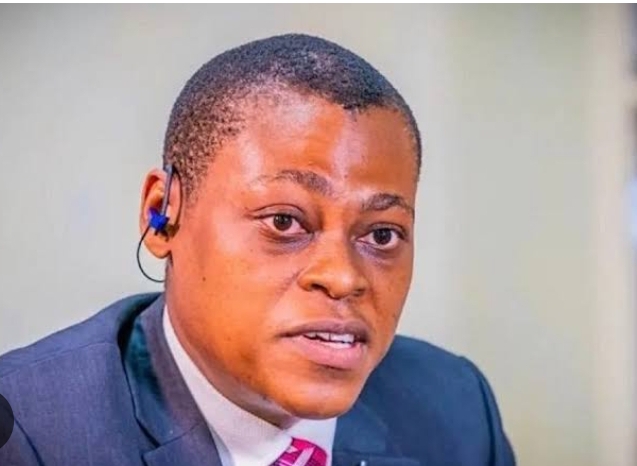
Rufai Oseni has challenged political analyst Olabode Sowunmi over the Federal Government’s 30-day petrol discount, questioning whether the intervention amounts to a return of fuel subsidy despite claims that the discount is being borne by the Nigerian National Petroleum Company Limited (NNPC).
The exchange occurred during an edition of The Morning Show on Arise News, where Oseni questioned Sowunmi about the financial implications of the petrol discount and other measures introduced to cushion the impact of fuel prices.
Oseni argued that several elements of the government’s intervention could be regarded as forms of subsidy, insisting that NNPC’s ownership structure must be considered when determining who ultimately bears the cost.
SEE MORE: ‘Another Speech to Tell Us, It Is Well’ — Oseni Rufai Reacts to Tinubu’s Address
“No matter how you try to explain it away, a subsidy is a subsidy,” Oseni said.
He challenged the argument that the discount should not be classified as a government subsidy simply because NNPC was responsible for providing it.
“We’re talking like NNPC is not owned by [the government] and heavily equity-based by the Ministry of Finance Incorporated,” he said.
Oseni identified the 30-day discount, forward sales of crude oil to domestic refineries, a proposed price ceiling, the removal of road levies and the consideration of an excess-profit tax among the measures he believed could amount to different forms of subsidy.
He argued that forward sales of crude oil to domestic refineries, with increased volumes as production grows, could help shield petrol pump prices from fluctuations in the international market.
Oseni also questioned the proposed negotiation of a price ceiling of ₦1,350 on landing and ex-country costs, arguing that government intervention to moderate prices contradicted the principle of allowing market forces to determine them.
“You are not supposed to come in to do this. Let me go back to your words: forces of market supply and demand should do this, but you have now come in to do this. That’s another form of subsidies,” he said.
He further cited the removal of road levies and cooperation with state governments under new tax laws as part of the measures requiring scrutiny.
After listing the interventions, Oseni demanded that Sowunmi explain their financial implications and identify who would ultimately pay for the petrol discount.
“But tie this with the most important question, actually, that you skipped: How much will this cost NNPC, and who pays for it? Don’t evade that question. Tell us the cost item and how much, who will pay for it,” Oseni said.
Sowunmi Defends His Position
In his response, Sowunmi argued that a government subsidy should be determined by whether the government bears the difference between the total cost of a product and its selling price.
He explained that a subsidy occurs when the government assumes the financial burden created by the gap between the cost of a product and the price at which it is sold.
“In the case of the discount that has been announced, it is borne by NNPC. So that cannot be…” Sowunmi said before Oseni interrupted.
Oseni challenged the distinction, insisting that NNPC’s ownership made it necessary to establish whether the cost could ultimately be linked to the government.
“Wait, not—who owns NNPC? Please answer. No, no, a straight question, and you can go ahead. Who owns NNPC?” Oseni asked.
Sowunmi responded that he had been invited to contribute to the discussion and should be allowed to complete his explanation.
“You asked, you asked NNPC because you believe—you asked me a question because you believe I have something to say. You cannot—you cannot tell me how to talk, so just be…” he said.
Oseni subsequently repeated his question about NNPC’s ownership, prompting Sowunmi to urge him to exercise patience.
“Basically, you need to be a bit patient and just…” Sowunmi responded.
The available transcript ends during the exchange, with no further explanation of the financial arrangements or conclusion to the discussion provided.
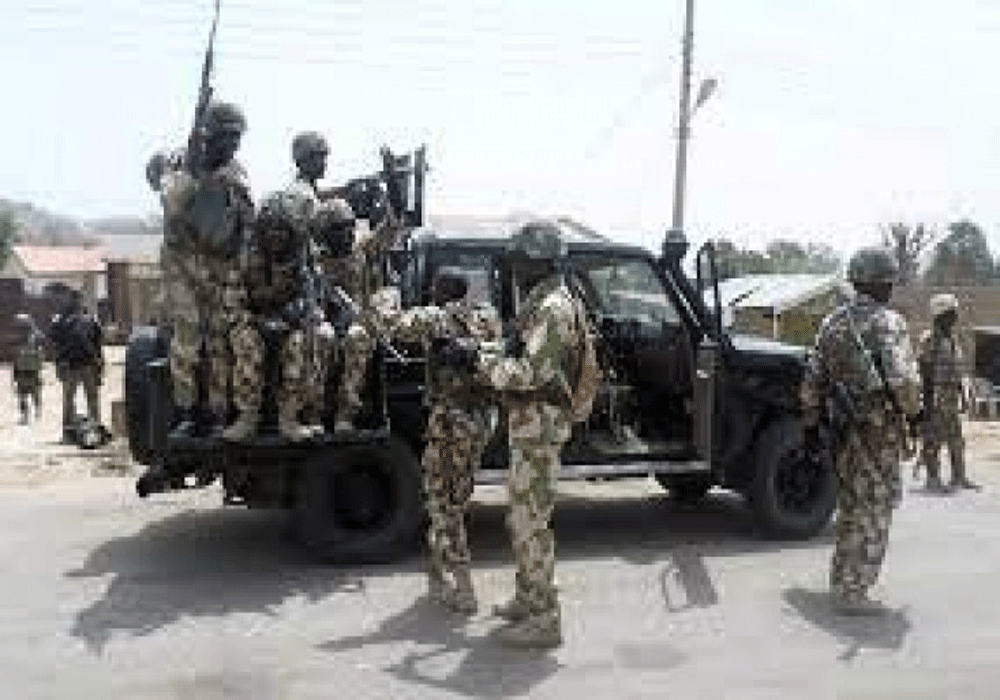
Human rights defender and Amnesty International volunteer, Lawrence Zongo, has been released from the custody of the Nigerian Army in Jos, Plateau State, after spending 10 days in detention.
His release comes after Amnesty International and the Take-It-Back (TIB) Movement demanded his immediate release, raising concerns over his alleged incommunicado detention at the Nigerian Army’s 3 Division headquarters in Jos.
ALSO READ: How Troops Forced Kidnappers to Abandon Abducted Army Lieutenant Colonel in Enugu
“Zongo is out,” a source privy to the information said on Thursday.
Zongo was arrested on October 5 while visiting relatives receiving treatment at a military hospital within Maxwell Khobe Cantonment, Rukuba Barracks, the headquarters of the Army’s 3 Division.
He had reportedly gone to the facility to assist family members who were attacked by gunmen in Meyango, Bassa Local Government Area of Plateau State, on Sunday night.
Sources familiar with the incident said one of Zongo’s first cousins died from injuries sustained in the attack before he arrived at the hospital late Monday morning.
Following his arrest, sources alleged that Zongo was held without charge and denied access to his lawyers and family members.
Sources also claimed that he was wearing Ray-Ban Meta smart glasses when he visited the military facility, suggesting that this might have contributed to the soldiers’ decision to detain him. However, the claim had not been independently verified.
On October 8, Amnesty International raised the alarm over what it described as the arbitrary and incommunicado detention of its member, demanding that the military either release him immediately or hand him over to the appropriate civilian authorities.
The organisation said efforts to gain access to Zongo had been unsuccessful and called on the Army to clarify the circumstances surrounding his arrest and detention.
On October 13, the Take-It-Back Movement’s Plateau State chapter also demanded his release, alleging that he remained in military custody without a clear explanation.
The movement said its members and executive committee representatives had discussed the matter during an appearance on JayFM Jos, insisting that the military should disclose the offence Zongo was suspected of committing and provide evidence justifying his continued detention.
The group also called for respect for Zongo’s fundamental rights and urged the Army to follow established legal procedures if there were allegations against him.
His release comes after days of pressure from rights advocates and activists over the circumstances surrounding his arrest and detention.
The Nigerian Army’s reasons for detaining Zongo and the circumstances surrounding his release were not immediately available.






Tesla Aims for 2028 Commercial Production of Flying Car

Corruption Trials: EFCC, NJI Push Specialised Judges, Digital Evidence Reforms

‘It Is Morally Wrong’ — PDP Chieftain Questions North’s Bid for Another Eight Years

2027 Election: ‘Your Future Is More Valuable’ — IGP Warn Youths Against Political Violence

Tinubu Charges PCC Members to Deliver Wards

Marketers Eye Portion of FG’s Petrol Discount

Trump’s Family Unveils New Cryptocurrency Platform

Senate Denies Receiving Petitions Against Tinubu’s Ambassadorial Nominees

Dangote Cement Lights Up Benue Host Communities With CSR Initiatives

Reps Recommend 3-year Jail Term For Aviation minister

Tems Sets New Record On Billboard Hot 100 Chart
